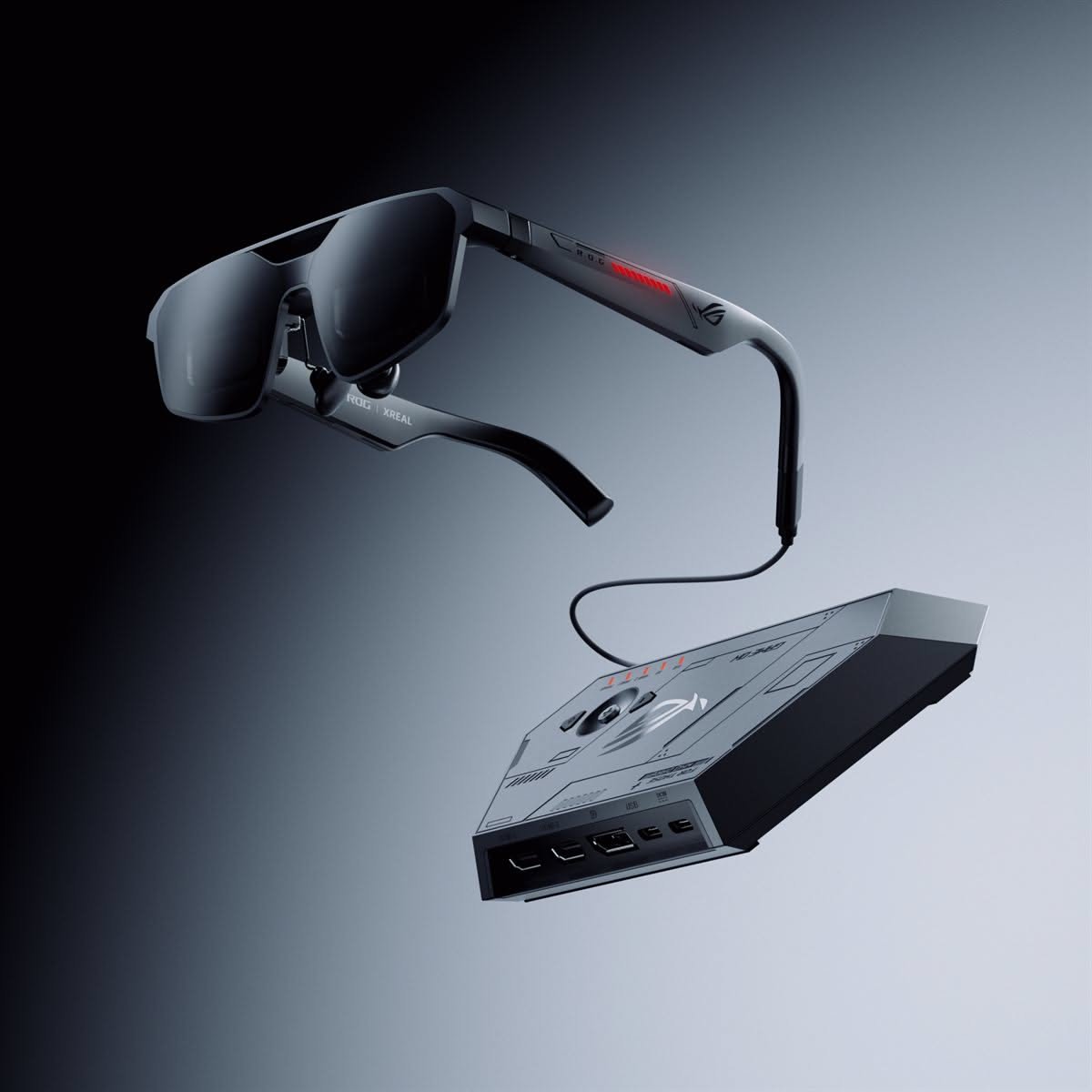
In brief — 2026-05-19 · Asus ROG and Xreal opened pre-orders for the ROG Xreal R1 AR glasses at $849, per Tom's Hardware, pairing a 171-inch virtual display with a 240 Hz refresh rate and cross-platform support across PC, Xbox, and PlayStation. The pricing slots between premium VR and spatial-computing hardware, positioning the device as a portable display alternative to a high-refresh gaming monitor rather than a standalone compute headset.
What happened
Asus ROG and Xreal jointly opened pre-orders for the ROG Xreal R1 AR glasses on May 15, 2026, per Tom's Hardware's primary coverage. The price is $849. The headline specification is a 171-inch equivalent virtual screen running at 240 Hz.
That refresh rate is a meaningful threshold for the AR glasses category. Most consumer AR glasses released before 2026 topped out at 90–120 Hz, which placed them below the floor competitive and fast-action players treat as the minimum for serious play. Matching the 240 Hz ceiling of current high-end gaming monitors removes that objection on the spec sheet — real-world latency and image quality require hands-on testing to confirm.
Platform compatibility spans PC, Xbox, and PlayStation. That breadth is uncommon in the category, which has historically skewed toward Android and PC. Specific console connection methods were not detailed in available coverage.
At $849, the device occupies a pricing bracket between mainstream VR and premium spatial computing. The more practical comparison for the target buyer is a high-end ultrawide gaming monitor, which similarly spans $600–$900 — the glasses offer portability and viewer privacy at roughly the same cost, with the tradeoff that they require an external compute source.
The launch is part of a dense Asus hardware cycle in May 2026. Tom's Hardware also reported Asus entering the DDR5 memory market during what it characterized as the largest memory shortage in recent history, with a 48 GB kit landing at $880. The same week, Tom's Hardware published a review of the Asus Prime Z890-P Wifi motherboard for Intel Core Ultra builders and covered a discounted gaming PC combo featuring an Asus Prime RTX 5070 paired with a Ryzen 9850X3D. Asus is simultaneously pushing across peripherals, memory, displays, and motherboards.
Why it matters for builders
For SpecPicks readers building gaming rigs or portable setups, the ROG Xreal R1 introduces a new line item in total build budgets — and changes what a portable competitive setup looks like.
At $849, the glasses cost roughly as much as a mid-range discrete GPU. The value calculation is use-case specific. For readers who game at a desk, the glasses offer no advantage over a high-refresh physical display and represent an additional cost on top of one. For readers who travel with a gaming laptop and currently rely on whatever screen is available — hotel TV, airplane tray — the glasses convert any seat into a 171-inch virtual display at 240 Hz, assuming the laptop's GPU can sustain target frame rates.
That GPU constraint is the sharpest practical filter. The glasses are a display device, not a compute device. They inherit frame-rate limitations from the connected host. A system that cannot sustain 240 fps in a given title on a native screen will see the same bottleneck through the glasses. Buyers should evaluate GPU headroom before factoring the $849 glasses cost into build decisions.
For home use, the glasses offer a privacy benefit monitors do not. The virtual display is not visible to anyone outside the wearer's field of view — a functional advantage in shared living spaces.
The cross-platform reach across PC, Xbox, and PlayStation matters for readers who game across multiple systems without a dedicated high-quality display for each. A single $849 device covering all three is a different proposition than buying a gaming monitor and a television separately.
The outstanding unknown at pre-order is pixel density. Virtual screen size is an angular measurement; whether 171 inches at AR viewing distance translates to sharp text and fine in-game detail can only be determined from hands-on reviews.
Hardware angle
The ROG Xreal R1 imposes the same GPU demands as a physical 240 Hz monitor. Any system that cannot sustain 240 fps natively will bottleneck through the glasses identically. For readers considering this device as part of a new build, GPU selection is the constraint to solve first — the glasses sit downstream of render performance.
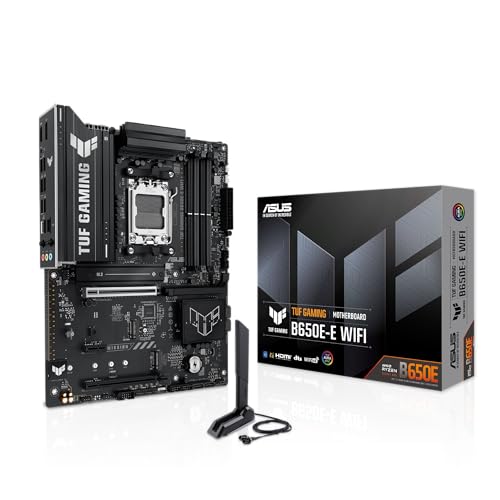
For readers already in the Asus ROG ecosystem targeting a high-refresh setup, the ASUS TUF GAMING B650E-E WIFI at $156.99 provides the platform foundation: PCIe 5.0 for current-gen discrete GPUs, DDR5 for memory bandwidth, and an AMD AM5 socket with headroom for Ryzen CPUs capable of feeding a 240 Hz workload in modern titles.
For readers curious about virtual display gaming before committing $849, the Virtual Reality Headset for Phone with Controller at $22.99 offers a phone-based preview of the concept. The fidelity and refresh rate are not comparable to the ROG Xreal R1, but the entry cost is low enough to test personal tolerance for head-mounted displays before making a significant hardware purchase.
What other coverage is saying
Tom's Hardware's dedicated report is the primary source for the ROG Xreal R1 pre-order launch, covering pricing, the 171-inch virtual display spec, the 240 Hz refresh rate, and PC/Xbox/PlayStation support. Tom's Hardware's parallel reporting this week reflects a concentrated Asus hardware cycle: the DDR5 memory entry at $880, the Z890-P Wifi motherboard review, and a discounted Prime RTX 5070 + Ryzen 9850X3D gaming PC combo all published in the same period, suggesting a coordinated push across multiple product lines.
Community discussion on r/LocalLLaMA in the same week centered on Asus's Ascent Nvidia GB10 unit, where at least one early buyer reported around 6 tokens per second on Gemma4-31B using llama.cpp — slower than expected. The GB10 thread surfaces as context for Asus's simultaneous expansion across gaming display hardware and AI compute, though the two product lines serve distinct audiences and share only the brand.
Sources
- Tom's Hardware — Asus ROG Xreal R1 AR glasses pre-orders — Primary coverage of the pre-order launch, including $849 price, 171-inch virtual display, 240 Hz refresh rate, and PC/Xbox/PlayStation platform support.
- r/LocalLLaMA — Asus Ascent Nvidia GB10 performance — Community benchmarking thread on Asus's GB10-based AI compute hardware; contextualizes Asus's simultaneous expansion across gaming display and AI inference markets.
- r/LocalLLaMA — Local AI tooling survey — Snapshot of software and hardware the local-AI community runs week of 2026-05-15; context for where hardware attention in AI-adjacent enthusiast spaces sits relative to gaming peripherals.
Filed by the SpecPicks News Desk. We summarize and link — never paywall-bypass.