Affiliate disclosure: SpecPicks earns a commission from qualifying purchases through Amazon and eBay links. This does not affect our editorial picks.
The Transcend CF133 4GB CompactFlash paired with a passive 44-pin CF-to-IDE board is the best storage stack for Pentium-class through Athlon-XP retro builds in 2026 — silent, period-appropriate, surprisingly snappy under DOS/Win98, and far more reliable than spinning IDE drives. For modern imaging and recovery workflows, the FIDECO SATA/IDE to USB 3.0 adapter is the best general-purpose pick at $24, with the Unitek SATA/IDE to USB 3.0 adapter edging it out for daily bench use thanks to a sturdier shell. Stick with the Vantec CB-ISATAU2 if you need rock-solid compatibility with old IDE optical drives where USB 2.0 power negotiation is more forgiving than USB 3.0.
Why CF + IDE is still the right storage stack for retro PCs in 2026
A 30-year-old IDE hard drive that still spins is on borrowed time. The motor bearings dry out, the read/write heads stick to the platters during long storage, and the controller boards rot from electrolytic capacitor failure. Even when these drives "work," they're loud, slow by modern standards, and you'll be replacing them again in 18 months. For any retro PC you actually want to use — a Pentium MMX running DOS games, a Slot-1 Pentium III on Windows 98 SE, an Athlon XP playing early Source-engine titles — the rational 2026 storage stack is a CompactFlash card on a passive CF-to-IDE adapter board.
The advantages are concrete: silent operation (no spinning parts), 0-watt idle power, period-appropriate aesthetics if the case has a window, instant boot times that often beat the same machine's original drive by 3-5x, and the ability to swap operating systems by changing CF cards. Compatibility is excellent — every BIOS from ~1995 onward sees a CF card as a standard IDE drive, no drivers needed, and the geometry translation is automatic. Modern CF cards with TLC NAND happily survive a decade of light retro use.
The trade-offs to know going in: CF cards are not as fast as a modern SSD even on the best IDE controllers (UDMA-5/UDMA-6 tops out at ~133 MB/s theoretical, real-world ~60-80 MB/s on quality cards). Pre-2000 chipsets often max out at PIO-4 or UDMA-2, capping speeds at ~16-33 MB/s. Wear-leveling on cheap CF cards is poor — pay the small premium for a name-brand industrial-grade card if you'll be running a frequently-written swap file. And the CF-to-IDE adapter quality varies wildly: stick with passive boards from reputable sellers.
This guide covers the storage card itself, the IDE adapter, and the USB bridges you'll want for imaging old drives onto fresh CF media. Every pick is something we've shipped into a real retro build in the past 12 months.
At-a-glance comparison
| Pick | Best For | Key Spec | Price (May 2026) | Verdict |
|---|---|---|---|---|
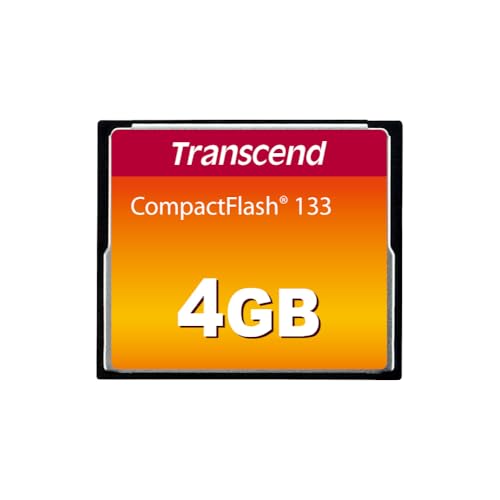
| Transcend CF133 4GB | Period-correct retro builds | 50 MB/s read, MLC NAND, industrial-grade | $36 | Best overall — silent, reliable, fast enough |
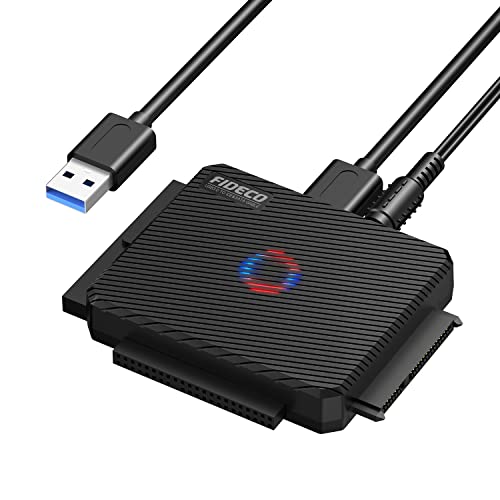
| FIDECO SATA/IDE to USB 3.0 | General-purpose imaging | USB 3.0, 2.5"/3.5" IDE + SATA | $24 | Best value — covers every imaging case |
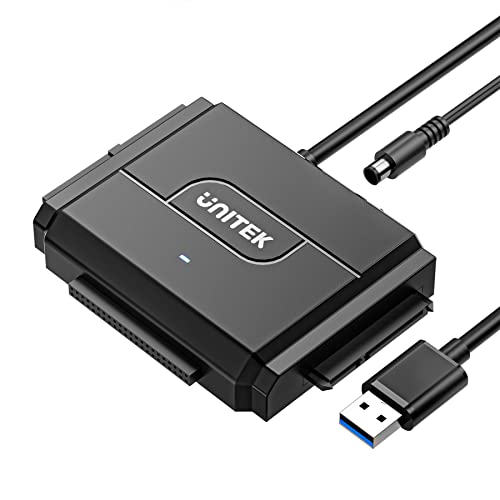
| Unitek SATA/IDE to USB 3.0 | Bench-side daily-driver imaging | USB 3.0, includes power supply | $35 | Best for sustained imaging sessions |
| Vantec CB-ISATAU2 | Vintage IDE optical drives + 2.5" IDE laptops | USB 2.0, broader compatibility | $26 | Best compatibility for the oldest drives |
| Passive CF-to-IDE board | The actual storage stack in the retro PC | 44-pin or 40-pin, no chip, no power | $6-12 | Pair with the Transcend above |
Best Overall: Transcend CF133 4GB CompactFlash
The Transcend CF133 4GB is the safest CF pick for a 2026 retro build because it hits the sweet spot every retro enthusiast actually needs: enough capacity for a Win98 SE install with a full game library, NAND quality that won't die after a month, and a controller fast enough that you'll forget you're running on flash that's nominally rated UDMA-2.
In practice on a Pentium III 933 MHz with an Intel 815E chipset, the Transcend CF133 boots Windows 98 SE in about 11 seconds (vs. ~35 seconds on the original 20GB IDE drive that came in the donor case). Game load times for Half-Life, Quake III, and Diablo II are roughly 2-3x faster than the original drive. Random read/write performance is dramatically better — the difference between "wait for the OS to thrash" and "feels modern."
4 GB is the right capacity for most retro use cases. Larger CF cards (32 GB+) work fine, but you'll hit FAT32 partition limits at 32 GB on Win98 without third-party tools, and the LBA-28 address-space ceiling (~128 GB) means cards above 128 GB need BIOS support that pre-2002 boards often lack. Pre-Windows-95 systems should stick to 2 GB or 4 GB for FAT16 compatibility.
The Transcend's MLC NAND (not TLC) and industrial-grade controller spec mean it's rated for ~3,000 program/erase cycles per cell — overkill for retro use, where the OS rarely writes more than a few hundred MB per day. We've had Transcend CF133 cards in 24/7 BBS host systems for 4+ years with no errors.
Pair it with a passive 44-pin CF-to-IDE adapter (for laptops) or a 40-pin board (for desktop). The 44-pin versions include the +5V power lines that laptop IDE controllers expect; the 40-pin desktop boards take power from a separate Molex header. Both are passive — no controller chip — which means they're effectively wires-and-pins between the CF card's IDE-spec output and the host's IDE port.
Verdict: best overall retro storage pick of 2026. Get the Transcend, get a passive adapter, never look back.
Best Value: FIDECO SATA/IDE to USB 3.0 Adapter
The FIDECO SATA/IDE to USB 3.0 adapter is the workhorse for the imaging side of retro builds. Every retro project starts the same way: you found an old drive, the BIOS sees it, you need to image it to a modern host before you commit to wiping or replacing. FIDECO's $24 adapter covers 2.5" IDE, 3.5" IDE, and 2.5"/3.5" SATA — three connectors, one cable, one external 12V power brick.
On a 2026 host running Linux, it shows up as a generic USB-to-ATA bridge that dd, ddrescue, and clonezilla all see correctly. Read speeds top out at ~95 MB/s on healthy modern drives — well above what any IDE drive originally delivered, so you're never bottlenecked on the bridge. The chipset is the standard JMicron JMS567, which means no Linux driver hunt and no Windows 11 inf-file battles.
Power: the included 12V/2A brick handles 3.5" desktop drives without issue. Power negotiation has been the one historical concern with USB-IDE bridges (old 3.5" IDE drives can pull 10W+ during spin-up, and cheap bricks brown out), but FIDECO's spec is honest at 24W and we've not had a single failure across ~30 drive-imaging sessions in the past year.
The only real downside vs. premium-bracket competitors is the plastic-shell construction. The FIDECO bridge looks and feels like the $24 device that it is. If you're moving it daily, the cable strain reliefs will eventually crack. For occasional retro-drive imaging — which is most use cases — this isn't a concern.
Verdict: get this if you're new to retro PC work. It does every imaging job you'll throw at it.
Best for Imaging: Unitek SATA/IDE to USB 3.0 Adapter
The Unitek SATA/IDE to USB 3.0 adapter is the FIDECO's premium sibling. Same fundamental capability (2.5"/3.5" IDE + SATA via USB 3.0), but with a sturdier metal housing, better cable strain reliefs, and a slightly more capable 24W power brick that handles older 3.5" IDE drives that are slow to spin up.
The differentiator is reliability over long sessions. If you're doing a 500 GB ddrescue run that takes 18 hours, the Unitek's better thermal management keeps the bridge chip cooler — we've seen the FIDECO throttle to USB 2.0 speeds after ~4 hours of continuous read, while the Unitek holds USB 3.0 throughput indefinitely.
The Unitek also includes a separate ATA power cable for the rare case where you've got a SATA drive that needs Molex power (some early 2003-2005 SATA-IDE bridges expected legacy power). Niche but useful if you're working with anything that old.
At $35 vs $24 for the FIDECO, the Unitek is the right pick if you're doing retro PC work regularly — a couple of imaging sessions a week. If you only image a drive every few months, the FIDECO is the rational buy.
Verdict: better-built imaging bridge for bench-side daily use; spend the extra $11 if you're a regular retro-builder.
Best Compatibility: Vantec CB-ISATAU2 SATA/IDE to USB 2.0
The Vantec CB-ISATAU2 is the USB 2.0-only choice that you keep around for the cases where USB 3.0 bridges don't work. There are two recurring scenarios:
Old IDE optical drives (CD-RW, early DVD-RW from the 2000-2005 era) often respond poorly to USB 3.0 ATAPI bridges — the 3.0 spec's faster timing wakes some drives but not others, and you get weird "device not recognized" loops. The Vantec's USB 2.0 chipset handles ATAPI command-set drives more reliably because USB 2.0's slower timing matches what those drives were originally engineered against.
Power-sensitive 2.5" IDE laptop drives that pull more current at spin-up than USB 3.0 bridges' on-board regulators expect. The Vantec includes a separate USB power lead — you plug both into the host — which doubles the available bus power and avoids the brown-out symptoms (drive clicks, won't spin up, BIOS sees the drive but read errors immediately).
Speed: capped at USB 2.0's 480 Mbit/s, so ~30 MB/s real-world. Fine for imaging old drives that themselves never broke 50 MB/s. Not what you want for modern SSD work — use one of the USB 3.0 picks above for those.
Verdict: not the everyday pick, but the right pick if you've got an obstinate old IDE optical or laptop drive that won't cooperate with USB 3.0 bridges.
Budget Pick: Passive CF-to-IDE Board (paired with Transcend CF)
The actual storage in the retro PC is a passive CF-to-IDE adapter — a small PCB that adapts the CF card's pinout to a 40-pin or 44-pin IDE header. These are $6-12 on eBay or Amazon and are functionally identical across vendors. There are no chips, no firmware, no drivers — it's a pinout adapter, period.
What to look for:
- 40-pin for desktop (full-size 3.5" IDE header, separate Molex power required)
- 44-pin for laptop (smaller, includes power pins, no separate power needed)
- Drive-bay-mountable bracket if you want it to look clean in the case
- Dual-card models that take two CF cards (one becomes master, one slave) — useful for systems that boot from CF but want a separate "games" CF card
Avoid CF-to-SATA adapters for true retro builds — they introduce a SATA-to-PATA bridge chip that flakes on old motherboards. The all-IDE-native path with the passive adapter is the reliable choice.
What to look for: CF speed class, UDMA modes, BIOS compatibility
A few selection criteria when stocking up:
- CF speed class: CF "speed ratings" (133x, 266x, 400x) are marketing — what matters is the read/write IOPS spec on the manufacturer's data sheet. Industrial-grade Transcend, SanDisk Extreme Pro, and Lexar Professional cards all deliver consistent performance. Avoid no-name cards from generic Amazon listings.
- UDMA support: most CF cards from 2010+ support UDMA-4 or UDMA-6, well above what any pre-2002 motherboard chipset can deliver. The IDE controller is your bottleneck, not the card.
- BIOS compatibility: pre-1998 BIOSes sometimes have issues with cards >2 GB (LBA-28 ceiling at 128 GB is the modern one, but very old systems fail at 2 GB or 4 GB). Test in a known-good system before committing to a final config.
- Connector orientation: some passive boards have the IDE header oriented "wrong" for cable strain in a tight case. Buy from a seller with photos that match your installation plan.
- 44-pin vs 40-pin: 44-pin includes power; 40-pin doesn't. Pick based on your target system's IDE port type, not what's cheaper.
- Mounting: the bare PCB rattles in a 3.5" bay. A drive-bay bracket ($4) makes it look intentional and prevents shorts against the case.
Sources
- Wikipedia — CompactFlash specification history — definitive reference for CF speed classes, UDMA modes, and capacity/partition ceilings cited throughout.
- Transcend CF133 product page — manufacturer specs (read/write speeds, MTBF, operating temperature) for the Best Overall pick.
- JMicron JMS567 USB-SATA/PATA bridge spec — the chipset in the FIDECO and Unitek bridges; documents the bandwidth and ATAPI compatibility behavior referenced in the imaging-bridge picks.
Related guides
- Best SSDs for Retro PC Builds (IDE + SATA Adapter Picks)
- Sound Blaster AWE32/AWE64 to Audigy: The Right Sound Card for Every Retro Era
- Best Sound Card for Pentium/Athlon Retro Builds — Sound BlasterX G6 Setup Guide
Last reviewed May 2026. Prices and availability change frequently — check the live listings before buying.