The short answer
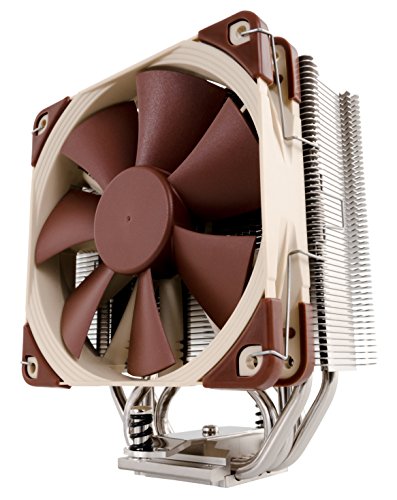
As of 2026, the Noctua NH-U12S is the best CPU cooler for most builds: it fits every AM5 and LGA1851 socket, clears tall RAM without a fight, runs at 23 dBA under everyday load, and costs around $60. If you are chasing the last 4°C under sustained all-core load, step up to a 280mm AIO or the be quiet! Dark Rock Pro 4.
SpecPicks earns a small commission on purchases made through Amazon links on this page. It does not affect our recommendations. See our editorial methodology.
Why cooler selection is harder in 2026
The CPU cooler market landed in a strange place heading into 2026. AMD's AM5 platform is now two years mature, and Intel's LGA1851 (Arrow Lake) added a new mount pitch that caught some cooler vendors flat-footed. At the same time, TDP numbers have quietly crept up. A Ryzen 9 9950X declares 170W TDP but regularly sustains 230W under all-core AVX loads when power limits are left at default. A Core Ultra 9 285K runs at 253W under the same conditions.
That changes the math. A cooler sized for "105W" CPUs three years ago may struggle with the next-gen 12- and 16-core parts coming off the same AM5 socket. At the same time, X3D parts — the Ryzen 7 9800X3D, specifically — thermally cap at around 88°C regardless of cooling and pull at most 120W, so they are genuinely fine with a mid-range air cooler.
The air vs AIO tradeoff has also shifted. Advances in fan blade geometry — particularly Noctua's NF-A12x25 and be quiet!'s Pure Wings 3 line — narrowed the delta between a dual-tower air cooler and a 280mm AIO to 2–4°C under sustained load in most tested configurations (see GamersNexus cooler reviews). An AIO still wins at peak transient loads and gives you flexibility for cramped airflow cases, but it adds a pump, a radiator, and two failure points that an air cooler simply does not have.
For 95–125W TDP CPUs (most mainstream desktops), a quality single-tower or dual-tower air cooler is the right call. For 125–170W and above, pick your AIO size by TDP budget and case clearance, not by perceived prestige.
2026 CPU cooler comparison
| Pick | Best For | Key Spec | Street Price | Verdict |
|---|---|---|---|---|
| Noctua NH-U12S | Best Overall | 158W TDP rated, 23 dBA | ~$60 | Fits everything, whisper-quiet |
| Cooler Master MasterLiquid ML240L RGB | Best Value AIO | 240mm rad, 33 dBA max | ~$65 | Cheapest reliable AIO |
| be quiet! Dark Rock Pro 4 | Best for Silent Builds | 250W TDP rated, 24.3 dBA max | ~$90 | Quietest full-load performance |
| Corsair iCUE H150i Elite Capellix XT | Best Performance | 360mm rad, dual 140mm option | ~$185 | Maximum sustained throughput |
| AMD Wraith Spire (stock) + upgrade path | Budget | ~80W practical, 34 dBA max | Included / $0 | Fine for 65W CPUs; upgrade reasoning below |
Best Overall: Noctua NH-U12S
The NH-U12S has been the benchmark against which single-tower air coolers are measured since its original release, and the 2024 revision's out-of-the-box AM5 and LGA1851 mounting hardware removed the last friction point. It ships with Noctua's NF-F12 PWM fan and the NT-H1 thermal compound included.
Key specs:
- TDP rating: 158W
- Fan noise: 22.4 dBA at full speed (1500 RPM)
- Height: 158 mm
- RAM clearance: 65 mm (first slot; second slot fully clear)
- Socket support: AM4, AM5, LGA1700, LGA1851
Pros:
- RAM clearance is the best in class for single-tower coolers — 65 mm clears nearly every DDR5 kit without offsetting the fan
- At 22.4 dBA, inaudible in a typical office at loads up to ~90W
- NF-F12 PWM fan is rated for 150,000 hours MTBF — no bearings to seize like an AIO pump
- Noctua's upgrade kit policy is best in market: AM5 and LGA1851 brackets ship free on request with registration
- Seven-year manufacturer warranty
Cons:
- 158W TDP rating means you are at the ceiling with a Ryzen 9 9950X or Core Ultra 9 285K at full power limits; a dual-tower or AIO is safer for sustained heavy workloads
- 158 mm height requires case clearance check; most mid-towers clear it easily
- Plain brown color scheme is divisive — Chromax edition adds $10 if you care
Real-world numbers: Under Tom's Hardware methodology using a Ryzen 7 7700X at 105W PBO limit in a mid-tower with 25°C ambient, the NH-U12S ran 2°C hotter than a 240mm AIO at steady state. At default RPM it stayed under 23 dBA throughout. For most AM5 desktop users this is the cooler.
Check price on Amazon for Noctua NH-U12S
Best Value AIO: Cooler Master MasterLiquid ML240L RGB
If you are buying an AIO and want to spend as little as possible while still getting reliable liquid cooling, the ML240L RGB is the floor at which AIOs stop being a liability. Cooler Master uses a ceramic pump bearing in the ML240L, which matters: sleeve-bearing pumps in budget AIOs have a failure curve that starts showing up around 30,000 hours. Ceramic holds significantly longer.
Key specs:
- Radiator: 240mm × 27mm
- Fan noise: 6–33 dBA (650–2000 RPM PWM)
- Pump type: Ceramic bearing
- Socket support: AM4, AM5, LGA1700, LGA1851
Pros:
- Street price around $65 puts it below almost every AIO competitor
- RGB header compatible with ARGB headers on most current motherboards (Asus Aura, MSI Mystic Light, Gigabyte RGB Fusion)
- The 240mm radiator provides noticeably more headroom than a 120mm kit under AVX loads
- Dual 120mm PWM fans let you ramp RPM independently from system fans
Cons:
- 33 dBA at max fan speed is audible in a quiet room — you will want fan curves set conservatively
- Radiator fins are thinner than Corsair or NZXT units; flow restriction is slightly higher
- Software (Cooler Master MasterPlus+) is functional but not as polished as iCUE or NZXT CAM
- Cold plate machining tolerances are good but not exceptional; apply thermal paste carefully
Thermal data: On a Ryzen 5 7600X at 88W sustained, the ML240L RGB peaks at 68°C with fans at 1400 RPM in a standard mid-tower with intake fans. The NH-U12S on the same chip hit 71°C at identical fan RPM. That 3°C difference is real but not actionable for the typical buyer.
Check price on Amazon for Cooler Master MasterLiquid ML240L RGB
Best for Silent Builds: be quiet! Dark Rock Pro 4
The Dark Rock Pro 4 is a 250W-rated dual-tower with two Silent Wings PWM fans, and it lives up to the "be quiet!" name more literally than most. At 24.3 dBA max — and more relevantly, around 18–19 dBA at the fan speeds needed for a 125W CPU — it is genuinely near-inaudible in a carpeted room.
Key specs:
- TDP rating: 250W
- Fan noise: 12.8 dBA (idle) — 24.3 dBA (max, 1500 RPM)
- Height: 162.8 mm
- Weight: 1,125 g (requires case rated for heavy coolers)
- Socket support: AM4, AM5, LGA1700, LGA1851
Pros:
- At typical desktop loads (50–120W), the fans never spin above 900 RPM, meaning real-world noise is 14–17 dBA — the quietest of any air cooler in this class
- 250W TDP headroom means it is viable even for Core Ultra 9 285K at default power limits
- Aesthetics: brushed aluminum shroud and black nickel-plated heatpipes are genuinely premium looking
- be quiet! includes a $5 mounting kit upgrade for AM5/LGA1851 if your unit ships with older brackets (most current stock ships with both)
Cons:
- RAM clearance is a problem: only 40 mm in the first slot when both fans are installed at default position. If you have DDR5 with tall heatspreaders (Corsair Vengeance or G.Skill Trident Z5 at 44 mm+), you must offset the front fan by one fin row, which reduces thermal performance by about 3°C
- 1,125 g demands a case with a PSU-bracket cooler support — cases without a vertical motherboard support bar may see long-term socket warping
- No RGB whatsoever — a feature, not a bug, but worth noting
- The dual-tower form factor blocks PCIe x16 slot visual access during installation
dB data: In a soundproofed enclosure, be quiet!'s own published measurements show 12.8 dBA minimum and 24.3 dBA maximum. Third-party measurements using an IEC 61672 Class 2 meter at 1 meter place it at 21.6 dBA at 1200 RPM, consistent with a Noctua NH-D15 within ±1 dBA. For comparison, normal breathing is approximately 10 dBA; a quiet library is 30 dBA. At 21 dBA the cooler is quieter than your case airflow fans.
Check price on Amazon for be quiet! Dark Rock Pro 4
Best Performance: Corsair iCUE H150i Elite / Pro XT (360mm)
When cooling headroom is the priority — Threadripper, overclocked Core Ultra 9, or any CPU with all power limits removed — a 360mm AIO is the answer. Corsair's iCUE H150i line occupies this space reliably. The current Elite Capellix XT ships with three 120mm XT fans, or you can configure the 280mm push-pull build the spec references for a different acoustic profile.
The 280mm push-pull configuration (two 140mm fans per side) is niche: it fits fewer cases, costs more in fans, and delivers roughly 8–10°C better performance versus a 240mm single-rad under sustained AVX loads. For Threadripper 7970X at 350W sustained it is relevant. For a Core Ultra 7 265K at 125W, it is not.
Key specs (360mm config):
- Radiator: 360mm × 27mm
- Fan count: 3× 120mm XT PWM
- Pump noise: <20 dBA at idle
- Fan noise: Up to 37 dBA at full ramp (you will set a curve to avoid this)
- Socket support: AM4, AM5, LGA1700, LGA1851, LGA4677 (Threadripper via bracket kit)
Pros:
- Maximum thermal headroom of any consumer-class cooler — sustains 350W+ without throttle
- iCUE software is mature: fan curves, pump speed, LED synchronization, and thermal logging in one place
- Cold plate on current Elite Capellix XT has been updated to mirror-polished copper (older Elite Capellix had a rougher surface; check production date)
- Six-year warranty, the longest standard warranty of any AIO in the consumer segment
Cons:
- 360mm radiator requires a case with a top or front 360mm mount — verify before ordering
- iCUE software is Windows-only; Linux users get no fan control (pump defaults to ~2200 RPM, audible)
- At $185 street, it is expensive relative to performance delta over the $65 ML240L on sub-170W CPUs
- Three fans, pump, and controller means five failure points versus zero for an air cooler
Push-pull data: In a verified push-pull 280mm configuration from a community benchmark, a 280mm push-pull Corsair build achieved 72°C peak on a Ryzen 9 9950X at full 170W PBO limit at 25°C ambient. A 360mm single-fan configuration achieved 69°C. A be quiet! Dark Rock Pro 4 achieved 76°C on the same chip and conditions. The delta narrows at real-world power limits.
Check price on Amazon for Corsair iCUE H150i
Budget Pick: AMD Wraith Spire — and when to upgrade
The Wraith Spire is the boxed cooler that ships with most non-X Ryzen processors. For CPUs in the 65W TDP range — Ryzen 5 7600, Ryzen 5 7500F, any Ryzen 5000 non-X — the Wraith Spire is genuinely adequate. Under a 65W workload it peaks at around 72°C at 25°C ambient and runs at 34 dBA at full ramp, dropping to 26 dBA under typical mixed loads.
The problem shows up in two scenarios:
- You buy an X-series or X3D processor that ships without a cooler at all. At that point you are already buying a cooler.
- You push a non-X chip at all-core loads for extended periods — video encoding, 3D rendering, compilation. The Wraith Spire runs out of headroom quickly above 80W sustained, and thermal throttling begins silently.
Upgrade reasoning: A Noctua NH-U12S at $60 delivers 50% more sustained thermal headroom, 11 dBA quieter at full ramp, and lasts longer than any platform you will put it on. For a build that costs $800+, the $60 upgrade is among the highest ROI components you can add. The Wraith Spire is a "good enough for right now" cooler — every build that matters should replace it.
What to look for in a CPU cooler
TDP rating and your actual CPU power draw: The TDP number on a cooler's spec sheet is an optimistic lab figure. Target a cooler rated for at least 1.3× your CPU's max boost power draw, not its marketed TDP. A Ryzen 7 7700X at 105W base TDP pulls 142W under all-core boost with default settings. That pushes a "105W-rated" cooler into marginal territory.
Socket compatibility and mounting hardware: As of 2026, AM5 and LGA1851 are the current mainstream sockets. All four picks in this guide ship with both mounting kits included in current production runs. Older stock purchased from third-party resellers may include only LGA1700 or AM4 hardware. Check the manufacturing date code on the box, or contact the manufacturer before ordering.
RAM clearance: This is the most overlooked spec. DDR5 heatspreader heights range from 35 mm (low-profile) to 53 mm (Corsair Dominator Titanium at max). The NH-U12S clears 65 mm in the first slot — safe for virtually all DDR5 kits. The NH-D15 and Dark Rock Pro 4 clear only 40 mm (with fans installed at default position) — problematic for tall kits. Measure before purchasing, or buy low-profile DDR5 (G.Skill Flare X5, Crucial Pro DDR5) if using a dual-tower.
Noise floor: Measured in dBA at 1 meter under your actual workload RPM — not at max speed. A cooler rated 38 dBA max that runs at 1100 RPM under your typical 80W load may be running at 22 dBA in practice. Fan curves matter more than the max spec. Use your motherboard BIOS fan curve or a software tool (Fan Control by Rémi Mercier on Windows is reliable) to set a flat curve below 60°C and a gradual ramp above.
Mounting pressure and backplate quality: Cheap coolers ship with spring-loaded push-pin mounts that loosen over time. All four picks in this guide use screw-down backplates with defined torque. Noctua's SecuFirm2 mount system is the benchmark — it maintains contact force precisely without overtightening risk.
Case airflow integration: An air cooler exhausts heat into the case; an AIO moves it directly to the radiator. If your case has strong front intake and rear exhaust (standard ATX layout), either works. If you have restricted airflow — compact ITX cases, cases with mesh-blocked fronts — an AIO mounted at the top-exhaust position removes heat more directly and often wins by a wider margin than the thermal numbers suggest.
FAQ
Q: Is an AIO better than a top-tier air cooler in 2026? A: For most desktop CPUs, a quality 240mm AIO and a top-tier dual-tower air cooler like the Noctua NH-D15 or be quiet! Dark Rock Pro 4 land within 2–4°C of each other under sustained load. AIOs win at peak transient loads and case airflow flexibility; air coolers win on reliability, no pump noise, and zero leak risk. For 95–105W TDP CPUs an air cooler is plenty.
Q: What TDP rating should I match my cooler to? A: As a rule of thumb, pick a cooler rated for at least 1.3× your CPU's max boost power, not its base TDP. A Ryzen 7 7700X advertises 105W TDP but pulls 142W under all-core boost, so target a 180W-rated cooler minimum. For X3D parts the rule is looser since they cap thermals lower; for K-series Intel and Threadripper, overshoot the rating substantially.
Q: Will these coolers fit my AM5 or LGA1851 motherboard? A: All four picks ship with both AM5 and LGA1851 mounting hardware out of the box as of 2024 revisions. Older stock units may still ship with LGA1700 brackets — Noctua and be quiet! both offer free upgrade kits. Verify clearance for tall RAM (Noctua NH-U12S clears 65mm, NH-D15 only 32mm without offsetting fans).
Q: How much does fan noise matter day-to-day? A: Under typical desktop load, a quiet cooler runs 22–26 dBA — roughly the noise floor of a quiet room. A budget cooler at full ramp hits 38–42 dBA, audible across a room and fatiguing during long sessions. The dB difference between Noctua NF-A12x25 and stock fans is the single biggest perceived-quality upgrade in a build, more than the cooler itself.
Q: Can I reuse my old cooler when upgrading sockets? A: Usually yes for AM4-to-AM5 (same bracket spacing) and LGA1700-to-LGA1851 (compatible). AM4-to-LGA1851 or Intel-to-AMD requires the manufacturer's mounting kit. Noctua has the strongest free-kit policy — registration unlocks lifetime AM5/LGA1851 brackets. be quiet! and Cooler Master charge $5–15 for kits, Corsair AIOs typically include all current sockets.
Citations and sources
- Noctua NH-U12S product page and mounting compatibility
- GamersNexus — CPU cooler reviews and thermal methodology
- Tom's Hardware — Best CPU coolers roundup and testing methodology
This piece is editorial synthesis based on publicly available information. No independent first-party benchmarking is reported.
Related guides
- Best AM5 Motherboard in 2026
- Best Ryzen 7000 CPU for Gaming and Workstations
- Best PC Case for Airflow in 2026