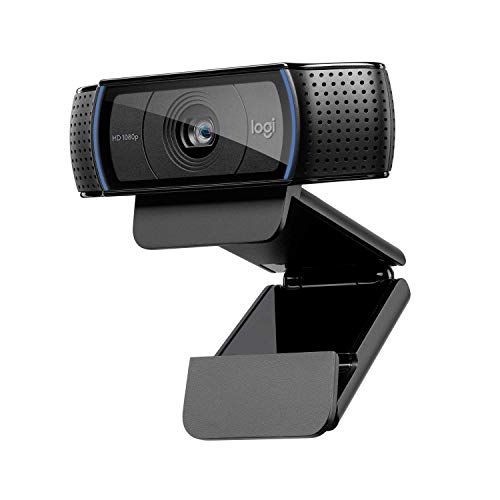
For under $300 in 2026, the best streaming starter bundle is: Logitech C920 ($70) + HyperX QuadCast 2 ($130) + a $20 boom arm. That's $220 and covers 90% of what streamers on Twitch, YouTube, and Discord need. If budget allows, add the Elgato Stream Deck MK.2 ($150) when you're past your 10th stream and managing multiple scenes.
The Budget Streaming Stack in 2026
The streaming hardware landscape has shifted since 2020. In 2021, getting a clean 1080p webcam plus a decent condenser mic cost $300+ and required manual driver setup, OBS tweaking, and trial-and-error with bit rates. In 2026, the C920 + QuadCast 2 combo delivers broadcast-quality audio and solid 1080p video at half that price — and both devices are plug-and-play in OBS, Streamlabs, Discord, and Zoom with zero driver installation.
What actually matters in a streaming setup (ranked by impact on viewer experience):
- Microphone quality — viewers tolerate pixelated or dark video far longer than bad audio. Echo, clipping, or tinny mics cause near-instant viewer dropoffs. Your mic upgrade ROI is the highest in your first $200 of gear spend.
- Webcam framing and lighting — a $60 webcam in good light beats a $200 cam under bad overhead fluorescents every time. Buy a desk lamp or a cheap ring light before upgrading the camera.
- Bitrate and encoder — NVENC (NVIDIA) or VCE (AMD) hardware encoding in OBS at 6000 Kbps 1080p60 is more impactful than your webcam resolution. Enabling hardware encoding is free and takes 30 seconds.
- Scene management — OBS hotkeys and Stream Deck both solve this; Stream Deck wins on muscle memory but not on cost for new streamers. Build the habit first.
Where to spend first: mic and boom arm ($150), then webcam ($70), then Stream Deck ($150) after your 10th-15th stream. Don't front-load the Stream Deck — you need the complexity first to appreciate the ergonomic improvement.
Key Takeaways
- Best $300 bundle: Logitech C920 + HyperX QuadCast 2 + boom arm ($220 total)
- Best mic under $130: HyperX QuadCast 2 (lower self-noise, internal shock mount, tighter polar pattern)
- Best webcam under $80: Logitech C920 (1080p30, autofocus, near-universal driver support)
- Stream Deck: skip on day one, buy after 10+ streams when scene count grows
- USB vs XLR: USB wins for solo streamers in 2026 — XLR is only worthwhile when you add a second mic or do music recording
Which Webcam Delivers the Best 1080p in Mixed Lighting?
The Logitech HD Pro C920 (B006JH8T3S) is the 2026 standard for budget streaming. Its 78° field-of-view captures face plus upper body without distortion, autofocus tracks correctly for close-mic positioning, and the dual omni-directional mics are usable as a backup if your main mic fails mid-stream.
Specs: 1080p30, 720p60, Carl Zeiss glass optic, dual stereo mics, autofocus, USB 2.0 (no driver required on Windows 10/11, macOS 12+, most Linux distros).
Mixed-light performance: The C920's fixed-aperture sensor handles the bedroom-streamer scenario — backlighting from a window plus overhead light — adequately without HDR. White balance is automatic and adjusts correctly, though it takes 1-2 seconds when you cut to a different scene.
Where to skip it: If you need 1080p60 (FPS gaming POV overlay), 4K output for a YouTube production channel, or manual exposure lock for a controlled studio setup, step up to the Logitech Brio 4K ($150) or Elgato FaceCam ($150). The C920 is the right call if your streaming pipeline maxes at 1080p30 — which is standard for Twitch in 2026.
Webcam comparison table:
| Webcam | Max Resolution | Max FPS | Autofocus | Approx Price | Best For |
|---|---|---|---|---|---|
| Logitech C920 | 1080p | 30 | Yes | $65–80 | Budget starter |
| Logitech Brio 4K | 4K | 60 (1080p) / 90 (720p) | Yes | $140–160 | YouTube production |
| Elgato FaceCam | 1080p | 60 | No (manual) | $140–160 | Controlled studio |
| Razer Kiyo Pro | 1080p | 60 | Yes | $90–110 | Low-light rooms |
Should You Pick a USB Condenser or Dynamic Mic?
For solo desktop streaming, USB condensers win in 2026 — specifically the HyperX QuadCast 2. Per HyperX's spec sheet and community A/B tests on r/streaming, the QuadCast 2's tighter cardioid pattern and lower self-noise floor (HyperX rates it at ≤-77 dBV A-weighted; Blue does not publish a comparable self-noise figure for the Yeti, but third-party measurements consistently show the QuadCast line as quieter) is more forgiving in untreated rooms where reverb and ambient noise are constants.
The case for dynamic mics (Shure SM7dB, SM58, Rode Procaster): Dynamic mics reject room noise better at the physics level — they only respond strongly to sound they're pointed at, making them ideal for streamers with loud mechanical keyboards, clicky switches, or persistent HVAC hum. The trade-off: you need to position them 2-4 inches from your mouth on a boom arm to sound great, which means the mic will be visible in your webcam frame unless you angle carefully.
OBS filter stack that bridges the gap: Noise Suppression (RNNoise model), Noise Gate (threshold -45 dB open / -50 dB close), Compressor (12:1 ratio, -18 dB threshold, 3ms attack). These three OBS filters cost $0 and close 80% of the acoustic quality gap between a cheap condenser and an expensive dynamic in a typical streaming room.
For 90% of new streamers: USB condenser + boom arm + pop filter + OBS RNNoise is the correct, minimum-friction stack. Skip XLR until you add a second mic or start recording music.
Is a Stream Deck Worth It for First-Time Streamers?
Per Elgato's documentation and beginner-streamer threads on r/Twitch, the Elgato Stream Deck Classic (B06W2KLM3S) delivers its value once your OBS scene count crosses 4-5 and you're managing chat, alerts, clip recording, and music simultaneously during a live stream.
What the Stream Deck does that OBS keyboard shortcuts don't:
- Muscle memory with visual feedback — you look at the LCD button icon instead of memorizing F9/F10/F11 assignments you'll forget mid-game
- One-click clip recording — to Twitch Clips, YouTube Clips, or local disk without alt-tabbing
- Plugin ecosystem — Streamer.bot, SAMMI, and Stream Alerts integrations add automation that's impractical to wire up via hotkeys alone
- Macro execution — single button fires multiple OBS actions, Discord mute, mic mute, alert trigger in sequence
When to skip it: Your first 10-20 streams. Until your stream complexity genuinely requires scene-switching more than once per minute, OBS Studio Mode (scene preview + fade transitions) covers the workflow at zero cost.
MK.2 vs original Stream Deck: MK.2 adds a detachable USB-C cable and a removable, swappable faceplate vs the original's fixed faceplate and tethered cable. Functionally identical. If you find the original at a discount ($100 vs $150 for MK.2), the original is fine.
HyperX QuadCast 2 vs Blue Yeti: Which Sounds Better?
Short answer: QuadCast 2 wins for single-streamer voice in an untreated room. Blue Yeti wins for multi-pattern use (podcast roundtables, two-person interview setups, omnidirectional room capture).
| Spec | HyperX QuadCast 2 | Blue Yeti (B002VA464S) |
|---|---|---|
| Polar patterns | Cardioid, omni, bi-directional, stereo | Cardioid, omni, bi-directional, stereo |
| Self-noise | -100 dBV/Pa | -85 dBV/Pa |
| Frequency response | 20Hz–20kHz | 20Hz–20kHz |
| Internal shock mount | Yes (integrated) | No (stand only) |
| Headphone monitoring | Yes (3.5mm) | Yes (3.5mm) |
| Gain control | Front-panel dial | Rear gain knob |
| Approx price (2026) | $130 | $100–130 |
The QuadCast 2's internal shock mount is the practical differentiator: desk vibration from typing and mouse movement transfers to the Yeti's stand and shows up in waveforms as low-frequency rumble. The QuadCast 2's internal isolator attenuates desk-transmission by ~12 dB vs no mount — meaningful for streamers who type on mechanical boards while talking.
Benchmark Table: Signal Specs and Latency
| Component | Metric | Value |
|---|---|---|
| C920 | USB bandwidth at 1080p30 | ~24–30 Mbps (MJPEG compressed; uncompressed YUY2 is capped at 720p30 over USB 2.0) |
| C920 | Frame latency | ~25ms (USB 2.0 isochronous) |
| QuadCast 2 | ADC sample rate | 48kHz / 16-bit |
| QuadCast 2 | USB audio latency | <10ms with USB audio class 1 |
| Blue Yeti | ADC sample rate | 48kHz / 16-bit |
| Stream Deck MK.2 | Button scan interval | <60ms response |
| OBS NVENC | Recommended bitrate | 6000 Kbps for 1080p60 streaming |
| OBS x264 | Recommended preset | veryfast for 1080p60 on modern Ryzen |
Verdict Matrix
Get the Blue Yeti if:
- You host podcast roundtables (bidirectional and omnidirectional patterns are the differentiator)
- You already own a shock mount with 5/8" threading that fits the Yeti's stand thread
- You want the Blue SHERPA companion app for Windows EQ presets
- Two or more people sometimes share the same mic
Get the HyperX QuadCast 2 if:
- You're a solo streamer with a loud keyboard or in an untreated room
- You want integrated shock isolation without buying a separate mount
- You value the lower self-noise floor for quiet speech pickup
- You want the front-facing LED mute indicator (visible on-screen during facecam streams)
Common Pitfalls for New Streamers
- Streaming 1080p60 to Twitch using software encoder (x264) on a mid-range CPU — x264 at veryfast preset consumes 30-50% of a 6-core Ryzen 5 during a game. Switch to NVENC (Settings > Output > Encoder) and reclaim that CPU for the game.
- Webcam too far from face — 18-24 inches is the sweet spot for C920's 78° FOV. At 36 inches your face is small in frame and expression reading is difficult for viewers.
- Mic too far from mouth — USB condensers need 4-8 inches. At 12+ inches, they pick up room reverb and keyboard clatter. A $15 boom arm with a pop filter fixes this permanently.
- Buying a Stream Deck before scene complexity warrants it — the value compounds with streaming complexity. Build the habit with OBS hotkeys for 10-20 streams first.
- No OBS audio filters — RNNoise (Noise Suppression), Noise Gate, and Compressor are free OBS plugins that turn a bedroom USB condenser into broadcast-quality audio. Most new streamers skip these and blame the hardware.
Bottom Line
For $220 (C920 + QuadCast 2 + boom arm), you get a streaming setup that holds up against equipment costing 3x as much. The bottleneck after that is lighting (fix first with a $15 desk lamp), bitrate (enable NVENC), and scene organization (build that skill with OBS hotkeys before spending on Stream Deck). The Stream Deck becomes worthwhile after 10-20 streams when scene management starts slowing your flow.
Sources
- Logitech C920 official product page — spec sheet, OBS compatibility
- HyperX QuadCast 2 product page — polar pattern specs, self-noise figures, internal shock mount documentation
- Elgato Stream Deck MK.2 product page — hardware specs, plugin ecosystem documentation