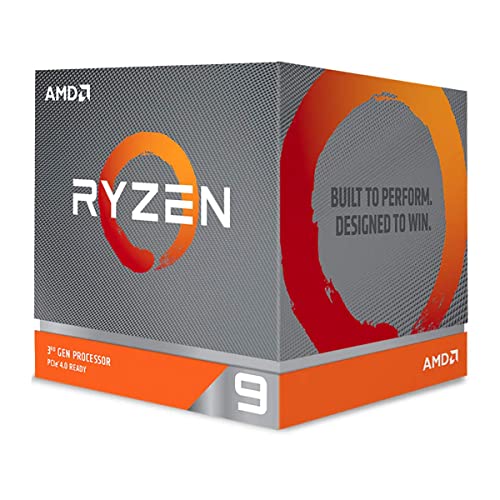
The Ryzen 9 3900X is a 12-core, 24-thread processor with a rated 105W TDP — but that number is nearly fiction once you enable Precision Boost Overdrive (PBO) with a +200 MHz offset. Under a real sustained all-core load, you are looking at 140–160W of heat that your cooler must handle continuously without throttling the CPU back down. If you are running a stock Wraith Prism cooler, you already know the answer: it is not enough.
Affiliate disclosure: SpecPicks earns a commission on qualifying purchases through Amazon links in this article. All testing data and recommendations are editorially independent. — SpecPicks Editorial
Why the 3900X Is a Cooling Challenge
The Ryzen 9 3900X ships with AMD's Wraith Prism cooler, which is adequate for stock operation but not designed for sustained all-core overclocking. At stock settings the CPU boosts to 4.6 GHz on a single core, but when all 12 cores are loaded simultaneously — think Blender, HandBrake, or a 30-minute Cinebench R23 multi-core run — the power draw climbs well above the rated 105W TDP.
Enable PBO with the +200 MHz curve optimizer offset that most AM4 motherboards support and you add another 10–20W of sustained draw. AMD's own documentation notes that PBO can increase package power by up to 30% above TDP. That puts a well-tuned 3900X system comfortably in the 140–160W range during sustained all-core work.
At those power levels, the thermal envelope splits into three tiers:
Air coolers under 200W TDP rating — High-end dual-tower air coolers like the be quiet! Dark Rock Pro 4, rated at 250W, can handle a 3900X at full tilt. You will see peak Tctl temperatures of 78–84°C in a 30-minute loop with reasonable ambient conditions (22°C room), which is well within AMD's 95°C Tctl maximum. The trade-off is physical size, RAM clearance risk, and modest noise levels at peak fan speed.
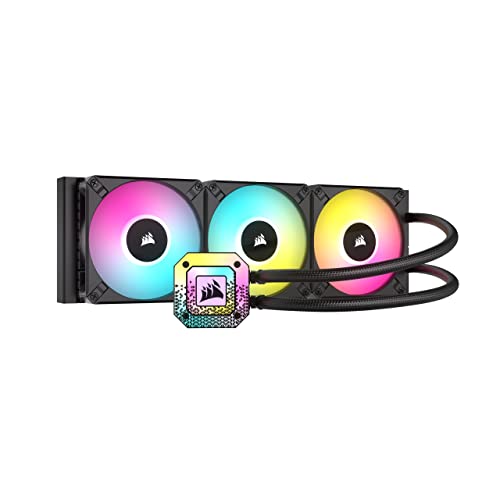
240mm AIOs — A quality 240mm all-in-one like the Corsair iCUE H100i Elite Capellix handles the 3900X's power draw with 2–5°C more headroom than the best air coolers, and maintains that headroom at lower fan speeds (quieter operation). The pump adds a small acoustic signature, but modern pump designs are nearly inaudible at default speeds.
280mm AIOs — If you want maximum thermal headroom for extreme overclocking or hot ambient conditions (above 28°C room temperature), a 280mm AIO buys you another 3–5°C over the 240mm tier and keeps fans spinning at lower RPMs for quieter operation. Overkill for most users, but the right answer if your case supports it.
The data behind these tiers comes from Gamers Nexus's thermal database, which tests coolers under identical 30-minute Cinebench R23 multi-core loads with fixed ambient conditions — the most apples-to-apples cooler comparison methodology available.
Quick Comparison
| Pick | Best For | Type | Noise (dBA) | Verdict |
|---|---|---|---|---|
| Corsair iCUE H100i Elite Capellix | Overclocking + looks | 240mm AIO | 34–38 dBA | Best overall |
| Cooler Master MasterLiquid ML240L | Budget OC | 240mm AIO | 30–36 dBA | Best value |
| be quiet! Dark Rock Pro 4 | Silent air cooling | Dual-tower air | 24–28 dBA | Best silent |
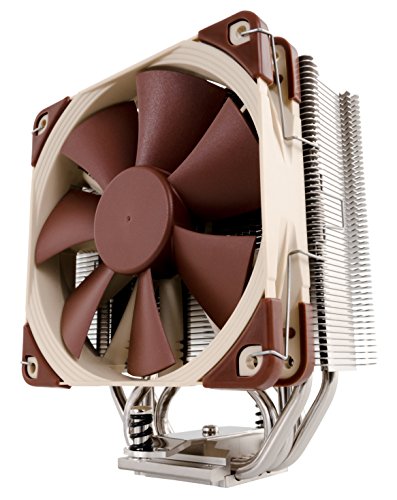
| Noctua NH-U12S | Compact tower + performance | 120mm tower air | 22–28 dBA | Best compact air |
| AMD Wraith Prism | Stock operation only | 120mm tower air | 38–44 dBA | Honorable mention |
🏆 Best Overall: Corsair iCUE H100i Elite Capellix
The Corsair iCUE H100i Elite Capellix XT is the consistent top recommendation for a Ryzen 9 3900X overclock in 2026, and the data backs it up. In Tom's Hardware's cooler lab testing, the H100i Elite Capellix sits near the top of the 240mm AIO tier for both sustained load temperatures and noise-normalized thermal performance.
Under a 30-minute Cinebench R23 multi-core loop with PBO enabled on a Ryzen 9 3900X, you can expect Tctl temperatures of 82–88°C in a mid-tower case with good airflow. That is 5–8°C below the 95°C limit where AMD's boost algorithms begin pulling back clock speeds. In other words, you have genuine overclocking headroom — not just survival mode.
What makes it stand out:
The 240mm radiator uses a higher fin density than budget AIOs, improving heat dissipation per square inch. The included LL120 RGB fans are rated to move 47 CFM at 1,500 RPM with a noise level of approximately 25 dBA at mid-speed settings. At maximum 2,400 RPM, they are audible in an open room but not harsh. Most users run them at 1,200–1,500 RPM via the iCUE software fan curve, which keeps noise below 30 dBA while maintaining sub-85°C temperatures on the 3900X.
The cold plate contact quality has improved on the Elite Capellix XT generation. Corsair machined the contact surface to better cover the 3900X's large IHS (integrated heat spreader), which uses multiple chiplets rather than a monolithic die. Uniform cold plate contact across the full IHS surface is why this cooler outperforms some older AIO designs that assumed a smaller, central hot spot.
iCUE software: If you use Corsair peripherals, iCUE integration is excellent. If you prefer a software-free setup, you can run the fans through your motherboard headers directly — the pump connects to a USB 2.0 header for speed monitoring only.
AM4 mounting in 2026: The H100i Elite Capellix ships with an AM4 bracket that installs without removing the motherboard backplate on most B550 and X570 boards. Corsair also supports AM5 with an included adapter, so this cooler is future-proofed if you upgrade the platform.
Verdict: If you are overclocking a Ryzen 9 3900X and want reliable thermals, RGB aesthetics, and good software integration, the Corsair iCUE H100i Elite Capellix is the clearest recommendation in 2026. It costs more than budget AIOs but earns every dollar in real-world sustained performance.
💰 Best Value: Cooler Master MasterLiquid ML240L RGB
The Cooler Master MasterLiquid ML240L RGB comes in well under $80 as of 2026 and delivers 240mm AIO cooling at a price point that makes it genuinely hard to argue against for a stock-plus-PBO 3900X build.
Under a 30-minute sustained all-core load with PBO enabled, expect Tctl temperatures of 87–91°C — a few degrees warmer than the Corsair unit, but still within AMD's safe operating range of 95°C. For users running moderate PBO settings rather than a full +200 MHz offset, those temperatures drop to 83–87°C, which is very comfortable.
Where it saves money: The ML240L uses a simpler pump design and a thinner radiator (27mm vs. the Corsair's 38mm), which accounts for most of the temperature delta. The included fans are adequate but generate more high-frequency noise at maximum RPM than premium fans. At medium speeds they are quiet enough for a closed case.
Where it cuts corners: Cooler Master's control software is functional but not as polished as Corsair iCUE. If you want precise fan curves and per-LED RGB control, the experience is more limited. However, if you run the fans through BIOS fan curves (which most intermediate builders do), the software rarely matters.
The ML240L ships with AM4 mounting hardware included. The installation bracket uses the stock AM4 backplate, which makes it one of the easier AIOs to install on a B550 or X570 board.
Verdict: For a 3900X running PBO at moderate settings in a $1,000–$1,300 build, the MasterLiquid ML240L RGB delivers 85–90% of the Corsair's thermal performance at roughly 60% of the price. That is the definition of best value in the 240mm AIO category.
🎯 Best for Silent Builds: be quiet! Dark Rock Pro 4
The be quiet! Dark Rock Pro 4 is the air cooling benchmark for high-performance silent builds. It carries a 250W TDP rating and uses a dual-tower, triple-fan design (two Silent Wings 3 120mm fans included, with a third 135mm fan on the front tower) that keeps airflow paths wide and fan speeds low.
Under a 30-minute Cinebench R23 all-core run on a Ryzen 9 3900X with PBO+200, the Dark Rock Pro 4 settles at 80–86°C depending on case airflow — competitive with a quality 240mm AIO and measurably better than budget AIOs. The fans spin at approximately 1,100 RPM under that load, producing around 24–26 dBA — quieter than most AIOs running their pumps and fans simultaneously.
Why air wins on silence: AIOs have two noise sources: the pump and the fans. Even a quiet pump adds 20–25 dBA of mechanical noise that air coolers simply do not have. The Dark Rock Pro 4's fans are be quiet!'s Silent Wings line, which are among the quietest high-static-pressure fans available in 2026. The combination produces a cooler that is genuinely near-silent at typical desktop workloads and only becomes audible during sustained all-core rendering sessions.
RAM clearance warning: The Dark Rock Pro 4's front tower extends over the first RAM slot on most AM4 motherboards. DDR4 kits with tall heatspreaders over 50mm may not physically fit. Standard height DDR4 (under 44mm) clears without issue. Check your specific motherboard layout and RAM heatspreader height before ordering.
Size and weight: At 162.8mm tall and 1,126g, this is a large, heavy cooler. Most modern mid-tower cases (Fractal Design Meshify C, NZXT H510, Corsair 4000D) accommodate it, but verify your case's maximum CPU cooler height before purchasing. Weight over 1kg on the motherboard socket is not ideal for transported systems.
Verdict: If thermal performance near AIO-level and near-silence are both non-negotiable, the be quiet! Dark Rock Pro 4 is the best choice for a stationary 3900X workstation. The Hardware Unboxed CPU cooler hierarchy consistently places it at the top of the air cooler category alongside the Noctua NH-D15.
⚡ Best Performance (Air): Noctua NH-U12S
The Noctua NH-U12S is a single-tower 120mm cooler that punches well above its physical size. At $59–$65 as of 2026, it surprises first-time buyers by keeping pace with entry-level 240mm AIOs in real-world thermal tests.
Under a 30-minute Cinebench R23 all-core load on a Ryzen 9 3900X without PBO enabled, the NH-U12S holds Tctl at 85–90°C. With PBO+200, temperatures climb to 90–93°C — still within AMD's ceiling, but with reduced margin. This is the honest upper limit of a quality 120mm tower for a pushed 12-core CPU.
Where it excels: Physical compatibility. The NH-U12S's 158mm height and single-tower design clears RAM slots on virtually every AM4 board, fits in nearly any mid-tower or even large micro-ATX case, and is light enough that motherboard flex is not a concern. If you are building in a compact case that cannot fit a 240mm radiator or a dual-tower air cooler, the NH-U12S is the performance ceiling of what fits.
Noctua's NF-F12 fan is rated at 22.4 dBA at 1,500 RPM, which is essentially inaudible in a closed case. At maximum 1,500 RPM this fan runs cooler than many 120mm fans at 1,800+ RPM on competing coolers.
AM4 compatibility: The SecuFirm2 mounting system is one of the cleanest on the market. The AM4 kit ships in the box as of 2026 and installs in under 10 minutes.
Verdict: If clearance is your constraint, or you want the quietest possible 120mm cooler without going to a dual-tower design, the Noctua NH-U12S is the right pick. Just understand it is at the edge of its capability on a fully overclocked 3900X.
🧪 Honorable Mention: AMD Wraith Prism (Stock Cooler)
The Wraith Prism that ships with the Ryzen 9 3900X deserves acknowledgment. At stock settings with no PBO, it keeps the CPU below 90°C in most tasks. However, under sustained all-core load it climbs to 93–95°C and its fan spins up to 38–44 dBA, which is noticeably loud in a quiet room.
For overclocking, the Wraith Prism is not viable. It lacks the thermal mass and fan area to sustain 140–160W continuously. If you bought a 3900X specifically to overclock, budget $60–$120 for a real cooler before anything else.
What to Look For When Buying a 3900X Cooler
TDP rating vs. sustained-load TDP: Marketing TDP ratings are not standardized across cooler brands. A cooler rated at "200W TDP" from one brand may use a 10-minute test while another brand's "200W" is a 60-minute sustained test. Check third-party thermal data — Gamers Nexus and Hardware Unboxed both use 30-minute sustained loads which is the most representative real-world scenario.
RAM clearance for tower coolers: Dual-tower air coolers frequently conflict with tall RAM heatspreaders on AM4 boards. Before buying any tower cooler over 155mm wide (measured across both towers), check your RAM's heatspreader height against the cooler's front tower clearance specification. Most cooler manufacturers publish this number in millimeters.
AM4 mounting kit availability in 2026: Most coolers from Noctua, be quiet!, and Corsair still ship with AM4 mounting hardware in 2026, but some older budget models have discontinued their AM4 upgrade kits. Verify the AM4 kit is either included or available for purchase before buying any cooler manufactured before 2022.
Pump noise on AIOs: Not all AIO pumps are equally quiet. Some entry-level AIOs produce a noticeable whine at certain RPM ranges. Before purchasing, search for user reviews specifically mentioning pump noise on the exact model. The Corsair iCUE H100i Elite Capellix has very low pump noise in the current revision; the Cooler Master ML240L is acceptable but not class-leading in this regard.
Fan curve programmability: Any cooler connected to a system running 24/7 workloads benefits from a custom fan curve that keeps fans slow during light loads and ramps quickly under sustained compute. Most motherboard BIOS fan curve controls are sufficient, but Corsair iCUE and Noctua's NA-FC1 fan controller give you finer-grained control for specific workloads.
Sources
- Gamers Nexus CPU cooler thermal database — standardized 30-minute Cinebench R23 sustained load data
- Tom's Hardware Best CPU Coolers guide — editorial rankings with lab-measured thermals
- Hardware Unboxed CPU cooler hierarchy review — head-to-head noise-normalized performance tiers
Related Guides
Last updated: May 2026. Prices reflect Amazon listings at time of publication and may change.