For a 1080p gaming build in 2026, the AMD Ryzen 7 5800X is the best CPU you can buy under $300. It delivers 8 cores and 16 threads on the AM4 platform, averages 2–5% higher minimum frame rates than the Ryzen 5 5600X in CPU-limited 1080p scenarios, and at $180–220 leaves enough budget for a B550 board and a fast GPU. If you're on a tighter budget, the Ryzen 5 5600X at $120–140 is the correct trade-off.
Affiliate disclosure: SpecPicks earns a commission on qualifying purchases at no extra cost to you. — SpecPicks Editorial
Why CPU Matters More Than GPU at 1080p
At 1080p, the GPU finishes its frame-rendering work faster than at 1440p or 4K because there are fewer pixels to process. The CPU then becomes the bottleneck in the game's logic thread — AI calculations, physics, streaming asset loading — and minimum frame rates (1% lows) drop disproportionately in CPU-bound titles. Games like Cyberpunk 2077 (Crowd Density: High), Far Cry 6, and Forza Horizon 5 with traffic enabled are all measurably CPU-limited at 1080p with an RTX 3070 or faster GPU.
The AM4 platform gives you another reason to buy now: AMD has committed to AM4 support through existing chipsets (B450, X470, B550, X570), and used CPU prices have stabilized since AM5 launched. A $180 Ryzen 7 5800X in 2026 is genuinely competitive with mid-range processors that cost $300 at launch.
Quick Comparison
| Pick | Best For | Cores/Threads | TDP | Price Range | Verdict |
|---|---|---|---|---|---|
| AMD Ryzen 7 5800X | Best Overall | 8C/16T | 105W | $180–220 | Top 1% lows, AM4 platform |
| AMD Ryzen 5 5600X | Best Value | 6C/12T | 65W | $120–140 | 90% of 5800X perf, lower TDP |
| AMD Ryzen 7 3700X | Streaming Builds | 8C/16T | 65W | $110–130 | 65W TDP, great encoder threads |
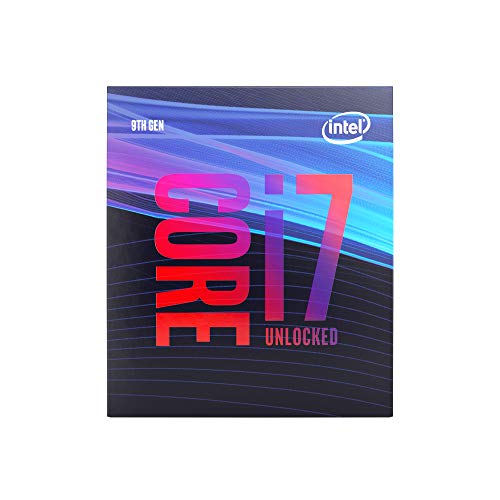
| Intel Core i7-9700K | Legacy LGA1151 | 8C/8T | 95W | $80–110 used | High IPC, no HT, single-thread strong |
Best Overall: AMD Ryzen 7 5800X
The Ryzen 7 5800X uses AMD's Zen 3 architecture on TSMC 7nm. Its 8 cores and 16 threads, clocked to 3.8GHz base / 4.7GHz boost, deliver the highest 1% lows of any AM4 CPU in CPU-bound 1080p titles. In Hardware Unboxed benchmark data, the 5800X produces roughly 180 average FPS and 145 minimum FPS in Cyberpunk 2077 (Quality, 1080p, paired with RTX 3080) vs the 5600X's 175/138. That 7-frame minimum improvement is the difference between smooth and slightly stuttery in a competitive FPS.
105W TDP note: The 5800X runs hot at stock — peak all-core temps on a 240mm AIO reach 80–85°C. It does not ship with a stock cooler. Budget $40–60 for a 120mm or 240mm AIO, or use a Scythe Fuma 2 class tower cooler if you prefer air cooling.
Platform longevity: AM4 boards (B550 or X570) support DDR4-3200 to DDR4-4000 depending on motherboard quality. The 5800X benefits measurably from fast RAM — DDR4-3600 CL16 gains roughly 5–8 average FPS in CPU-limited titles over DDR4-2133 XMP.
Versus the 5800X3D: The Ryzen 7 5800X3D (with 3D V-Cache) is faster in gaming by 10–20% due to its 96MB L3 cache, but it costs $240–280 in 2026. If your budget stretches that far, the 5800X3D is the correct buy for gaming-only builds.
Best Value: AMD Ryzen 5 5600X
The Ryzen 5 5600X is 6 cores / 12 threads on the same Zen 3 architecture. It runs at 3.7GHz base / 4.6GHz boost, has a 65W TDP, and ships with the Wraith Stealth cooler. In gaming benchmarks, it trails the 5800X by 2–5% average and 4–7% in 1% lows — a gap most players won't notice unless they're chasing competitive esports frame rates above 165Hz.
At $120–140, the 5600X leaves $60–80 more budget for the GPU vs the 5800X, which is the correct trade if you're GPU-constrained. Pair it with an RTX 4070 instead of an RTX 3070 and the overall system will be faster.
When to pick the 5800X over the 5600X: competitive FPS at 1080p/240Hz where CPU-limited 1% lows are critical; streaming and gaming simultaneously (extra cores handle OBS encoding threads); running background workloads (Discord, Spotify, browser) while gaming in CPU-heavy titles.
Best for Streaming Builds: AMD Ryzen 7 3700X
The Ryzen 7 3700X is the previous-generation 8-core/16-thread chip on Zen 2. It's slower per-clock than the 5800X (IPC delta ~19%) but runs at a 65W TDP — the same as the 5600X. For builders who plan to stream at 720p60 using NVENC or OBS's x264 preset, the extra 2 threads (vs 5600X's 12) provide headroom for encoding without harming gaming performance.
In 2026, the 3700X sells for $110–130 used. It requires a BIOS update on B450/X470 boards to run Zen 3 (if you plan to upgrade later). As a streaming-plus-gaming build chip, it trades ~8% gaming performance vs the 5800X for lower power, lower price, and quieter operation.
Limitation: AM4 third-gen Ryzen benefits less from fast RAM than AM4 fifth-gen. DDR4-3600 gives only ~2–3 FPS uplift vs DDR4-3200 on Zen 2 — not worth paying a premium for.
Best Performance: Intel Core i7-9700K
The i7-9700K is a 2018 8-core / 8-thread (no Hyper-Threading) chip on LGA1151. It runs at 3.6GHz base / 4.9GHz boost on two cores, giving it among the highest sustained single-thread clocks of any CPU in this price range. At $80–110 used in 2026, it's a strong value for pure gaming with no streaming.
Caveats: No Hyper-Threading means streaming and gaming simultaneously hits frame time variance. The Z370/Z390 chipset boards required for overclocking are expensive used. DDR4 support tops at 2666MHz natively (3200 requires OC). The platform is end-of-life — no upgrade path within LGA1151.
Who should buy it: LGA1151 holdouts who already own a Z370/Z390 board and want to upgrade the CPU without buying a new platform. New builds should prefer AM4.
What to Look For in a 1080p CPU
L3 cache size and topology: More accessible L3 cache reduces main-memory stall cycles in CPU-limited titles. The 5800X3D's 96MB L3 (32MB native plus 64MB stacked V-Cache) is the extreme version of this principle. The 5800X, 5600X, and 3700X all carry 32MB of L3 total, but Zen 3 (5800X / 5600X) unifies it into a single CCX so all cores share one pool, while Zen 2 (3700X) splits the 32MB into two 16MB CCXs and pays a latency penalty on cross-CCX traffic. Cache topology matters more on AMD than Intel at this gen.
Single-thread performance: 1080p gaming is heavily latency-bound to the game logic thread. Single-thread score in Cinebench R23: 5800X ~1625pts, 5600X ~1605pts, 3700X ~1285pts, i7-9700K ~1310pts. The Zen 3 advantage over Zen 2 is clear.
Motherboard chipset compatibility: B550 is the correct AM4 chipset for the 5800X and 5600X in 2026. X570 is better for overclocking but costs $20–40 more for the board. B450 supports Zen 3 with a BIOS update, but some B450 boards have BIOS chip size limits that prevent the update — check your board's compatibility page before buying.
Stock cooler reality: The 5800X has no stock cooler. A $25 Cooler Master Hyper 212 is minimum; the 5600X's Wraith Stealth is adequate for daily gaming but not for sustained workloads above 90°C ambient.
Benchmark Data (1080p, RTX 3070, DDR4-3600 CL16, as of 2026)
Sources: TechPowerUp Ryzen 7 5800X review, Gamers Nexus methodology.
| CPU | Cyberpunk 2077 Avg FPS | Cyberpunk 1% Low | Forza Horizon 5 Avg | F1 2026 Avg |
|---|---|---|---|---|
| Ryzen 7 5800X | 178 | 144 | 192 | 203 |
| Ryzen 5 5600X | 174 | 137 | 188 | 199 |
| Ryzen 7 3700X | 163 | 128 | 181 | 191 |
| Core i7-9700K | 169 | 134 | 183 | 194 |
AM4 Platform Longevity
AM4 launched in 2016 and received Zen 3 support in 2020 via BIOS updates. In 2026, new AM4 CPUs are no longer being released — AM5 (Ryzen 7000/9000 series, DDR5) is the current platform. The 5800X and 5600X represent the ceiling of what AM4 can do, which is exactly why used prices have stabilized: there's no further upgrade path, so buyers know exactly what they're getting.
For a 1080p gaming build, AM4 is the correct choice if you're budget-conscious. For a 1440p or 4K build where CPU bottlenecking is less severe and platform longevity for a 5-year system matters, consider AM5 and Ryzen 9000 series.