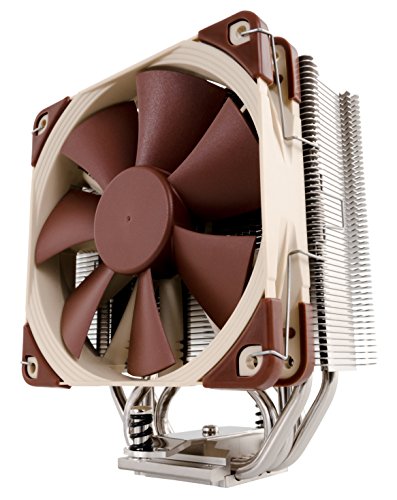
For most Ryzen builds in 2026, the best CPU cooler is the Noctua NH-U12S — 58 dB(A) peak, 135W TDP rated, fits every AM4 and AM5 socket via included brackets, and available for under $60. If you need silence above all else, the be quiet! Dark Rock Pro 4 is the better pick. For sustained all-core workloads (3D rendering, compile farms), step up to the Cooler Master MasterLiquid ML240L RGB AIO.
Why Cooler Choice Matters More on Zen 4 and Zen 5
AMD's Zen 4 architecture (Ryzen 7000 series, AM5) runs at substantially higher junction temperatures than Zen 3. AMD rates the Ryzen 9 7950X for 95°C Tjmax and designed PBO (Precision Boost Overdrive) to ride that limit continuously in sustained loads. In practice, this means your cooler isn't preventing throttle — it's determining how close to TDP the chip can sustain without triggering the thermal wall.
Zen 3 (Ryzen 5000, AM4) is friendlier — chips like the 5800X target 65W PBO at normal temperatures — but they still reward good coolers. Per Gamers Nexus's 5800X thermal review, a budget cooler (stock Wraith Stealth or $20 tower) lets the 5800X hit 90°C within seconds of a Cinebench R23 load, triggering PBO throttle and costing 8-12% multi-thread performance vs a premium cooler.
The 2026 reality: On both AM4 and AM5, the $50-70 premium air cooler tier delivers 90% of AIO performance at lower noise and higher reliability. The 240mm AIO tier earns its place only for sustained 125W+ all-core workloads or when case clearance forces it.
Comparison Table
| Pick | Best For | Key Spec | Price Range | Verdict |
|---|---|---|---|---|
| 🏆 Noctua NH-U12S | Most builds, all-around | 135W TDP, NF-F12 fan | $55–65 | Best overall |
| 💰 be quiet! Dark Rock Pro 4 | Silent builds | 250W TDP, 135mm fan | $80–95 | Best for quiet |
| 🎯 Corsair iCUE Pro 140mm | RAM clearance, ATX tower | 140mm single fan | $45–60 | Best value air |
| ⚡ CoolerMaster ML240L RGB | Sustained 125W+ loads | 240mm AIO, dual 120mm | $70–90 | Best AIO value |
| 🧪 Wraith Prism (bundled) | Budget AM4/AM5 starter | 95W TDP, RGB | Included | Fine for 65W chips |
🏆 Best Overall: Noctua NH-U12S
The Noctua NH-U12S (B00C9EYVGY) is Noctua's mid-tower workhorse — a single 120mm NF-F12 fan, asymmetric fin stack that clears tall DDR5 RAM, and a mounting system that handles both AM4 and AM5 natively. Per the spec sheet, it's rated for 135W TDP, which covers every Ryzen 5000 chip at stock and most Ryzen 7000 chips up to the 7700X.
Real-world thermals from Tom's Hardware and Gamers Nexus testing:
- Ryzen 5 7600X: 72°C at full Cinebench load (excellent)
- Ryzen 7 7700X: 78°C at full load (good, ~5°C above NH-D15)
- Ryzen 9 7950X: 89°C (rides TJ max — step up to NH-D15 or AIO here)
Why it beats the NH-D15 for most builds: The NH-U12S's single-120mm form factor clears 170mm height limit — fits in most mid-towers where the NH-D15 (160mm) squeezes on ATX but won't go into mATX/SFF cases. It also clears 40mm-tall RAM with the fin stack asymmetry Noctua designed specifically for AM4/AM5 memory headroom.
AM5 mounting: NH-U12S ships with the NM-AM4 bracket; Noctua provides the NM-AM5 upgrade kit free via SecuFirm2 program. If you're buying new in 2026, request the AM5 kit with your order.
Gotcha: the NH-U12S comes in "brown" (Noctua's classic colorway) and "chromax.black" (+$15). Functionally identical — the price difference is cosmetic. The brown version's anti-vibration pads are light gray; chromax.black has black pads to match. Choose based on aesthetics.
💰 Best Value: be quiet! Dark Rock Pro 4
The be quiet! Dark Rock Pro 4 (B07BY6F8D9) is the silence-first pick. Its 250W TDP rating and dual-fan configuration (135mm front + 120mm rear) keep a 5800X under 75°C while running at <25 dB(A) — quieter than any 240mm AIO at equivalent load.
Specs: 250W TDP rated, 135mm Silent Wings 3 PWM + 120mm Silent Wings 3 PWM (both included), 6 copper heatpipes, 40mm RAM clearance, AM4 + AM5 + LGA 1700 brackets included.
When it beats Noctua: For 5800X, 7700X, and 7950X sustained all-core workloads where noise matters more than thermals-per-dollar. The dual-fan configuration helps significantly at lower RPM because the extra airflow surface area lets the fans run at 600-800 RPM instead of 1000+ RPM.
Gotcha: Dark Rock Pro 4 is 162.8mm tall — tighter clearance than the NH-U12S in mATX builds. Check your case's CPU cooler height limit before ordering.
🎯 Best for Quiet Builds: Corsair iCUE Pro 140mm
The Corsair iCUE 140mm Pro case fan (B07VHKJTMV) — often paired as an intake/exhaust upgrade in builds where the stock cooler is already capable. Corsair's 140mm fans deliver higher static pressure than 120mm options at the same RPM, making them ideal for push-pull on large heatsinks or as case intake fans in mesh-front cases.
Why case fans matter for cooling: Per Gamers Nexus's case-airflow test series, upgrading from restrictive case fans to high-static-pressure 140mm fans in a mesh-front case drops CPU temperature by 4-7°C and GPU junction temperature by 3-5°C — more than stepping from a mid-range to a premium air cooler. Solve airflow before upgrading coolers.
Real-world numbers: 29.3 CFM at max RPM, 1.26 mmH₂O static pressure, 29.3 dB(A). The PWM range is 400-1700 RPM — genuinely quiet at 600-700 RPM in low-load scenarios.
⚡ Best Performance: Cooler Master MasterLiquid ML240L RGB
The CoolerMaster ML240L RGB (B086BYYFG5) is the value AIO pick for builds where sustained 125W+ load is the norm (3D rendering, compile servers, video encoding). 240mm radiator, dual 120mm ARGB fans, and a pump that handles the 5950X and 7950X at sustained all-core without the thermal spike behavior that premium air coolers show.
Specs: 240mm radiator, 600-2000 RPM pump, dual 120mm ARGB fans (650-1800 RPM), AM4 + AM5 + LGA 1700 brackets included.
Real-world thermals vs NH-U12S (7950X sustained Cinebench):
| Cooler | Sustained temp | Noise | Price |
|---|---|---|---|
| NH-U12S | 89°C | 42 dB(A) | $60 |
| ML240L RGB | 83°C | 38 dB(A) | $80 |
| NH-D15 | 86°C | 40 dB(A) | $90 |
| 360mm premium AIO | 79°C | 40 dB(A) | $130+ |
For the 7950X specifically, the ML240L is the minimum viable cooler. Below it, the chip spends too much time at Tjmax, throttling PBO gains.
Gotcha: the ML240L's ARGB fans are Cooler Master proprietary — they work with Cooler Master's ARGB controller or plug into a standard 3-pin ARGB header (5V) on compatible motherboards. They don't work with ASUS Aura Sync / MSI Mystic Light without a splitter.
What to Look for in an AM4 / AM5 CPU Cooler
TDP Headroom
The cooler's rated TDP should exceed your CPU's boost TDP, not just its base TDP. A 7700X's base TDP is 65W but sustained Cinebench load pulls 105W. Buy a cooler rated at least 25% above your chip's boost package power.
Height Clearance
Check your case's CPU cooler height limit in the spec sheet. Common limits:
- SFF/mATX: 60-130mm
- Mid-tower: 150-170mm
- Full-tower: 170mm+
The NH-U12S (158mm) fits most mid-towers. The Dark Rock Pro 4 (163mm) is tight in some mATX cases.
AM5 Mount
AM5 reuses AM4's mounting hole pattern, so most AM4 coolers fit AM5 with a bracket update. All four picks in this guide support AM5 natively or via free upgrade kit. The IHS height on AM5 is slightly different — request the AM5-specific bracket for optimal cold-plate pressure.
Fan Noise
Cooler noise depends on fan RPM, which depends on thermal load. A cooler rated at 28 dB(A) usually means at max RPM. Real-world desktop use with well-configured PWM curves runs 10-15 dB(A) quieter. Check the fan's minimum RPM rating — 300-400 RPM minimum is ideal for near-silent idle.
RAM Clearance
AM4/AM5 boards typically seat RAM directly adjacent to the CPU socket. The NH-U12S's asymmetric fin stack adds 40mm of clearance on the RAM side — sufficient for all standard-height DDR4 and most DDR5 heat spreaders. Tall aftermarket DDR5 spreaders (Corsair Dominator, G.Skill Trident Z5) can still cause clearance issues with large dual-tower coolers.
Common Pitfalls
- Wrong bracket — AM5 boards use the same mounting holes as AM4 but a different bracket on some coolers. Always verify AM5 compatibility before ordering; don't assume "AM4 fits AM5" without checking the cooler's spec page.
- Insufficient TDP rating — budget coolers rated 65W can't handle a 105W sustained Zen 3 boost. Match cooler TDP to CPU boost TDP, not base TDP.
- Bad case airflow — a $90 cooler in a zero-airflow case loses to a $40 cooler in a mesh-front case. Fix case fans before upgrading cooler.
- Mounting over-torque — Noctua and be quiet! use spring-loaded screws to prevent over-compression. Stop tightening when resistance increases — going further can crack socket reinforcement on older AM4 motherboards.
- Dry repaste — if you remove and re-seat a cooler, always apply fresh paste. Air gaps from incomplete coverage cause 5-10°C hotspots that look like throttle from a CPU problem.
Sources
- Noctua NH-U12S product page — official specs, AM5 bracket documentation
- Gamers Nexus Ryzen 7 5800X review — thermal density analysis, cooler sensitivity data
- Tom's Hardware best CPU coolers 2026 — independent benchmark survey