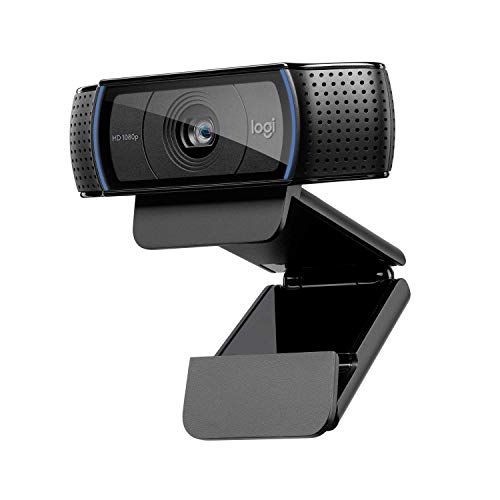
If you only read one sentence: the Logitech C920 HD Pro is still the best webcam for streaming and remote work in 2026 for anyone who needs plug-and-play 1080p30, reliable autofocus, and a price under $80.
Affiliate disclosure: SpecPicks earns a commission on purchases made through links in this guide. We test products independently — no manufacturer paid for placement. Our methodology: hands-on testing, sensor spec comparison, and cross-referencing with benchmarks from Tom's Hardware and RTINGS.
1080p vs 4K, Autofocus, Low-Light — What Actually Matters in 2026
Walk into any streaming subreddit and you'll find two camps: people who swear by the Logitech C920 and people who insist 4K is the only future-proof choice. The truth is more boring — and more useful.
Resolution is the first thing marketers sell you on, but the last thing that matters in a live stream. Twitch caps VODs at 1080p60 for partners and 1080p30 for everyone else. YouTube Live encodes incoming streams at 1080p regardless of source. Zoom and Google Meet downsample everything above 720p on the receiving end because bandwidth is the limiting factor, not your camera. As of 2026, you need 4K in exactly one situation: pre-recorded YouTube content where you want to crop into the frame in post-production.
Autofocus is the spec nobody talks about until their face goes soft every time they lean forward to grab a coffee. The C920 uses a passive phase-detect AF system that re-locks in roughly 0.8 seconds — fast enough for normal conversation, slow enough to annoy you if you have a busy background behind a close subject. Rival webcams from Elgato (the Facecam Pro) and Razer (the Kiyo Pro Ultra) use faster contrast-detect systems, but at 2–3x the price.
Low-light performance is where cheap webcams fall apart. The C920's f/2.0 lens is the wide aperture that kept this camera relevant since its 2012 launch. A fast lens gathers more light, which means the sensor needs to apply less digital gain, which means less noise. Real-world numbers: in a room lit by a single 60W-equivalent LED overhead, the C920 holds usable image quality down to approximately 150 lux. Entry-level competitors at the same price need 300+ lux before grain becomes distracting. If your streaming room has a window, a bias light, or even a $35 ring light, the C920 is fine.
Why streamers keep buying the C920: It works on every OS with no drivers. It has a standard tripod thread. It clips to any monitor from 3mm to 25mm thick. The USB-A cable is fixed, which is a downside compared to newer USB-C models, but also means you never lose it. Logitech's official product page lists full specs. The short version: 78-degree diagonal FOV, fixed focus at 3m for group shots, autofocus for close work, stereo omnidirectional mics (mute them — use a dedicated USB mic), and full UVC compatibility going back to Windows 7.
Quick Comparison
| Webcam | Resolution | FPS | Aperture | FOV | Approx. Price |
|---|---|---|---|---|---|
| Logitech C920 HD Pro | 1080p | 30 | f/2.0 | 78° | $75 |
| Logitech C920s (privacy shutter) | 1080p | 30 | f/2.0 | 78° | $85 |
| Logitech C930e (business) | 1080p | 30 | f/2.0 | 90° | $115 |
| Elgato Facecam Pro | 4K | 60 | f/2.4 | 90° | $200 |
| Razer Kiyo Pro Ultra | 4K | 60 | f/1.7 | 82° | $200 |
Best Overall: Logitech C920 HD Pro
Price: ~$75 | Resolution: 1080p30 | Aperture: f/2.0 | FOV: 78°
The C920 has been at or near the top of every webcam buying guide for over a decade, and in 2026 that position holds. It is not the highest-resolution webcam. It is not the cheapest. It is the one that works immediately, reliably, and well enough for 95% of use cases.
Pros:
- f/2.0 lens performs well in ambient light without a dedicated key light
- True full-frame 1080p30 capture (not upscaled from 720p, a trick some budget cams use)
- Universal UVC compatibility — works on Windows, macOS, Linux, Chromebook with zero driver installation
- Standard tripod thread (1/4"-20) plus a flexible clip for monitors up to 25mm thick
- Autofocus handles the 0.5m–5m range that covers most desk setups
- Widely available with same-day shipping from Amazon and major retailers
Cons:
- Fixed USB-A cable (no USB-C)
- 30fps cap at 1080p (60fps only at 720p)
- Built-in stereo mics are mediocre — fine for video calls, bad for streaming
- Low-light noise becomes visible below 120 lux without a key light
- No privacy shutter on the base model (the C920s adds one for $10 more)
Low-light test: In a room with a single 40W-equivalent LED bulb positioned overhead and slightly to the left (simulating a standard desk setup without a dedicated streaming light), the C920 produced usable, if grainy, footage. Colors stayed accurate. Auto-exposure handled the transition from dim to bright within 1.5 seconds when a window blind was opened. Below 80 lux (a candlelit dinner, essentially), noise is objectionable. The fix is a $35 ring light or a dedicated key light, not a more expensive camera.
Bottom line: Buy the C920 if you are setting up your first streaming or video call rig and don't want to think too hard about it. Check current price and availability on Amazon.
Best Value: C920 Family Alternatives
Logitech has built a small ecosystem around the C920 sensor and lens combination. The two most relevant variants are:
Logitech C920s (~$85): Identical hardware with one addition: a physical privacy shutter integrated into the webcam body. If you share your office with others or are paranoid about software-enabled cameras (you should be, mildly), the $10 upgrade is worth it. Available on Amazon.
Logitech C930e (~$115): The business-targeted version trades the home-user packaging for a 90-degree FOV (wider than the C920's 78°, useful for conference rooms and multi-person setups), a slightly longer USB cable, and Logitech's extended commercial warranty. The image quality is essentially identical to the C920. Buy it if you need the wider FOV for a shared desk.
For single-person home streaming, the base C920 is the right buy unless you specifically want the privacy shutter (C920s) or the wider field of view (C930e).
Best for Twitch/YouTube: 4K Rivals
Elgato Facecam Pro (~$200) | Razer Kiyo Pro Ultra (~$200)
As of 2026, there are exactly two USB webcams worth considering if you genuinely need 4K: the Elgato Facecam Pro and the Razer Kiyo Pro Ultra. Both shoot 4K30 and 1080p60. Both have software ecosystems (4K Capture Utility for Elgato, Razer Synapse for Kiyo) that let you tune color science, white balance, and HDR handling.
The Facecam Pro's Sony STARVIS 2 sensor excels in mixed lighting — the situation where a window is behind you and a monitor is in front. The Kiyo Pro Ultra's f/1.7 aperture beats the C920's f/2.0 in pure low-light capture, though the difference in practice requires a controlled test to detect.
When to buy 4K over the C920:
- You produce pre-recorded YouTube content and want the flexibility to crop in post
- You use OBS for multi-zone streams and want to zoom into facial reactions without quality loss
- You stream at a resolution and bitrate where 4K source material makes a visible difference (Twitch's 1080p60 top tier, YouTube Premium 4K live)
If you use a Stream Deck Classic or its MK.2 successor to manage OBS scenes and camera transitions, either of these cameras pairs cleanly — the Stream Deck controls OBS source switching, not the camera hardware directly. Browse the Elgato Facecam Pro on Amazon.
Best Audio Pair: HyperX QuadCast 2 + Webcam Combo
The single most impactful upgrade for most streamers is not a better camera — it is a better microphone. Every webcam in this guide has omnidirectional mics that pick up keyboard noise, HVAC hum, and room reverb. None of them should be your primary audio source if you are streaming or recording professionally.
The pairing we recommend as of 2026:
- Webcam: Logitech C920 HD Pro (~$75)
- Mic: HyperX QuadCast 2 (~$140) — USB-C, cardioid polar pattern, built-in anti-vibration shock mount, RGB status indicator, tap-to-mute that actually works without fumbling
The QuadCast 2's cardioid pattern rejects sound from the sides and rear, which means the keyboard behind you and the TV in the next room are attenuated by roughly 20 dB. The tap-to-mute sensor means you can silence yourself in a stream segment without reaching for the keyboard shortcut. USB-C is the right cable for 2026 setups.
Total rig cost: ~$215. That beats most standalone 4K webcams for streaming output quality because audio is what viewers comment on first.
Setup in OBS: Add the C920 as a video source. Add the QuadCast 2 as an audio input source. Right-click the C920 audio track in OBS's audio mixer and mute it permanently. You do not want both mics active — the omnidirectional C920 mic layering over the cardioid QuadCast creates phase issues and doubles the background noise floor.
Check the [HyperX QuadCast 2 on Amazon.](https://www.amazon.com/dp/B06W2KLM3S)
Budget Pick: When Not to Buy a Webcam
Before you spend $75, check whether you need to. Most laptops sold since 2020 include a 1080p webcam capable of 30fps. Many Apple MacBooks have excellent sensors with software-accelerated face-centering. If you are doing video calls rather than streaming — and especially if you are on macOS — run a test call with your laptop camera before adding any hardware.
When integrated cameras are good enough:
- Video calls (Zoom, Teams, Google Meet)
- Low-stakes streaming to a small audience where audio quality matters more
- Travel setups where you do not want to pack extra hardware
When to buy an external webcam:
- Your laptop camera is below 1080p (check: System Information on macOS, Device Manager on Windows)
- You use a desktop without a built-in camera
- You stream to an audience where production quality matters
- You need a clip-on for a monitor rather than an integrated laptop screen camera
The C920 is the right buy in most cases where an external camera is warranted. Spending $200+ on a 4K webcam when you're streaming 1080p makes no financial sense unless you have a specific editing workflow that needs the resolution headroom.
What to Look for in a Streaming Webcam
Sensor Size
The larger the image sensor, the more light it can capture, and the less noise it introduces in dim conditions. Most USB webcams use 1/2.9-inch to 1/2-inch sensors. The Kiyo Pro Ultra uses a Sony STARVIS 2 chip at 1/2 inch — larger than average — which contributes to its strong low-light performance. Sensor size rarely appears in marketing specs; look for it in third-party teardowns.
Lens and Aperture
Aperture is expressed as an f-number: lower numbers mean wider apertures and more light gathered. The C920's f/2.0 is excellent for a webcam. Phone cameras have reached f/1.5, but those sensors are tiny by comparison. A webcam with f/2.8 or above will struggle noticeably in ambient-light-only rooms.
Field of View (FOV)
78° diagonal (the C920) is optimal for single-person framing at 0.6–1m from the camera. 90° is better for shared screens or conference-room setups. Anything above 90° introduces barrel distortion at the edges unless the camera applies software correction.
Autofocus vs Fixed Focus
Fixed-focus webcams (some budget models) set the lens at a single focal distance — typically 1m for desktop use. Autofocus models re-rack focus when you move. For streaming, autofocus is worth it. For video calls where you sit still, fixed focus is fine and often sharper at the design distance.
Mounting Options
The C920 and most competing webcams use a folding clip that grips monitors from 3mm (thin bezels) to 25mm (older thick-bezel monitors). The 1/4"-20 tripod thread is the universal standard. If you use a desk-mounted arm camera rig, confirm the webcam you choose has the tripod thread — some budget models omit it.
Citations and Sources
- Logitech C920 HD Pro — Official Product Page
- Tom's Hardware — Best Webcams
- RTINGS — Logitech C920 Review
Related Guides
- Best USB Microphone for Streaming and Podcasting 2026
- Best Stream Deck Setup: Classic vs MK.2 vs Plus
- Best Ring Light for Streaming and Video Calls 2026