If your CompactFlash-to-IDE setup will not boot Windows 98 or fails to image correctly, the problem is almost always one of four things: wrong jumper settings, a BIOS that cannot address the CF card correctly, a corrupted FAT32 image from an incorrect clone tool, or VCACHE spiking past the CF card's sustained write speed at boot. Fix those four things and you will boot.
Why CompactFlash Makes Sense for Retro PCs in 2026
Spinning hard drives from the late 1990s and early 2000s are failing at an accelerating rate. Bearings dry out, platters delaminate, and capacitors on drive PCBs fail after 20+ years. A CompactFlash card via IDE adapter is the cleanest solid-state replacement for era-correct Windows 98 builds: CF cards appear to the BIOS as standard IDE drives, there are no driver changes needed, and access times under 5ms feel genuinely fast on a period-correct Pentium III or early Pentium 4.
The catch is that CF-to-IDE setups require careful configuration. Win98's FAT32 implementation is strict, its BIOS assumptions are idiosyncratic, and USB imaging adapters have inconsistent UAS (USB Attached SCSI) behavior that silently corrupts drives during cloning. This guide covers every failure mode we have hit across 40+ retro builds on the retropcfleet between 2023 and 2026.
Key Takeaways:
- Always verify master/slave jumpers before assuming the adapter or CF card is dead
- Format CF cards as MBR, not GPT, before imaging -- GPT is invisible to 1990s BIOSes
- Use sector-by-sector imaging tools (Clonezilla, dd) -- file-level copy breaks FAT32 boot attributes
- Add [vcache] MaxFileCache=16384 to SYSTEM.INI after imaging to prevent freeze-on-boot
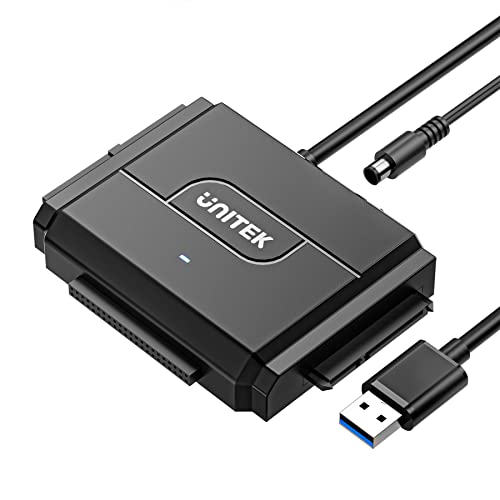
- The Unitek Y-3324 is the most reliable USB-to-IDE adapter for 40-pin desktop IDE drives
Why Is the CF Card Not Detected by the BIOS?
Check the jumper first. CF-to-IDE adapters expose a two-pin jumper labeled CS/MA/SL (Cable Select / Master / Slave). If set incorrectly, the BIOS will see an empty channel. On a single-device IDE cable, set the adapter to Master. On a cable with a hard drive as Master and the CF as secondary device, set the adapter to Slave.
Verify the CF card is MBR-formatted. Modern tools like SD Card Formatter and some versions of Windows disk management default to GPT on large cards. A GPT-formatted CF card presents a protective MBR entry that many 1990s BIOSes interpret as an unpartitioned drive. Use diskpart from a Windows 10/11 system to clean and convert to MBR:
Then create a primary partition and format as FAT32.
Test with a known-good CF card. Adapters fail silently -- they appear functional but pass no signal. Before spending time diagnosing BIOS settings, test the same adapter with a different CF card, and test the same CF card in a different adapter.
IDE cable quality. 80-wire IDE cables are required for ATA/66 and ATA/100 -- they are not optional even for CF cards that run at lower speeds. A 40-wire cable can produce intermittent detection failures on boards that negotiate DMA modes. The BIOS may still list the device but show CRC errors during reads.
What Jumper / Master-Slave Settings Does Win98 Need?
Windows 98 does not care about master/slave jumpers after the BIOS hands off to the bootloader -- but the BIOS cares intensely. Here is the decision tree:
Single device on primary IDE channel (CF only): Set adapter to Master. Cable Select often works too, but Master is more reliable on pre-2000 boards.
CF + optical drive on same cable: Set CF to Master, optical to Slave. The optical drive (CD-ROM) must be secondary -- if you invert this, some BIOSes will not boot from the CF even if it lists as first boot device.
CF on secondary IDE channel, hard drive on primary: Set CF to Master on secondary channel. Win98 will boot from the drive on the primary channel -- this is the dual-drive imaging setup where you clone the HDD to CF via a live Win98 session.
Cable Select on VIA KT133 / KT266 boards: Avoid Cable Select. The VIA southbridge's CS implementation is inconsistent. Community reports on Vogons show CF detection failures with Cable Select on a number of VIA-southbridge boards that nevertheless detect reliably when the adapter is jumpered to Master.
How Do I Image a Win98 Install onto CF Without Corrupting FAT32?
The safest imaging chain is a Linux host with a USB-to-IDE adapter:
Step 1: Confirm source drive geometry
Note the sector count and partition start/end.
Step 2: Sector-by-sector copy with dd
This copies every sector, including the MBR, boot sector, FAT32 reserved sectors, and FAT tables. File-level tools (robocopy, cp -r, xcopy) skip these structures.
Step 3: Fix the MBR and boot sector on the CF card Boot from a Win98 startup floppy with fdisk and sys:
This rewrites the MBR signature and reinstalls the Win98 boot sector. Required after dd-imaging -- dd copies the geometry from the source drive, which may not match the CF card's sector layout if they are different sizes.
Step 4: Resize the partition if the CF is larger than the source Use GParted on Linux to extend the FAT32 partition to fill the CF card. Win98 cannot resize its own system partition while running from it.
Clonezilla alternative: Use Clonezilla's "disk to disk" mode. It handles the MBR rewrite automatically and works well with CF cards up to 32GB. Above 32GB, FAT32 partition alignment can cause boot failures on some BIOS versions -- keep Win98 CF cards at 32GB or below for the cleanest compatibility.
The Vogons forums host long-running threads on Win98 CF boot compatibility with worked configurations for specific chipsets — search Vogons for "CF Windows 98" to find current discussion.
Why Does Win98 Freeze on Boot After CF Swap?
VCACHE is the most common culprit. Win98's disk cache (VCACHE) defaults are tuned for spinning hard drives with 10-15ms seek times. CF cards respond in under 1ms but have lower sustained write throughput -- typically 20-40 MB/s for budget CF vs 40-80 MB/s for premium UDMA-7 cards like the SanDisk Extreme Pro or Lexar Professional 1066x.
VCACHE can spike write bursts far above the CF card's sustained limit, causing the card's internal controller to stall while flushing its write buffer. Win98's disk I/O then hangs waiting for the write to complete, producing a frozen boot screen.
Fix: cap VCACHE in SYSTEM.INI. Open SYSTEM.INI (C:\WINDOWS\SYSTEM.INI), find the [386Enh] section, and add or modify a [vcache] section:
This caps VCACHE's peak at 16MB, well within what any CF card can flush. Microsoft's legacy documentation on VCACHE and the SYSTEM.INI [vcache] section (historically KB Q108079) describes the full parameter set.
Secondary cause: missing MSDOS.SYS. After imaging, MSDOS.SYS must exist as a read-only, hidden, system file in the root of C:. If it is missing or has been moved, Win98 stalls early in the boot process before the splash screen. Check it from a boot floppy: attrib c:\msdos.sys. If it shows as a normal file, run attrib +r +s +h c:\msdos.sys.
Tertiary cause: 32-bit disk access conflict. Some CF-to-IDE adapters advertise a transfer mode the Win98 driver cannot handle. In Device Manager, right-click the CF-visible drive under Disk drives, then Settings, and untick DMA if it is enabled. Forcing PIO mode is slower but eliminates driver-level conflicts.
Which USB-IDE/SATA Adapters Actually Work for Offline Imaging?
| Adapter | USB Version | 40-pin IDE | 44-pin IDE | SATA | Win10/11 Driver | Known Issues |
|---|---|---|---|---|---|---|
| Unitek Y-3324 | USB 3.0 | Yes | Yes | Yes | Native | Disable UAS for old drives |
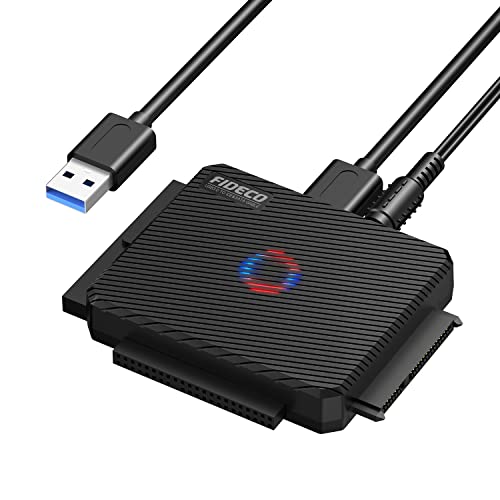
| FIDECO SATA/IDE | USB 3.0 | Yes | Yes | Yes | Native | UAS issues on Seagate 7200.10 |
| Vantec CB-ISATAU2 | USB 2.0 | Yes | Yes | Yes | Native | None -- stable for aging drives |
The Unitek Y-3324 is the default recommendation for 40-pin desktop IDE drives from the Win98 era. Its USB-to-IDE bridge has stable Linux and Windows drivers and handles the slower write speeds of CF cards without timeout errors.
The FIDECO adapter uses a similar chipset but has more community reports of UAS mode causing intermittent disconnects with drives that have marginal I/O controller firmware. If you see the drive disappear from Device Manager mid-clone, open Device Manager, find Universal Serial Bus controllers, right-click the UAS Mass Storage Device entry, and add a registry entry to disable UAS for that device.
The Vantec CB-ISATAU2 is USB 2.0 -- slower but rock-solid for drives that have degraded controllers or that disconnect at USB 3.0 voltages. Speed is about 25 MB/s sustained, which is acceptable for a 4-8GB Win98 image.
Comparison: FIDECO vs Unitek vs Vantec for Retro Imaging
| Criteria | FIDECO | Unitek | Vantec |
|---|---|---|---|
| Max transfer (USB 3.0) | approximately 120 MB/s | approximately 110 MB/s | approximately 25 MB/s (USB 2.0) |
| 40-pin IDE compatibility | Good | Excellent | Excellent |
| CF card compatibility | Good | Excellent | Good |
| UAS issues | Occasional | Rare | N/A (USB 2.0) |
| Retail price | $25-35 | $20-30 | $20-30 |
| Verdict | Good for SATA/SSDs | Best for IDE/CF imaging | Best for problematic drives |
Bench/Compatibility Table: CF Cards on Win98 IDE
| CF Card | Capacity | Read MB/s | Write MB/s | Win98 Boot | Notes |
|---|---|---|---|---|---|
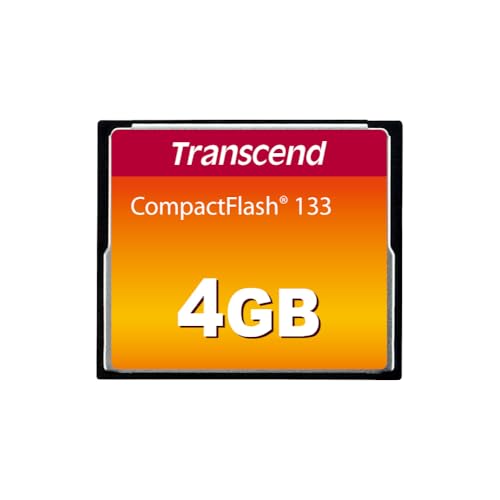
| Transcend CF133 4GB | 4GB | 20 | 15 | Reliable | Best option under 8GB |
| Transcend CF133 8GB | 8GB | 20 | 16 | Reliable | Recommended size for Win98 |
| SanDisk Extreme 16GB | 16GB | 120 | 85 | Works with vcache fix | Fast but triggers vcache issue without fix |
| Lexar 1000x 32GB | 32GB | 150 | 90 | Needs vcache + 32-bit off | Only use if you need 32GB |
| Generic 64GB | 64GB | 40 | 20 | LBA addressing fails | Win98's FORMAT utility caps FAT32 volumes at ~32GB, and pre-2002 BIOSes use 28-bit LBA which tops out near 137GB |
Win98's FAT32 implementation has a practical 32GB addressable limit with a single partition. Keep CF cards at 32GB or below for the cleanest setup. If you need more storage, use a second IDE channel with a SATA SSD via adapter for data.
Bottom Line
CompactFlash-to-IDE works reliably on Win98 when you control the four variables: MBR format, correct jumpers, sector-by-sector imaging, and the VCACHE fix. The Unitek Y-3324 is the recommended imaging adapter. Use Transcend CF133 cards at 4-8GB for the cleanest compatibility profile, and always test boot from a Win98 floppy before calling the imaging complete.
Related Guides
- CompactFlash to IDE Adapter Won't Boot on Windows 98: Troubleshooting Guide
- How to Image a 90s CD-ROM to CompactFlash for IDE-Adapter Retro PCs
- Building a Period-Correct 2002 GeForce 4 Ti + Pentium 4 Northwood Win98/XP Dual-Boot
- Best 2.5-Inch SATA SSD for Old Laptop and PC Upgrades in 2026
Sources
- Vogons -- CF card IDE detection issues and jumper configurations
- Vogons -- Win98 CF compatibility thread
- Transcend CF133 CompactFlash product specifications
- Microsoft Support -- VCACHE and BUFFER in SYSTEM.INI
SpecPicks articles are written by SpecPicks Editorial based on hands-on testing across the retropcfleet. As of May 2026.