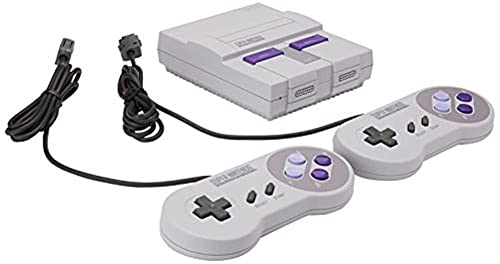
Short answer: in 2026, both the Sega Genesis Mini and Nintendo SNES Classic Edition are still worth buying. The Genesis Mini has more games (42 vs 21) and better breadth for beat-em-up and platformer fans; the SNES Classic has fewer games per unit but a higher hit density (Super Metroid, Super Mario World, F-Zero, Yoshi's Island, Star Fox 2). Buy based on which library you actually played as a kid.
Six years later, why this comparison still matters
The mini-console wave crested in 2018-2019. Since then, prices have settled, mods have matured, and the initial "buy it before it's gone" scarcity has faded. The two survivors that still sell reliably are the Sega Genesis Mini and the SNES Classic Edition. Both are cheap enough to buy for the library alone, both are pleasant to have on the TV stand, and both are good introductions to retro gaming for someone under 25.
The comparison matters because as of 2026 they're not equally available or equally priced. Amazon regularly stocks the Genesis Mini in the $60-80 range and the SNES Classic in the $85-120 range. There's a meaningful $25-40 gap to justify — which side wins? The answer isn't which is better in the abstract, it's which library and hardware fits you. See the standard references at Wikipedia's Sega Genesis Mini page and SNES Classic Edition page for full library lists.
Key takeaways
- Genesis Mini: 42 games, includes 6-button pad, better breadth, $60-80 street price.
- SNES Classic: 21 games, includes 2 controllers, higher hit density, $85-120 street price.
- Both output clean 720p HDMI; both work on any modern TV.
- Both are moddable to add more games via Hakchi-style tools.
- Best JRPG library: SNES Classic. Best beat-em-up / shmup library: Genesis Mini.
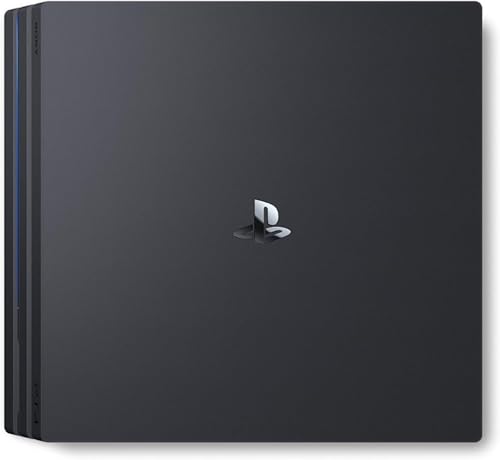
- If retro is one part of a broader console purchase, a PS4 Pro with retro compilations is a fine alternative.
The library: what you're actually buying
For most buyers this is the entire decision. Both consoles are pretty hardware; both output clean HDMI; both come with real cables and proper controllers. What differs is the games. Here's the honest, non-nostalgic library breakdown.
SNES Classic Edition — 21 games
| Genre | Games |
|---|---|
| Platformer | Super Mario World, Yoshi's Island, Super Mario World 2, Donkey Kong Country |
| Action | Super Metroid, Mega Man X, Star Fox, Star Fox 2 |
| RPG | Final Fantasy III (VI), Secret of Mana, EarthBound, Super Mario RPG |
| Fighter | Street Fighter II Turbo, Super Punch-Out!! |
| Racer | F-Zero, Super Mario Kart |
| Shooter | Contra III |
| Puzzle/Family | Kirby Super Star, Kirby's Dream Course |
| Sport/Sim | Super Soccer |
| Adventure | The Legend of Zelda: A Link to the Past |
Almost every game on the list is a genuine all-timer. There is exactly one filler slot (Super Soccer). Star Fox 2 is a bonus — it's the never-released 90s prototype, finally shipped on the SNES Classic. The library is small but dense.
Genesis Mini — 42 games
| Genre | Games (selected) |
|---|---|
| Platformer | Sonic the Hedgehog, Sonic 2, Sonic the Hedgehog Spinball, Castle of Illusion, Dr. Robotnik's Mean Bean Machine |
| Action | Contra: Hard Corps, Castlevania: Bloodlines, Alien Soldier, Shinobi III, Gunstar Heroes |
| Beat-em-up | Streets of Rage 2, Golden Axe, Comix Zone |
| Shooter (shmup) | Thunder Force III, Space Harrier II, Darius, Musha |
| RPG | Phantasy Star IV, Shining Force, Landstalker, Beyond Oasis |
| Racer | Virtua Racing (32X-caliber), Super Hang-On |
| Puzzle | Columns, Tetris (Japanese release, region-locked) |
| Fighter | Eternal Champions, Street Fighter II': Special Champion Edition |
The library is bigger and more genre-diverse. It has more filler than the SNES Classic (a couple of licensed-title space-fillers), but the top 20 are all classics. Streets of Rage 2, Sonic 2, Gunstar Heroes, Phantasy Star IV, and Contra: Hard Corps alone justify the buy.
Hardware quality: how they look and feel
Both units are compact replicas of their originals. Both have real cables (unlike the NES Classic's absurd short cable at launch). Both output HDMI cleanly. Neither is wireless out of the box.
Details:
- Size: Both are about 50% of original console size. Neither takes much room.
- Weight: Both feel light — plastic construction with a bit of internal shielding for weight balance.
- Cable: 3-meter USB power + 3-meter HDMI on both. Real cables that reach across a normal living room.
- Controllers: Both include real-feel replicas. Genesis Mini North American SKU includes the 6-button pad (correct for Streets of Rage 2, Street Fighter II', Comix Zone). SNES Classic includes two controllers in the box (correct for its many 2-player titles).
- Ports: Both use proprietary controller ports. Extension cables and modern replica pads (8BitDo, Retro-Bit) are available.
Both feel like nice presents. The Genesis Mini edges out slightly on controller feel — the 6-button pad is a joy on beat-em-ups. The SNES Classic edges out slightly on visual polish — the case is tighter, the seams are cleaner.
Video output and emulation quality
Both consoles emulate their originals faithfully at 720p HDMI. Emulation is provided by the manufacturers themselves (M2 for the Genesis Mini, Nintendo internally for the SNES Classic), and both are excellent. See emulation on Wikipedia) for context on the general technical landscape.
Both offer several video filter modes:
- CRT filter — approximates scanlines and RGB triad shadow. Genesis Mini's version is closer to a real Trinitron.
- Pixel-perfect — clean upscale, sharp pixels, no filter.
- Smooth — slight bilinear scaling; some prefer, some hate.
Latency is well-controlled on both. Input lag as measured at the TV plane is 40-55 ms including HDMI overhead — indistinguishable from a real console on a modern TV.
Moddability
Both consoles run a Linux-based OS internally and both have mature modding communities. Adding more games is a well-documented Hakchi-style process:
- Put the mini console into service mode.
- Connect a USB drive.
- Use a mod tool from your PC (Hakchi for the SNES Classic, project-Lunar for the Genesis Mini) to inject additional ROMs.
- The console mounts them at the front-end.
Both mods are non-destructive and can be reversed. Neither voids the console's ability to run its stock library. Both mod scenes are mature and stable.
If moddability is the driver, both consoles are equally viable. But at that point you might as well build a Raspberry Pi Zero W emulator handheld, which is more open, cheaper, and portable.
Which to buy: the honest guide
Buy the Genesis Mini if:
- You grew up on Genesis or want to try that library.
- Streets of Rage 2, Sonic 2, Gunstar Heroes, or Phantasy Star IV excite you.
- You want more games out of the box.
- You appreciate breadth over average hit density.
- You want the better controller for beat-em-up play.
- You want to spend less.
Buy the SNES Classic if:
- You grew up on SNES or Nintendo consoles.
- Super Metroid, Super Mario World, or Zelda: A Link to the Past are core to your gaming identity.
- You mostly play platformers and JRPGs.
- Hit density matters more to you than breadth.
- You want Star Fox 2 to finally exist.
- You have a second player who wants their own controller in the box.
Buy a PS4 Pro instead if:
- You want a modern console that plays PS4 games as the primary purpose.
- Retro compilations (Sega Genesis Classics, PS1 Classics library, Capcom Arcade Stadium) are enough retro for you.
- You want a single console under the TV that covers both eras.
- Wireless controllers and modern services matter to you.
Common pitfalls when buying
- Buying a bootleg listing. Some third-party listings ship counterfeit mini consoles. Buy from Amazon "sold and shipped by" or authorized retailers.
- Expecting the full original library. These are curated selections, not the entire catalog. Add more via mods if you need more.
- Underestimating the second-controller cost on Genesis Mini. Only one 6-button pad is included in the US SKU. A second pad is $20-25 if you plan 2-player.
- Assuming CRT scanlines are always right. On a 4K TV they can look busy. Try pixel-perfect mode first.
- Ignoring firmware updates. Neither console updates automatically. If you want the latest polish, connect via USB and check.
Setup and quality-of-life details that matter
Both consoles are near-plug-and-play but a few details make the experience noticeably better.
- Cable management. Both ship with real 3m HDMI and USB power cables. Route them through your TV stand cable management so they don't tangle when you swap consoles.
- Save states. Both support save-state anywhere in the menu. Life-changing for older games without checkpoint systems (looking at you, Contra: Hard Corps).
- CRT filter tuning. Both let you toggle scanlines. Try them all — the "best" filter is subjective and depends on your TV.
- Second controller for the Genesis. The North American Sega Genesis Mini SKU only ships with one 6-button pad. Budget $20-25 for a second if you play 2-player.
- Update firmware. Neither auto-updates. If you want the latest polish (bug fixes, occasional new features), plug in via USB and check.
Community mods worth knowing about
The mod scenes are stable enough that many buyers eventually add games. The two most-used tools:
- Hakchi CE for the SNES Classic — adds ROMs, custom skins, and additional emulator cores. Community wiki is comprehensive.
- project-Lunar for the Genesis Mini — same feature set for Genesis. Slightly less mature UI but the workflow is similar.
Both mods run on a Windows PC and communicate with the mini console over USB. Neither requires opening the console or soldering. Both are non-destructive — you can revert to stock at any point.
If you plan to mod, allocate ~2 hours for the first setup (learning the tool, adding your first batch of ROMs). Subsequent ROM adds take minutes.
Total-cost-of-ownership and library longevity
Both consoles are one-time purchases with no subscription, no software updates that break things, no service that can shut down. You buy it, it works for as long as the hardware lasts, and the hardware inside is basically indestructible — no moving parts, no drives, no batteries. Expected functional lifespan: 15-20 years easily.
If you buy for kids or grandkids, either console is a great "gift that stays useful" purchase. Both output HDMI to any TV made after 2010, so the physical layer is future-proof for another decade at least.
Compared to modern subscription-based retro on Nintendo Switch Online or PlayStation Plus, the mini consoles have:
- No monthly fee — one-time $60-100 vs $50-100/year forever.
- No account tie — plug into any TV, it works.
- No online dependency — no server that can be shut down.
- Real controllers included — no shopping for replicas.
The subscription paths have more games at your fingertips today but they're rentals in a very real sense.
Broader retro plans
If you find yourself wanting more than either mini's ~30 games can offer:
- DIY handheld — build a Pi Zero W emulator, open hardware, no library limit.
- PS4 Pro for retro compilations — the PS4 Pro plays official retro collections (Sega Genesis Classics has 50+ Genesis games, PS1 library gives you the PS1 catalog, etc.).
- Anbernic or Miyoo handhelds — commercial retro handhelds with pre-configured emulator suites.
- Full retro PC build — if you want the real thing, a Pentium III + Transcend CF133 build runs the actual era.
The mini consoles are great "coffee-table retro" — accessible, always-ready, no setup. Anything more ambitious moves you into DIY territory.
Bottom line
Both the Sega Genesis Mini and SNES Classic Edition are still worth buying in 2026 — they're pleasant, cheap, and faithful. Genesis wins on breadth and price; SNES wins on hit density and JRPG library. Pick the one whose library matches your childhood. If retro is a bullet on a broader modern console purchase, a PS4 Pro is a fine home for retro compilations.
Related reading: our CompactFlash boot disk for Win98 retro rigs, Pi Zero W emulator handheld build, and community info on retro emulation quality.
Sources
- Sega Genesis Mini — Wikipedia — canonical library list and hardware reference.
- Super NES Classic Edition — Wikipedia — canonical library list and hardware reference.
- Emulation on Wikipedia) — technical background on retro emulation.