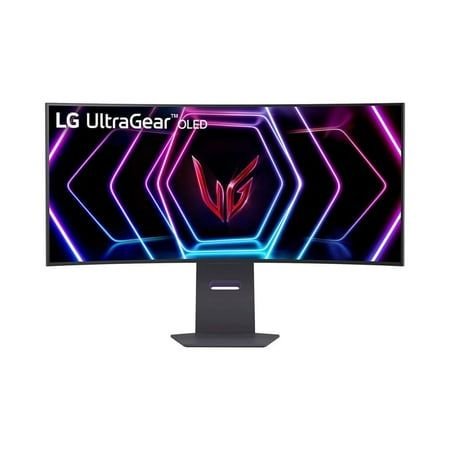
In brief — 2026-05-19 · LG's UltraGear 52G930B lands as a 52-inch 5K OLED gaming monitor that Tom's Hardware calls "extreme in every respect" — a screen that pushes both panel size and pixel density well past the 32-inch 4K norm that has defined enthusiast displays for the last three years. For builders shopping a flagship monitor, the 52G930B reframes the GPU horsepower question: at 5K, even an RTX 5090 has to work.
What happened
LG has launched the UltraGear 52G930B, a 52-inch 5K OLED gaming monitor reviewed this week by Tom's Hardware under the headline "Extreme in every respect." The 52-inch diagonal sits well above the 32-to-42-inch range that has defined OLED gaming displays since 2024, and the 5K (5120×2880) native resolution pushes the pixel count roughly 78% above 4K UHD's 3840×2160. Tom's Hardware's verdict frames the panel as a category-redefining product rather than an incremental refresh — both for sheer surface area and for the rendering load it imposes on a host GPU.
The 52G930B follows LG's broader 2026 UltraGear push. The company has also teased the UltraGear 25G590B, billed as the "world's first" native 1,000 Hz refresh rate panel at 1080p, slated for the second half of 2026. Together the two announcements stake out opposite ends of the gaming-monitor market: one chasing maximum competitive frame cadence at low resolution, the other chasing cinematic surface area at extreme pixel density.
Pricing and availability for the 52G930B were not specified in the headline review, but the category positioning — a flagship OLED at a resolution above 4K and a size above 42 inches — places it firmly in the workstation-adjacent display tier rather than mass-market gaming. Tom's Hardware's framing suggests the monitor is aimed at builders who want a single display to serve both a high-end gaming rig and a creator workflow, replacing the dual-monitor setups common at this budget.
Why it matters for builders
Anyone speccing a new rig in 2026 has been able to assume that an RTX 4080-class or better GPU can comfortably drive 4K at high refresh rates in most modern titles. A 5K panel breaks that assumption. The 52G930B's 5120×2880 native grid demands roughly 78% more pixels per frame than 4K, which collapses the headroom GPUs like the RTX 4080 Super and RX 7900 XTX have at the top of the 4K stack.
That makes the 52G930B a genuine RTX 5090-tier display. For builders cross-shopping a flagship monitor and a flagship GPU, the math now favors pairing the two — anything less leaves the panel underdriven in demanding titles, particularly with ray tracing enabled. DLSS 4 and FSR 4 upscaling become load-bearing rather than optional, since rendering at native 5K with full effects is outside the comfort zone of even the current top card.
There is also a productivity argument. A 52-inch 5K panel at roughly 113 PPI delivers desktop real estate close to a dual-27-inch 4K setup in a single seamless surface, which is attractive for local-LLM developers running multiple chat windows, IDEs, and log streams side-by-side. Builders considering a 52G930B should also budget for a desk deep enough to view it comfortably — viewing distance scales with diagonal, and a 52-inch panel at typical 60 cm depth is too close for most users.
Hardware angle
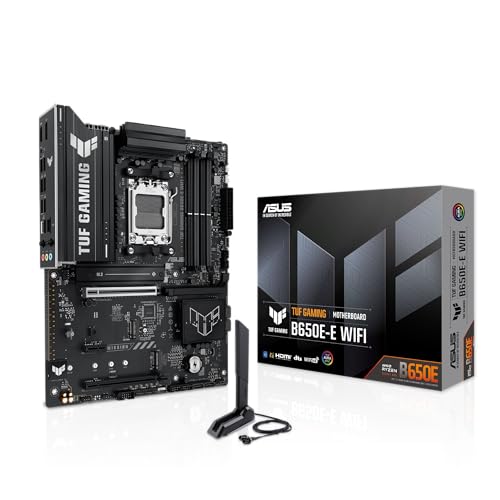
The 52G930B's resolution puts a hard floor under the GPU budget for any build that includes it. Pairing the monitor with a high-core-count CPU like the AMD Ryzen 9 7900X bundle keeps render-thread bottlenecks off the table in CPU-bound titles, and the bundled ASUS ROG Strix B650-A board delivers the PCIe 5.0 GPU slot and DDR5 bandwidth that a 5090-class card needs to feed a 5K panel. Builders who want a step up on VRM headroom for sustained overclocks can swap in an ASUS TUF Gaming B650E-E WiFi, which moves to an 8+2+1 80A DrMOS stage and a PCIe 5.0-ready M.2 layout.
Desk ergonomics matter on a 52-inch display. A monitor light bar like the Quntis Monitor Light Bar Pro avoids the glare and ceiling-light reflections that OLED panels are particularly prone to, and is sized to clip onto displays in this diagonal range. Builders moving up from a 32-inch 4K setup should expect to rethink lighting and monitor-arm load capacity at the same time as the GPU upgrade.
What other coverage is saying
Tom's Hardware separately reports that LG is preparing the UltraGear 25G590B, a 1,000 Hz 1080p panel aimed at competitive shooters, for a second-half 2026 launch — a counterpoint to the 52G930B's resolution-first positioning. The same outlet also notes that Dell has cut $1,150 off its RTX 5090 gaming laptop, dropping it to $4,399, which puts a mobile 5090 in the same conversation as the desktop 5090-plus-52-inch-monitor pairing the 52G930B implies. Tom's Hardware's MSI Raider 16 Max HX review reinforces the same point from the laptop side — that 5K-capable mobile silicon is now shipping in volume. The Decoder, covering an unrelated FDA pilot on AI-monitored clinical trials, illustrates how broadly the "monitor everything in real time" framing has spread across categories well outside gaming displays.
Sources
- Tom's Hardware — LG UltraGear 52G930B review — Full review of the 52-inch 5K OLED, framing it as a category-redefining flagship.
- Tom's Hardware — UltraGear 25G590B 1,000 Hz announcement — LG's second-half-2026 1,000 Hz 1080p competitive panel, the counterpoint to the 52G930B.
- Tom's Hardware — Dell RTX 5090 laptop price cut — $1,150 discount brings a mobile RTX 5090 rig to $4,399, relevant context for 5K-capable hardware budgets.
- Tom's Hardware — MSI Raider 16 Max HX review — Elite-tier gaming laptop coverage that maps onto the same 5K-capable silicon discussion.
- The Decoder — FDA AI clinical-trial monitoring — Tangential but illustrative of the broader "always-on monitoring" trend across industries.
Filed by the SpecPicks News Desk. We summarize and link — never paywall-bypass.