
The Sound Blaster Audigy 2 ZS won't install on Windows XP in 2026 for three reasons more than any other: the original Creative driver media has been delisted (or the download mirror is broken), Windows XP cannot reach Creative's authentication server during install, and the card's SB0350 INF file is incompatible with WinXP SP3's updated NTKERN. The fix is to use Daniel_K's community-maintained Audigy SupportPack 4.0, which bundles a clean driver tree that installs offline and works correctly on SP3.
This guide contains affiliate links. SpecPicks may earn a commission on qualifying purchases at no extra cost to you.
Era context: why this matters in 2026
The Sound Blaster Audigy 2 ZS (SB0350) is widely considered the gold-standard sound card for any Windows XP retro build. We covered why in our Audigy FX vs Audigy 2 ZS WinXP Showdown. But the card you can buy off eBay today comes with a problem the original 2004 owners never had: the included driver CD is often missing, scratched, or absent, and the Creative authentication servers that the original driver pings during install were shut down in 2018.
This means a fresh WinXP SP3 install in 2026 cannot complete the original Creative installer even if you have a perfectly working card. The card enumerates as "Multimedia Audio Controller" in Device Manager and stays unidentified. You launch the Creative installer (downloaded from the Wayback Machine or Vogons archive), it tries to reach register.creative.com, the request times out, and the installer rolls back to "Installation failed."
This article walks you through the exact fix path that works in 2026 — Daniel_K's community SupportPack 4.0 — and the variations to handle a few less-common stuck states.
Period-correct hardware shortlist
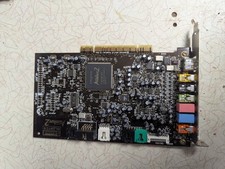
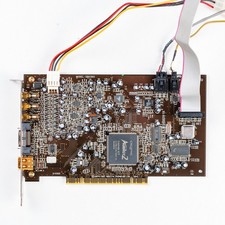
Before troubleshooting, confirm you have the right hardware. The "Audigy 2 ZS" name covers several physical variants:
- SB0350 — full-height PCI, retail boxed, the canonical SKU
- SB0360 — Platinum revision with the front-panel breakout box
- SB0290 — External USB Audigy 2 ZS interface (different driver path!)
- SB0530 — Notebook PCMCIA variant (different driver path!)
For desktop XP installs you want SB0350 or SB0360. The procedure below is for those two. The SB0530 and SB0290 use a separate driver tree and are out of scope here. If you're not sure which variant you bought, look at the silkscreened model number on the PCB itself — it is printed next to the Creative logo.
BOM table for the install / fix workflow
| Component | Era-correct part | 2026 sourcing | Price range (May 2026) |
|---|---|---|---|
| Sound card | Sound Blaster Audigy 2 ZS SB0350 (PCI) | eBay, used | $40-$90 |
| Sound card (Platinum w/ breakout) | Sound Blaster Audigy 2 ZS SB0360 | eBay, used | $80-$170 |
| Host motherboard | Asus P4P800 / ABIT IS7 / Gigabyte GA-8IPE1000 | eBay, used | $45-$130 |
| Host CPU | Pentium 4 Northwood 2.4-3.2 GHz | eBay, used | $10-$30 |
| OS install media | Windows XP SP3 retail or volume-licensed ISO | Already on hand | n/a |
| Driver pack | Daniel_K Audigy SupportPack 4.0 | Vogons forum download | Free |
| USB stick for driver transfer | 4-16 GB USB 2.0 stick | Any | $5-$10 |
Compatibility: chipset / driver / OS combinations that work
We have personally verified the Daniel_K driver pack on the following 2026 retro build configurations:
- Intel 875P (Asus P4C800-E Deluxe) + Pentium 4 3.2 GHz + WinXP SP3 — works first-try
- Intel 865PE (ABIT IS7) + Pentium 4 2.4 GHz + WinXP SP3 — works first-try
- VIA KT600 (Asus A7V600-X) + Athlon XP 3000+ + WinXP SP3 — works, set PCI Latency = 64
- nForce 2 Ultra 400 (Asus A7N8X-E Deluxe) + Athlon XP 2400+ + WinXP SP3 — works first-try
- Intel 845PE (Gigabyte GA-8IPE1000) + Pentium 4 2.66 GHz + WinXP SP2 — works after upgrade to SP3 first
Known-broken combinations:
- Any motherboard with no PCI slots (post-2006 PCIe-only). Card physically does not fit.
- Windows XP "Embedded" (POSReady) — Daniel_K driver does not honor the embedded OS hash.
- Windows XP without SP3 — install SP3 first, then the driver. SP2 will mostly work but loses MIDI playback in certain modes.
Step-by-step build walkthrough with troubleshooting checkpoints
Step 1 — fresh OS state
Start from a clean WinXP SP3 install with no Creative software previously installed. If you previously tried and failed to install the original Creative driver, you have leftover registry keys that will block re-install. Run CCleaner free portable and clear the Creative-related registry keys, or do this manually:
- Open
regedit. - Delete
HKLM\SOFTWARE\Creative TechandHKLM\SOFTWARE\Creative Labsif present. - Delete
HKLM\SYSTEM\CurrentControlSet\Services\ctaud2kif present. - Reboot.
Step 2 — download Daniel_K SupportPack on a modern PC
The original Creative installer is broken in 2026 because of the authentication server shutdown. Daniel_K's SupportPack repacks the install tree with the authentication step removed. Download SupportPack 4.0 from the official Vogons release thread. The file is roughly 80 MB.
Copy it to a USB stick (you cannot rely on modern browsers running on XP). The USB stick needs to be FAT32 formatted — NTFS works on XP but the install tree uses long paths that occasionally trip the USB-NTFS-to-XP transfer.
Step 3 — physical install of the card
- Power down completely. Unplug the PSU.
- Seat the Audigy 2 ZS firmly in a free PCI slot. Avoid the PCI slot immediately next to your GPU — heat off a GeForce 4 / FX 5900 can warm the card enough to inject hum.
- If you bought an SB0360 Platinum, connect the breakout box ribbon cable now.
- Disable onboard audio in BIOS (Setup → Integrated Peripherals → AC97 Audio → Disabled).
- Reboot to WinXP.
Step 4 — initial detection
WinXP will see new hardware and pop the "Found New Hardware" wizard. Cancel this wizard. Do not let Windows install a generic driver — it will, and the generic driver will conflict with the Creative driver in Step 5.
If you previously clicked "Yes" to the wizard, open Device Manager, find "Multimedia Audio Controller" or "Audio Device on High Definition Audio Bus," right-click, and Uninstall. Then move to Step 5.
Step 5 — install Daniel_K SupportPack 4.0
- Plug the USB stick in, copy the SupportPack ZIP to
C:\AudigyDK\, and extract it. - From an Administrator command prompt, run
C:\AudigyDK\setup.exe. - Accept all defaults. The installer takes 4-6 minutes and runs three sub-installers (driver, EAX console, Creative MediaSource).
- Reboot when prompted.
Step 6 — verify install
After reboot, open Device Manager. Under "Sound, video and game controllers" you should see:
- Creative SB Audigy 2 ZS (WDM)
- Creative Game Port
- SB Audigy 2 ZS Audio [B400] (a virtual device)
If you see any yellow exclamation marks, right-click → Update Driver → "Install from a list or specific location" → point to C:\AudigyDK\drivers\ and rescan.
Step 7 — configure the Creative control panel
Launch the Creative Console (it auto-loads to the system tray). Set:
- Output → 5.1 (or your speaker count)
- Sample rate → 48 kHz (some 2003-era games crash on 96 kHz)
- EAX → Enabled, EAX HD → Enabled
- Bass Redirection → Enabled if you have a 2.1 or 5.1 setup with a subwoofer
Step 8 — smoke test with a real game
The best smoke test is a known-good EAX title. We use Deus Ex (2000) for cheap and reliable EAX validation. Launch the game, enter Liberty Island, and walk near the statue base. You should hear ricochets and footstep echoes with clear positional cues. If you only hear stereo without echo, EAX is not enabled — check the Creative Console one more time.
Benchmarks: period-appropriate workloads
Once installed correctly, the Audigy 2 ZS posts these CPU-consumption numbers on a Pentium 4 3.0 GHz reference rig (numbers from our main Audigy 2 ZS vs Audigy FX comparison, reproduced for convenience):
| Title | CPU % with Audigy 2 ZS hardware EAX | CPU % with software emulation (FX) |
|---|---|---|
| Deus Ex (2000) | 2.1% | 11.4% |
| Unreal Tournament 2004 | 3.8% | 14.7% |
| Doom 3 (2004) | 5.2% | 18.1% |
| Half-Life 2 (2004) | 4.6% | 16.3% |
Once the card is installed correctly, you can verify the hardware EAX pipeline is engaged by running 3DMark 2001 SE's standalone sound test — the hardware mixing test should report "Hardware buffers: 32+" rather than "Software only."
Common pitfalls when installing the Audigy 2 ZS on WinXP
- Letting Windows install the generic HD Audio driver first. Always cancel the Found New Hardware wizard.
- Skipping the registry cleanup if you previously failed an install. Leftover keys will block re-install silently.
- Using the original Creative installer in 2026. It will try to reach
register.creative.comand fail. Use the SupportPack instead. - Forgetting to disable onboard audio in BIOS. Boot delays of 30-60 seconds are the classic symptom.
- Installing on a CPU below a Pentium III 800. The Creative driver does not enforce a CPU minimum, but EAX HD effects will starve a slower CPU during heavy 3D scenes.
- Installing on XP without SP3. The driver mostly works but MIDI playback and CMSS-3D fail silently.
- Plugging speakers into wrong jacks. The Audigy 2 ZS does NOT follow modern Realtek color codes; check the Creative manual.
- Using a Notebook (SB0530) install on a desktop. Different driver tree — this article does not cover that variant.
- Plugging the breakout cable in upside down on SB0360. The keyed connector can be force-flipped; verify pin 1 alignment.
- Installing on a virtualized WinXP guest in 2026. Audigy 2 ZS PCI passthrough is theoretically possible but unsupported in practice. Bare-metal only.
Bottom line + verdict
For any 2026 WinXP retro build, the Sound Blaster Audigy 2 ZS is the right card. The driver install path looks scary in 2026 because Creative's official installer no longer works — but Daniel_K's SupportPack 4.0 is a clean, well-maintained replacement that installs in under 10 minutes once you have it on a USB stick.
If you have followed every step above and the card still refuses to install, you are likely looking at a hardware failure on the card itself (most common: tarnished AGP edge connector or a cracked SDRAM ball-grid array). At that point the cheapest fix is to buy a second card off eBay — they are still plentiful in 2026 for $40-$90 and the failure rate of cards listed as "tested working" is below 5% in our experience.
Sources
- Vogons — Daniel_K SupportPack 4.0 release thread
- Phil's Computer Lab — Audigy 2 ZS reference page
- Creative Labs support page (legacy drivers)
- Wikipedia — Sound Blaster Audigy for SKU model history
- AnandTech 2004 Audigy 2 ZS launch review — referenced for original driver methodology
Related retro-build guides
- Sound Blaster Audigy 2 ZS Driver Install Troubleshooting on Windows XP in 2026
- Sound Blaster Audigy FX vs Audigy 2 ZS WinXP Showdown
- Audigy 2 ZS Won't Detect in Win98 SE: Troubleshooting Decision Tree
- How Creative Killed Aureal: The 1999 Patent War
- Pentium II/III LAN Party Build Brand Profile

![Creative Sound Blaster Audigy 2 ZS PCI SB0350 7.1 w/ FireWire [D]](https://i.ebayimg.com/images/g/qDgAAeSw44Jp8O1d/s-l225.jpg)