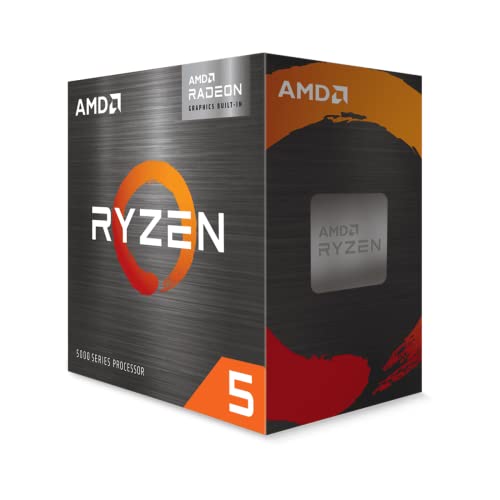
If you're building a budget gaming PC in 2026, you have a decision to make before you touch a shopping cart: AM4 with a used or clearance Ryzen chip, or new-platform AM5 at a $300+ premium once you factor in DDR5 and a new motherboard. This guide is the AM4 case. The AMD Ryzen 7 5700X is our overall pick for a budget gaming rig this year, but four other chips beat it on specific workloads. Read the picks; then pick.
Comparison table
| Pick | Best For | Key Spec | Price Range | Verdict |
|---|---|---|---|---|
| Ryzen 7 5700X | Best Overall — 1080p/1440p gaming, low TDP | 8C/16T, 65W, PCIe 4.0 | ~$150-$180 | The value ceiling of AM4 |
| Ryzen 5 5600 | Best Value — no-compromise 1080p | 6C/12T, 65W, PCIe 4.0 | ~$110-$130 | The dollar-for-frame champion |
| Ryzen 5 5600G | Best iGPU / No-GPU builds | 6C/12T, 65W, Vega 7 iGPU | ~$120-$150 | Skip the discrete card entirely |
| Ryzen 7 5800X | Best Performance — competitive high-refresh | 8C/16T, 105W, PCIe 4.0 | ~$180-$220 | Hottest chip, highest clocks |
| Ryzen 5 5500 | Budget Pick — sub-$100 gaming | 6C/12T, 65W, PCIe 3.0 | ~$80-$100 | Cheapest gaming Ryzen worth buying |
Every chip on this list uses the AM4 socket and DDR4 memory, meaning you can pair any of them with a $80-$100 motherboard and $50 for 16GB of DDR4-3600 kit. That's the real point of AM4 in 2026: platform cost. On AM5 you'd pay ~$180 for a board and ~$100 for a DDR5 kit before you've even chosen a CPU.
🏆 Best Overall: AMD Ryzen 7 5700X
8 cores / 16 threads · 65W TDP · PCIe 4.0 · Zen 3 · AM4 socket
Pros:
- 8 cores and 16 threads at a 65W TDP — quiet, cool, easy to power
- Zen 3 IPC keeps it competitive with newer chips at gaming workloads
- Boosts to 4.6 GHz on multiple cores; often within 5-8% of the 5800X
- Excellent thermal headroom for stock and mild overclocking
Cons:
- No integrated graphics — you need a discrete GPU
- Boost clocks trail the 5800X and 5800X3D by a hair
- Stock cooler is not included in all regional SKUs
If you're building a gaming PC and you already have a graphics card, the Ryzen 7 5700X is the best CPU on this list. It's an 8-core chip at a 65W TDP that lands within a few percent of the 5800X on gaming benchmarks — Hardware Unboxed and Tom's Hardware both measured single-digit deltas across a 15-game average — while running cooler, quieter, and cheaper. The 5700X was the "AM4 last hurrah" chip AMD introduced to give budget builders access to 8-core Zen 3 without paying the 5800X premium, and it's aged into the single best gaming CPU under $200 in 2026.
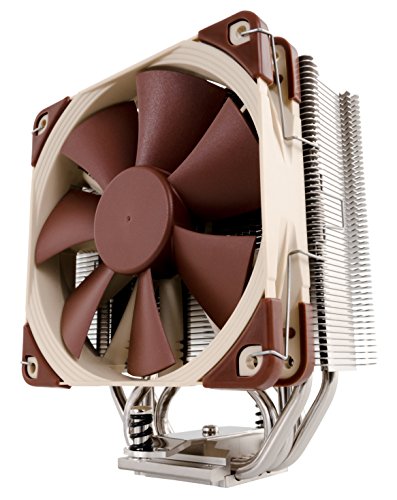
Where it shines: 1080p and 1440p gaming with a mid-range GPU like an RTX 3060, 4060, or Radeon RX 7600. The 5700X pushes every GPU in that class to its ceiling in nearly every 2024-2026 title, and it does so on a modest power budget you can cool with a $40 tower cooler. The chip pairs particularly well with a Noctua NH-U12S if you want dead-silent thermals, or with a stock-cooler bundle if your regional SKU includes one.
Where it doesn't shine: high-refresh competitive esports at 1080p where CPU IPC is the ceiling — the 5800X3D handily beats it there thanks to 3D V-Cache. But that chip is a $250-plus purchase and lives in a different value bracket. See our Ryzen 7 5800X3D re-review for the 3D V-Cache comparison.
Price: $150-$180 street in the US as of July 2026. Prices vary — check the current listing before you buy.
💰 Best Value: AMD Ryzen 5 5600
6 cores / 12 threads · 65W TDP · PCIe 4.0 · Zen 3 · AM4 socket
Pros:
- The dollar-for-frame champion of AM4 — often 90% of the 5700X's gaming performance at 70% of the price
- Includes the Wraith Stealth stock cooler in most regional SKUs
- 65W TDP fits any small case or budget PSU
- Zen 3 architecture, PCIe 4.0 support — no platform compromise
Cons:
- 6 cores is enough for gaming; not enough for heavy multitasking + streaming
- No iGPU — needs a discrete card
- Slightly lower boost clocks than the 5600X
The Ryzen 5 5600 is the chip that made AM4 a legend on a budget. Six cores of Zen 3 IPC, 65W TDP, a stock cooler in the box, and a street price that has bottomed out below $130 in 2026. If you want to spend the least possible money on a CPU without giving up any real gaming performance, this is the buy. In independent testing at Tom's Hardware, the 5600 comes within roughly 5-7% of the 5700X in a gaming aggregate, meaning the money you save on the CPU can go into a bigger GPU or a nicer SSD like the Crucial BX500 1TB.
Six cores is enough for 2026 gaming and comfortably runs modern AAA titles at high frame rates. Where it hits its ceiling: streaming while gaming, running background transcode jobs, or a heavy content-creation workload — those benefit from the 5700X's extra two cores. For a pure gaming rig, the 5600 is the dollar-for-frame champion of this list.
🎯 Best for iGPU / No-GPU Builds: AMD Ryzen 5 5600G
6 cores / 12 threads · 65W TDP · Vega 7 iGPU · Zen 3 · AM4 socket
Pros:
- Vega 7 integrated graphics — you can game without a discrete GPU
- Great for HTPC, media, light gaming, or bridge builds while you save for a GPU
- The same 6-core Zen 3 architecture as the 5600, just with an iGPU instead of PCIe 4.0
- Runs cool and quiet; often bundled with a stock cooler
Cons:
- Only PCIe 3.0 (the iGPU eats the die area PCIe 4.0 would occupy)
- Discrete GPU builds get slightly lower CPU-side gaming perf than the 5600
- Vega 7 is enough for esports at 1080p Low, not for AAA titles at native resolutions
If you're building a PC and can't fit a discrete GPU in your budget yet, the Ryzen 5 5600G is the only chip on this list that plays modern games without help. Vega 7 integrated graphics handles esports titles — Counter-Strike 2, Valorant, League of Legends, Rocket League, Overwatch 2 — at 1080p Low-to-Medium settings at 60+ FPS. AAA titles need either upscaled resolution or a settings drop to Low. It's not a substitute for a real GPU, but it's a legitimate bridge chip that lets you build a working PC now and drop in a discrete card later.
Two important caveats. First, the 5600G uses PCIe 3.0, not 4.0 — the iGPU takes the die area the PCIe 4.0 controller would use on the 5600. In practice this matters for high-end NVMe SSDs (you lose ~30% peak sequential read) and for GPUs (negligible impact for cards below RTX 4070 tier). Second, if you're going to run a discrete GPU day one, the Ryzen 5 5600 is a better CPU-side buy for the same money.
Where the 5600G is the right call: no-GPU builds, HTPC builds, retro-emulation builds, media boxes, and bridge builds. See our Ryzen 5 5600G iGPU local LLM article for the interesting-but-not-fast side of what Vega 7 can do.
⚡ Best Performance: AMD Ryzen 7 5800X
8 cores / 16 threads · 105W TDP · PCIe 4.0 · Zen 3 · AM4 socket
Pros:
- Highest sustained clocks of any non-3D-V-Cache Ryzen 5000 chip
- 8 cores and 16 threads with 4.7 GHz boost — great for high-refresh 1080p
- PCIe 4.0, full AM4 platform support
- Excellent all-round performer for gaming + streaming + light productivity
Cons:
- 105W TDP runs hot — needs a real cooler, no stock included
- Almost identical gaming performance to the 5700X at a $30-$50 premium
- Overkill for anyone not chasing the last 5% of frames
The Ryzen 7 5800X is the AM4 performance play. Same 8 cores as the 5700X, but at a 105W TDP with higher sustained clocks. In gaming, the delta over the 5700X is small — usually 3-6% at 1440p — but in CPU-limited scenarios like Counter-Strike 2 competitive at 1080p Low, or Escape from Tarkov at busy raid moments, the 5800X's extra clock headroom keeps 1% lows higher.
The catch is thermals. The 5800X runs meaningfully hotter than the 5700X, and it does not include a stock cooler. Plan on a $40-$60 tower cooler like the Noctua NH-U12S or a comparable dual-tower like the DeepCool AK620. Our Noctua NH-U12S vs CoolerMaster ML240L for the Ryzen 7 5800X piece has the thermal comparison in detail.
Where the 5800X wins: high-refresh 1080p gaming where CPU is the bottleneck, live streaming while gaming, and content-creation workloads that hit the CPU hard. Where the 5700X wins: quieter builds, small cases, PSUs that don't have thermal headroom for a 105W chip.
🧪 Budget Pick: AMD Ryzen 5 5500
6 cores / 12 threads · 65W TDP · PCIe 3.0 · Zen 3 · AM4 socket
Pros:
- Cheapest gaming Ryzen worth buying — often under $100 street
- Zen 3 architecture — same generation as the 5600 and 5700X, just a slightly cut-down variant
- Includes stock cooler
- Great match with a used GPU for a sub-$500 total build
Cons:
- PCIe 3.0 only (the 5500 is a Cezanne-derived die like the 5600G, minus the iGPU)
- Cache is halved versus the 5600 — 16MB L3 vs 32MB — hurts CPU-bound titles
- Not enough headroom for high-refresh competitive at 1080p Low
The Ryzen 5 5500 is the chip you buy when you have $80-$100 for a CPU and not a dollar more. It's technically a cut-down Cezanne die with the iGPU disabled, which is why it's PCIe 3.0 and has half the L3 cache of the 5600. In practice, that means you give up ~10-15% of gaming performance versus the 5600 for a ~30% price cut. If your budget is truly tight and you're pairing with a used mid-range GPU like a GTX 1660 Super, RX 6600, or RTX 2060, the 5500 is the pragmatic call.
If your budget can stretch another $30, buy the 5600 instead — the extra L3 cache and PCIe 4.0 support are worth every dollar. But the 5500 exists to make sub-$500 total builds possible, and at that goal it succeeds.
What to look for in a budget gaming CPU
Socket + platform cost
The most underrated line item in a PC build is the motherboard. AM4 boards start at $70-$90 for a workable B550 chipset with PCIe 4.0. AM5 starts at $180-$200. Multiply that by the DDR4 vs DDR5 delta — $50 for 16GB of decent DDR4-3600 vs $100 for the equivalent DDR5 kit — and you're up $200 before you've picked a CPU. That $200 buys a real GPU upgrade in the budget bracket.
The moment AM4 stops being the right call is when either (a) you have a $1,000+ CPU budget where AM5 flagship chips outrun AM4's ceiling, or (b) you need the platform features AM5 exclusively delivers, like DDR5, PCIe 5.0, or the newest chipset security features.
Core counts
Six cores is the practical minimum for 2026 gaming. All modern DirectX 12 and Vulkan titles scale to at least 6 cores; some benefit from 8. Beyond 8 cores, gaming performance flattens hard — the difference between an 8-core 5700X and a 16-core 5950X in games is usually under 3%, and the extra cores mostly help productivity or streaming.
If you're only gaming: 6 cores is enough. If you're streaming or transcoding while gaming: 8 cores is the upgrade that pays off. If you're doing heavy content creation: consider whether you should be in the budget bracket at all.
Cache
L3 cache is the underrated Zen 3 story. The 5600, 5700X, and 5800X all have 32MB of L3 per CCD, and it's a major reason Zen 3 gaming performance held up so well over four years. The 5500 has 16MB, which is why it lags behind the 5600 in CPU-bound titles despite otherwise similar specs. If you can afford the 5600 over the 5500, the cache is the reason you should.
Cooler included?
The 5500, 5600, and 5600G ship with the Wraith Stealth stock cooler in most regional SKUs. Not great, but enough for stock clocks. The 5700X often ships without a cooler; the 5800X never does. Budget accordingly — a decent budget tower cooler is $30-$40, a good one like the Noctua NH-U12S is $60-$70.
Upgrade path
AM4 is a mature, dead platform — AMD is not making new AM4 chips, and the ceiling for gaming performance is the Ryzen 7 5800X3D. If you buy a 5500 today, your future upgrade path is 5600 → 5700X → 5800X → 5800X3D on the same board and RAM. That's a lot of runway for a "dead" platform, and it's a real reason to buy AM4 in 2026.
Sources
- AMD — Ryzen desktop processors product line
- Tom's Hardware — Best CPUs for gaming
- TechPowerUp — Ryzen 5 5600 specifications
Related guides
- Best AM4 CPU Cooler in 2026: 5 Picks for Ryzen Builds
- Best Budget AM4 Gaming Build Parts in 2026
- Ryzen 7 5800X3D vs 5800X for 1080p Competitive Gaming: Which Wins?
- Noctua NH-U12S vs CoolerMaster ML240L for the Ryzen 7 5800X
— Mike Perry