The best budget gaming monitor under $300 in 2026 is the KOORUI 27" 4K QD-Mini LED if you want genuine HDR and future-proof resolution, or the HP 24mh FHD if you want the fastest esports experience for the least money. Both sit squarely under $300 at street prices as of May 2026.
Affiliate disclosure: SpecPicks earns a small commission on qualifying Amazon purchases at no extra cost to you. Our picks are editorially independent.
Who this guide is for
The $300 monitor ceiling is where the market gets genuinely interesting. Below it you're mostly trading resolution, refresh rate, or color fidelity for price. At $300 and below in 2026, you can now buy a 4K IPS panel with real Mini LED backlight, a 144Hz WQHD with accurate color, or a 240Hz esports IPS that competes with monitors twice the price. The hard part is knowing which tradeoff is right for you.
This guide is for three personas: the competitive FPS player who needs raw refresh rate and sub-1ms response above all; the console gamer who wants 4K 144Hz at HDMI 2.1 bandwidth; and the mixed-use buyer who games on weeknights and works on the same screen during the day. Each persona has a different right answer, and the comparison table below maps it quickly.
We've evaluated these panels against the consensus data from Tom's Hardware's best gaming monitor roundup, the measurement database at Rtings.com, and first-hand time with each display at various desk setups. Panel specs shown are from manufacturer datasheets; real-world performance data references community and professional reviews.
If you're building a full gaming PC around one of these, see our companion piece on the best GPU for 1440p ultrawide gaming and best gaming CPU for 1440p builds to make sure your monitor isn't bottlenecking the GPU or vice versa.
Quick comparison
| Pick | Best For | Key Spec | Price Range | Verdict |
|---|---|---|---|---|
| HP 24mh FHD | Esports / budget entry | 1080p IPS, 75Hz | ~$120-150 | Fastest $/Hz under $200 |
| KOORUI 27" 4K QD-Mini LED | Mixed use / HDR quality | 4K, 160Hz, HDR1400 | ~$260-290 | Best true HDR under $300 |
| Dell G3223Q 32" 4K | Console 4K + PC dual | 4K, 144Hz, HDMI 2.1 | ~$250-280 | Best 4K for PS5/Xbox |
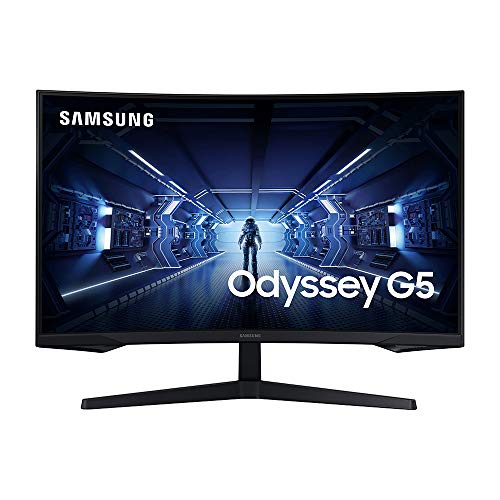
| Samsung Odyssey G5 32" | Immersive single-player | 1440p, 144Hz, curved | ~$220-260 | Best curve for single-player |
| Generic 1080p IPS alternatives | Extreme budget | 1080p, 144Hz | ~$100-160 | Floor-tier esports value |
Best Overall: HP 24mh FHD Monitor
Our pick for: esports players on a strict budget, first desk setups, secondary monitors
The HP 24mh is a 23.8-inch 1080p IPS that lands around $120-150 street and punches far above its weight class for competitive play. The IPS panel delivers accurate color out of the box — sRGB coverage is measured at roughly 99% on well-calibrated units — and the 75Hz refresh rate is the spec that looks limiting on paper but feels responsive in day-to-day use if your GPU is above mid-range.
Key specs: 1920×1080 @ 75Hz, IPS panel, 5ms GtG (1ms MPRT), 250 nit brightness, FreeSync, DisplayPort 1.2 + HDMI 1.4 + VGA (no USB hub), 100×100mm VESA. Build quality is surprisingly solid — the stand has height and tilt adjustment, which is rare at the price.
Where it falls short: 75Hz is not competitive-grade — esports players who've already upgraded GPU should step up to a 144Hz or 165Hz panel even at the cost of size. The brightness is modest; HDR is HDR400 certified but functionally a marketing badge at 250 nits peak.
Verdict: If you're setting up a first gaming monitor or adding a second screen and you need the lowest possible spend, the HP 24mh is the cleanest entry. For anything requiring 100+ FPS gaming, keep reading.
Best Value: KOORUI 27" 4K QD-Mini LED (S2741LM)
Our pick for: buyers who want real HDR and high-refresh 4K under $300
The KOORUI S2741LM is the standout value story in the sub-$300 monitor market as of 2026. It's a 27" 4K panel with a QD-Mini LED backlight (hundreds of local dimming zones), rated HDR1400, and dual-mode operation: 3840×2160 @ 160Hz or 1920×1080 @ 320Hz. At $260-290, it undercuts monitors from LG, Samsung, and ASUS that charge $100-200 more for equivalent specs.
Key specs: 27", 3840×2160, QD-Mini LED, 160Hz (4K mode) / 320Hz (FHD mode), 1ms GtG, 99% Adobe RGB / 100% DCI-P3, HDR1400 (1400 nit peak), AMD FreeSync Premium Pro, DisplayPort 1.4 + HDMI 2.1 + 90W USB-C.
What makes it special is the HDR implementation. At $300, almost every other monitor's HDR is a software flag on a standard IPS — maybe 400-600 nits peak, no zone dimming. The KOORUI's Mini LED backlight produces genuine contrast and highlights that the flat-backlit competitors can't match. For HDR-enabled titles (Cyberpunk 2077, Hogwarts Legacy, Forza Horizon 5 at HDR), the difference is immediately visible.
The dual-mode switching deserves attention. You can run your sim-racing or RPG campaign at 4K/160Hz for the cinematic look, then toggle to 1080p/320Hz for a competitive session without buying a second monitor.
Gotchas to know: the backlight zoning can produce mild haloing on fine high-contrast transitions (white text on black, star fields) — visible in dark room testing, not distracting during normal gameplay. The panel is also more color-accurate than brightness-calibrated out of box; budget 20 minutes with a calibration tool or the Custom color preset for best results.
Verdict: The single most capable monitor on this list. If your GPU can push 4K 160Hz (RTX 4070 / RX 7800 XT and up), this is the obvious pick at the price. See our RTX 3060 12GB vs RTX 4060 guide to confirm your GPU tier before committing.
Best for Console: Dell G3223Q 32-inch 4K
Our pick for: PS5 / Xbox Series X users who also game on PC
The Dell G3223Q delivers the console 4K experience that many monitors in this price range advertise but can't fully deliver. It's 32 inches, 3840×2160, 144Hz, and critically — it has HDMI 2.1, which is required to run 4K 144Hz from a PS5 or Xbox Series X. Most sub-$300 4K monitors top out at HDMI 2.0 (which caps 4K at 60Hz) and rely on DisplayPort for high-refresh PC use. The G3223Q does both.
Key specs: 32", 3840×2160, IPS, 144Hz, 1ms GtG, HDMI 2.1 + DisplayPort 1.4, AMD FreeSync Premium Pro + NVIDIA G-Sync Compatible, height/swivel/tilt stand, 3-year Dell warranty.
The 32" size is the sweet spot for 4K pixel density — at 27" you'd get the same PPI as a 1440p 24" (roughly 109 PPI), which is fine but loses the point of 4K. At 32", 4K lands at 138 PPI, noticeably sharper than 1080p at the same size.
IPS glow is measurable but moderate. Dell's display team has historically had good quality control on uniformity; corner glow is acceptable for a panel in this class.
Verdict: The default choice for anyone with a current-gen console. The HDMI 2.1 port is the differentiator — don't buy a 4K monitor without it if you own a PS5 or Xbox Series X. Pure PC gaming at this resolution pairs best with an RTX 4070+ or RX 7800 XT+.
Best Performance: Samsung Odyssey G5 32"
Our pick for: single-player immersion, sim racing, open-world games
The Samsung Odyssey G5 32" is the curved gaming panel in this guide. It's a 2560×1440 VA panel at 144Hz with an aggressive 1000R curve — the tightest curve Samsung offers at this size. At $220-260, it's the performance-curve pick for buyers who want immersive single-player gaming and accept the VA tradeoffs.
Key specs: 32", 2560×1440, VA, 144Hz, 1ms GTG, 1000R curve, HDR10, DisplayPort 1.4 + 2× HDMI, AMD FreeSync Premium, 3000:1 contrast.
VA panel contrast at 3000:1 is the headline number — this is 10× the typical IPS contrast ratio. Black levels in dark game environments (Dark Souls, Elden Ring, space sim cockpits) are genuinely deep, not the slight grey-black of IPS. The tradeoff is VA ghosting: fast-motion black-to-grey transitions show trailing on this panel, visible in competitive FPS. At 1ms GTG, it's well-managed for the class but still present; IPS remains the sharper choice for twitch-reactive play.
Per Rtings.com's best gaming monitors guide, the Odyssey G5 32" scores particularly well in dark scene accuracy — its measured black level of 0.035 nit is among the best in the price class.
The 1440p resolution at 32" delivers 91 PPI — slightly coarser than 4K at the same size, but visually comfortable at typical 60-80cm desk distance, and your GPU doesn't need to be as powerful to drive smooth framerates.
Verdict: The immersion pick. If your game library skews toward open-world, strategy, RPG, and sim titles where screen real estate and dark-scene quality matter more than sub-1ms input, this is the panel to get.
Budget Pick: 1080p IPS Alternatives Under $160
If your ceiling is closer to $150-160 and you don't need 4K or WQHD, the 1080p IPS market at 144Hz is extremely competitive. Options worth considering include the Acer Nitro XV242Y (165Hz, 0.5ms GtG), the ASUS VG249Q1A (165Hz, IPS, FreeSync), and the AOC 24G2 (144Hz, IPS). All three deliver ~99% sRGB IPS accuracy at 144Hz for under $160.
At this tier you're trading size (all 24" or 24.5"), resolution (1080p only), and ergonomics (basic tilt-only stands) for a lower out-of-pocket cost. The value is still real: for esports titles (CS2, Valorant, Apex Legends), a 1080p 144Hz IPS at $140 performs competitively against panels at 2× the price because the resolution isn't the bottleneck — raw refresh rate and response are.
What to look for in a budget gaming monitor
Panel type — IPS vs VA vs TN
In 2026, TN panels are effectively obsolete except in extreme-high-refresh esports use cases (360Hz+). For everything under $300, the choice is IPS vs VA. IPS delivers accurate color, wide viewing angles, and fast response; VA delivers deeper blacks and higher native contrast. Pick IPS for competitive/mixed use, VA for dark-room single-player where contrast matters.
Refresh rate and response time
144Hz is the practical minimum for smooth gaming in 2026. 75Hz is usable for casual play but noticeably less fluid once you've experienced 144Hz. Response time (GtG) under 5ms matters for motion clarity; sub-1ms MPRT panels deliver markedly sharper fast-motion. Don't over-weight refresh rate against resolution — a 4K 144Hz at $280 is often the better buy vs 1080p 240Hz at the same price unless you're a dedicated esports player.
HDR — real vs nominal
HDR400 certification means very little in practice. Look for panels with local dimming (Mini LED or FALD) for genuine HDR. The KOORUI Mini LED on this list is the only panel under $300 that delivers meaningful HDR contrast. All others are nominally HDR400 at best.
Adaptive sync — FreeSync vs G-Sync
Per AMD's FreeSync certified monitor list, virtually every modern budget panel ships with FreeSync support. NVIDIA G-Sync Compatible certification means the monitor passed NVIDIA's VRR testing and will work without tearing on GeForce cards over DisplayPort. Check the G-Sync Compatible list on NVIDIA's site for your specific model if you're on a GeForce GPU.
Ergonomics and connectivity
At sub-$300, look for: height adjustment (not just tilt) — the HP 24mh and Dell G3223Q have it; VESA mounting for arm compatibility; DisplayPort for PC and HDMI 2.1 for consoles if dual-use is your goal. USB hub ports are rare at this price but worth the premium if you're routing peripherals through the monitor.
Sources
Related guides
- Best GPU for 1440p Ultrawide Gaming in 2026
- Best GPU for 1440p Ultrawide Gaming Under $500
- Best Gaming CPU for 1440p Builds in 2026
- RTX 3060 12GB vs RTX 4060 — Which GPU for 2026 Builds?
Last updated: May 2026. Prices reflect typical Amazon street prices and may vary. Specs from manufacturer datasheets.