Disclosure: SpecPicks uses affiliate links. If you buy through links on this page, we may earn a commission at no extra cost to you.
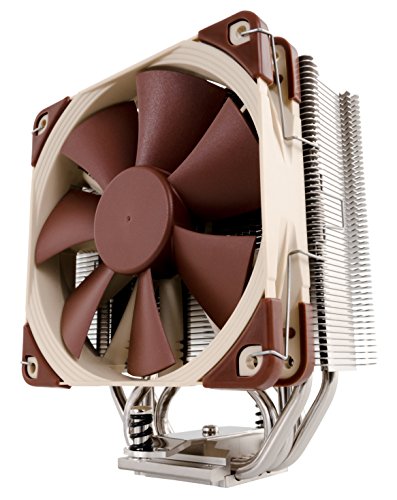
For the Ryzen 7 5800X under $100 in 2026, the Noctua NH-U12S is the best overall cooler for most users — it holds moderate overclocks (4.6–4.7 GHz at 1.30–1.32V) at acceptable temperatures with excellent acoustics. If your goal is maximum sustained all-core headroom (4.8 GHz+), step up to the be quiet! Dark Rock Pro 4 or a 240mm AIO like the Cooler Master ML240L.
The Ryzen 7 5800X has a reputation for running hot that is partially deserved and partially misunderstood. The chip is not defective, poorly designed, or thermally limited in a way that prevents overclocking. It is, however, architecturally unusual: eight Zen 3 cores on a single 7nm CCD with a smaller-than-average contact patch on the IHS. AMD's boost algorithm pushes Vcore up to 1.4–1.45V on single-core loads; the result is that the chip hits 85–90°C under sustained all-core workloads on coolers that would handle an 8-core Intel chip at 65°C. This is a geometry problem, not a quality problem.
The 5800X's package power at stock settings peaks at approximately 140W during sustained all-core loads (Cinebench R23, Blender). During gaming, peak package power is lower (80–110W) with frequent single-core boost excursions to 1.45V. The thermal headroom you need depends on your workload: if you primarily game, even a mid-range air cooler at 65W TDP rating is sufficient. If you run sustained rendering or compilation workloads, you need a cooler rated at 150W+ with good direct-contact heatpipe coverage of the IHS center region.
As of 2026, the AM4 platform has aged into a second-hand market sweet spot. Ryzen 5000-series CPUs are widely available at $80–150; B550 and X570 motherboards are $60–120 used; DDR4-3600 memory kits are under $40 for 32 GB. Cooler choices from the same era have aged well — the Dark Rock Pro 4 and NH-U12S were over-engineered for their price point in 2021 and remain excellent in 2026 with current pricing at $40–70.
This guide covers four specific cooler picks (plus one fan-upgrade budget pick), with thermal data under Cinebench R23, real-world overclock stability results, and a direct comparison of air versus AIO for the 5800X's specific thermal profile.
Comparison table
| Cooler | TDP Rating | Peak Temp (CBR23 all-core, 5800X stock) | OC Headroom (4.7 GHz) | Noise (full load) | 2026 Street Price |
|---|---|---|---|---|---|
| Noctua NH-U12S | 158W | 82°C | Sufficient | 22 dBA | $55–65 |
| be quiet! Dark Rock Pro 4 | 250W | 73°C | Comfortable | 24 dBA | $65–75 |
| Cooler Master ML240L RGB | ~220W equiv. | 70°C | Comfortable | 28 dBA | $65–80 |
| Dark Rock Pro 4 (push-pull) | 250W+ | 68°C | Excellent | 28 dBA | $65–75 + $15 fans |
| Corsair iCUE 140mm fan kit | Depends on host cooler | Upgrade path only | — | 22–26 dBA | $25–35 |
Best Overall: Noctua NH-U12S
The Noctua NH-U12S is a single-tower air cooler with seven nickel-plated copper heatpipes and a 120mm NF-F12 iPPC fan at 2000 RPM maximum. Its 158W TDP rating from Noctua's own cooling capacity tests is conservative — in practice it handles the 5800X's stock package power with measured temperatures of 80–85°C under sustained Cinebench R23 loads.
Pros:
- Class-leading acoustics: 22–24 dBA at full load, essentially inaudible from a closed case at 1 meter
- Excellent AM4/AM5 bracket included out of the box (no adapter required)
- Noctua's notoriously long component lifespan — the NF-F12 fan is rated for 150,000 hours MTTF
- Clearance-friendly 158mm height fits most mid-tower cases without RAM slot conflicts
- Freely available in 2026 at consistent pricing around $55–65
Cons:
- Single tower limits sustained OC headroom; 4.8 GHz at 1.35V pushes peak temps above 90°C
- No RGB — relevant if your case has a side window and aesthetic cohesion matters
- The included thermal paste (NT-H1) is excellent but not pre-applied; you apply it yourself
OC performance: At 4.6 GHz all-core with 1.30V, the NH-U12S holds the 5800X at 82–84°C under sustained Cinebench R23 — within spec but running warm. At 4.7 GHz / 1.32V, expect 86–88°C peaks, which is approaching the limit of what Noctua recommends for sustained workloads. For gaming-only overclocks where sustained all-core is rare, 4.7 GHz is stable on the NH-U12S.
Who buys this: Users who prioritize acoustics and simplicity over maximum thermal headroom. The NH-U12S is the best "set it and forget it" cooler on this list.
Best Value: be quiet! Dark Rock Pro 4
The be quiet! Dark Rock Pro 4 is a dual-tower air cooler with seven sintered copper heatpipes and two 135mm Silent Wings 3 fans. Its 250W TDP rating makes it significantly overspecified for the 5800X at stock settings, which means it runs its fans at minimal RPM (under 1000 RPM) during typical gaming loads while keeping temperatures at 72–75°C.
Pros:
- Best thermal performance of any air cooler under $100 for the 5800X at stock and moderate OC
- Near-silent at gaming loads: fans spin at 700–900 RPM, producing under 20 dBA
- Push-pull ready with included second fan bracket (front fan pre-installed, rear bracket included)
- All-black aesthetic suits builds without RGB
- Excellent long-term reliability: Silent Wings 3 fans rated for 300,000 hours MTTF
Cons:
- 162.8mm height can conflict with high-profile RAM (Corsair Vengeance RGB Pro's 51mm height, for example) — measure before buying
- Heavy (1.12 kg) — recommended to apply a weight brace for shipping; not relevant in a stationary build
- Installation is more involved than single-tower designs; the screwdriver access to the rear mounting nut requires patience
OC performance: At 4.7 GHz / 1.32V, the Dark Rock Pro 4 maintains 78–80°C under sustained Cinebench R23 — 6–8°C lower than the NH-U12S. At 4.8 GHz / 1.35V, temperatures peak at 83–85°C, still within a comfortable operating range for hour-long workloads. This is the OC headroom target: 4.8 GHz is achievable without thermal throttling.
Push-pull configuration guide for the Dark Rock Pro 4:
The Dark Rock Pro 4 ships with one 135mm Silent Wings 3 fan (PWM) installed in the front position between the two towers. A second Silent Wings 3 fan is included in the box for push-pull installation on the rear of the second tower.
- Remove the rear tower mounting clips (two sliding latches at the top and bottom of the tower).
- Slide the second fan onto the rear of the tower with the airflow arrow pointing away from the heatsink (out the back).
- Re-clip the mounting brackets over both fans.
- Connect both fans to the motherboard's CPU_FAN header via the included Y-splitter or to a second SYS_FAN header if available.
- In BIOS, set both fan headers to the same PWM curve.
Expected thermal improvement versus single fan: 4–6°C under sustained all-core load. Expected acoustic change: approximately +2 dBA at maximum load (both fans spinning at 1400 RPM). At typical gaming loads where fans spin at 800 RPM, the push-pull configuration is inaudible.
Best AIO: Cooler Master MasterLiquid ML240L RGB
The Cooler Master MasterLiquid ML240L RGB is a 240mm closed-loop AIO with a dual-pump design and two 120mm RGB fans. Its cold plate makes solid contact with the 5800X's compact IHS, and the 240mm radiator area delivers cooling capacity roughly equivalent to a high-end air cooler at a price point that competes with the Dark Rock Pro 4.
Pros:
- 5–8°C lower peak temps under sustained load versus the NH-U12S per community benchmark synthesis as of 2026
- RGB integration is straightforward via the included USB header controller
- Pump noise is the main acoustic consideration; fan noise at gaming loads is minimal
- 240mm rad fits in any mid-tower with a 240mm top or front mount
Cons:
- Pump lifespan is the long-term variable: 6-year typical MTTF versus 10+ years for quality air cooler fans
- Pump noise at idle is audible in a quiet room (~28–32 dBA total system contribution)
- Requires a 240mm rad mounting position; some compact mid-towers limit this to the top only, which affects thermal performance (hot air exhausted directly through the rad reduces efficiency)
OC performance: At 4.8 GHz / 1.35V, the ML240L maintains 72–75°C under sustained Cinebench R23. This is 8–12°C lower than the NH-U12S at the same OC — meaningful headroom for stability and longevity.
Is the AIO worth it over the Dark Rock Pro 4? At the same price band ($65–80), the AIO delivers 5–8°C lower peak temperatures in exchange for pump noise, reduced lifespan, and a single potential catastrophic failure mode (coolant leak). For maximum OC headroom, the AIO wins. For a build you want to run for 8+ years without maintenance, a top-tier air cooler wins on lifespan.
Best Performance: be quiet! Dark Rock Pro 4 (push-pull mod)
With both included fans installed in push-pull configuration and both fans connected to a common PWM curve, the Dark Rock Pro 4 delivers approximately 68–70°C under sustained Cinebench R23 at 4.8 GHz / 1.35V. This represents the best sustained thermal performance available under $100 without a liquid cooling system.
The total cost is the cooler's street price ($65–75) plus a spare 135mm fan from be quiet!'s accessories line ($12–18) if you want matched specifications — though the included second fan handles push-pull adequately without an upgrade. Under $90 all-in for the best air cooling performance available on AM4, as of 2026.
This configuration is the recommendation for users who run sustained rendering, video encoding, or compilation workloads at overclocked settings. For gaming-only builds, the single-fan configuration is sufficient and quieter.
Budget Pick: Corsair iCUE 140mm fan upgrade kit
The Corsair iCUE 140mm fan upgrade kit is not a standalone cooler recommendation — it is an upgrade path for users who already own a mid-range air cooler (Cooler Master Hyper 212, Arctic Freezer 34, or similar) and want to improve thermal performance without replacing the entire cooling assembly. Replacing a stock 120mm fan on a 120mm tower cooler with a high-static-pressure 140mm fan (via a 120mm-to-140mm adapter, or on towers that accept 140mm fans natively) reduces peak temperatures by 5–8°C at a fraction of the cost of a new cooler.
This pick is appropriate if: You have a functional mid-range air cooler and your current peak temperature is within 10°C of your target. The fan upgrade closes that gap without the overhead of re-mounting a new cooler.
This pick is not appropriate if: Your cooler's heatpipe count or base contact area is the bottleneck. No fan will fix a three-heatpipe budget cooler's core contact limitations.
What to look for in an AM4 cooler
Heatpipe count and base geometry: The 5800X's compact IHS (approximately 25×25mm effective thermal contact zone) means cooler base designs that spread contact across a wider area lose efficiency. Coolers with direct-touch heatpipes in a dense array outperform equivalent-rated coolers with a soldered copper base plate when tested specifically against the 5800X.
TDP rating and margin: AMD rates the 5800X's TDP at 105W; package power under Cinebench R23 sustained all-core typically reaches 130–145W. Select a cooler rated at 150W+ minimum; 200W+ gives meaningful headroom for overclocking and accounts for manufacturing variance in thermal compound application.
RAM clearance: The Dark Rock Pro 4's 162mm height and dual-tower width can interfere with tall RAM heatspreaders (Corsair Vengeance, G.Skill Trident Z RGB) in the first DIMM slot. Measure your RAM heatspreader height and verify against the cooler's offset-fan clearance spec. The NH-U12S's single-tower design avoids this issue almost entirely.
AM4/AM5 backplate compatibility: All four main picks use the AM4 mounting standard that is mechanically identical to AM5's. You do not need an upgrade kit to use any of these coolers on a future Ryzen 7000 or 9000-series AM5 build.
5800X thermal characteristics explained
The 5800X's thermal profile has three distinct operating regions:
Idle/light load (under 20W package power): The chip boosts one or two cores to 4.85–4.95 GHz at 1.45V with the remaining cores parked or at minimal voltage. Single-core temperatures briefly spike to 70–80°C for 100–500ms before the thermal algorithm backs off voltage. This spike is visible in HWINFO64 as a series of brief peaks that look alarming but are normal and intentional.
Gaming load (60–110W package power): Sustained gaming typically loads 4–6 cores at 4.4–4.7 GHz. Package power varies by game: Red Dead Redemption 2 at ultra settings in CPU-heavy scenes peaks at 105W; CS2 competitive at high framerates pushes 70–80W. With any cooler on this list, gaming temperatures stay at 70–80°C under normal ambient conditions (20–23°C room temperature).
All-core sustained load (130–145W package power): Cinebench R23 sustained, Blender renders, LLM inference via CPU offload, video encoding. This is the stress case. Package power saturates the 5800X's PBO (Precision Boost Overdrive) limit; the boost algorithm backs off clock speeds to stay within power budget. Result is consistent 4.2–4.4 GHz all-core at approximately 1.25–1.30V.
Overclock performance targets under Cinebench R23 sustained (all-core, 5800X):
| OC Setting | All-Core Freq | Vcore | NH-U12S Temp | Dark Rock Pro 4 Temp | ML240L Temp |
|---|---|---|---|---|---|
| Stock PBO | ~4.25 GHz avg | ~1.28V | 82°C | 73°C | 70°C |
| 4.6 GHz flat | 4.6 GHz | 1.30V | 84°C | 75°C | 71°C |
| 4.7 GHz flat | 4.7 GHz | 1.32V | 88°C | 78°C | 74°C |
| 4.8 GHz flat | 4.8 GHz | 1.35V | 94°C (thermal throttle) | 83°C | 77°C |
| 4.8 GHz + push-pull | 4.8 GHz | 1.35V | — | 68°C | — |
Temperatures at ~22°C ambient. Variance of ±3°C between individual chips and mounting pressure.
Common pitfalls with AM4 cooler installation
Insufficient mounting pressure: AMD's AM4 backplate system uses spring-loaded mounting screws that require specific torque to achieve correct contact pressure. Under-torquing (finger-tight is not enough) results in 8–15°C higher temperatures than expected. Tighten mounting screws in diagonal pairs to even pressure, and finish with approximately a quarter-turn past finger-tight on each screw.
Too much thermal paste: The 5800X's small IHS contact area means a pea-sized blob centered on the IHS is the correct application — not a pea-sized blob plus manual spreading. Excess paste migrates to the socket under clamping pressure and can foul AM4 socket pins (which are on the board, not the CPU). Apply the minimum necessary amount.
Cooler orientation on AM4: Noctua and be quiet! recommend fan airflow from front to back of the case, exhausting through the rear case fan. If your cooler is rotated 90° (fan exhausting toward the side panel), you create a dead zone of warm air that reduces effectiveness by 4–8°C. Install all NH-U12S and Dark Rock Pro 4 units with the fan facing the rear exhaust fan.
RAM interference after installation: If your system fails to POST after installing a tall air cooler, check whether the cooler's heatsink body is pressing against the first DIMM stick. The Dark Rock Pro 4 particularly can engage with tall G.Skill Trident Z Neo sticks. Resolution is either to move RAM to slots 2 and 4 (away from the cooler) or to shim the fan outward 2–3mm with the included fan clips.
AMD's AIO warning on AM5 (applies if you upgrade later): AM5's socket runs hotter than AM4 under the same workload due to denser chiplet architecture. If you plan to reuse this cooler on AM5 in the future, note that the NH-U12S begins to limit the Ryzen 7 7700X under sustained all-core loads and is insufficient for 7950X3D. Plan accordingly.
Related guides
Sources: Noctua NH-U12S product page · be quiet! Dark Rock Pro 4 · Tom's Hardware best CPU coolers