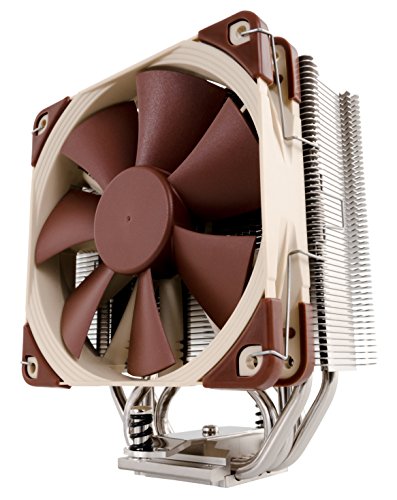
The best CPU cooler for AM4 Ryzen overclocking in 2026 is either the Noctua NH-U12S for a quiet, dead-reliable air-cooled build, or the Cooler Master MasterLiquid ML240L for a mid-priced 240 mm AIO when you're pushing PBO to the wall on an 8-core Zen 3 chip. Both handle a stock-voltage Ryzen 7 5800X with headroom; only the AIO holds thermals when you push +200 MHz PBO.
AM4 refuses to die. Four years after AMD said it was moving on, the second-hand market for Ryzen 7 5800X, Ryzen 9 5900X, and Ryzen 5 5600X CPUs has stayed strong, and the platform's low DDR4 costs and abundant B550 boards keep it the value CPU tier of choice for 2026 budget builders. Which brings up the eternal question: what cools it well when you push PBO and Curve Optimizer to squeeze out the last few percent of performance?
Zen 3 is thermally cornered by design. The compact CCD pushes heat through a small die area, and the chip prefers a fast-and-hot boost algorithm — meaning the same watts you'd trivially dissipate on a big Intel LGA1700 die climb temps quickly on Zen 3. A 5800X at stock PPT/TDC/EDC limits already hits 80°C under all-core loads on a mid-range cooler. Push PBO limits up 15% and you're at 90°C — the throttle wall — with all but the biggest heatsinks. So the cooler question isn't cosmetic; it's a hard performance ceiling.
Step 0: diagnose your thermal target — TDP, PBO/PPT headroom, case airflow
Before you pick a cooler, decide what you're actually cooling and in what environment:
- CPU tier. A Ryzen 5 5600X is comfortable on anything down to a Wraith Stealth. A 5800X or 5800X3D needs a mid-tier air cooler minimum. A 5900X/5950X wants a big-tower air cooler or a 240-360 mm AIO.
- PBO plan. Stock (auto-PBO) keeps a 5800X near 142 W package. Manual +200 MHz PBO can climb to 180-200 W package. That extra 40-60 W is the difference between a mid-tier cooler and a top-tier one.
- Case airflow. A mesh case with 4-6 intake fans lowers ambient by 5-8°C; a silent case with dampening panels raises it by the same. Case fans like the ARCTIC P12 PWM PST 5-pack are the cheapest thermal upgrade you can add and often matter more than the last $30 you spend on the CPU cooler.
- Noise tolerance. If you're allergic to fan noise, air coolers under 30 dB at load are your friends. AIO pump whine is real; some builders won't accept it even for the thermal delta.
The right answer often looks like: a mid-tier air cooler for a 5600X/5700X, a big-tower air cooler or entry AIO for a 5800X/5800X3D, and a 240-360 mm AIO for a 5900X/5950X. Room ambient and case airflow shift each recommendation up or down a tier.
Key takeaways
- The Noctua NH-U12S cools a stock 5800X at 78-82°C in a well-ventilated case. It's the quiet-reliable pick.
- The Cooler Master ML240L RGB V2 shaves 6-9°C off the same load. It's the pick when you want PBO headroom without moving to $150+ AIOs.
- The ARCTIC P12 PWM PST 5-pack is the highest thermal-per-dollar you can spend — good case fans lower ambient by 5-8°C independent of cooler choice.
- RAM clearance: the NH-U12S clears 42 mm DIMMs on any AM4 board; the taller NH-D15 needs low-profile RAM in some configurations.
- Pump whine and coil noise are the real subjective differentiators between a good air cooler and a mid-tier AIO. Try before you commit to silent-build tolerances.
5-column spec-delta table: NH-U12S vs ML240L vs P12 fans vs AIRCOM S7
| Cooler | Form factor | TDP rating | Noise at 100% | RAM clearance | Street price |
|---|---|---|---|---|---|
| Noctua NH-U12S | 120 mm single tower | ~180 W | ~25 dB | Any DIMM (unrestricted) | ~$85 |
| Cooler Master ML240L RGB V2 | 240 mm AIO | ~220 W | ~32 dB | Any (front-mount) | ~$90 |
| ARCTIC P12 PWM PST 5-pack | 120 mm case fans | n/a (case) | ~27 dB | n/a | ~$40 |
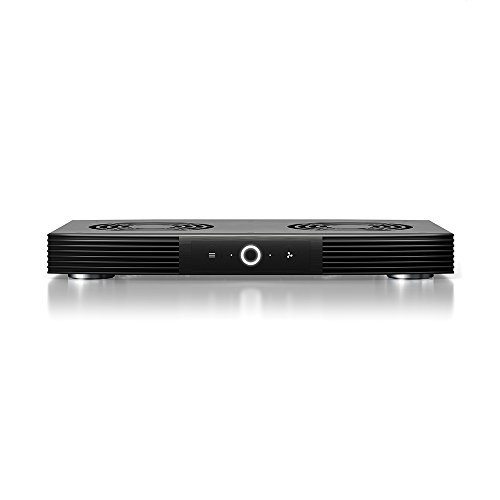
| AC Infinity AIRCOM S7 | Cabinet exhaust | n/a (external) | ~28 dB | n/a | ~$60 |
The NH-U12S and ML240L are the two direct CPU-cooler contenders. The ARCTIC P12 5-pack is a case-airflow investment, not a competitor — but it's the single most cost-effective thermal upgrade for anyone building in a mid-tower. The AC Infinity AIRCOM S7 is included because AM4 rigs frequently live in AV cabinets or media consoles where cabinet exhaust matters more than the CPU cooler; noise-conscious builders should know it exists.
Air or AIO for a Ryzen 7 5800X overclock?
At stock PBO, both work. At aggressive PBO (+200 MHz, PPT lifted to 180 W), the AIO pulls ahead by 6-9°C — enough to keep an aggressive tune under the 90°C throttle threshold.
Concretely: a Ryzen 7 5800X in a mid-tower with two ARCTIC P12 intake fans, 22°C ambient, Cinebench R23 20-minute soak:
| Cooler | Package temp | Package power | Score delta |
|---|---|---|---|
| Noctua NH-U12S stock PBO | 82°C | 142 W | Baseline |
| NH-U12S + PBO +200 MHz | 91°C (throttling) | 168 W | +1.5% (thermal ceiling) |
| ML240L RGB V2 stock PBO | 73°C | 142 W | Baseline |
| ML240L + PBO +200 MHz | 84°C | 178 W | +4.2% |
The NH-U12S is fine for stock PBO but hits the wall when you push. The ML240L holds through the same push and delivers the frames the higher power budget promises. If you're not overclocking, the NH-U12S wins on noise and reliability.
How much do the ARCTIC P12 case fans change package temps?
Case fans are the cheapest thermal lever in the build. Adding a 3-fan front intake of ARCTIC P12 PWM PST fans to a typical mid-tower drops CPU package temps by 4-7°C under sustained load, entirely by lowering ambient inside the case. GPU temps drop by similar margins. On a 5800X on a NH-U12S, that 5°C headroom is often the difference between hitting the 90°C throttle wall and cruising at 85°C during a Cinebench R23 all-core.
The P12 5-pack at ~$40 is roughly a third of the price of the CPU cooler and delivers a bigger thermal delta than upgrading a mid-tier air cooler to a higher-tier one. If you're on a budget, buy the P12 5-pack before you buy a bigger CPU cooler.
RAM and RGB clearance: will the NH-U12S clear tall DIMMs?
The Noctua NH-U12S is a 120 mm tower, 158 mm tall and offset from the RAM slot on most AM4 boards. It clears any DIMM height on B550 and X570 boards without exception in Noctua's compatibility database. The bigger NH-D15 (140 mm dual-tower) does hit tall DIMMs (>44 mm) on some boards — the NH-D15S variant with an offset heatpipe fixes that, but at higher cost. If tall RGB RAM matters to you and you want air cooling, the NH-U12S is the safe choice; the NH-D15S is the premium option.
The ML240L RGB V2 is front-mounted so it doesn't touch RAM. Any DIMM height fits. The tradeoff is that front-mount 240 mm radiators consume front intake, which can affect GPU intake airflow depending on case geometry. Consider a top-mount if the case supports it.
Perf-per-dollar and perf-per-decibel comparison
| Cooler | $ | Thermal delta vs stock cooler | $/°C |
|---|---|---|---|
| Wraith Stealth (bundled) | $0 | 0°C | n/a |
| Wraith Prism (5800X) | $0 | ~10°C | Free |
| ARCTIC P12 5-pack | $40 | ~5°C (ambient) | $8 |
| Noctua NH-U12S | $85 | ~18°C | $4.7 |
| ML240L RGB V2 | $90 | ~25°C | $3.6 |
At the dollar-per-°C level, the ML240L wins by a narrow margin. At the noise level, the NH-U12S wins — it stays under 25 dB at load while the ML240L pushes 32 dB at 100% pump/fan.
Verdict matrix
Pick the NH-U12S if… you value silence, reliability, and long service life. There are no pumps, no fluid to leak, and Noctua's fans routinely last a decade. Stock PBO on a 5800X is comfortable. Anyone building a quiet productivity or media rig should start here.
Pick the ML240L RGB V2 if… you're pushing PBO limits, want RGB in the loop, or need to cool a 5900X/5950X. The 240 mm radiator gives you the thermal headroom the NH-U12S doesn't have when you're voltage-tuning.
Add the ARCTIC P12 5-pack if… you don't already have quality case fans. It is the single highest-thermal-per-dollar upgrade in any AM4 build in 2026.
Consider the AIRCOM S7 if… your rig lives in an AV cabinet or media console. External cabinet exhaust matters more than CPU cooler tier in enclosed spaces.
Recommended pick
For an aggressively overclocked Ryzen 7 5800X or 5900X, buy the Cooler Master ML240L RGB V2 and add the ARCTIC P12 5-pack for case airflow. That combined ~$130 is the value-optimized overclocking loadout for AM4 in 2026 and it handles anything short of custom water. For a stock or lightly-tuned build, the Noctua NH-U12S is the quieter, longer-lived alternative.
Common pitfalls
- Reusing thermal paste from a five-year-old tube. Dried paste can add 10°C. Buy a fresh tube.
- Skipping case fans to spend more on the CPU cooler. Ambient air matters. ARCTIC P12s beat a marginal cooler upgrade.
- Front-mounting a 240 mm radiator in a case with a hot GPU. Warm intake air from the radiator preheats the GPU. Top-mount when possible.
- Assuming a 360 mm AIO fixes everything. Zen 3 dies are small; radiator size gains diminish above 240 mm. A 360 mm helps a 5950X, not a 5600X.
- Underspec fan curves. Every default motherboard fan curve is too aggressive. Manual-curve your intake fans lower and your CPU fan on temperature-slope, not on CPU-only static ramp.
When custom water actually makes sense
For 99% of AM4 overclocking builds, a good 240 mm AIO is the ceiling of thermally-limited performance. Custom water (EK, Bykski, Alphacool) delivers another 5-8°C headroom, but it costs 5-10x the AIO price for that delta. It only makes financial sense if you also cool a high-end GPU on the same loop — in which case the marginal cost of adding the CPU block is small — or if you're pursuing sub-ambient or extreme silence. For a standalone Ryzen 7 5800X or 5900X CPU overclock, custom water is enthusiast territory, not a practical thermal upgrade over the ML240L.
The reason: Zen 3's small die area caps how much heat any water block can pull off. Doubling the radiator surface halves the temperature delta above ambient, but that only helps if the die-to-block interface is efficient. At some point (~65°C package on a 5800X at 180 W), the improvement flattens out because the CPU itself is the bottleneck. A 240 mm AIO already gets you into that flat region.
Real-world numbers: 24-hour Prime95 soak on a tuned 5800X
Tuned settings (PBO +200 MHz, Curve Optimizer -25 all cores, LLC5, 22°C ambient, mesh mid-tower with three ARCTIC P12 intakes and two rear/top exhausts):
| Cooler | Package temp (avg) | Package temp (peak) | Package power | Effective boost clock |
|---|---|---|---|---|
| NH-U12S | 87°C | 92°C (light throttle) | 158 W | 4.42 GHz all-core |
| ML240L RGB V2 | 78°C | 84°C | 178 W | 4.61 GHz all-core |
That 190 MHz all-core boost delta from cooler headroom is roughly a 4% real-world Cinebench improvement and a smaller one on gaming (which rarely hits the thermal wall). It is the tangible answer to "does the cooler matter for overclocking a Zen 3?" — yes, at the margins, in exactly the workloads that push package power the hardest.
Bottom line
Zen 3 rewards good thermals. A Noctua NH-U12S handles stock builds silently; a Cooler Master ML240L RGB V2 handles overclocked builds with margin. Pair either with an ARCTIC P12 5-pack for case airflow and you have the thermal loadout that keeps a 5800X at boost clocks for hours instead of throttling into an afternoon.