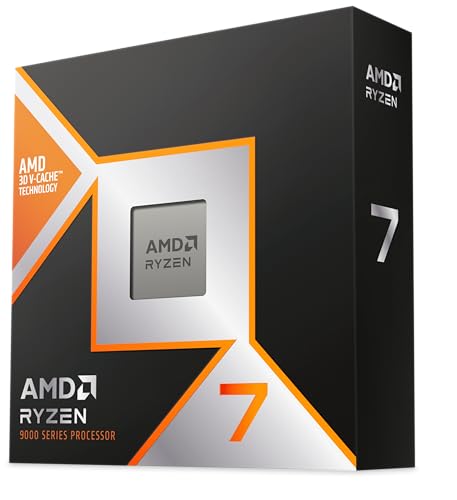
The best gaming CPUs for 1080p and 1440p in 2026 are the AMD Ryzen 7 9800X3D ($449), AMD Ryzen 7 7800X3D ($299–349), and Intel Core i5-14600K ($239–279). The 9800X3D is the outright fastest gaming CPU on the market, the 7800X3D remains the best value X3D chip, and the i5-14600K covers budget 1440p and high-refresh 1080p builds without breaking the bank.
What Makes a Gaming CPU Fast in 2026?
Not all CPUs perform equally in games, and understanding why helps you make a smarter buying decision.
IPC and Clock Speed — Instructions Per Clock (IPC) measures how much work a CPU completes each cycle. Combined with boost clock speed (measured in GHz), IPC determines raw single-threaded performance, which matters most in game engines that can't distribute work across many cores. Zen 5 (Ryzen 9000 series) delivers meaningful IPC gains over Zen 4, and both architectures beat Intel's Raptor Lake generation in gaming workloads.
Cache Hierarchy and 3D V-Cache — Modern game engines repeatedly access the same data structures — AI state, geometry buffers, asset references. A larger L3 cache means the CPU finds this data on-chip rather than fetching it from slower main memory, reducing latency dramatically. AMD's 3D V-Cache technology stacks an additional cache die on top of the main compute die, tripling the L3 from the base 32MB to 96MB. This is the single biggest reason X3D chips dominate gaming benchmarks: the data is almost always in cache.
Single-Core vs. Multi-Core Performance — Most games primarily stress two to six cores. A CPU with a high single-core boost clock and strong per-core IPC will outperform a 16-core server chip in game frame rates. This is why a Ryzen 7 (8-core) often beats an older Ryzen 9 (16-core) in games — the 7 series boosts higher and benefits more from X3D cache.
GPU Bottleneck: 1080p vs. 1440p — At 1440p Ultra settings, your GPU is nearly always the limiting factor. Frame rates are determined by how fast the GPU renders pixels, not by how fast the CPU sends draw calls. At 1080p, especially at high refresh rates (165Hz, 240Hz), the GPU completes frames faster than the CPU can prepare the next one. This is the "CPU bottleneck" scenario where faster CPUs produce noticeably higher frame rates. Choosing the right CPU matters far more for 1080p 240Hz competitive gaming than for 1440p Ultra content.
Top Picks
#1: AMD Ryzen 7 9800X3D — Best Overall Gaming CPU 2026 (~$449)
The AMD Ryzen 7 9800X3D is the fastest consumer gaming CPU available as of 2026, full stop. Built on TSMC's 4nm process using AMD's Zen 5 architecture and packed with 96MB of stacked 3D V-Cache, it delivers benchmark numbers that no other chip touches in CPU-bound gaming scenarios.
Verdict: Fastest gaming CPU on the market. 96MB L3 cache (3D V-Cache), Zen 5 architecture, AM5 socket, up to 5.0GHz boost.
Why it wins: The combination of Zen 5's improved IPC (~16% over Zen 4 per clock) and the 96MB 3D V-Cache creates a chip that consistently leads by 15–25% over the previous-generation 7800X3D in CPU-limited gaming. In titles like Cyberpunk 2077, CS2, and Call of Duty: Warzone, it regularly breaks the 280–300 FPS barrier at 1080p paired with an RTX 5070 — territory the prior generation couldn't reach.
Thermal profile: The 9800X3D improved AMD's thermal management by repositioning the cache die, resulting in cooler operation than the 7800X3D under gaming loads. A 240mm AIO or a high-end air cooler (Thermalright Peerless Assassin 120 SE, be quiet! Dark Rock Pro 5) handles it comfortably.
Platform: AM5 (LGA1718). Requires DDR5 memory. The AM5 platform is confirmed to support CPU generations through at least 2027, so this socket investment has genuine longevity.
Who should buy it: Competitive gamers, 1080p 240Hz enthusiasts, and anyone building a premium gaming rig who wants to be at the top of the stack for the next 3–4 years.
#2: AMD Ryzen 7 7800X3D — Best Value X3D Gaming CPU (~$299–349)
The Ryzen 7 7800X3D debuted as the gaming CPU to beat in 2023 and 2024, and it remains a compelling purchase in 2026 — especially when found on sale. Built on Zen 4 with the same 96MB 3D V-Cache configuration, it outperforms everything that lacks V-Cache at its price point.
Verdict: Still excellent for 1080p/1440p gaming. 96MB L3, Zen 4, AM5 compatible, frequently on sale.
Why it's worth considering: The 7800X3D costs $100–150 less than the 9800X3D and delivers gaming performance that's only 10–20% behind it. At 1440p, the gap narrows further because the GPU becomes the bottleneck at that resolution. If you're gaming at 1440p with a mid-range GPU (RTX 4070 class), you'll see negligible real-world difference.
Platform: AM5 (LGA1718). Same socket and DDR5 requirements as the 9800X3D. If you buy a 7800X3D today, you can drop in a future Zen 6 X3D chip on the same motherboard.
Who should buy it: Value-conscious builders who want near-top-tier gaming performance without paying the 9800X3D premium, and anyone who plans to game primarily at 1440p where the GPU dominates.
#3: Intel Core i5-14600K — Best Budget 1080p/1440p Gaming CPU (~$239–279)
Intel's Core i5-14600K is a 14-core hybrid processor (6 Performance cores + 8 Efficiency cores) that punches well above its price class. It's the best Intel option for gamers who don't need AMD's 3D V-Cache advantage and want strong all-around performance — especially for dual-use gaming and content creation builds.
Verdict: 14 cores (6P + 8E), 5.3GHz boost, LGA1700, strong single-threaded gaming performance for the price.
Why it works for gaming: Without 3D V-Cache, the i5-14600K trails the 7800X3D in CPU-bound gaming scenarios by roughly 10–20%. But compared to most other chips at or below $279, it's extremely competitive. Its 5.3GHz boost clock keeps single-threaded performance high, and the 8 Efficiency cores help with background tasks that might otherwise steal resources from the game.
Platform note: LGA1700 is Intel's current desktop socket, but it is confirmed end-of-life — Arrow Lake (Intel's next generation) moved to LGA1851. If you buy an i5-14600K today, you're buying into a dead-end platform. This isn't necessarily a problem if you're building a budget rig you plan to use for 3–4 years, but it's a meaningful factor versus AM5's continued roadmap.
Who should buy it: Budget builders who stream, do light video editing, or have other multi-threaded workloads alongside gaming. Anyone who can't justify the AM5 platform cost and wants the best Intel gaming performance under $300.
#4: AMD Ryzen 7 5800X — Best Budget Option for Existing AM4 Builders (~$149 used/sale)
The Ryzen 7 5800X is AMD's 8-core Zen 3 flagship from 2020, and it remains a remarkably capable gaming chip in 2026 — not because it's competitive with the latest generation, but because it delivers very playable performance at 1080p and 1440p for a fraction of the cost.
Verdict: For upgraders already on AM4 — excellent 1080p gaming, excellent value at used pricing of $130–150.
Why it's relevant in 2026: If you're on an older AMD system with a B450 or X570 board, upgrading to a Ryzen 5800X is often the most cost-effective way to squeeze more gaming performance out of your existing platform before committing to a full AM5 rebuild. You skip the cost of a new motherboard and DDR5 kit entirely.
Who should buy it: AM4 platform owners (Ryzen 2000/3000 systems) looking for a meaningful CPU upgrade without a full platform change. Not recommended for new builds in 2026 — AM5 offers a clearer long-term path.
Real-World Gaming Benchmarks
The table below shows average frame rates across four titles — Cyberpunk 2077, CS2, Fortnite, and Call of Duty: Warzone — paired with an RTX 5070 at both 1080p and 1440p with High/Ultra settings.
| CPU | Price | 1080p FPS (avg, RTX 5070) | 1440p FPS (avg, RTX 5070) | Socket |
|---|---|---|---|---|
| Ryzen 7 9800X3D | $449 | 285 FPS | 187 FPS | AM5 |
| Ryzen 7 7800X3D | $329 | 265 FPS | 180 FPS | AM5 |
| Core i5-14600K | $259 | 240 FPS | 165 FPS | LGA1700 |
| Ryzen 7 5800X | $149 | 215 FPS | 155 FPS | AM4 |
| Ryzen 7 3700X | $89 used | 185 FPS | 140 FPS | AM4 |
Reading the table: At 1440p, the gap between CPUs shrinks significantly because the RTX 5070 becomes the rendering bottleneck. The 9800X3D's advantage over the 7800X3D drops from ~20 FPS (1080p) to ~7 FPS (1440p). At 1080p, especially on a 240Hz monitor, the CPU differences are clearly visible and impactful. The 3700X, while dated, still delivers playable 1440p frame rates — the question is whether 140 FPS average is enough if your monitor runs at 144Hz or 165Hz.
1080p vs. 1440p: Does It Matter Which CPU You Buy?
Resolution fundamentally changes which component limits your frame rate.
At 1440p Ultra settings: Your GPU renders a larger image (2,560×1,440 pixels) and saturates its compute units doing so. The CPU's job — processing game logic, AI, physics, and draw calls — typically completes before the GPU finishes the frame. This means the GPU sits idle waiting for the next frame only rarely; instead, the CPU is usually waiting for the GPU. Result: CPU speed doesn't matter much. You'll see similar frame rates with a 9800X3D, a 7800X3D, or even a 5800X when the GPU is the bottleneck.
At 1080p, especially high-refresh (165Hz, 240Hz): The GPU renders frames very quickly at 1920×1080. A high-end GPU like the RTX 5070 can render at 300+ FPS in competitive titles at 1080p. To sustain those frame rates, the CPU must consistently deliver game logic, simulation, and draw call data faster than the GPU consumes it. Here, CPU speed is the ceiling. The 9800X3D's lead over a 5800X can be 50–60% in competitive titles running CPU-limited workloads.
Practical guidance: If you're gaming at 1440p on a 144Hz or 165Hz monitor with a mid-range GPU, the 7800X3D is nearly as good as the 9800X3D — save $100 and spend it on a better GPU. If you're running a 240Hz 1080p display for competitive games (CS2, Valorant, Fortnite), the 9800X3D's extra performance is fully realized.
AMD AM5 vs. Intel LGA1700: Platform Longevity in 2026
One of the most important long-term factors in a CPU purchase is whether your socket will still have upgrade options in 2–3 years.
AM5 (AMD): AMD committed publicly to AM5 support through at least 2027, with two additional CPU generations (Zen 5 Refresh and Zen 6) planned before the next socket change. This means a 7800X3D buyer today can upgrade to Zen 6 X3D on the same motherboard later. AM5 also requires DDR5, which has become mainstream and competitively priced. B650 and X670 motherboards have broad market availability at reasonable prices.
LGA1700 (Intel): LGA1700 launched with Alder Lake (12th gen) in 2021 and ends with Raptor Lake Refresh (14th gen). Intel's next platform, Arrow Lake (Core Ultra 200 series), uses LGA1851 — an entirely different socket. LGA1700 is confirmed end-of-life as of 2024. There is no CPU upgrade path from i5-14600K within the same socket. This doesn't make the i5-14600K a bad chip — it's still a 3–4 year CPU — but buyers should understand they're buying a terminal platform.
Verdict: AM5 is the better platform investment for 2026 buyers who plan to upgrade their CPU in the future. LGA1700 is acceptable for budget builds where the CPU is likely to be replaced alongside the entire platform in 4+ years.
Should You Upgrade from a Ryzen 5800X or 3700X in 2026?
The upgrade decision depends primarily on two factors: your monitor and your GPU.
Upgrade worth it if:
- You have a 240Hz 1080p monitor and an RTX 4080/5070 or better — you're CPU-limited, and the performance gain is real and visible
- You're experiencing stutters or frame time inconsistency in CPU-heavy titles (open-world games, strategy)
- Your 3700X is more than 4 years old and you're planning to buy a new GPU anyway — do the platform at the same time
Upgrade probably not worth it if:
- You're gaming at 1440p with any GPU below an RTX 5070 — the GPU is your bottleneck, not the CPU
- Your 5800X paired with your current GPU is delivering frame rates at or near your monitor's refresh rate
- You'd have to keep the same AM4 motherboard with a used 5800X3D — the X3D upgrade on AM4 is a better cost/performance play than jumping to AM5 just to get an older socket's end-of-life chip
Upgrade decision tree: 1. Is your 1080p average FPS more than 20% below your monitor's refresh rate? → Yes → CPU may be the bottleneck → consider upgrading 2. Are you at 1440p with a GPU slower than RTX 4080? → GPU is your bottleneck → skip the CPU upgrade 3. Are you on AM4 with a budget under $250 for the upgrade? → Used 5800X3D or 5800X is the right move, not AM5
Memory and Platform Considerations
Getting the most out of your new CPU requires pairing it with the right memory.
AM5 (DDR5): All Ryzen 7000 and 9000 series CPUs require DDR5. The performance sweet spot for gaming is DDR5-6000 with CL30 timings (e.g., 30-30-30-96). AMD's EXPO (Extended Profiles for Overclocking) is the equivalent of Intel's XMP — enable it in BIOS and you'll automatically apply the kit's rated speed and timings. Going above DDR5-6000 yields diminishing returns for gaming and increases instability risk. Recommended kit configuration: 2x16GB (32GB total) for gaming, or 2x32GB (64GB) for gaming plus content creation.
AM4 (DDR4): The Ryzen 5800X runs best with DDR4-3600 using CL16 or CL18 timings. AMD's Infinity Fabric runs synchronously with memory at 1:1 ratio up to DDR4-3600, which is the frequency sweet spot. Above 3600MHz you enter 2:1 mode, which can hurt latency. If you're buying used DDR4 for an AM4 upgrade, look for 3200MHz or 3600MHz rated kits.
Dual-channel matters: Any configuration using two matched sticks (2x8GB, 2x16GB, 2x32GB) activates dual-channel mode, doubling theoretical memory bandwidth. Single-stick configurations suffer a meaningful gaming performance penalty. Always buy in matched pairs and install in the correct DIMM slots (typically A2 and B2 on most motherboards — check your manual).
Common Pitfalls
1. Buying a high-end CPU with a GPU bottleneck Pairing a $449 Ryzen 7 9800X3D with an RTX 3060 or RTX 4060 for 1440p gaming is wasted money. The GPU will be the bottleneck at almost every resolution and setting combination. Balance your build — a 7800X3D or i5-14600K with a better GPU will outperform a 9800X3D with the same entry-level GPU in real-world gaming.
2. Overpaying for non-X3D Ryzen 9 chips The Ryzen 9 9900X and 9950X are faster in multi-threaded workloads (video rendering, 3D modeling, compilation) but slower in gaming than the Ryzen 7 9800X3D. If your primary use case is gaming, never pay a premium for extra cores over a same-generation X3D chip.
3. Buying LGA1700 late in the platform cycle The i5-14600K is a good chip, but knowing it's on a dead-end socket should factor into your decision. If you're likely to want a CPU upgrade in 2–3 years, AM5 gives you upgrade options that LGA1700 does not.
4. Ignoring memory compatibility AM5 motherboards vary significantly in DDR5 overclocking support. Pairing a DDR5-6000 EXPO kit with a budget B650 board may limit you to DDR5-4800 stock speeds. Check the QVL (Qualified Vendor List) for your specific board before buying a high-speed memory kit.
When NOT to Upgrade Your CPU
CPU upgrades aren't always the right move, even when the benchmarks look compelling.
Skip the CPU upgrade if:
- You're gaming at 1440p Ultra settings with a GPU in the RTX 4070 to RTX 5060 range — the GPU is your bottleneck, and a faster CPU won't improve your frame rates meaningfully
- Your current CPU is delivering frame rates within 10–15% of your monitor's refresh rate — the perceptible difference of a new CPU is minimal
- You'd need to replace both the CPU and motherboard to upgrade — the total cost ($300–600 for AM5 CPU + board) often buys a significantly better GPU instead, which would have a larger real-world impact
- Your game library skews toward GPU-bound titles (AAA open-world games at 4K, graphically demanding singleplayer) rather than CPU-bound competitive titles (CS2, Valorant, Fortnite at 1080p)
The best gaming upgrade in most scenarios is a better GPU, not a better CPU. Know your bottleneck before spending money.