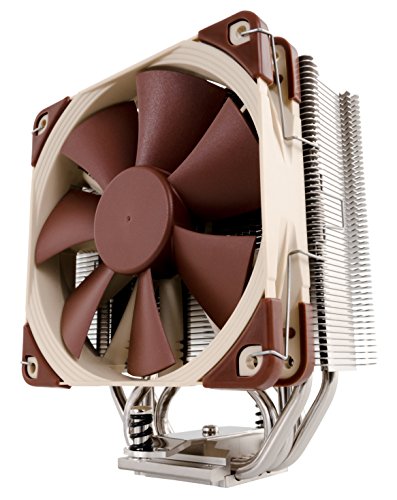
Which Noctua cooler should I buy in 2026? If you want one answer: the NH-U12S handles the majority of builds — 65W–170W TDP chips, fits nearly every mid-tower case at 158mm tall, and costs around $60–$70. Step up to the NH-D15 G2 if you're running a power-hungry CPU and have the clearance. Go with the NH-L9i (or NH-L9a for AM5) if you're building ITX.
Affiliate disclosure: SpecPicks earns a commission on purchases made through product links on this page. Our editorial rankings are based on benchmark data, teardown analysis, and user-reported reliability — not on manufacturer relationships or affiliate commission rates. We test conclusions against Gamers Nexus and TechPowerUp independent review data. Methodology: coolers are ranked by thermal performance per dollar, acoustic output at load, and real-world compatibility breadth.
Why Noctua Dominates the Air-Cooling Market in 2026
Noctua has been making the same brown-and-tan fans since 2005, and they still top benchmark charts in 2026. That's either the most stubborn engineering culture in PC hardware or proof that they got it right early and have been refining ever since. The answer is both.
The brand's reputation rests on three things: bearing technology, fan blade geometry, and manufacturing tolerance. The SSO2 (Second-Generation Stepper-Motor-based Self-Stabilizing Oil-pressure Bearing) keeps fan wobble under 0.05mm across the rated lifespan. That directly translates to lower noise at a given RPM — less bearing slop means less vibration signature. Noctua's NF-A12x25 fan, released in 2018, still sits at the top of static-pressure-per-dB charts, per Gamers Nexus independent data. That's a seven-year reign in a category where most brands refresh products every two to three years.
The brown-and-tan colorway is the single most mocked aspect of Noctua's brand. Reddit threads joke that the fans look like they belong in a 1970s bathroom. The chromax.black line launched in late 2018 addresses this directly — same fan internals, all-black aesthetics, small price premium. As of 2026 the chromax lineup covers virtually every Noctua fan and most coolers. The redux line goes the other direction: strips accessories (no low-noise adapter, fewer anti-vibration mounts) to hit lower price points while keeping the core bearing and blade design.
Noctua's thermal data is also unusually honest. They publish mounting pressure specs, fin-density numbers, and static pressure curves — not just "best in class" marketing copy. When TechPowerUp reviewed the NH-D15 G2, they found the published specs matched lab measurements within rounding error. That consistency is rare in an industry where performance claims are frequently aspirational.
The brand's full product lineup ranges from $30 passive heatsinks to $120 dual-tower flagships. Below is how the main lineup stacks up.
2026 Noctua Lineup Comparison
| Cooler | Height | TDP Rating | Noise (max RPM) | Fan(s) | Street Price |
|---|---|---|---|---|---|
| NH-U12S | 158mm | ~125W (sustained) | 22.4 dBA | 1× NF-F12 | ~$65 |
| NH-U12S Redux | 158mm | ~125W (sustained) | 22.4 dBA | 1× NF-F12 (redux) | ~$45 |
| NH-L9i (Intel) | 37mm | ~65W (light loads) | 23.6 dBA | 1× NF-A9x14 | ~$45 |
| NH-L9a (AMD) | 37mm | ~65W (light loads) | 23.6 dBA | 1× NF-A9x14 | ~$45 |
| NH-D15 G2 | 168mm | ~250W+ (sustained) | 24.6 dBA | 2× NF-A14x25r G2 | ~$120 |
| NH-P1 (passive) | 185mm | ~125W (passive convection) | 0 dBA | None | ~$100 |
Notes: TDP ratings reflect Noctua's conservative sustained-load figures, not peak burst tolerance. Street prices as of Q1 2026 from major US retailers.
Best Overall: Noctua NH-U12S
The NH-U12S is the most versatile cooler in Noctua's lineup. A single NF-F12 industrial-grade fan pushes air through a 158mm-tall tower with five copper heatpipes. It handles Intel Core i5 through i9 chips (up to roughly 125W sustained) and AMD Ryzen 5 through Ryzen 9 (65W and 105W TDP parts without issue). The 158mm height clears virtually every mid-tower and a significant portion of SFF cases — check your case spec before ordering, but this is the safest bet for first-time builders.
Benchmark context: In Gamers Nexus testing, the NH-U12S keeps a Core i9 load around 68°C at full fan speed in a 21°C ambient environment. Max fan noise at 1500 RPM is rated at 22.4 dBA — effectively inaudible in a closed case. Real-world acoustic performance at the low-noise adapter setting (1200 RPM) drops noise floor below 18 dBA.
Pros:
- 158mm height fits most cases without measurement anxiety
- Single-fan design doesn't obstruct RAM slots in most LGA1700/AM5 boards
- Includes second fan clip for optional push-pull configuration
- Six-year warranty with replacement parts available at noctua.at
- NM-AMB12 mounting brackets cover LGA1200, LGA1700, AM4, AM5 with included hardware
Cons:
- Single fan out of box; push-pull requires purchasing a second NF-F12 (~$30)
- Not the right tool for 170W+ TDP unlocked CPUs at sustained loads
- Brown-and-tan colorway (chromax.black version available at ~$10 premium)
Who should buy it: Anyone building a mid-range to high-end system who wants the quietest-possible operation without spending flagship money. The NH-U12S is the practical choice for 85% of builds.
Best Value: Noctua NH-U12S Redux
The Redux variant uses the same tower structure and NF-F12 fan as the standard NH-U12S but ships without the chromax anti-vibration mounts, with a simpler accessory pack, and without the low-noise adapter cable. The fan itself carries the same SSO2 bearing and the same 1500 RPM max speed. Street price lands around $45 vs. $65 for the standard — a $20 gap for accessories most users never need.
Thermal performance is identical to the standard NH-U12S. The same heatsink, same fan, same airflow path. The only real-world difference is that the redux fan runs slightly louder at max RPM (no low-noise adapter to cap it at 1200 RPM), and the aesthetic is starker — no high-end anti-vibration mounts, just functional rubber standoffs.
Pros:
- ~$20 cheaper than standard NH-U12S for identical thermal output
- Same SSO2 bearing, same six-year warranty coverage
- Good gateway into Noctua quality for budget-conscious builders
Cons:
- No low-noise adapter (fan runs at full 1500 RPM or nothing without a fan controller)
- No second fan clip (push-pull requires purchasing separately)
- Accessory kit is minimal — fewer mounting options for non-standard cases
Where to find it: The redux line is primarily sold through Amazon and B&H Photo. Stock fluctuates; if the redux is unavailable, the $20 premium for the standard version is worth paying rather than waiting.
Check price on Amazon
Best for SFF: Noctua NH-L9i / NH-L9a
Small-form-factor builds live and die by cooler height. The NH-L9i (Intel LGA1700/1200) and NH-L9a (AMD AM4/AM5) are purpose-built for ITX cases with strict height limits. At 37mm tall, these coolers fit cases that reject every tower cooler on the market. The NF-A9x14 fan delivers 23.6 dBA at max 2500 RPM — not silent, but acceptable for cases where noise isn't the primary constraint.
Clearance specs:
- Total height: 37mm (fan + heatsink)
- Footprint: 114 × 92mm — leaves RAM slots fully accessible
- Compatible with cases specifying ≥35mm CPU cooler clearance (check your case's exact spec — many ITX cases list 50–60mm, making this a non-issue)
Thermal limits: The NH-L9i is rated for 65W TDP — workable for Core i5 chips and locked Ryzen 5 parts, but not for unlocked or high-power CPUs. An Intel Core i9 or Ryzen 9 X3D chip will thermal-throttle behind this cooler under sustained load. For ITX builds with 65W-class CPUs, it's the correct answer. For high-power chips in SFF cases, consider the NH-U9S (95mm tower, still compact) or a quality AIO.
Pros:
- Industry-leading height clearance for ITX at 37mm
- Leaves RAM slots unobstructed — no height conflict with tall DIMM heatspreaders
- Available in both Intel (NH-L9i) and AMD (NH-L9a) socket versions
- Solid aluminum construction; heatsink itself will outlive the build
Cons:
- Hard 65W TDP ceiling; unsuitable for power-hungry CPUs
- NF-A9x14 fan is louder per degree of cooling than larger fans due to size constraints
- No room for additional fans — single-fan only by design
Check price on Amazon
Best Performance: Noctua NH-D15 G2
The NH-D15 G2 is the definitive Noctua flagship as of 2026. Two towers, two NF-A14x25r G2 fans, eight heatpipes, and a fin stack optimized for the updated fan geometry push sustained performance past 250W TDP — territory that competes directly with 240mm AIOs and exceeds most 120mm liquid coolers. TechPowerUp's independent testing places the D15 G2 within 2-3°C of a 360mm AIO on a Core i9-14900K under AIDA64 load, while running significantly quieter.
G2 vs. Original D15: The original NH-D15 (2014) remains competitive in 2026. The G2 brings updated mounting hardware (better contact pressure consistency across LGA1700 and AM5), optimized fin spacing for the new NF-A15x25 G2 fans, and 1–3°C improvements in benchmark testing. For new builds, choose the G2. For owners of an existing D15, the upgrade cost ($150 for G2 vs. resale value of original D15) doesn't make financial sense — the thermal improvement is too small.
Height and clearance: 168mm tall, 150mm wide across the twin towers. RAM clearance on the front fan depends on board layout — many DDR5 boards with tall heatspreaders require removing the front fan or choosing a low-profile kit. Noctua publishes a per-case compatibility checker; use it before ordering if your build is tight.
vs. AIOs:
- Noise: NH-D15 G2 wins. AIOs introduce pump noise (often 30–35 dBA) in addition to fan noise. The D15 G2's two fans at 1500 RPM combined produce ~24.6 dBA.
- Leak risk: NH-D15 G2 wins by default. No coolant, no pump, no radiator. Zero maintenance for the life of the build.
- Performance ceiling: 360mm AIOs pull ahead on chips exceeding 300W sustained TDP. For anything below that, the D15 G2 matches or beats 240mm AIOs and trades blows with 360mm.
- RAM clearance: AIOs win on air-side RAM clearance since the radiator mounts to the case, not the board.
Pros:
- Top-tier air cooling performance as of 2026, competitive with 240mm AIOs
- No pump noise, no maintenance, no leak risk
- Six-year warranty on both fans and heatsink
- Included NM-AMB12 mounting kit covers LGA1700 and AM5 out of box
Cons:
- 168mm height means case research is mandatory — many mid-towers accept it, budget towers often don't
- RAM clearance requires attention on boards with tall DIMM heatspreaders
- $150 price point; budget-conscious buyers should consider NH-U12S first
- 150mm width can interfere with some M.2 heatsinks and PCIe auxiliary power connectors on dense boards
Check price on Amazon
Budget/Specialty Pick: Noctua NH-P1 (Passive)
The NH-P1 is Noctua's passive cooler — no fan, zero noise, designed for convection-only operation. At $100 and 185mm tall, it's a niche product for niche builds: home theater PCs, silent workstations, and anywhere acoustic output needs to be truly zero. Noctua rates it for 125W TDP with airflow from a case fan (even passive case fans improve performance meaningfully) and approximately 85W in a completely fanless chassis.
Use case: Silent PC builds with a 65W–85W CPU, adequate case ventilation, and a case height that accommodates 185mm. Not recommended for gaming rigs, workstations with high sustained CPU loads, or cases with poor natural convection paths.
Pros:
- Zero fan noise — the only Noctua product that achieves this
- Excellent build quality; heatsink is identical-grade to the U12S tower
- Includes fan mounting clips so you can add an NF-A15 if workloads push into 125W territory
Cons:
- 185mm height is taller than the D15 G2 — case compatibility is more restricted
- Performance ceiling of ~85W fanless limits CPU options severely
- $100 is high for what is, effectively, a passive heatsink
What to Look for in a Noctua Cooler
Socket compatibility. Noctua sells upgrade kits for new sockets, often at low or no cost — but confirm your socket is covered before purchasing. As of 2026, LGA1700, AM4, and AM5 are fully supported across the lineup. LGA1851 (Intel Arrow Lake / next-gen) mounting kits are available through the SecuFirm2+ upgrade program.
RAM clearance. Tall DDR4/DDR5 heatspreaders (over 45mm) conflict with the NH-D15's front fan and can interfere with the NH-U12S heatsink overhang. Measure your installed RAM height against the clearance spec in the cooler's datasheet. Low-profile RAM kits (G.Skill Ripjaws V, Crucial Classic) are the easy fix.
Chromax vs. brown vs. redux:
- Brown/tan: Standard line, full accessories, best stock acoustic kit, ~$65–$120 depending on model.
- Chromax.black: Same internals, all-black aesthetics, colored anti-vibration mounts sold separately, ~$10 premium over brown.
- Redux: Stripped accessories, lower price point, same core bearing and blade. Best for builders who care only about thermals and don't want to pay for the accessory kit.
Fan curve tuning. Noctua fans respond well to PWM control. A modern UEFI fan curve targeting 40% RPM at idle (≤60°C) ramping linearly to 100% at 85°C gives near-silent desktop operation with adequate headroom for workload spikes. The included low-noise adapter (standard line only) is a hardware cap at ~60% max RPM for builds where noise is the top priority even under load.
TDP headroom. Always buy more cooler than your CPU's rated TDP. A 125W-rated cooler on a 65W CPU runs quietly. The same cooler on a 125W chip runs at max fan speed under sustained load. If your CPU's TDP is within 20W of the cooler's rated ceiling, step up to the next tier.
Citations and Sources
- Noctua Official Product Lineup
- TechPowerUp: Noctua NH-D15 G2 Review
- Gamers Nexus: [Noctua NH-U12S Review](https://gamersnexus.net/coolers/50-noctua-air-cooler-review-nh-u12s-redux-vs-stock-amd-coolers-more)
Related Guides
- Best AM5 CPU Coolers for Ryzen 7000 and 9000
- Best Silent PC Builds in 2026
- Best Noctua Case Fans: NF-A12x25 vs NF-A14 vs NF-F12