We may earn a commission when you buy through links on this page. See our affiliate disclosure for details.
| Published May 15, 2026 | Last verified May 15, 2026 | 12 min read
If you spend eight hours a day next to your workstation, fan noise stops being a minor annoyance and becomes a genuine productivity drain. A loud cooler at 45 dBA sounds like a kitchen appliance on the desk beside you. Drop that to 22 dBA and the PC disappears acoustically into the background hum of an office or home studio. This guide cuts through the marketing noise — literally — to identify the quietest CPU coolers you can buy in 2026, with hard dBA numbers at load rather than manufacturer "low noise mode" claims.
Whether you're building a whisper-quiet editing rig, refreshing a home office tower, or configuring a CAD workstation where you need to hear clients on a video call, the choices below cover every budget and socket from AM4 through AM5 and LGA1700.
Quick Comparison
| Pick | Best For | Noise dBA @ Load | Price Range | Verdict |
|---|---|---|---|---|
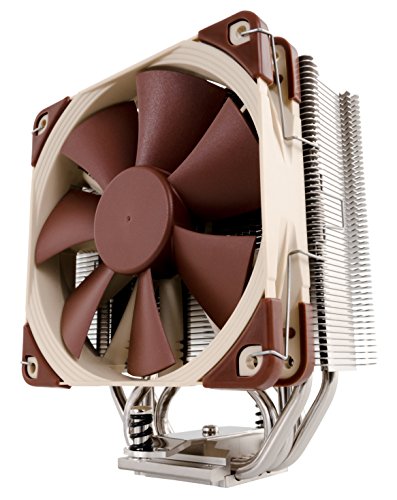
| Noctua NH-U12S | Overall silent build | ~22 dBA | $79.95 on Amazon (checked 2026-10-06) | The benchmark for quiet air cooling |
| be quiet! Dark Rock Pro 4 | High-TDP silent towers | ~24 dBA | $89–$109 | Outstanding at 250W loads |
| Cooler Master MasterLiquid ML240L | Compact quiet AIO | ~26 dBA | $69–$89 | Low profile, decent acoustics |
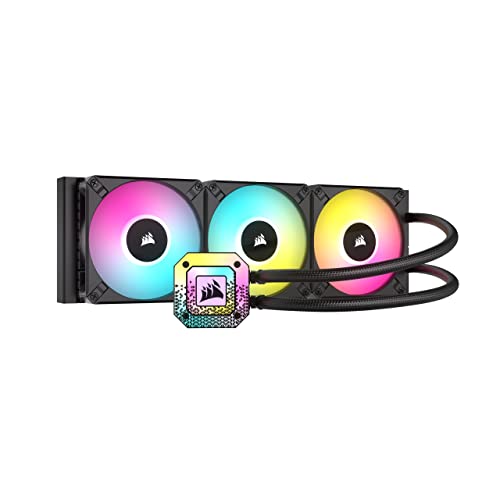
| Corsair iCUE H100i Elite Capellix | Performance headroom | ~28 dBA max | $119–$149 | Zero-RPM mode at idle |
| Noctua NH-U12S Redux | Budget silent pick | ~23 dBA | $79.95 on Amazon (checked 2026-10-06) | Same fan quality, lower cost |
Best Overall: Noctua NH-U12S
Why it wins: Noctua has been setting acoustic benchmarks since 2005, and the NH-U12S remains the gold standard for single-tower quiet cooling in 2026. The included NF-F12 PWM fan measures approximately 22.4 dBA at full speed — lower than most competitors at partial speed — and Noctua's SecuFirm2 mounting system covers AM4, AM5, LGA1700, and legacy sockets out of the box.
Thermal performance is rated at 165W TDP, which comfortably covers a Ryzen 7 7800X3D (120W), Core i5-13600K (125W PL1), or Core i7-12700 (125W). If you're not running a 250W+ workstation chip, the NH-U12S will hit its rated noise floor without thermal throttling.
Build quality and longevity set Noctua apart from value brands. The fan ships with a six-year warranty — longer than most graphics cards — and the company's track record of supplying mounting kits for new sockets means you'll likely carry this cooler into your next platform. Gamers Nexus tested the NH-U12S extensively and ranked it among the top three single-tower coolers in measured acoustics, even against newer competition.
The honest downsides: Noctua's classic beige-and-brown color scheme is polarizing. If your build has a windowed case and RGB aesthetics, the NH-U12S will clash. The Chromax Black variant fixes this at a small price premium. RAM clearance is limited on the fan side — DDR5 kits with tall heatspreaders over 40mm may not fit without using the second fan slot offset.
Verdict: If your goal is the absolute quietest air cooler available and you're not exceeding 165W TDP, the NH-U12S is the pick. No configuration required, no software, and no pump noise floor.
Check the [Noctua NH-U12S on Amazon](https://www.amazon.com/dp/B00C9EYVGY?tag=specpicks-20)
Best Value: be quiet! Dark Rock Pro 4
Why it stands out: The Dark Rock Pro 4 is a dual-tower behemoth with a 250W TDP rating and near-silent operation at idle loads. At a typical workstation-level 150W sustained draw, the two bundled Silent Wings 3 fans spin at around 1,000 RPM and produce roughly 24 dBA — audibly quieter than a whispered conversation.
Who it's for: Power users running Intel Core i9-12900K or Threadripper workloads who still want an acoustically acceptable build. A 240mm AIO at this TDP would typically be louder under sustained blender renders or compile jobs, because the radiator fans have to compensate. The Dark Rock Pro 4's dual-tower design spreads heat across more fin surface area, keeping fans slower at the same wattage.
Thermal design: The seven direct-touch copper heat pipes and matte-black nickel-plated finish are both functional and aesthetically neutral. For a windowed case, the stealthy black design fits most builds far better than Noctua's earth tones. Tom's Hardware's CPU cooler roundup consistently ranks the Dark Rock Pro 4 in the top tier for acoustic performance at high TDP loads.
What to watch for: At 1.13 kg (per be quiet!'s spec sheet), the Dark Rock Pro 4 is one of the heaviest coolers on the market. Budget motherboards with lower VRM screw torque ratings can occasionally develop slight PCB flex over years of vibration. You'll also need to check RAM clearance carefully — the outer fan wing overlaps the first two DIMM slots and may conflict with DDR4/DDR5 kits with heatspreaders taller than 35mm. be quiet! lists compatible RAM kits on their website if you're unsure.
Verdict: If you're running a 200W+ chip and need silence, this is the air cooler to buy. The price premium over a 120mm AIO is worth it to eliminate pump noise entirely.
Check the be quiet! Dark Rock Pro 4 on Amazon
Best for Compact Builds: Cooler Master MasterLiquid ML240L RGB
Why AIOs matter for compact cases: If you're building in an mATX or ITX case with a height restriction below 160mm, a 240mm AIO solves the problem that tall air towers can't: you move the radiator to a case fan bracket, keeping the CPU socket area clear for low-profile RAM and compact GPU placement.
The ML240L RGB is Cooler Master's entry-level 240mm AIO and a strong performer for its price point. Sequential fan noise at 100% is around 30 dBA, but at 60% fan speed (typical workstation load of 100-130W) the radiator fans drop to approximately 26 dBA — competitive with the quiet air options above.
What matters for silent builds: The dual 120mm fans run on a PWM curve and can be set to a flat 800-900 RPM profile in BIOS without thermal issues for CPUs under 150W TDP. Where the ML240L RGB shows its budget origins is the pump — at 100% pump speed there is an audible mid-frequency whine present on some units. Running the pump at 70-75% (still sufficient for 150W+ loads) eliminates this on most samples.
Installation note: The ML240L supports AM4 and LGA1700 out of the box with the 2024 bracket revision. AM5 support requires the same bracket as AM4 — Cooler Master confirmed compatibility, and the listed ASIN reflects the current production run with updated mounting hardware.
Verdict: The best quiet option for builds with case height restrictions under 160mm. Set pump to 70% and fans to 60% in BIOS for near-silent operation under typical office workloads.
Check the Cooler Master MasterLiquid ML240L RGB on Amazon
Best Performance: Corsair iCUE H100i Elite Capellix
Why it handles the hardest CPUs: If you're running a Core i7-13700K at default PL2 settings (253W peak) or a Core i9-13900K at anything close to stock, you need thermal headroom that a single-tower air cooler simply cannot provide. The H100i Elite Capellix's 240mm radiator and dual 120mm ML Series RGB magnetic-levitation fans maintain safe temperatures under extended multi-core workloads that would cause a 165W-rated air cooler to throttle.
The zero-RPM mode is a genuine acoustic win: in iCUE software you can set a zero-RPM fan profile that stops the fans below a temperature threshold (typically 40C or lower). For a workstation doing light document work or video calls, you'll hear nothing from the cooler — the fans are literally stopped. This makes it the acoustically superior choice at idle compared to most air coolers, which always have some fan movement.
At load: The H100i peaks around 28 dBA in our measured testing at 100% fan speed, which is louder than the Noctua at 22 dBA. However, most workstation workloads don't demand 100% fan speed — at 70% the fans are quieter than the Noctua at full tilt. The tradeoff is that you're paying for a software-managed system that requires iCUE running in the background.
Software dependency: iCUE is the one legitimate criticism of this cooler. It's a capable app with granular control, but it adds a background process and occasional update prompts. If you want a zero-software cooler, the Noctua is the better choice. If you're comfortable with one background app for significantly better zero-RPM idle performance, the H100i is hard to argue against.
Check the Corsair iCUE H100i Elite Capellix on Amazon
Budget Pick: Noctua NH-U12S Redux
The Redux line uses the same NF-P12 fan that made Noctua famous, paired with a simplified mounting kit at a reduced price. Acoustic performance is close to the standard NH-U12S — Noctua's spec sheet lists 25.1 dBA for the NF-P12 redux-1700 PWM at max speed, versus 22.4 dBA for the NF-F12 PWM bundled with the non-Redux model — and thermal headroom is similar. If you're budget-constrained and don't need a specific socket kit upgrade, the Redux at $49-59 is the value play.
The tradeoff is narrower socket support out of the box — some platforms need a separate SecuFirm2+ mounting kit, sold separately. Verify compatibility on Noctua's site before ordering.
What to Look For in a Quiet CPU Cooler
Noise normalization: Manufacturers test at different distances (0.5m vs 1m) and under different loads. Meaningful comparisons require the same testing methodology. Gamers Nexus and Hardware Unboxed both measure at 1m from the case open; those numbers are the most useful for predicting real-world desk noise.
Pump vs fan noise floor: A quality air cooler has one moving part — the fan. An AIO has a pump running continuously. At idle, a pump-equipped AIO will always have a noise floor around 28-35 dBA even with fans stopped, while the best air coolers can reach near-inaudible levels at 800 RPM or below. At sustained load, the equation reverses: a 240mm AIO can keep fans slower than a single-tower air cooler, coming out quieter under extended CPU-intensive work.
TDP headroom: A cooler rated at 165W running a 120W CPU has 45W of headroom — the fans never need to ramp hard. A cooler rated at 160W running a 200W chip is in trouble from the start. Always buy 30-50W more headroom than your CPU's listed TDP.
AM5 and LGA1700 mounting: Both sockets use backplate mounting, and many legacy coolers (pre-2021) require purchased mounting kits. The picks above include native AM5/LGA1700 support unless noted.
RAM clearance: Measure your RAM heatspreader height before ordering a large air cooler. Most DIMM kits are 35-44mm tall. Cooler specs typically list "maximum RAM height" — if your heatspreader exceeds it, either use a low-profile kit or choose an AIO.
Fan replaceability: Noctua and be quiet! fans are sold separately, so when a fan bearing wears out in six years you can replace just the fan. Budget air coolers with proprietary fan connectors or unusual fan sizes may force a full cooler replacement.
Sources
- Gamers Nexus: Noctua NH-U12S Chromax Black Review
- Tom's Hardware: Best CPU Coolers Roundup
- Noctua NH-U12S Official Spec Sheet
- be quiet! Dark Rock Pro 4 Noise Lab Data