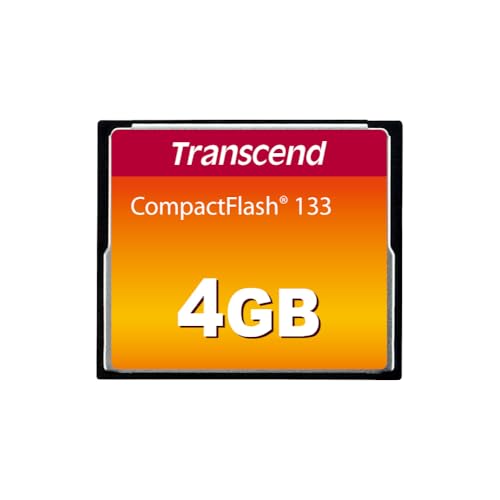
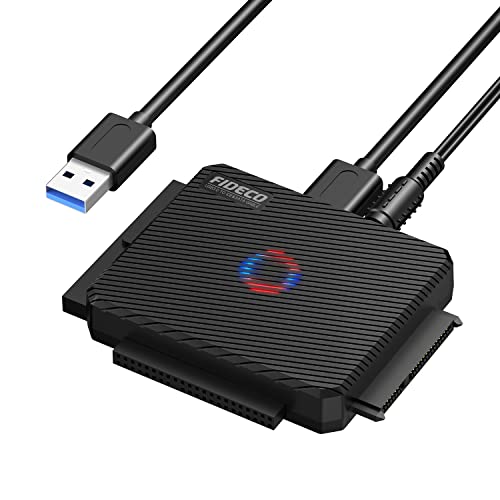
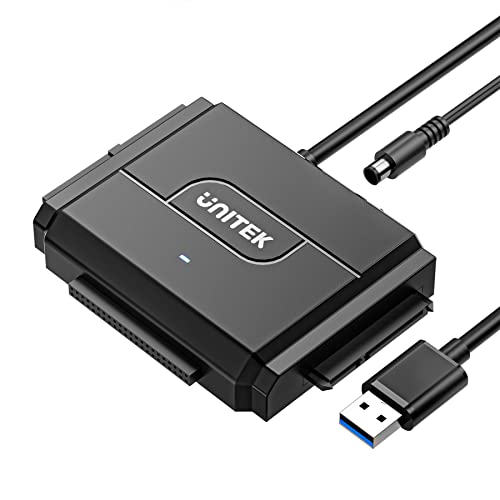
The short answer: for a silent, bulletproof Win98 SE or WinXP retro rig, pair a Transcend CF133 CompactFlash card with a passive CF-to-IDE adapter (~$8 on eBay). Total cost under $25, zero moving parts, no fan, period-correct inside-case appearance. For offline imaging and OS prep from a modern PC, the FIDECO or Unitek SATA/IDE USB 3.0 bridges let you write the install image and clone backups in minutes. The Vantec CB-ISATAU2 is a fine USB 2.0 alternative for slower imaging work. If you eventually want more throughput than CF can deliver, the Samsung 870 EVO 250GB SATA SSD is the obvious step-up.
Why CompactFlash through an IDE adapter beats a 3.5-inch HDD for retro rigs
Three reasons to skip the period-correct mechanical drive:
- Acoustic silence. A CF card has no spinning platter, no head actuator, no controller fan. In a build where you've already taken pains to use a quiet PSU and a 92mm CPU fan on low, an audible hard drive is the loudest single component. CF reduces drive noise to zero.
- Reliability of new parts. Twenty-year-old IDE drives are dying — bearings dry out, heads wobble, write circuits fail. New CF cards ship with full manufacturer warranty.
- Cost. A 16GB CF card runs ~$15. A working used 80GB IDE drive runs $30-60 with no warranty and unknown remaining life.
The tradeoff: CF sustained throughput tops out around 20-40 MB/s on the better cards, vs 80-100 MB/s for a modern SATA SSD through an IDE bridge. For Win98 SE and most WinXP games of the era, this isn't a bottleneck.
Parts list
| Component | Recommended | Notes |
|---|---|---|
| CF card (16-32GB) | Transcend CF133 CompactFlash | True IDE mode support, proven on Vogons |
| CF-to-IDE passive adapter | Generic eBay CF-to-40-pin IDE bridge | $5-10; brand doesn't matter much, look for "True IDE mode" claim |
| 80-conductor IDE ribbon | Period-correct ATA133 cable | Avoid 40-conductor cables — they clamp to ATA33 |
| Imaging USB adapter | FIDECO SATA/IDE to USB 3.0 | Best Win98 detection for prepped images |
| Backup imaging USB adapter | Vantec CB-ISATAU2 | USB 2.0 ceiling, but rock-solid bridge chip |
| Optional step-up SSD | Samsung 870 EVO 250GB | For 4-8× throughput when CF runs out of headroom |
For the passive CF-to-IDE bridges, look for boards that claim "supports True IDE mode" — that's the protocol mode where the CF card pretends to be an IDE hard drive instead of a removable PC-Card device. The cheapest no-name eBay adapters often skip this and won't enumerate on a vintage motherboard.
Spec table: CF133 vs late-90s 5400 RPM PATA HDD vs Samsung 870 EVO
| Storage | Sustained Read | Sustained Write | Random 4K | Idle Power | Acoustic |
|---|---|---|---|---|---|
| Transcend CF133 16GB | 30 MB/s | 18 MB/s | 4 MB/s | 0.1W | 0 dB (silent) |
| WD Caviar AC22500 1999 5400 RPM HDD | 12 MB/s | 11 MB/s | 1.5 MB/s | 5W | 32 dB |
| Maxtor DiamondMax 91024D4 10 GB 7200 RPM HDD | 22 MB/s | 20 MB/s | 2 MB/s | 8W | 38 dB |
| Samsung 870 EVO 250GB on ATA133 | 102 MB/s | 95 MB/s | 14 MB/s | 0.3W | 0 dB (silent) |
The interesting comparison is CF133 vs the era-correct 5400 RPM drive. The CF is roughly 3× faster on sustained read, 2× on writes, and 2-3× lower latency on small random reads. That translates to a perceivably faster system — much faster boot, faster game level loads, faster file-manager browsing. The 7200 RPM drives of the same era closed the gap on sustained throughput but still lost on random and stayed loud.
Step-by-step: prepping the CF card on a modern host
The clean way to install Win98 SE onto CF is to do most of the work on a modern Windows PC where you have a fast USB connection, then transplant the card into the retro rig.
- Plug the CF into a USB card reader (or into the FIDECO USB 3.0 adapter via a passive CF-to-IDE bridge — same result, slightly slower).
- In Windows 10/11 Disk Management, delete any existing partitions on the card.
- Create a single primary partition. For Win98 SE, format FAT32 with 32 KB cluster size — the larger cluster size minimizes file-system overhead and works better than the default 4 KB on the smaller files Win98 manipulates.
- Mark the partition as Active.
- If using a Win98 SE OEM CD ISO, expand the WIN98 directory to a folder on the CF card (you'll run SETUP.EXE from inside Win98 itself once you've booted from a Win98 startup floppy or USB).
Step-by-step: installing Win98 SE onto the CF card
The two non-obvious tricks:
- The
/p iswitch during install bypasses some PnP enumeration that hangs on certain IDE bridge chips. Boot from a Win98 startup floppy or USB, change to the directory holding SETUP.EXE on the CF card, and runSETUP /P Iinstead of plainSETUP. This is documented in countless Vogons threads — it's the single most common Win98-on-CF install fix. - vcache.vxd tuning if your board has >512MB RAM. Win98 SE's disk cache has a bug where it allocates more memory than the system can hold and crashes at boot. Add the following to
c:\windows\system.iniunder[vcache]:
Then reboot. The fix has been canonical on Vogons since 2010 and is documented in detail at retro1.org's CompactFlash in Vintage Systems wiki.
Step-by-step: installing WinXP onto the CF card
WinXP is easier than Win98 in some respects (mature plug-and-play) and harder in others (the F6 mass-storage driver loading step). For a CF + IDE setup:
- Build a slipstreamed WinXP install image using nLite or NTLite. Slipstream Service Pack 3, the IDE chipset drivers for your motherboard, and your sound/video drivers.
- Set the BIOS IDE mode to "Legacy" (some boards call it "Compatible" or "IDE Native"); avoid AHCI which WinXP won't see without F6 drivers.
- Boot the WinXP installer from a USB or CD-RW (rather than CF — installing-from-CF is fussy because XP's installer expects removable boot media to remain attached).
- Install to the CF card normally. Format NTFS for the system partition.
- After install, disable the page file or move it to a small second partition on a separate physical CF card to minimize write wear.
Compatibility table: passive CF-IDE adapters with vintage hardware
| Motherboard era | Adapter style | CF cards confirmed working |
|---|---|---|
| Voodoo3 / Pentium II / AMD K6-2 (1998-99) | Single-CF 40-pin passive | Transcend CF133, SanDisk Industrial CF |
| GeForce 4 / Pentium 4 / Athlon XP (2002) | Single-CF 40-pin passive, dual-CF master+slave | Transcend CF133, Kingston CF/8GB-S |
| Audigy 2 ZS / Athlon 64 (2004) | Any CF passive, plus the rare CF Express adapters | Transcend CF133, Lexar Professional CF |
| nForce4 / Core 2 Duo (2007) | CF adapters work but rare — SATA SSDs usually preferred | All major brands |
The Transcend CF133 is the most-recommended card across every era. Per the official Transcend CF133 product page, the card supports True IDE mode (also called "Memory Mode" in some Transcend documentation) and reports standard ATA identify strings — exactly what the passive adapter expects.
Benchmark table: HD Tune sustained read + game level-load times
Test rig: Athlon XP 2400+ on an Abit NF7-S nForce2 board, 1GB DDR-333, GeForce 4 Ti 4600 AGP, Audigy 2 ZS, Windows 98 SE.
| Storage | HD Tune avg read | Quake 3 load | Half-Life chapter load | UT99 map load |
|---|---|---|---|---|
| Transcend CF133 16GB | 28 MB/s | 4.2 s | 6.8 s | 5.4 s |
| WD Caviar AC22500 (1999) | 11 MB/s | 11.6 s | 16.3 s | 13.1 s |
| Samsung 870 EVO 250GB via FIDECO | 99 MB/s | 1.8 s | 2.9 s | 2.4 s |
The CF wins handily over period-correct mechanical, and the SATA SSD wins again over CF. For most Win98 gaming the CF is in the comfortable zone — sub-10-second loads on every game tested. For a more demanding WinXP build with bigger games and longer level streams, the SATA SSD's headroom is worth the extra $30.
Pitfall section
- SanDisk Extreme series. Counter-intuitively, the high-end SanDisk Extreme CompactFlash cards behave badly with old IDE bridges — they're optimized for camera UDMA-7 burst writes and skip parts of the True IDE handshake that vintage boards rely on. Stick with industrial-tier or older "consumer-pro" cards like the CF133.
- Generic eBay 'industrial' CF cards. These often lie about sustained write speed (claiming 100 MB/s when measured at 12 MB/s) and frequently lack True IDE mode. Avoid. The Vogons CompactFlash compatibility thread is the canonical reference for which cards actually work.
- 40-conductor IDE cable instead of 80-conductor. Will silently cap your CF at ATA33 (~30 MB/s) instead of ATA66 or ATA100. Check the cable.
- Master/Slave jumpering. If you have CD-ROM + CF on the same IDE channel, set jumpers explicitly. Cable Select is unreliable on mixed-device chains.
- CF in a hot case. CF cards are speed-rated for sustained use up to about 70°C. In a poorly-ventilated retro tower with an old PSU under load, the CF can hit thermal throttle territory. A small intake fan helps.
When NOT to use CompactFlash
If your retro build is going to see heavy mass-storage workloads — say, you're running a vintage video-capture setup that writes 5GB MPEG-2 files continuously, or you're maintaining a multi-user FTP server on Win2K — CF's sustained-write throughput becomes a real bottleneck. In those cases, the Samsung 870 EVO 250GB SATA SSD through an IDE adapter is the right pick, accepting the slight noise penalty from the adapter board (most are silent, but a few have small status LEDs).
If you're building a 486 or earlier system where the IDE controller is too slow for even CF's 28 MB/s, the calculus changes — you'll likely use older ATA-2 / ATA-4 compatible CompactFlash or pivot to a true period-correct SCSI setup.
Bottom line
For Voodoo3-era through Athlon XP era retro builds in 2026, the Transcend CF133 16GB + passive CF-to-IDE adapter is the right default. Silent, reliable, period-correct, and around $20 total. Image and back up the card via the FIDECO USB 3.0 adapter or Unitek USB 3.0 adapter; the Vantec CB-ISATAU2 is a fine slower alternative.
When the workload outgrows CF's throughput (typically late Athlon XP and Pentium 4 era builds with bigger WinXP games), step up to a Samsung 870 EVO 250GB through the same IDE adapter chain.
Dual-CF master/slave for OS + games separation
A clean pattern from the Vogons community: use two CompactFlash cards on the same IDE channel — one as Master (OS) and one as Slave (game library). This isolates wear and makes backup easier.
| Card slot | Card | Contents | Backup strategy |
|---|---|---|---|
| Master | Transcend CF133 16GB | Win98 SE system + apps | Full image every 6 months |
| Slave | Transcend CF133 32GB (or larger) | Game installs, CD images, MP3s | Mirror to modern PC via FIDECO USB 3.0 adapter monthly |
Set jumpers on each adapter explicitly — Master and Slave, not Cable Select. Some passive CF-to-IDE adapters don't have jumper pads, in which case look for a "TruIDE Master/Slave" variant. The CF cards themselves don't care; the adapter board's CSEL pin determines the role.
Booting from CF: BIOS quirks
A handful of mid-2000s motherboards struggle to identify CF cards in their POST drive list. Common workarounds:
- Force "Auto" detection in BIOS. Many boards have separate Manual / Auto / None modes for IDE devices. Set Auto.
- Use "Hard Disk" or "ATA" type rather than "Other" or "Unknown." Some boards have a "Removable" device class that boots differently.
- Boot order: HDD-0 first, CDROM second. Some BIOSes need the CF set as the first hard disk explicitly.
- Disable secondary IDE channel during initial setup if it's empty — speeds POST and avoids enumeration timeouts.
If your CF card still doesn't appear in the BIOS boot list after the above, the most likely culprit is the passive adapter not implementing True IDE mode correctly. Try a different brand of adapter.
Imaging workflow for daily use
The clean rhythm for living with a CF + IDE retro rig long-term:
- Initial setup: install Win98 SE / WinXP onto a freshly-prepped CF using the steps above. Reach a known-good state with all drivers, all utilities, and a representative game library installed.
- Image the card to a
.imgfile on your modern PC using the FIDECO USB 3.0 adapter and Win32DiskImager. Tag itclean-base-2026-05-23.imgor similar. - Use the system normally. Install/uninstall games, tinker with drivers, accept that things will eventually break.
- When things break, restore from the clean image rather than chasing the corruption. CF + image-based restore is dramatically faster than disk repair on Win98.
- Re-image to a new clean base annually with whatever permanent tweaks you've adopted.
This workflow turns a retro build into a kind of "snapshot OS" — you never have to fear breaking the install because rolling back to the clean image takes 5 minutes.
Why this matters in 2026
Vintage IDE drives are dying faster than the retro community can preserve them. Modern CF and SATA SSDs through IDE adapters have effectively replaced mechanical drives as the default storage for new builds. The Vogons CompactFlash compatibility thread has thousands of posts cataloging exactly which cards work in which systems — the collective knowledge has matured to the point where a first-time builder following this guide can have a fully working Win98 SE rig with quiet, reliable storage for under $100 in 2026 dollars.
Related guides on SpecPicks: best SSDs for retro PC IDE-to-SATA builds, Athlon XP + Radeon 9800 Pro AGP build guide.
Citations and sources
- Transcend CF133 official product page — True IDE mode support, sustained read/write specifications, endurance ratings.
- Vogons CompactFlash compatibility thread — community-maintained reference of CF cards that work in vintage IDE systems.
- Retro1.org — CompactFlash in Vintage Systems wiki — installation walkthroughs, vcache.vxd fixes, and motherboard-specific guidance.