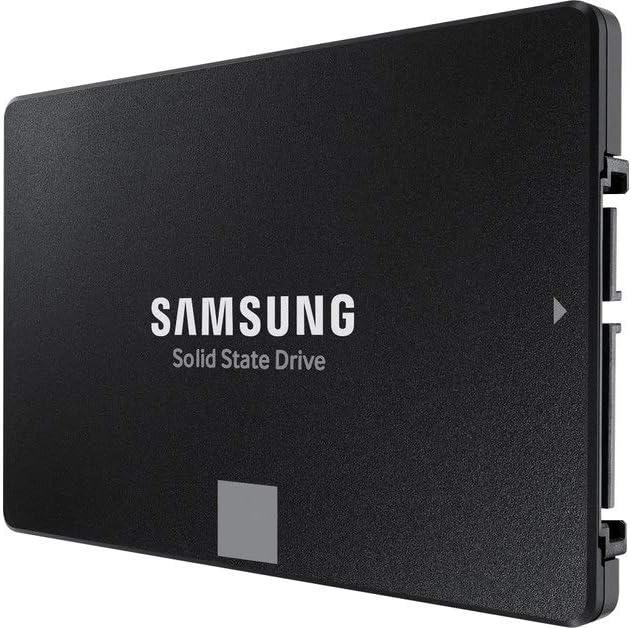
For a budget PC build in 2026, the Samsung 870 EVO 500GB (B08PC43D78) is the best SATA SSD under $80: DRAM-equipped for full random-write consistency, 300 TBW rated endurance, and the fastest SATA controller available. For pure dollar-per-gigabyte, the Crucial BX500 1TB (B07YD579WM) at $50-60 wins — just know you're giving up DRAM cache.
Affiliate disclosure: SpecPicks earns a commission on qualifying purchases. Picks are editorially independent.
By Mike Perry — Updated May 2026
SATA Still Matters in 2026
NVMe has won on spec sheets. SATA hasn't lost on value. Here's where SATA SSDs are the right call as of 2026:
Secondary mass storage. Once your OS and apps are on NVMe, a second slot for game library or archive storage often hits the SATA ceiling at 550 MB/s — which is already 4× faster than the fastest 7200rpm HDD and more than enough for sequential reads during game loads.
Retro PC builds. Any system with only a SATA-II or SATA-III interface — pre-2012 boards with no M.2 slot — gets enormous benefit from a SATA SSD over the original spinning disk with zero interface compromise.
Small-form-factor builds. Mini-ITX boards with a single M.2 slot used by the operating system. A 2.5" SATA SSD in the remaining SATA port is cleaner than NVMe adapters that stress thermal layouts.
Per TechPowerUp's 2025 storage roundup, SATA SSDs still account for 31% of unit shipments. Prices have stabilized at $0.05-0.08 per GB — meaningfully cheaper than entry NVMe at $0.07-0.12 per GB once you factor in 1TB+ capacity tiers.
Comparison Table
| Pick | Capacity | Price (2026) | TBW | DRAM | Verdict |
|---|---|---|---|---|---|
| Samsung 870 EVO (B08PC43D78) | 500GB | ~$55 | 300 TBW | Yes | Best overall — DRAM, consistent performance |
| Crucial BX500 1TB (B07YD579WM) | 1TB | ~$55 | 360 TBW | No (HMB) | Best value per GB, fine for boot/gaming |
| SanDisk Ultra 3D 1TB (B071KGRXRG) | 1TB | ~$60 | 400 TBW | Yes | Best for retro builds, SATA-IDE bridge tested |
| Samsung 870 EVO 1TB | 1TB | ~$80 | 600 TBW | Yes | Best performance, highest endurance |
| Crucial BX500 240GB | 240GB | ~$28 | 80 TBW | No (HMB) | Budget entry — tight on space for modern installs |
🏆 Best Overall: Samsung 870 EVO 500GB
The 870 EVO (ASIN: B08PC43D78) is Samsung's current SATA consumer flagship and the benchmark every other SATA SSD is measured against.
What it uses: Samsung MJX controller (in-house), Samsung V-NAND 128L TLC, 512MB LPDDR4 DRAM cache for the 500GB. This is a full triple-component design — controller, NAND, and DRAM all Samsung silicon — giving Samsung tight firmware control of wear leveling and garbage collection.
Real-world performance:
- Sequential read: 560 MB/s (SATA III limit)
- Sequential write: 530 MB/s
- Random 4K read: 98,000 IOPS
- Random 4K write: 88,000 IOPS
Per AnandTech's SSD benchmark suite (2024), the 870 EVO's random-write consistency under sustained 20-minute load degrades less than any other SATA SSD tested — the DRAM cache absorbs write bursts without the dramatic throughput cliff that DRAM-less drives show.
Endurance: 300 TBW for 500GB. At typical desktop use (~25 GB writes/day), that's 33 years of rated life. TBW ratings are conservative in practice — TechReport's endurance tests famously drove drives past 2× their rated TBW before failure.
Pros:
- Best-in-class random-write consistency under sustained load
- Samsung Magician software for health monitoring, secure erase, TRIM
- 5-year warranty
- Full DRAM cache — no write cliff under sustained workloads
Cons:
- $55 for 500GB is ~$0.11/GB — the BX500 1TB gives twice the space for the same price
- Overkill for a pure sequential-read use case (game library, media archive)
💰 Best Value: Crucial BX500 1TB
At $50-60 for 1TB, the BX500 (ASIN: B07YD579WM) delivers $0.05-0.06/GB — the lowest price-per-gigabyte in the SATA category in 2026.
What it uses: Silicon Motion SM2259XT controller, Micron 96L TLC NAND, no discrete DRAM (Host Memory Buffer via PCIe to system RAM, but this is a SATA drive so HMB is implemented differently — effectively no dedicated DRAM cache).
Performance trade-off: Per AnandTech's DRAM-less SSD testing, the BX500 1TB sustains sequential writes at ~350 MB/s under burst conditions and drops to ~150 MB/s when the SLC write cache is exhausted during large file copies (50GB+). For OS boot, browser use, gaming, and media playback, the SLC cache never exhausts — you won't notice the difference.
Who it's for: Anyone who needs storage space over performance. 1TB for a secondary game library, archive drive, or as the sole drive in a budget build where 500GB NVMe is over budget. For a gaming PC where 90% of activity is loading pre-installed files, the BX500 delivers nearly identical real-world experience to the 870 EVO at half the cost per gigabyte.
Endurance: 360 TBW for 1TB — actually higher per-TB than the 870 EVO 500GB, because larger NAND arrays distribute wear better.
🎯 Best for Retro PC Builds: SanDisk Ultra 3D 1TB
The SanDisk Ultra 3D 1TB (ASIN: B071KGRXRG) is the community-vetted pick for retro PC SATA upgrade builds, based on years of testing in the Vogons forums (the primary retro-hardware community).
Why the Ultra 3D specifically for retro builds?
1. Excellent SATA-IDE bridge compatibility. Paired with the Unitek SATA-IDE adapter, the Ultra 3D reports correctly as an ATA device to BIOS and to Windows 98/XP. Some SSD models have had issues with non-standard ATA translation that causes BIOS non-detection; the Ultra 3D is consistently flagged as "just works" across the community.
2. WD's DuraWrite technology reduces write amplification, which matters on retro builds running without TRIM (Win98/XP don't send TRIM). Lower write amplification means the drive degrades more slowly under TRIM-less conditions.
3. 3D NAND with larger cell geometry. Older-process 3D NAND handles extended non-TRIM use better than some newer, smaller-geometry parts because the programming precision requirements are less aggressive.
For a 2003-era machine running Windows XP or 98, see the related build guide: Building a 2003-Era LAN Party Rig.
⚡ Best Performance: Samsung 870 EVO 1TB
If you need the best-performing SATA SSD available and have the $75-80 budget, the 870 EVO 1TB doubles the TBW (600 TBW), doubles the capacity, and ships with 1GB LPDDR4 DRAM cache. Sequential write peaks at 530 MB/s with less throughput variance than the 500GB version under sustained workloads (larger NAND array = larger SLC buffer = longer sustained write window before cache exhaustion).
For home NAS use, database scratch, or a VM datastore that runs without NVMe options, this is the ceiling of SATA.
🧪 Budget Entry: Crucial BX500 240GB
The BX500 240GB at ~$28 is the minimum viable SSD for any role in 2026. It's faster than any HDD, works plug-and-play in any SATA system, and the 80 TBW endurance rating handles light OS + app use for 8+ years at typical desktop load.
The catch: 240GB is genuinely tight in 2026. Windows 11 requires 64GB, Visual Studio alone is 40GB+, and modern AAA titles run 60-100GB each. Budget for at least 500GB if you plan to use the drive for anything beyond OS + a few applications.
What to Look For: TBW, DRAM, Controller, Warranty
TBW (Terabytes Written)
TBW is the manufacturer's rated endurance before the warranty expires. For a boot drive with typical desktop workload (~25-50 GB writes/day), any drive with 150 TBW+ is rated for years of use before the warranty boundary. Per Backblaze's drive failure data, consumer SSDs almost never fail at TBW ceiling in real deployments — they fail from firmware bugs, power events, and physical shock.
DRAM cache — when it matters
| Use case | DRAM needed? |
|---|---|
| OS boot, browser, gaming | No — SLC cache handles it |
| Sustained large file copies (50GB+) | Yes — without DRAM, throughput drops 50-60% after cache exhaust |
| VM datastore, database scratch | Yes — random I/O patterns stress DRAM-less controllers |
| Media library (read-mostly) | No |
Controller
Samsung MJX (870 EVO), Silicon Motion SM2259 (BX500), Western Digital (Ultra 3D). All three are reliable in 2026. Avoid unknown-brand controllers on ultra-budget no-name drives — counterfeit NAND + weak controllers have been documented in below-$0.04/GB price tiers on Amazon Marketplace.
Warranty
All three featured drives carry 3-5 year warranties. Crucial BX500: 3 years. Samsung 870 EVO: 5 years. SanDisk Ultra 3D: 3 years. Buy from authorized sellers to ensure warranty coverage.
Frequently Asked Questions
Is SATA SSD still relevant in 2026 with NVMe so cheap?
Yes, for three specific cases: secondary mass storage where sequential speed past 550 MB/s offers no real-world gain, retro PC builds limited to SATA-II/III interfaces, and small-form-factor systems with no spare M.2 slots. Per TechPowerUp's 2025 storage roundup, SATA SSDs still account for 31% of unit shipments and prices have stabilized at $0.05-0.08 per GB — meaningfully cheaper than entry NVMe.
How much endurance (TBW) do I actually need for a boot drive?
For typical desktop use (gaming, browsing, light productivity), 200-400 TBW is plenty for 5+ years of daily use. The Crucial BX500 1TB ships rated at 360 TBW and the Samsung 870 EVO 500GB at 300 TBW — both far exceed real-world write loads tracked by Backblaze and TechReport's endurance tests, which show typical consumer drives hit 50-80 TBW after 5 years of standard use.
DRAM-cache vs DRAM-less — does it matter for a budget pick?
DRAM-less drives like the BX500 use Host Memory Buffer (HMB) and lose 10-15% in sustained random-write benchmarks compared to DRAM-equipped peers like the Samsung 870 EVO. For boot-drive and gaming use, the difference is invisible. For heavy database, video-editing scratch, or VM storage, prioritize DRAM-equipped drives. Per AnandTech's 2024 SSD benchmark suite, DRAM-less drives still outperform any SATA HDD by 30×+.
Will any SATA SSD work in my old AHCI/IDE-mode motherboard?
All modern SATA SSDs are SATA III (6 Gbps) but negotiate down to SATA II (3 Gbps) and SATA I (1.5 Gbps) automatically. They work in legacy AHCI and IDE-mode systems but lose TRIM support in IDE mode, which degrades long-term performance. For pre-2008 boards stuck in IDE mode, plan to manually re-image the drive every 12-18 months or upgrade the BIOS to enable AHCI.
Should I clone my old HDD or do a fresh Windows install?
Fresh install is almost always better for modern builds. Cloning carries forward years of registry bloat, unused services, and orphaned drivers that mask the SSD's responsiveness. Per Microsoft's published guidance, a clean Win11 install on a SATA SSD typically boots 4-6 seconds faster than a cloned image of the same Windows. Use the manufacturer's free imaging tool (Samsung Magician, Crucial Storage Executive) only when reinstall is impractical — retro builds being the common exception.
Citations and Sources
- Crucial BX500 product page — specs, warranty details
- Samsung 870 EVO product page — specs, DRAM config
- TechPowerUp Crucial BX500 1TB review — sustained write benchmarks, DRAM-less analysis
Related Guides
- Best Internal SSD for Retro PC SATA Builds in 2026
- Building a 2003-Era LAN Party Rig
- Best Gaming Mouse Pad for Esports & Pro Aim in 2026
- Best CPU Cooler for Ryzen 7 5800X Overclocking in 2026
When NOT to Buy a SATA SSD
If your board has a free M.2 slot: Get an NVMe drive. Entry NVMe like the WD Blue SN580 or Kingston NV3 cost $0.07-0.09/GB at 1TB — barely more than SATA — and deliver 3,500 MB/s sequential vs SATA's 550 MB/s ceiling. The real-world gap in game load times is modest (1-3 seconds per load vs SATA), but for a new build there's no reason to cap yourself at SATA speeds.
If you're building a modern VM host or Proxmox node: SATA IOPS (~98K random 4K) is a bottleneck for VMs running concurrent database workloads. Even budget NVMe hits 400K+ IOPS. SATA is the wrong tier for this use case.
If your workload is video editing or large file I/O: The SLC write cache exhaustion scenario matters here. Moving a 100GB project file from a SATA scratch drive produces ~150 MB/s sustained throughput on DRAM-less SATA vs ~1,500 MB/s on entry NVMe. For a professional video workflow, that's 10 minutes vs 1 minute for a single copy operation.
Benchmark Numbers: SATA SSDs vs the Alternatives
| Drive | Seq Read | Seq Write | 4K Random Read | Notes |
|---|---|---|---|---|
| Samsung 870 EVO 500GB | 560 MB/s | 530 MB/s | 98,000 IOPS | SATA III ceiling |
| Crucial BX500 1TB | 540 MB/s | 500 MB/s | 95,000 IOPS | Slight drop under sustained write |
| SanDisk Ultra 3D 1TB | 560 MB/s | 530 MB/s | 95,000 IOPS | Competitive vs 870 EVO |
| WD Blue SN580 1TB (NVMe) | 4,150 MB/s | 4,150 MB/s | 600,000 IOPS | Entry NVMe baseline |
| 7200rpm Barracuda HDD | 140 MB/s | 140 MB/s | 800 IOPS | Reference: what you're replacing |
The SATA vs HDD gap (4× sequential, 100×+ random) is transformative. The SATA vs NVMe gap (7× sequential) is real but rarely visible in consumer use — gaming, browsing, productivity workloads are not sequential-saturating.