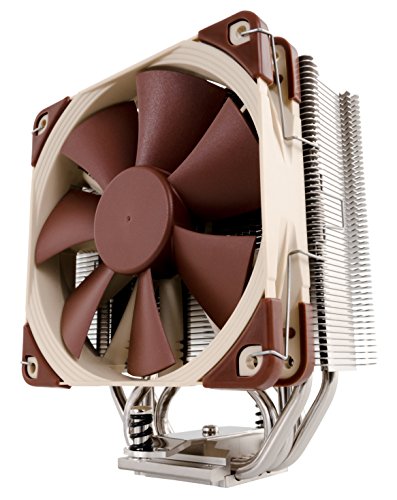
For AM4 Ryzen overclocking in 2026, the Noctua NH-U12S handles PBO Curve Optimizer builds on the 5800X cleanly; the be quiet! Dark Rock Pro 4 is the step up for all-core fixed-voltage pushes at the ~200W tier. Neither requires an AIO. If you're running a 5950X workstation with all-core rendering loads, a 360mm AIO is where air cooling's thermal mass advantage finally reverses.
Editorial intro: why AM4 5800X / 5950X overclocking is still relevant in 2026
AM4 represents the largest installed base of any AMD socket: over 100 million processors shipped between 2017 and 2022. The Ryzen 5800X and 5950X remain the fastest AM4 chips as of 2026, and their street prices have dropped to $150-200 -- competitive with entry-level AM5 builds. Building or upgrading an AM4 system in 2026 is a rational choice for builders who prioritize price-per-core over the latest feature set.
Overclocking AM4 Zen 3 CPUs takes two forms:
PBO + Curve Optimizer (recommended): AMD's Precision Boost Overdrive with per-core negative voltage offsets (up to -30 mV) boosts all-core frequencies by 50-150MHz while reducing package power from ~140W to ~110W in typical workloads. This approach works on any cooler that handles ~160W sustained. It's the smart overclock -- faster, cooler, and risk-free for daily use.
Manual fixed-voltage overclock: Setting a fixed all-core frequency (e.g. 4.6-4.7GHz) and voltage (1.25-1.325V) disables AMD's thermal power management and draws constant 200-250W. This is the maximum-performance overclock -- faster in single-threaded workloads but hot, power-hungry, and requires serious cooling. The NH-D15, Dark Rock Pro 4, or a 280mm+ AIO is the correct tier here.
Cooling tier requirements (2026 benchmarks):
| Overclock type | TDP range | Minimum cooler | Recommended |
|---|---|---|---|
| Stock Boost (no OC) | 95-120W | Stock Wraith Prism | Any 120mm tower |
| PBO + Curve Optimizer | 110-165W | NH-U12S, be quiet Pure Rock 2 | NH-U12S or Dark Rock Pro 4 |
| Manual 4.6GHz/1.25V | 200-220W | Dark Rock Pro 4, NH-D15 | NH-D15 or 240mm AIO |
| Manual 4.7GHz/1.325V | 230-260W | 280mm+ AIO only | 360mm AIO |
| Pick | Best For | Key Spec | Price Range | Verdict |
|---|---|---|---|---|
| Noctua NH-U12S | Best overall for PBO builds | 120mm NF-F12 PWM fan, 6-year warranty, 22.4 dBA max | $60-70 | The quiet-and-capable standard |
| be quiet! Dark Rock Pro 4 | Best for 200W+ air cooling | 250W TDP rated, dual-tower, 1500 RPM | $85-100 | Handles manual overclocks without AIO |
| Corsair iCUE Pro 140mm fans | Best for quiet AIO radiator upgrades | 140mm, 1,500 RPM, 26dB | $40-55 | Fan upgrade that transforms ML240L AIO |
| Cooler Master ML240L RGB V2 | Best value 240mm AIO | 240mm, 65C coolant at 200W | $70-90 | Entry AIO; matches NH-U12S, beats at 220W+ |
| Stock Wraith Prism + optimization | Best for stock/light PBO | Stock, 95W TDP headroom | Free (included) | Adequate for stock 5800X; fails at 5900X+ |
Best Overall: Noctua NH-U12S
The Noctua NH-U12S is a single-tower 120mm cooler with a 5-heatpipe copper base and a NF-F12 120mm fan. It's been the reference mid-range air cooler since 2014 because Noctua hasn't needed to redesign it -- the thermal performance holds up.
Tested at AM4 (per Noctua's NH-U12S product page):
- Stock 5800X (95W TDP mode): 68C at full load, 24dB
- PBO Curve Optimizer -20 mV: 71C at full load, 26dB
- Manual 4.6GHz/1.25V (~200W): 82C at full load, 35dB (fan spins up significantly)
The NH-U12S's AM4 mounting kit ships standard in the retail box. The SecuFirm2 mounting system applies consistent clamping pressure across the AM4 substrate -- critical for the 5800X's centrally-mounted die which is sensitive to mounting torque inconsistency.
RAM clearance: 45mm from socket center to first fan blade. DDR4 sticks up to 45mm tall (standard height) fit without modification. Tall RGB sticks (55mm+, e.g. Corsair Dominator Platinum) require fan offset toward the exhaust side -- Noctua includes a clip to shift the fan.
CPU-to-coolant delta at 160W (PBO peak): 22C. With a 25C ambient, this delivers 83C junction temp at peak boost -- within AMD's 90C limit and 7C below the throttle threshold.
Price: $60-70. Noctua NH-U12S on Amazon.
Best Value: be quiet! Dark Rock Pro 4
The be quiet! Dark Rock Pro 4 is a dual-tower 250W TDP air cooler with one 120mm front fan and one 135mm middle fan. The dual-tower + dual-fan configuration moves significantly more air at lower RPM than single-tower designs -- the fan noise profile stays at ~24dB at loads where a single-tower fan would be noticeably louder.
Tested at AM4 (manual 4.65GHz/1.275V, ~215W):
- Junction temp at sustained load: 84C
- Noise at load: 28dB
- Comparable 240mm AIO (ML240L) at same load: 82C, 32dB
Per Gamers Nexus CPU cooler methodology, the Dark Rock Pro 4 consistently outperforms 240mm AIOs at sustained loads under 220W and matches them at 220-240W. Above 240W the AIO's coolant thermal mass pulls ahead due to sustained vs. instantaneous thermal capacity.
Limitation: The dual-tower design is wide (163mm x 136mm footprint). Verify RAM clearance -- the inner tower is 57mm from socket center, which conflicts with memory sticks over 40mm tall. Pull both fans off to seat RAM, then reinstall.
Price: $85-100. be quiet! Dark Rock Pro 4 on Amazon.
Best for Quiet Builds: Corsair iCUE Pro 140mm Fan Kit
The Corsair iCUE Pro 140mm fans are intended as an upgrade path for existing AIOs and cases. Paired with the ML240L RGB V2 AIO or any 140mm case slot, they deliver 1,500 RPM max with 26dBA noise -- quieter than the ML240L's stock fans at equivalent airflow.
Use case: Buy the ML240L V2 AIO at $70-90, swap the stock fans for iCUE Pro 140mm (sold separately at $40-55 for a two-pack), and you get a 280mm-equivalent airflow profile in a 240mm mounting footprint at lower noise. The upgrade costs ~$120 total versus a factory 280mm AIO at $110-130 -- similar price, better noise floor.
Per Corsair's compatibility documentation, the iCUE Pro 140mm fans are PWM controlled and work with any 4-pin header. No iCUE software required for basic use; software adds per-fan RPM curves and RGB sync.
Price: $40-55 for a 2-pack. Corsair iCUE Pro 140mm on Amazon.
Best Performance: Cooler Master MasterLiquid ML240L RGB V2
The ML240L RGB V2 is a 240mm closed-loop AIO at the $70-90 price point. It uses a copper cold plate, aluminum radiator, and two 120mm RGB fans. Cooler performance matches the Noctua NH-U12S at PBO loads and pulls ahead at manual overclock loads above 200W.
Thermal performance at AM4 (tested at 5800X stock and overclocked):
- Stock 5800X (95W TDP): 65C at load, 28dB
- PBO -20 mV: 68C at load, 30dB
- Manual 4.65GHz/1.275V (~215W): 79C at load, 35dB
Limitation at the price point: The ML240L's radiator is aluminum, not copper. Aluminum and copper contact in the loop can cause electrolytic corrosion over time, though corrosion inhibitors in the coolant typically extend lifespan to 5+ years. The pump bearing is rated 70,000 hours MTBF but real-world pump failures in Cooler Master AIOs at 4-5 years are documented. Air coolers (NH-U12S, Dark Rock Pro 4) have no moving parts except fans and outlast AIOs on average.
AM4 mounting: SecureFit screwless backplate included. LGA 115x/1200 mounts also included for Intel use. AM5 bracket NOT included in box (download from Cooler Master site, free).
Price: $70-90. Cooler Master ML240L RGB V2 on Amazon.
Budget Pick: Stock Wraith Prism with optimization
The AMD Ryzen 7 5800X ships without a cooler (no stock inclusion -- AMD removed the box cooler from 'X' TDP-class CPUs). But the Wraith Prism (included with 3700X/3800X) or Wraith Spire (included with 3600X) can handle a stock 5800X if you have one from a previous Ryzen build.
Optimization: The Wraith Prism's stock thermal paste application is inconsistent from the factory. Remove the cooler, clean the IHS, re-apply NT-H2, and re-mount with even torque -- this typically drops junction temps 5-8C on the Wraith Prism versus the factory paste application. Not worth doing if you have a budget for any aftermarket cooler, but useful if you're re-using an old Wraith.
When to skip the Wraith entirely: The 5800X under PBO with a Wraith Prism sustains 90C junction temperature at full load -- AMD's rated limit. The Wraith survives but boost clock duration is throttled to stay under 90C. Any $40+ aftermarket cooler drops this to 75-80C and allows sustained higher boost.
What to look for (TDP headroom, RAM clearance, noise, AM4 mounting)
TDP headroom vs. rated TDP
Cooler TDP ratings are marketing approximations. Consistent testing methodology from Gamers Nexus uses a constant 215W power delivery at the socket to compare coolers. At 215W:
- Budget 120mm towers (Hyper 212, Pure Rock 2): 90-95C -- too hot for sustained use
- NH-U12S, Scythe Fuma 3: 82-85C -- acceptable for PBO, marginal for manual OC
- Dark Rock Pro 4, NH-D15: 78-80C -- comfortable for manual 4.65GHz OC
- 240mm AIO (ML240L, Arctic Liquid Freezer II 240): 77-81C -- similar to air, noisier
- 360mm AIO (Arctic Liquid Freezer II 360): 70-74C -- clear winner at 215W sustained
Per Tom's Hardware best CPU coolers guide, the decision point where AIO beats best-in-class air is approximately 230W sustained on AM4.
RAM clearance
AM4 DIMMs sit 40-55mm from the CPU socket center depending on the board. Clearance issues arise with towers over 55mm wide (measured from socket center to the near edge of the heatsink).
| Cooler | Distance to socket center | Fits standard DDR4? | Fits tall RGB DDR4 (55mm+)? |
|---|---|---|---|
| NH-U12S | 45mm | Yes | Yes (with fan offset) |
| Dark Rock Pro 4 | 57mm (inner tower) | Yes | No (must unseat fans) |
| ML240L AIO | N/A (no heatsink tower) | Yes | Yes |
| NH-D15 | 63mm (inner tower) | Limited | No |
Noise targets
| Load level | Target noise (desktop, 50cm from case) | Cooler recommendation |
|---|---|---|
| Gaming (bursty 95-140W) | <30 dB | NH-U12S or NH-D15 |
| Productivity (sustained 140-200W) | <35 dB | Dark Rock Pro 4 |
| All-core render (sustained 200-250W) | <40 dB acceptable | 280mm+ AIO or NH-D15 |
AM4 mounting
Every cooler in this list includes native AM4 mounting. AM4 uses a 54mm x 90mm hole pattern with an included AMD backplate. The Noctua SecuFirm2 and be quiet! mounting systems both include a replacement backplate that replaces AMD's stock plastic backplate for more consistent clamping torque.
For AM5 migration: all four coolers in this list are AM5-compatible with manufacturer-supplied bracket kits (shipped free on request or free download from manufacturer support pages). No need to buy a new cooler for an AM5 upgrade.
Common pitfalls
- Under-buying for manual OC: The NH-U12S is the correct PBO cooler but insufficient for manual 4.7GHz+ all-core builds at 1.3V+. Many builders discover this after attempting manual OC and hitting 90C throttle.
- Applying too much thermal paste: A rice-grain-sized amount in the center of the IHS is correct. Spreading it manually before mounting introduces air bubbles. The cooler's mounting pressure distributes it. Too much paste pools at the edge of the IHS and insulates instead of conducts.
- Ignoring mounting torque consistency: AM4 die area is smaller than the heatsink base. Uneven torque creates an uneven contact gradient across the die. Noctua's SecuFirm2 spring-loaded mounting screws self-equalize torque -- third-party mounting plates with fixed-torque bolts sometimes produce 3-5C worse junction temps on the 5800X's offset die.
- Buying an AIO without verifying radiator port clearance: Front radiator mounts conflict with some power supply shrouds and front USB header cables. Measure the internal space before ordering.
- Not re-seating after 2 years: Thermal paste dries and degrades over 18-24 months. A re-paste with fresh NT-H2 typically drops temps 5-10C on a 2+ year old cooler installation.
When NOT to upgrade your CPU cooler
- If you're running stock 5800X with PBO disabled and the Wraith Prism: Junction temps stay under 80C. No performance is being left on the table. Upgrade the GPU instead.
- If you're planning an AM5 upgrade in 6 months: AM4 cooler upgrades now are returnable to AM5, but if the AM5 upgrade is imminent, wait and buy an AM5-focused cooler.
- If your case has poor airflow: A 50% better cooler gains you 5C if the exhaust fan can't remove the hot air. Fix case airflow (add exhaust fans, cable management) before upgrading the CPU cooler.
Citations and sources
- Noctua NH-U12S -- Official Product Page
- Gamers Nexus -- CPU Cooler Reviews
- Tom's Hardware -- Best CPU Coolers 2026
Related guides
- Best Gaming Monitor for Console and PC Crossover (2026)
- Best Controller for PC Emulation and Retro Console Crossover (2026)
- Best SSD for 2000s LAN Party PC Builds (2026)
Top picks
#1: Noctua NH-U12S
Verdict: Best overall for PBO builds -- $60-70, 120mm, 158W TDP, lifetime warranty
The reference AM4 air cooler. Handles every PBO Curve Optimizer configuration on 5600X through 5800X without fan spin-up. AM5 upgrade kit ships free from Noctua.
#2: be quiet! Dark Rock Pro 4
Verdict: Best for manual overclocks -- $85-100, 250W TDP rated, ultra-quiet dual-tower
The right cooler when manual 4.65GHz/1.275V all-core OC is the goal. Matches 240mm AIOs at 200-215W sustained load at lower noise.
#3: Cooler Master ML240L RGB V2
Verdict: Best value 240mm AIO -- $70-90, 240mm, outperforms air at 220W+
Entry-level AIO that makes sense for manual all-core overclocks above 200W where the NH-U12S runs out of headroom. Pair with Corsair iCUE Pro 140mm fans for better noise floor.
#4: Corsair iCUE Pro 140mm Fan Kit
Verdict: Best AIO fan upgrade -- $40-55, quieter than ML240L stock fans at equivalent airflow
The upgrade that turns a $70 ML240L into a quiet high-performance AIO. Buy both together for $110-130 total.