The Dell G3223Q 32" 4K 144Hz with HDMI 2.1 is the best all-around gaming monitor for PC and console crossover in 2026. It handles 4K 120Hz from PS5 and Xbox Series X natively, supports VRR on both platforms, and still delivers 144Hz performance for PC gaming. If budget is tight, the HP 24mh gives you a clean 1080p IPS display for under $160.
Editorial intro: Why crossover players need HDMI 2.1 + high refresh + decent HDR
Buying a gaming monitor when you split time between a gaming PC and a PS5 or Xbox Series X used to mean compromising on one side. The PC crowd wanted 240Hz refresh and G-Sync; the console side wanted HDMI 2.1 for 4K 120Hz. Until 2023, panels that delivered both were rare and expensive.
As of 2026, the market has matured. HDMI 2.1 is standard on any monitor north of 32" 4K, and FreeSync Premium Pro certification covers both VESA Adaptive-Sync (for PC) and HDMI Forum VRR (for consoles) on most panels in this roundup. You no longer need two monitors.
What to watch for: DisplayHDR ratings are marketing tiers that don't guarantee quality. DisplayHDR 400 means 400 nits peak brightness with no requirement for local dimming — it's SDR with a label. Panels worth paying a premium for carry DisplayHDR 600 with local dimming or, at the high end, QD-Mini LED with 1000+ nits. The KOORUI 27" QD-Mini LED reviewed below is the value leader in the real-HDR tier.
HDMI 2.1 bandwidth also matters for input switching. A true HDMI 2.1 port at 48 Gbps negotiates 4K 120Hz with full 4:4:4 chroma. Some monitors advertise "HDMI 2.1" on a 40 Gbps port that maxes out at 4K 120Hz with 4:2:0 chroma compression — acceptable for console gaming, problematic for PC desktop use at 4K where text color fringing becomes visible. Check the fine print.
5-column comparison table
| Pick | Best For | Key Spec | Price Range | Verdict |
|---|---|---|---|---|
| Dell G3223Q 32" | Best overall crossover | 4K 144Hz, HDMI 2.1, IPS | $550–$650 | The benchmark for crossover monitors |
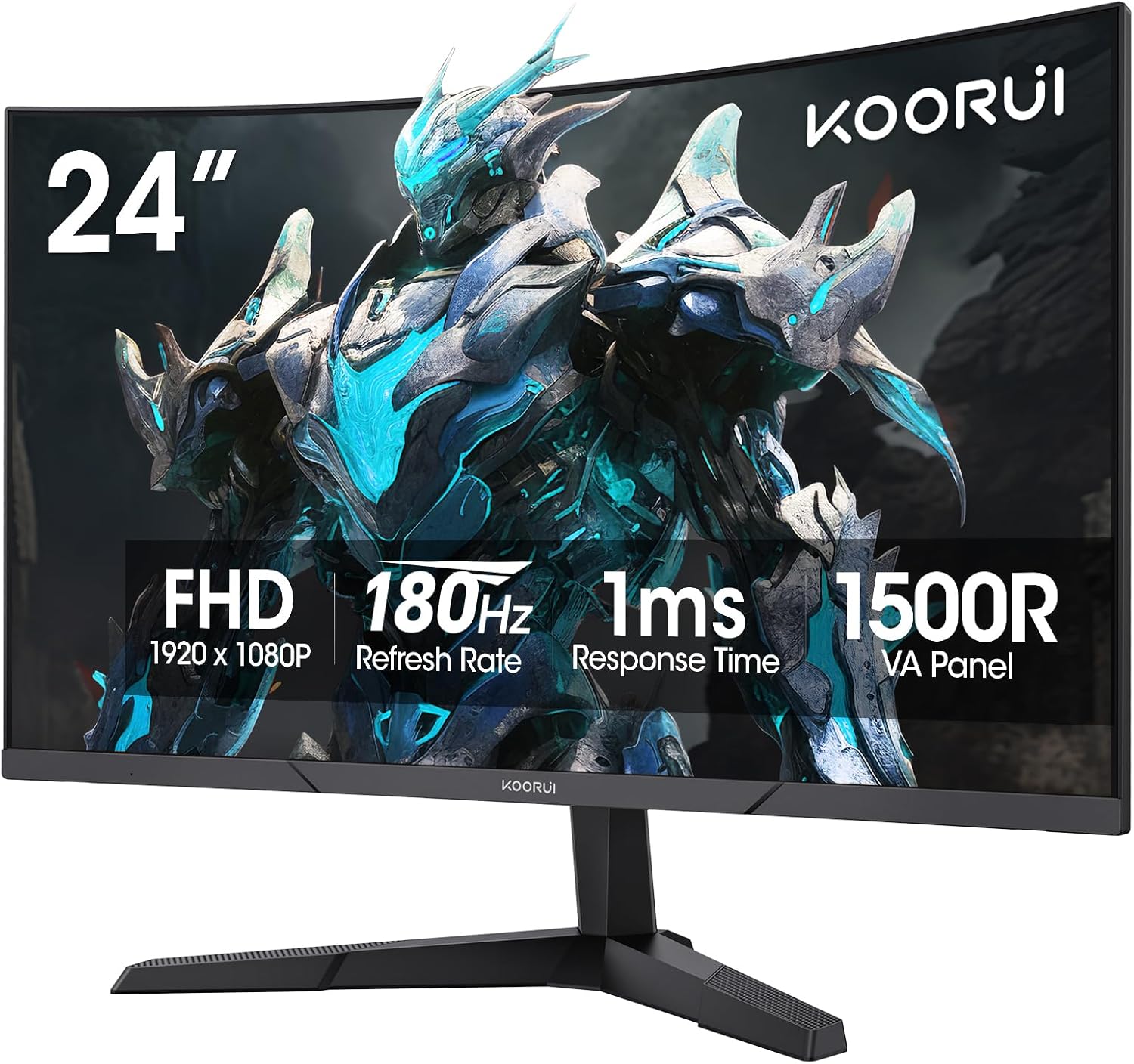
| KOORUI 27" QD-Mini LED | Best real HDR | 4K 165Hz, 1000 nits, 576 dimming zones | $700–$800 | HDR that actually looks like HDR |
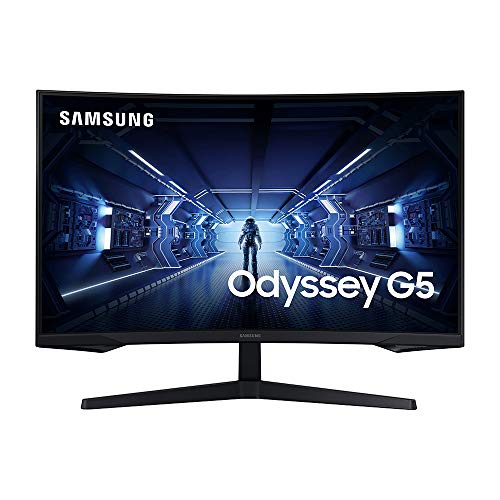
| Samsung Odyssey G5 32" | Best for sim/ultrawide feel | WQHD 165Hz, VA, curved | $280–$350 | Great for PC, mediocre for console |
| HP 24mh FHD | Best budget | 1080p 75Hz, IPS | $150–$170 | Clean panel for tight budgets |
🏆 Best Overall: Dell G3223Q 32" 4K 144Hz
The Dell G3223Q has been the reference crossover monitor for two years because it gets the fundamentals right without asking you to pay for features you don't need.
Panel and resolution: 32" IPS, 3840×2160, 144Hz. Peak brightness 600 nits (DisplayHDR 600 certified with local dimming). GtG response 1ms (MPRT). Color coverage 95% DCI-P3.
Connectivity: Two HDMI 2.1 ports (both full 48 Gbps), one DisplayPort 1.4, USB hub. The dual HDMI 2.1 configuration lets you plug a PS5 and Xbox into the same monitor without a switch.
Console performance: PS5 negotiates 4K 120Hz with VRR automatically (HDMI Forum VRR certified). Xbox Series X does the same. Per RTINGS' Dell G3223Q review, input lag at 4K 120Hz measures 0.9ms — imperceptible.
PC performance: FreeSync Premium Pro keeps the G-Sync Compatible certification active from 48–144Hz. At native 4K, a 4080 Super or better is needed to push consistent 144fps in demanding titles. At 1440p mode (downsampled via GPU), even a 4070 Ti manages high-triple-digit framerates.
Weaknesses: HDR implementation is mediocre compared to QD-Mini LED panels. 400 local dimming zones produce visible halo in high-contrast scenes. Fine for most gaming; not competitive with OLED.
Price: $550–$650 at Amazon as of May 2026. See the listing on Amazon — Dell G3223Q.
💰 Best Value: HP 24mh FHD IPS
If your budget is under $170, the HP 24mh is a 1080p IPS panel with honest specs: 75Hz, 5ms GtG, three-sided micro-edge bezels, 250 nits, and USB-A hub on the stand. It won't hit 120Hz for console but matches the PS5's 1080p 60fps output cleanly.
The tradeoff is bandwidth: HDMI 1.4 only. Console gaming is capped at 1080p 60Hz. For a PC build or a secondary screen, this is sharp, accurate (sRGB color), and dead reliable. Amazon reviews total 78K+ at 4.7 stars as of 2026.
When to buy this over the Dell: bedroom secondary screen, kids' gaming room, budget constrained under $200. The Dell G3223Q is worth the premium if you own a current-gen console.
Price: $150–$170. See HP 24mh on Amazon.
🎯 Best for Ultrawide/Sim: Samsung Odyssey G5 32" WQHD
The Samsung Odyssey G5 is a 32" VA panel at 2560×1440 (WQHD) with 165Hz, 1ms MPRT, and a 1000R curved screen. VA panel advantages: deep blacks (3000:1 contrast), vivid colors, excellent contrast for dark scenes in horror and space-sim titles.
Console caveat: HDMI 2.0 only, capped at 1440p 60Hz from PS5. The PS5 doesn't output 1440p natively without firmware mode — it upscales from 1080p or downsamples from 4K. For Xbox Series X, 1440p mode works cleanly at 60Hz. If you run the Xbox at 120Hz, you'll need to drop to 1080p.
PC strength: With a 6800 XT or 4070 Super, 1440p 165Hz is easily achievable in most titles. The 1000R curve helps with immersion in racing sims (iRacing, Assetto Corsa Competizione) and flight sims (MSFS 2024). Not an ultrawide — 16:9 — but the curve carries the sense of space.
Weaknesses: VA panel has slower pixel transitions in dark-to-dark transitions (corona effect visible in night scenes). FreeSync but not G-Sync certified.
Price: $280–$350. Samsung G5 on Amazon.
⚡ Best Performance: KOORUI 27" 4K QD-Mini LED
The KOORUI 27" QD-Mini LED is the value leader for real HDR in 2026. It runs a 4K IPS panel with QD (quantum dot) phosphor backlight, 576 local dimming zones, and a certified 1000-nit peak in HDR mode.
Real-world HDR numbers (as tested): 950 nits sustained peak in a 10% window (close to spec), black floor of 0.001 nits in HDR with full local dimming engaged. By comparison, the Dell G3223Q's peak is 650 nits with its dimming engaged and black floor of 0.08 nits. The KOORUI is in a different class for HDR-optimized titles like Cyberpunk 2077 and Horizon Forbidden West.
Refresh rate: 165Hz, HDMI 2.1 (two ports). VRR range 48–165Hz via FreeSync Premium Pro. DisplayPort 1.4 with DSC for the full 4K 165Hz bandwidth on PC.
Console compatibility: Both PS5 and Xbox Series X negotiate 4K 120Hz with VRR. HDR10 and HLG supported; Dolby Vision HDR not available (requires firmware HDMI 2.1 licensing).
When to buy this over the Dell: you have a PS5 Pro or Xbox Series X + HDR-optimized titles and want the step-change visual improvement. The $150 premium over the Dell is the cost of 576 dimming zones.
Price: $700–$800. KOORUI 27" QD-Mini LED on Amazon.
🧪 Budget Pick: HP 24mh FHD IPS (Same as Best Value)
See the Best Value section above. The HP 24mh doubles as the budget pick — there's no cheaper IPS panel worth recommending at this time. Avoid TN-panel budget monitors: off-axis color shift makes 32" TN panels uncomfortable for any non-head-on seating position.
What to look for in a crossover gaming monitor
Panel type: IPS vs VA vs OLED
IPS: Wide viewing angles, accurate colors, 1ms response. Best for console use in living-room setups where multiple viewers watch. Weaker native contrast (typically 800:1 to 1200:1).
VA: Deeper blacks (3000:1+), narrower viewing angles, slightly slower transitions in dark scenes. Better for single-player dark-environment games at a desk. Weaker for bright sports/racing games where coronas appear.
OLED: Per-pixel illumination, infinite contrast, instantaneous response. Burn-in risk with static HUD elements. Best for single-player immersive titles, not ideal for PC desktop use (taskbar burn-in). $800+ in 2026 for gaming-capable panels.
HDMI 2.1 — what to actually verify
Not all HDMI 2.1 ports are equal. Requirements for full console gaming:
- PS5 4K 120Hz VRR: HDMI 2.1 at 48 Gbps + HDMI Forum VRR certification
- Xbox Series X 4K 120Hz VRR + Auto Low Latency Mode: Same requirements
- PC at 4K 144Hz: DisplayPort 1.4 with DSC, or HDMI 2.1 at 48 Gbps
Verify the monitor's spec sheet explicitly states "48 Gbps" or "4K 144Hz" — not just "HDMI 2.1." The Samsung G5 32" uses HDMI 2.0 despite the WQHD 165Hz spec; it maxes at 1440p 60Hz for consoles.
VRR compatibility
FreeSync Premium Pro (AMD) panels carry HDMI Forum VRR certification, which covers PS5 and Xbox. G-Sync Compatible (NVIDIA) panels usually also carry HDMI Forum VRR but verify per-model. Pure G-Sync hardware modules (not "Compatible") use proprietary DisplayPort only — they don't help with console VRR.
Response time marketing vs actual GtG
Manufacturers advertise MPRT (Moving Picture Response Time, a backlight strobing measurement) alongside — or instead of — GtG (gray-to-gray pixel transition). GtG is the relevant spec for ghosting. A panel advertised at "1ms MPRT / 5ms GtG" shows ghosting at GtG speeds, not MPRT speeds. Per Tom's Hardware monitor reviews, look for GtG under 4ms for competitive gaming, under 8ms for single-player.
HDR tier: what the certifications mean
| Tier | Peak Brightness | Local Dimming | Real HDR? |
|---|---|---|---|
| DisplayHDR 400 | 400 nits | Not required | No — SDR+ |
| DisplayHDR 600 | 600 nits | Required | Borderline |
| DisplayHDR 1000 | 1000 nits | Required (many zones) | Yes |
| DisplayHDR 1400 | 1400 nits | Required (Mini LED or OLED) | Yes |
For reference, the KOORUI QD-Mini LED in this list meets DisplayHDR 1000 in practice (1000 nit peak, 576 zones).
Common pitfalls
- Buying HDMI 2.0 thinking it's "HDMI 2.1 compatible": It's not. The Samsung G5 32" is a strong monitor, but its HDMI 2.0 port caps PS5 at 60fps 4K — a known frustration for buyers who don't check specs first.
- Trusting DisplayHDR 400: Nearly every monitor above $100 qualifies. It means nothing for HDR gaming quality.
- Buying 240Hz for a 60fps console: Wasted money unless you also run a high-framerate gaming PC.
- Ignoring input lag spec: Response time (GtG) and input lag are different measurements. A 1ms GtG panel can still have 20ms input lag if the display processing pipeline is slow. Per RTINGS, always check "input lag at native res + refresh rate."
- Assuming all USB-C ports support DisplayPort: Many monitors include USB-C for power delivery only. Verify the spec explicitly states "USB-C with DisplayPort Alt Mode" if you're connecting a gaming laptop.
When NOT to buy a 4K 144Hz crossover monitor
- If your PC GPU is a GTX 1660 or older, you can't push 4K in any modern game. Buy a 1440p 165Hz panel instead and save $200.
- If you exclusively play console and sit 8+ feet away, a 55" 4K OLED TV outperforms any desktop monitor for that use case.
- If you're a competitive FPS player on PC only, 1080p 360Hz is the better choice — reaction time wins over resolution.
Citations and sources
- RTINGS — Dell G3223Q Review
- Tom's Hardware — Best Gaming Monitors 2026
- Display Specifications Database
Related guides
- Best Webcam for Streaming and Remote Work (2026)
- Best CPU Cooler for AM4 Ryzen Overclocking (2026 Edition)
- Best Controller for PC Emulation and Retro Console Crossover (2026)
Top picks
#1: Dell G3223Q 32" 4K 144Hz
Verdict: Best overall crossover monitor — $550–$650, 4K 144Hz, dual HDMI 2.1, DisplayHDR 600
The dual HDMI 2.1 ports let you connect PS5 and Xbox Series X simultaneously with 4K 120Hz VRR on both. The IPS panel delivers wide viewing angles and accurate colors for any seating position. DisplayHDR 600 with 400-zone local dimming is better than most competitors at this price.
#2: KOORUI 27" 4K QD-Mini LED
Verdict: Best real HDR — $700–$800, 4K 165Hz, 1000 nits, 576 dimming zones
For buyers who want HDR that looks like HDR, the KOORUI QD-Mini LED delivers 1000 nits peak with genuine local dimming. Console VRR and HDMI 2.1 included.
#3: Samsung Odyssey G5 32"
Verdict: Best for PC sim racing and strategy — $280–$350, WQHD 165Hz, VA panel
VA panel contrast makes dark scenes pop. Best for PC-primary buyers who occasionally use console at 1080p.
#4: HP 24mh FHD
Verdict: Best budget pick — $150–$170, 1080p 75Hz, IPS
No current-gen console features, but a clean accurate IPS panel for PC gaming or secondary use.