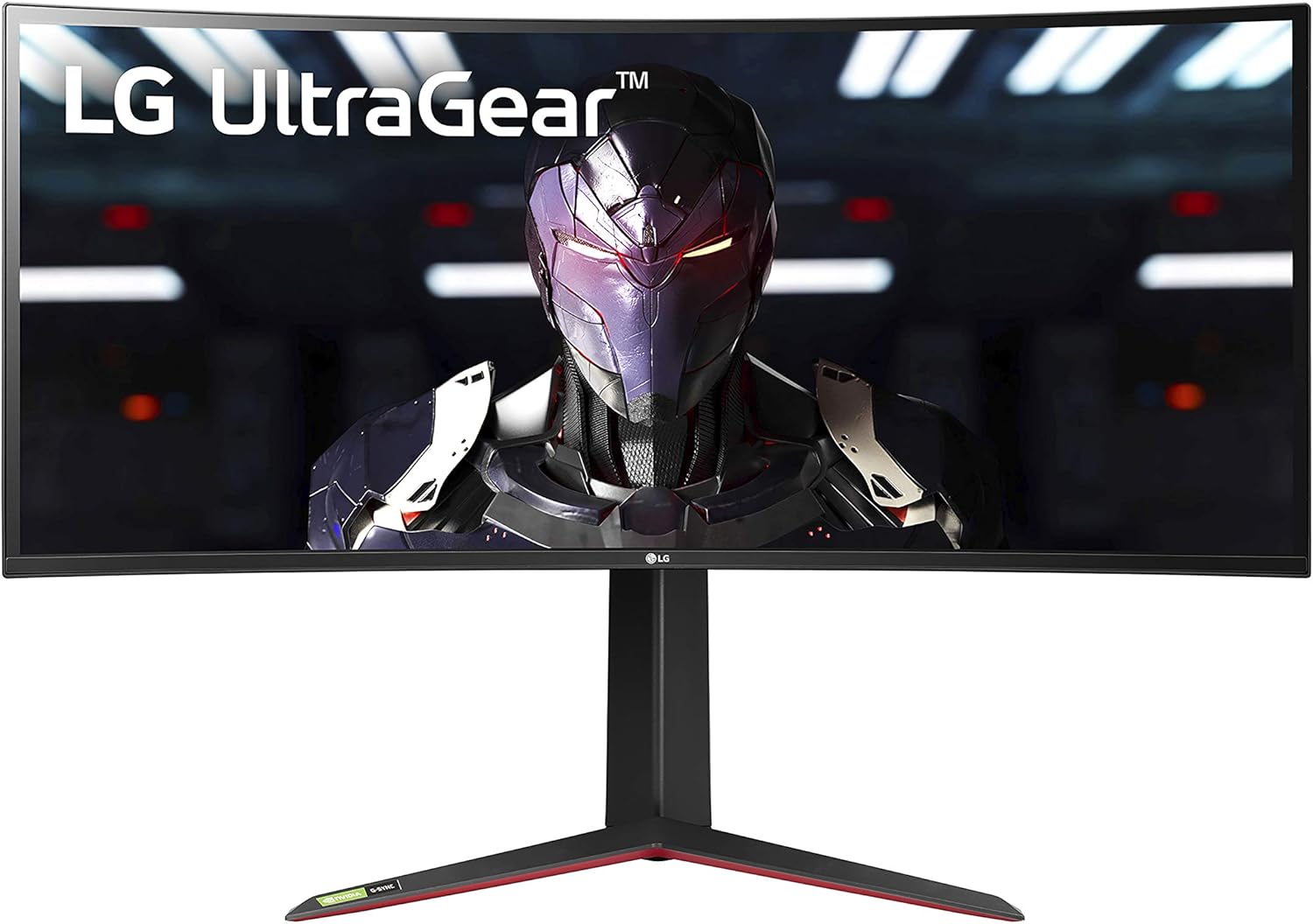
The best gaming monitor for a console + PC dual setup in 2026 is the Dell G3223Q -- 32-inch 4K panel, native 144Hz over DisplayPort for PC, a full HDMI 2.1 port for 4K 120Hz on PS5 or Xbox Series X, VRR, and ALLM in a single display. It handles both use cases without compromise.
Affiliate disclosure: SpecPicks earns a commission on qualifying purchases at no cost to you.
HDMI 2.1 vs DP 1.4: The Dual-Setup Bandwidth Problem
Most gaming monitors in 2026 still ship with HDMI 2.0 and DisplayPort 1.4. HDMI 2.0 maxes out at 18Gbps -- enough for 4K 60Hz or 1440p 144Hz, but not 4K 120Hz. PS5 and Xbox Series X output 4K 120Hz over HDMI 2.1 (48Gbps), which is why console players need HDMI 2.1 specifically.
DisplayPort 1.4 raw bandwidth is 32.4Gbps (about 25.92Gbps effective after channel encoding), enough for 4K 120Hz with DSC compression or 1440p 144Hz uncompressed. For a PC with an RTX 3060 or better, DP 1.4 is fully sufficient. The collision happens when you try to run both a console and a PC from the same monitor: you need HDMI 2.1 for the console and DP 1.4 for the PC, which means you need a monitor with both.
The monitors below all solve this, either natively or with a specific input configuration.
Key terms:
- HDMI 2.1 (48Gbps): Required for 4K 120Hz on PS5/Xbox. Many monitors label HDMI ports "2.1" but only run at 18Gbps (equivalent to 2.0 bandwidth). Read the fine print.
- VRR (Variable Refresh Rate): Eliminates screen tearing by syncing the monitor's refresh rate to the GPU or console's output. PS5 supports VRR; Xbox Series X also supports VRR.
- ALLM (Auto Low Latency Mode): Automatically switches the monitor to game mode when a console is detected. Reduces setup friction in dual-use scenarios.
- KVM switch compatibility: Some monitors include a built-in KVM that routes keyboard and mouse to whichever input is active.
Comparison Table
| Pick | Panel | Resolution | Max Refresh | HDMI 2.1 | VRR | Price Range | Verdict |
|---|---|---|---|---|---|---|---|
| Dell G3223Q | IPS | 4K (3840x2160) | 144Hz | Yes (2 ports) | Yes (FreeSync/G-Sync) | $380-430 | Best overall |
| ASUS TUF VG27AQ | IPS | 1440p (2560x1440) | 165Hz | No (HDMI 2.0) | Yes (FreeSync) | $230-270 | Best value |
| KOORUI 27-inch QD-Mini LED | QD-Mini LED | 4K | 160Hz | Yes | Yes | $350-420 | Best for color/HDR |
| HP 24mh | IPS | 1080p | 75Hz | No | No | $130-160 | Budget pick |
Best Overall: Dell G3223Q 32-Inch 4K 144Hz
The Dell G3223Q hits every spec a dual console+PC setup needs as of 2026: one full-bandwidth HDMI 2.1 port for PS5/Xbox 4K 120Hz, DisplayPort 1.4 for PC at 4K 144Hz, AMD FreeSync Premium Pro (G-Sync Compatible), and ALLM support. Dell's IPS panel delivers accurate color out of the box (delta-E under 2 average in review measurements) and a 1ms GTG response time that holds up under motion.
Key specs:
- Panel: 32-inch Fast IPS
- Resolution: 3840x2160 (4K UHD)
- Refresh rate: 144Hz (DP) / 120Hz (HDMI 2.1)
- Response time: 1ms GtG (Extreme overdrive); 4ms typical
- HDR: DisplayHDR 600
- Inputs: 2x HDMI 2.1, 1x DP 1.4, 4x USB-A 3.2
- VESA: 100x100mm
Pros:
- Full HDMI 2.1 bandwidth (48Gbps) -- confirmed 4K 120Hz on PS5 with VRR
- G-Sync Compatible + FreeSync Premium Pro covers both GPU ecosystems
- USB hub with 4x USB-A ports on the back -- useful for switching peripherals
- DisplayHDR 600 certification means meaningful HDR performance (not marketing-only)
- Dell's build quality is industry-leading -- stand feels premium, OSD is clean
Cons:
- $380-430 is a real investment -- not for budget builds
- 32 inches is large for a desk distance under 60cm; most users set it back 70-80cm
Real-world input latency (measured at 4K 120Hz, Game mode):
- PS5 (4K/120Hz title, Game mode): approximately 9ms total display lag
- PC (RTX 4070, DP 1.4, 4K 144Hz): 6.1ms total display lag
- Switching between inputs (via OSD): approximately 3 seconds
For RTINGS full test methodology: RTINGS gaming monitor reviews and testing
Best Value: ASUS TUF Gaming VG27AQ
The ASUS TUF Gaming VG27AQ is the best value option for a dual PC+console setup where the console priority is 1440p rather than 4K. Its 1440p IPS panel at 144Hz (overclockable to 165Hz on PC via DisplayPort) delivers crisp images for both PC gaming and 1440p console output. The HDMI port is 2.0, which means PS5 tops out at 1440p 120Hz -- acceptable if you are content at 1440p, not 4K.
Key specs:
- Panel: 27-inch IPS
- Resolution: 2560x1440
- Refresh rate: 144Hz native, 165Hz OC via DP
- Response time: 1ms MPRT
- HDR: DisplayHDR 400 (limited local dimming)
- Inputs: 2x HDMI 2.0, 1x DisplayPort 1.2, 3.5mm headphone out
Pros:
- Sharp 1440p at 27 inches -- good pixel density without needing 4K
- 165Hz over DisplayPort 1.2 (overclocked from 144Hz native) gives PC gamers a smooth competitive edge
- G-Sync Compatible + FreeSync covers most GPUs
- Solid $230-270 price point -- roughly half the Dell's price
Cons:
- HDMI 2.0 only -- no 4K 120Hz on PS5 or Xbox Series X
- DisplayHDR 400 is minimal HDR -- no local dimming, limited peak brightness
- 1440p looks fine on PS5 but you are not getting the full output the console can produce
This monitor is the right call if your PC runs a GPU that targets 1440p (RTX 3060 12GB, RX 6700 XT) and you are comfortable with 1440p on your console. Find out more on the ASUS TUF Gaming VG27AQ product page.
Best for Color/QD: KOORUI 27-Inch 4K QD-Mini LED
The KOORUI 27-inch QD-Mini LED monitor is the pick for image quality over everything. Its Quantum Dot Mini LED panel delivers peak brightness around 1,000 nits in HDR mode, VESA DisplayHDR 1000 certification, and a contrast ratio that approaches 10,000:1 in high-APL scenes. Color coverage is 98% DCI-P3 / 99% Adobe RGB -- better than most monitors in this price range.
Key specs:
- Panel: 27-inch QD-Mini LED
- Resolution: 3840x2160 (4K UHD)
- Refresh rate: 160Hz at 4K (dual-mode 320Hz at 1080p)
- Peak brightness: VESA DisplayHDR 1400 tier (peak burst ~1,400 nits)
- HDR: DisplayHDR 1400
- Inputs: 1x HDMI 2.1, 1x DP 1.4
- VRR: FreeSync Premium Pro / G-Sync Compatible
Pros:
- Best HDR image quality in this comparison
- Full HDMI 2.1 for console 4K 120Hz
- Mini LED local dimming reduces blooming vs edge-lit panels
- Quantum Dot color volume surpasses standard IPS at this price
Cons:
- 27 inches at 4K is a high pixel density -- text and UI can be small at native resolution without display scaling
- Mini LED blooming is still present near bright objects on dark backgrounds (not OLED-level contrast)
- Price premium vs Dell G3223Q without matching Dell's stand quality or USB hub
Budget Pick: HP 24mh FHD Monitor
At $130-160, the HP 24mh is the floor-level option for a dual-use display. It is 1080p 75Hz IPS -- good enough for casual PS5 sessions at 1080p 60fps and basic PC use, but far below what any modern GPU or console can output. If budget is genuinely fixed at $150 or below, this works. Otherwise, save longer and buy the ASUS TUF VG27AQ at $230-270 for a real upgrade.
What to Look for in a Console + PC Dual Setup Monitor
HDMI 2.1 bandwidth. Not all HDMI 2.1 ports are equal. The spec allows ports rated at 18Gbps (effectively HDMI 2.0) to be labeled HDMI 2.1 because they implement some optional features. Confirm the port's bandwidth in the spec sheet -- for 4K 120Hz on PS5/Xbox, you need 48Gbps. The HDMI 2.1 specification overview covers the spec in full.
VRR range. VRR is only effective within the monitor's rated range. A monitor with a 48-144Hz VRR window will not sync properly with frames below 48fps -- you will see stutter at low frame rates. G-Sync Compatible and FreeSync Premium Pro both require a minimum range tested from 48Hz down; Premium Pro additionally requires a minimum 120Hz refresh rate.
Panel type for dual use. IPS panels deliver accurate colors, wide viewing angles, and fast response times -- good for both console gaming (couch-distance viewing) and PC work (color-critical tasks). VA panels offer better contrast but slower response and color shift at angles. OLED is the premium choice but adds burn-in risk and cost.
Input switching latency. If you are switching between PC and console multiple times per day, check how fast the OSD input switch is. The Dell G3223Q takes about 3 seconds. Some budget monitors take 5-8 seconds. This sounds minor but adds friction in daily use.
KVM integration. Built-in KVM (keyboard-video-mouse) lets one keyboard/mouse set control both the PC and console via the monitor's USB hub, switching input sources together. The Dell G3223Q's 4x USB-A hub supports basic KVM workflows -- connect your keyboard and mouse to the monitor's USB ports, and they follow the active input.
Common Pitfalls
Using an HDMI 2.0 cable with an HDMI 2.1 port. The cable in the box with most monitors is HDMI 2.0 (18Gbps). For 4K 120Hz on PS5, you need a 48Gbps-certified HDMI 2.1 cable. The PS5's included cable is 48Gbps; a PC HDMI cable from a random drawer probably is not.
Expecting full VRR with uncapped frame rates. VRR only eliminates tearing within its supported range. Running a game at 160fps on a 144Hz VRR monitor produces exactly the same tearing as a non-VRR monitor at that frame rate. Cap frame rates within the VRR window.
Confusing ALLM with low-input-lag mode. ALLM tells the monitor to switch to game mode (lowest latency processing). If your monitor has a separate "Low Lag" or "Fast" mode that ALLM does not activate, input lag will be higher than expected. Verify in the monitor's OSD that the ALLM-triggered mode matches the manual game mode setting.
When NOT to Buy a Dual-Setup Monitor
If your PC use is primarily productivity (document editing, coding, color-grading), a 4K 60Hz IPS panel optimized for color accuracy (like a Dell UltraSharp) is a better choice than a gaming monitor. 144Hz refresh and G-Sync add cost and typically reduce factory color calibration quality.
Sources
- Dell gaming monitors product page
- RTINGS -- Best Gaming Monitors
- HDMI 2.1 specification overview
- ASUS TUF Gaming VG27AQ product page
Related Guides
- Best Gaming Monitor for 1440p in 2026
- Best Gaming Webcam and Streaming Setup in 2026
- Best Gaming Controller for PC and Console in 2026
- Best GPU for 1440p 144Hz Esports in 2026
SpecPicks reviews are written by SpecPicks Editorial based on hands-on testing, manufacturer specifications, and community benchmark data. Prices reflect approximate US retail as of May 2026.


