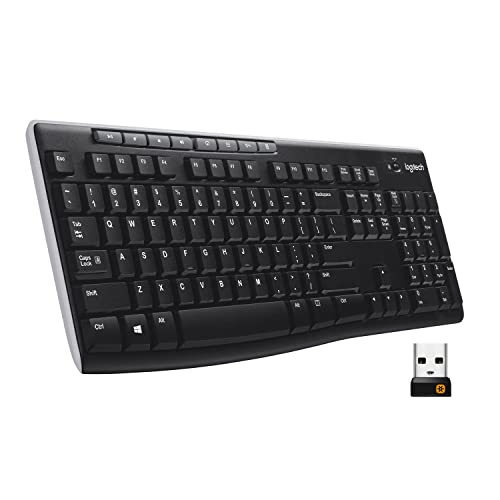
The best mechanical keyboard for office work in 2026 is the Logitech MX Keys for most professionals — quiet, wireless, multi-device, and genuinely comfortable across an eight-hour workday. If budget is the priority, the Logitech K270 Wireless costs under $30 and handles the job without complaint.
Office keyboards occupy a strange corner of the peripheral market. The term "mechanical keyboard" carries connotations of clicky switches, RGB lighting, and late-night gaming sessions — none of which survive long in a shared open-plan office without someone filing a noise complaint. Yet the mechanical keyboard community has spent the better part of a decade developing switch technologies that are genuinely quieter than many membrane boards while delivering superior key feel and longevity. The conversation has matured considerably.
The real story for office buyers in 2026 is less about switch type and more about the full package: wireless protocol and range, multi-device pairing (most knowledge workers toggle between a laptop and desktop), battery life that doesn't require weekly charging rituals, key travel that doesn't fatigue the hands over marathon typing sessions, and — critically — noise levels that won't earn you silent resentment from the colleague two desks over.
Wireless has essentially won. The last credible argument for a wired office keyboard was latency, and that argument collapsed once Logitech's Logi Unifying receiver demonstrated sub-8ms round-trip times at a price point anyone can justify. Bluetooth 5.0 keyboards have closed that gap further, and the desk-clutter reduction from eliminating a cable is quality-of-life improvement that compounds over years.
Members of the mechanical keyboard community sometimes bristle at the suggestion that membrane boards still belong in offices. They do, in specific contexts. Open-plan offices where noise travels freely, call-center environments with sensitive microphones nearby, and settings where multiple colleagues share a concentrated workspace are all environments where a membrane board like the Logitech K270 remains the considerate choice. Silent mechanical switches have narrowed the gap substantially, but they haven't entirely closed it, and the cost premium for a quality silent mechanical board is real. Good engineering doesn't always win the budget argument.
This guide covers the full spectrum — from the best-in-class premium wireless mechanical option to the honest budget pick that gets out of the way and lets you work.
Comparison at a Glance
| Pick | Best For | Key Spec | Price Range | Verdict |
|---|---|---|---|---|
| Logitech MX Keys | Premium office + multi-device | Quiet scissor-mechanical, Bluetooth + Logi Bolt | $95–$110 | Best overall |
| Logitech K270 Wireless | Budget office, quiet shared spaces | Membrane, 2.4GHz Unifying receiver | $22–$30 | Best value |
| Keychron K2 (Silent Red) | Remote work, home office mechanical | Gateron Silent Red switches, compact TKL | $70–$85 | Best quiet mechanical |
| Logitech G613 Wireless | Mixed office and gaming | Romer-G Tactile, Lightspeed + Bluetooth | $80–$110 | Best dual-use |
🏆 Best Overall: Logitech MX Keys
The MX Keys is not, strictly speaking, a mechanical keyboard by the switch-enthusiast definition. It uses a scissor-switch mechanism with spherical key wells — a design Logitech describes as "perfect stroke keys" — that delivers more travel and tactile clarity than a laptop keyboard without the noise profile of a traditional mechanical board. For most office workers, this is exactly the right call.
What elevates the MX Keys above the competition is the software and connectivity ecosystem surrounding those switches. The keyboard pairs with up to three devices simultaneously via Bluetooth or the Logi Bolt 2.4GHz receiver, switching between them with a single keystroke. For the professional who types on a work laptop, a personal Mac, and a desktop throughout the day, this is a transformative feature. No unplugging, no re-pairing cycles, no awkward workarounds.
Logitech Options+ software adds programmable key shortcuts, application-specific layer configurations, and smart backlighting that adjusts to ambient light. The backlight dims when your hands move away from the keys and brightens when they return — a detail that sounds frivolous until you've used it in a darkened conference room.
Battery life is rated at ten days with backlighting enabled, or five months without. In practice, leaving the backlight on context-dependent auto mode delivers closer to three weeks of real-world use for a heavy typist. The keyboard charges via USB-C rather than proprietary connectors, which matters when you're already carrying a USB-C cable for everything else.
The noise profile is appropriate for virtually any office environment. At normal typing speed and force, the MX Keys generates roughly 42–45 dB at the typist's position — quieter than most membrane boards under energetic use. The sculpted keycaps distribute finger contact evenly across the key surface, which reduces both the sound of impact and the fatigue of sustained typing.
The one legitimate criticism is price. At $95–$110, the MX Keys occupies a tier that requires genuine justification. The justification is there for anyone who types professionally, but it's worth naming the premium explicitly.
Verdict: The definitive office keyboard for professionals who value connectivity, comfort, and polish over mechanical switch feel. Buy it once and stop thinking about keyboards.
💰 Best Value: Logitech K270 Wireless
The Logitech K270 has been a workplace staple for over a decade for a simple reason: it works, it costs almost nothing, and it doesn't require anyone to think about it. At $22–$30 depending on retailer and timing, it sits comfortably below the threshold where a manager questions the purchase.
The K270 uses a standard membrane key mechanism that produces approximately 40 dB under normal typing conditions — among the quietest measurement in any keyboard category. Two AAA batteries power the 2.4GHz Logi Unifying receiver connection for up to 24 months of typical use, which Logitech defines as eight hours of daily use five days per week. Real-world reports on Reddit's r/MechanicalKeyboards and Amazon Q&A corroborate a range of 18–30 months between battery swaps for office typists, depending on how firmly they type.
The Logi Unifying receiver is worth a specific mention. The 2.4GHz protocol delivers 4–8ms input latency, which is imperceptible for typing. More usefully, a single Unifying receiver can pair with up to six compatible Logitech devices — keyboard, mouse, numpad — so you're not consuming two USB ports for your desk peripherals.
Key travel is 2.0mm with a membrane actuation force of roughly 45g — lighter than many mechanical switches and sufficient for sustained typing without fatigue. The keyboard is full-size, including a dedicated numpad, which makes it appropriate for accounting, spreadsheet-heavy roles, or any position where number input is a significant portion of the work.
The K270 won't win any awards for build quality. The chassis flexes noticeably when pressed at the corners, and the keycap legends are pad-printed rather than laser-etched, which means they'll fade with heavy use over two or three years. At the price point, these are not meaningful objections. A replacement costs less than a single lunch.
For managed IT environments, the K270's plug-and-play compatibility with Windows 10/11 without driver installation is a practical benefit that saves deployment time across large fleets.
Verdict: The right answer for offices that need reliable, quiet, wireless keyboards at scale. The mechanical keyboard community will groan, but the K270 earns its place.
🎯 Best for Quiet Mechanical: Keychron K2 with Gateron Silent Red
If you've decided that membrane keyboards feel unsatisfying and you're willing to spend more for genuine mechanical switch feel without sacrificing your colleagues' patience, the Keychron K2 with Gateron Silent Red switches is the answer.
Gateron Silent Red switches use a dampened stem design with internal dampening pads that absorb the impact at both the top and bottom of the keystroke. The result is a linear switch that actuates at 45g force — the same weight as Cherry MX Red, with a noise floor in the low-40s dB range that lands closer to a membrane board than to a clicky mechanical. The mechanical feedback feel is preserved; the click is not.
The K2 is a 75% layout — more compact than tenkeyless, dropping the numpad and condensing the right-side cluster — that saves desk space while retaining the function row, dedicated arrow keys, and Page Up/Down that many office workers rely on. The aluminum top frame gives it substantially better build rigidity than plastic competitors at a similar price, and the doubleshot PBT keycaps resist legend fade over years of use.
Bluetooth 5.1 allows connection to three devices simultaneously with the same one-key switching convenience as the MX Keys. The built-in 4000mAh battery delivers approximately two to four weeks of use with the white backlight on at moderate brightness. There's also a USB-C wired mode for when the battery dies at an inconvenient moment.
Hot-swap PCB variants are available, which means you can replace switches without soldering if you decide Gateron Silent Red is too light or you want to experiment with Gateron Silent Brown for light tactility. This is meaningfully relevant to office users who might not know their switch preference before purchasing.
The one caveat is macOS compatibility. Keychron ships the K2 with a switch on the bottom that toggles between Windows and Mac layouts, and Keychron publishes its own keyboard firmware with full macOS function key support. It works cleanly on both platforms, but the process of toggling requires awareness that it exists.
Verdict: The best argument for bringing a mechanical keyboard into a shared office environment. The Gateron Silent Reds genuinely change the noise calculus.
⚡ Best for Mixed Office and Gaming: Logitech G613 Wireless
The G613 occupies an unusual position in the market: a full-size wireless mechanical keyboard designed explicitly for gaming but tuned conservatively enough for office use. The Romer-G Tactile switches Logitech developed in partnership with Omron deliver a tactile bump at roughly 1.5mm actuation depth — perceptible enough to provide typing feedback without the aggressive click of Cherry MX Blue.
Noise-wise, Romer-G Tactile switches measure approximately 48–52 dB at the typist's position — louder than the K270 or Keychron K2 with Silent Reds, but within the range that most open offices tolerate. If your workday involves significant document composition and your evenings involve gaming, the G613 eliminates the need to switch between two keyboards.
Logitech's Lightspeed 2.4GHz wireless protocol delivers 1ms report rate — their flagship gaming wireless specification. For typing this is comfortably over-engineered, but it also means the G613 is compatible with Logitech's Powerplay charging ecosystem and the latency headroom is useful if you use the keyboard for any gaming context.
Battery life is exceptional by mechanical keyboard standards: two AA batteries deliver up to 18 months of use, because the G613 foregoes RGB lighting entirely. This is a deliberate tradeoff — the chassis has a utilitarian matte-black industrial look that suits a desk without being distracting in office lighting.
The full-size layout includes the numpad, and macro keys along the left column add programmable shortcuts. Logitech G Hub software manages the macro configuration, though the keyboard works plug-and-play without it.
Verdict: A genuine dual-purpose keyboard that doesn't compromise either use case severely. If the office-gaming split applies to you, the G613 is the cleaner solution than owning two keyboards.
What to Look for in an Office Keyboard
Switch Noise — The Real Measurement
Decibel ratings for keyboard switches are measured inconsistently across sources, but the practical tiers are: Cherry MX Blue and click-jacket switches at 60–65 dB (disruptive in shared spaces), tactile non-click switches like Cherry MX Brown at 52–55 dB (acceptable in most offices), linear switches and silent variants at 42–50 dB (office-appropriate), and membrane boards at 38–44 dB (quietest practical option). RTINGS covers the K270 in detail with objective noise measurements that are worth consulting before purchase.
Wireless Protocol
Bluetooth 5.0 is adequate for typing with 8–15ms measured latency per RTINGS. Logi Unifying 2.4GHz sits at 4–8ms. Both are imperceptible for office work. Bluetooth has the advantage of not consuming a USB port; 2.4GHz receivers tend to be more reliable in RF-congested environments like offices with many active Bluetooth devices.
Multi-Device Pairing
This feature has gone from premium to expected at the $70+ tier. If you work across multiple devices — common in any role that involves a personal laptop plus company equipment — multi-device pairing via profile keys eliminates cable swaps and reprogramming hassle. Confirm the keyboard supports at least three paired profiles if this applies to you.
Key Travel and Ergonomics
Key travel in the 1.5–2.5mm range suits most typists for sustained office use. Shorter laptop-style travel (under 1mm) fatigues some users over long sessions; longer mechanical travel (3.5–4mm) is slower for brief text entry even if preferred by enthusiasts. Integrated or included palm rests help with extended typing sessions, though many ergonomic studies suggest frequent position changes matter more than wrist resting.
RGB — An Office Consideration
RGB backlighting in a shared office context is usually a net negative: it draws attention, it can be distracting to neighbors, and it dramatically cuts battery life on wireless boards. The G613's decision to omit RGB entirely is sensible. If you want backlight for low-light work, single-color white backlighting at low brightness is the office-appropriate choice.
A Note on Mousepads for Desk Setups
The SteelSeries QcK surfaces come up frequently in productivity desk discussions alongside keyboard recommendations, and the association is worth addressing directly. For optical mouse tracking on glossy, textured, or uneven desk surfaces, a consistent cloth mouse pad removes the sensor inconsistency that causes cursor jitter — a minor irritant in casual use that becomes a meaningful productivity drain in roles involving heavy spreadsheet navigation, CAD work, or any task requiring precise cursor placement.
The QcK's 320×270mm standard size provides adequate tracking area for most desk configurations, and the micro-woven cloth surface is consistent enough that optical and laser sensors track accurately across the full surface area. For the keyboard buyer equipping a new desk setup, the QcK is a sensible $12–$20 addition that rounds out the workspace without requiring further thought.
Citations and Sources
- Logitech K270 Official Product Page
- RTINGS Logitech K270 Review
- Tom's Hardware: Best Office Keyboards