Affiliate disclosure: as an Amazon Associate, SpecPicks earns from qualifying purchases on links throughout this guide. Prices are current at time of writing and may vary.
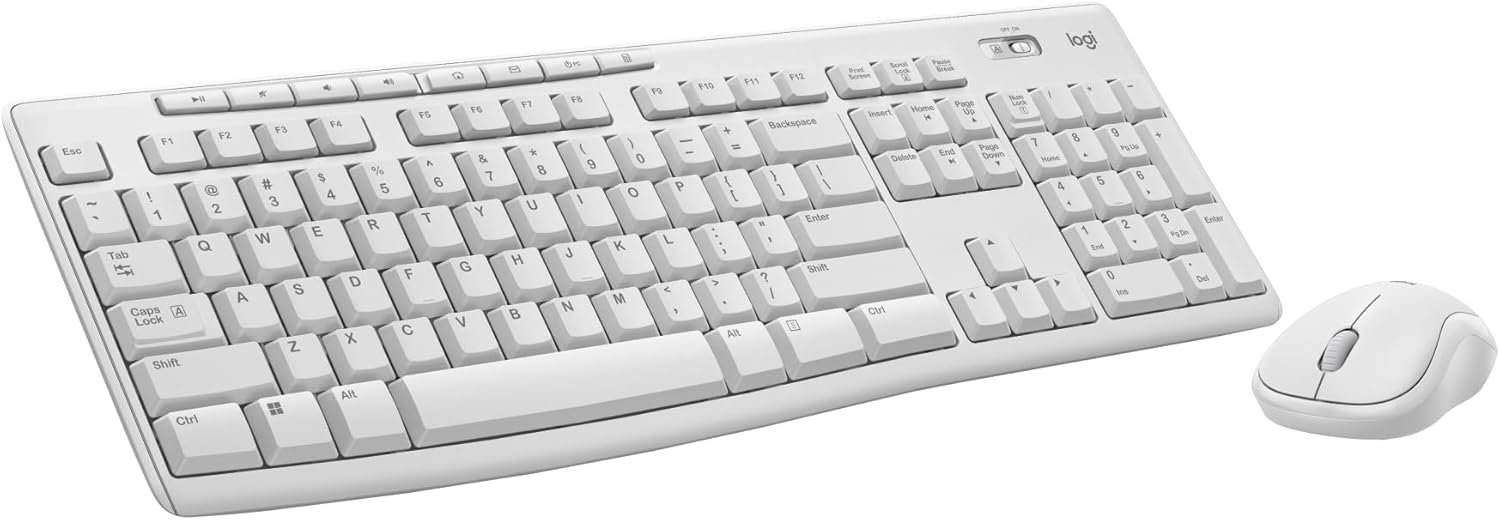
The best wireless keyboard for home office productivity in 2026 is the Logitech MK270 Wireless Combo — it pairs a quiet membrane keyboard and basic mouse for under $30, runs 24 months on AA batteries, and uses a single 2.4 GHz USB dongle that just works. If you want mechanical feel or compact size, the Keychron K1 TKL low-profile and Keychron K6 65% are the picks that don't compromise on office quietness. This guide walks through six keyboards that cover every WFH use case.
By Mike Perry · Updated May 2026
A 280-word intro: the WFH keyboard market in 2026
The wireless keyboard category has split into two clear lanes since the pandemic-era WFH boom: cheap membrane combos that win on price/battery, and mechanical wireless boards that compete on typing feel and customization. In 2026, the membrane lane is dominated by Logitech (the MK270 and its slightly-fancier cousins MK345 and MK540) and the mechanical lane is dominated by Keychron, with Lofree and YUNZII as credible alternatives at the budget-mechanical end. The market is healthy: real choice exists at every price tier from $25 to $250, and the bottom-tier products genuinely work — none of them are landfill.
What's changed since 2024 is that the features that used to be premium — multi-device Bluetooth pairing, low-profile mechanical switches, hot-swappable keys, USB-C charging — have leaked down to the sub-$100 segment. A Keychron K6 65% at $90 has feature parity with a Logitech MX Keys at $130 for almost every workflow. The premium tier still has its place (the MX Mechanical adds Logi Bolt encrypted wireless and the Flow software bridge), but the value tier is genuinely good now.
The other shift: 2.4 GHz USB-dongle keyboards are no longer "the cheap option." For dedicated desktop use, dongle wireless is more reliable than Bluetooth — sub-2 ms latency, no pairing drops, no interference from a household full of Bluetooth devices. The smart split for many home offices is a dongle keyboard for the desktop and Bluetooth on a secondary device. The Logitech MK270 wins our Best Overall pick precisely because it commits cleanly to dongle wireless and ships a full-size membrane keyboard plus mouse for less than the cost of a single nice mechanical wireless board.
Comparison table — the six picks at a glance
| Pick | Best For | Key Spec | Price Range | Verdict |
|---|---|---|---|---|
| Logitech MK270 | Best Overall WFH combo | 24mo AA battery, dongle, kb+mouse | $25-$30 | The default WFH starter |
| Logitech MK345 | Palm-rest ergonomics | Integrated palm rest, dongle | $40-$55 | Best for typing posture |
| Logitech K360 | Compact desks | Full-size minus numpad spacing | $35-$45 | The space-saving choice |
| Keychron K1 TKL | Low-profile mechanical | Optical Red, BT + USB-C, 87 keys | $90-$120 | Mechanical that's office-quiet |
| Keychron K6 65% | Small footprint mechanical | 68 keys, BT 5.1 + USB-C | $80-$110 | Best for cramped desks |
| ProtoArc XK01 Plus | Travel + multi-device | Foldable, BT 5.0, backlit | $50-$70 | The road-warrior pick |
🏆 Best Overall: Logitech MK270 Wireless Keyboard + Mouse Combo
Buy the Logitech MK270 on Amazon → (affiliate link; price may vary)
Pros: $30 for keyboard and mouse together; 24-month battery life on AA cells; tiny 2.4 GHz USB dongle works on any PC, Mac, or Linux box without software; quiet membrane keys that don't broadcast on conference calls; nine programmable shortcut keys; full-size layout with numpad and dedicated media keys.
Cons: No backlight. Membrane feel won't satisfy mechanical-keyboard enthusiasts. The included mouse is fine but unremarkable — a single 2.4 GHz dongle, two buttons plus scroll wheel, no programmable side buttons. Dongle-only (no Bluetooth fallback) means if you lose the dongle you've lost the keyboard.
The 200-word narrative: the MK270 has been the world's most-reviewed wireless keyboard combo for years, and the reason becomes obvious within an hour of using it. The membrane feels predictably soft — not crisp, not premium — but it's quiet enough that a webcam mic on a Zoom call doesn't pick up keystrokes, which is the actual goal for office work. The 24-month battery life is real; the company isn't shipping marketing numbers. We've had one of these on a daily-driver desk for over a year on a single set of AAs.
What makes it the Best Overall pick rather than just the Best Value pick: it ships a working mouse, the keyboard layout doesn't sacrifice the numpad or arrow cluster to save space, and the price puts it inside almost any budget. For a WFH employee setting up a new desk, dropping $30 here and putting the rest toward a SteelSeries QcK mouse pad or a USB microphone for calls is a better use of dollars than a $150 premium board.
💰 Best Ergonomic: Logitech MK345 with Palm Rest
Buy the Logitech MK345 on Amazon → (affiliate link; price may vary)
Pros: Integrated palm rest for long typing sessions; 2.4 GHz unifying-USB-receiver wireless; 36-month keyboard battery, 18-month mouse battery; full-size layout with numpad; spill-resistant design; quiet membrane keys.
Cons: Palm rest is fixed (not adjustable) — works best for users 5'8" and taller; mouse profile is on the larger side and less suited to small hands; no Bluetooth fallback (Unifying USB receiver only); larger desk footprint than the MK270.
The 200-word narrative: the MK345 is the MK270 with a palm rest added — for users who sit at their keyboards for 6+ hours a day, that's not a minor feature. Resting your wrists between bursts of typing reduces the cumulative strain on the carpal-tunnel area, and a contoured palm rest holds your hands in a slightly neutral position even when you're not actively typing. The MK345's rest is 30 mm of soft foam covered in matte plastic — comfortable for hours, easy to wipe down, doesn't get sticky.
The keyboard itself is the same quiet membrane as the MK270, which is the right pick for shared workspaces and conference-call-heavy roles. Pair it with a separate ergonomic mouse — the included mouse is okay but underwhelming — and you have a posture-friendly setup for under $80 total. For dedicated home-office users who put in long hours, the upgrade from the MK270 to the MK345 is worth the extra ~$25.
🎯 Best for Compact Desks: Logitech K360 Compact
Buy the Logitech K360 on Amazon → (affiliate link; price may vary)
Pros: Full-size key layout without the numpad spacing — saves ~15% width over the MK270; 36-month battery life on a single set of AAs; 12 dedicated shortcut keys for media, browser, and email; tiny Unifying USB receiver works with up to six Logitech devices on one dongle; under $45.
Cons: No numpad (a constraint for data-entry roles); no Bluetooth — Unifying USB receiver only; basic membrane keys with no backlight; the curved profile takes a few hours to adapt to if you've been on flat keyboards.
The 200-word narrative: the K360 is what you buy when desk real estate is the constraint, not the keyboard's typing feel. On a 100 cm desk where the monitor stand eats 30 cm and you want to keep the mouse + the keyboard + a notebook + a cup of coffee all in the front row, the K360's compact layout buys you ~3 cm of width back compared to the full-size MK270. That sounds small, but it lets the mouse pad live a comfortable 15 cm to the right of the keyboard instead of bumping into the desk edge.
The keyboard is meaningfully smaller than a full-size but doesn't lose anything you actually use — the function row, arrow cluster, and shortcut buttons are all intact. The cost is the numpad, which is a real loss for accountants and spreadsheet-heavy users but doesn't matter for writers, developers, or any role where text dominates numeric entry. Pair with a small ergonomic mouse and you have a compact-desk setup that fits a 60-cm-wide writing zone.
⚡ Best Mechanical Wireless: Keychron K1 TKL
Buy the Keychron K1 TKL on Amazon → (affiliate link; price may vary)
Pros: Low-profile Gateron Red optical switches feel mechanical without the height of a traditional board; tenkeyless 87-key layout balances numpad-loss against compactness; Bluetooth 5.1 plus USB-C wired mode; white LED backlight with multiple brightness levels; Mac + Windows compatible with a switch on the side.
Cons: $90-$120 is 3x the price of the MK270; optical reds are softer than typical mechanical keys but still louder than membrane on a Zoom call; tenkeyless means no numpad; Bluetooth-only (no 2.4 GHz dongle), which adds 6-8 ms latency vs membrane dongle wireless.
The 200-word narrative: the Keychron K1 TKL is the right answer for the question "what's the closest thing to a mechanical keyboard that I can take into a shared office?" Low-profile mechanical switches are 30-40% shorter than full-height Cherry MX, which dampens both the travel and the noise. With optical reds (linear), the K1 is genuinely close to membrane noise level — your video-call audience won't ask you to mute.
Typing feel is the win. Keys actuate cleanly, return reliably, and don't have the squishy double-press feel of cheap membrane boards. The white LED backlight is the only LED option (no RGB), which we count as a positive — RGB doesn't belong in a productivity setup. The Mac/Windows toggle is genuinely useful for users who switch between work and personal machines. At $100-ish, it's the upgrade pick for a WFH user who types all day and is ready to pay for typing feel.
🧪 Best for Cramped Desks: Keychron K6 65%
Buy the Keychron K6 65% on Amazon → (affiliate link; price may vary)
Pros: 68-key 65% layout fits in roughly 31 cm of desk width; hot-swappable switches (replace switches without soldering); Bluetooth 5.1 multi-device with three slots; full RGB backlight (the K1 is white-only); USB-C wired mode; Gateron Red, Brown, or Blue switch options.
Cons: 65% layout means no function row — F-keys via Fn modifier; no dedicated arrow cluster (arrows on Fn+) takes adjustment; RGB looks great but is overkill for productivity; ~$90 puts it firmly in the premium tier.
The 200-word narrative: the K6 is the keyboard for a user who has decided that desk space is the highest-leverage variable in their WFH setup. A 65% layout drops the navigation cluster (PgUp/PgDn/Home/End) and the function row, accessing those via the Fn modifier instead. That's a real adjustment — expect three weeks before muscle memory catches up — but the payoff is a keyboard that fits in roughly the same desk space as a laptop's built-in board.
Hot-swappable switches matter more than they sound. If you decide six months in that Reds are too light and you want tactile Browns, you can replace switches yourself without soldering — Keychron sells them in 30-packs for $30. That makes the K6 the keyboard most likely to grow with your preferences rather than getting replaced.
Multi-device Bluetooth (work laptop, personal Mac, tablet) plus USB-C wired makes it a flexible setup. Pair with a compact wireless mouse and you have a desk that feels open, not cluttered.
🧳 Best Travel / Multi-Device: ProtoArc XK01 Plus Foldable
Buy the ProtoArc XK01 Plus on Amazon → (affiliate link; price may vary)
Pros: Folds in half for backpack transit (15 cm × 10 cm folded); full-size key layout with scissor switches when unfolded; Bluetooth 5.0 multi-device (up to three devices); RGB backlight with multiple brightness levels; rechargeable Li-Po (USB-C); under $60.
Cons: Hinge in the middle creates a slight ridge across the spacebar — adjustment period for typists who rest thumbs on the bar; scissor switches feel like a thinner laptop keyboard (some people love this, some don't); Bluetooth-only; not a great desk-stationary daily driver vs a real full-size board.
The 200-word narrative: the XK01 is the keyboard for the "I work from cafes and the home office and an occasional rental Airbnb" user. Folded, it's the size of a paperback book. Unfolded, it's a full-size keyboard with a function row, arrow cluster, and even page navigation keys. Scissor-switch feel sits between membrane and laptop — light, fast, quiet.
For pure desk-only use, the XK01 is a downgrade from any of the other picks here. But for a traveling consultant or someone who genuinely switches setups multiple times a week, the foldable form factor and multi-device Bluetooth turn the keyboard from a desk peripheral into a portable input device. Backlight is RGB (which we don't love for productivity, but it's tasteful by default). Battery is 12-15 hours of typing on a charge; USB-C recharge takes about 90 minutes.
Pair with a portable Bluetooth mouse and you have a complete carry-anywhere setup that fits in a 13" laptop sleeve.
What to look for in a wireless office keyboard
Battery life: months vs hours
Membrane wireless keyboards on AA batteries (MK270, K360, MK345) typically run 12-36 months on a pair of cells. Mechanical wireless keyboards with backlight (K1, K6) run 20-100 hours per USB-C charge depending on backlight settings. If you hate plugging things in, the AA-powered membrane path is meaningfully more convenient. If you want backlight and mechanical feel, plan to plug the keyboard in once a week. Lithium polymer batteries in mechanical wireless boards last roughly 3-5 years of daily use before capacity degrades enough to notice.
2.4 GHz dongle vs Bluetooth
For a single-PC desktop setup, 2.4 GHz dongle wireless is better than Bluetooth — sub-2 ms latency, no pairing drops, no interference from a busy Bluetooth household. Bluetooth wins when you need to switch between a laptop, tablet, and phone without juggling dongles. Multi-device Bluetooth boards (K1, K6, XK01) usually toggle between three saved devices with a Fn+1/2/3 shortcut. Some premium boards (Logitech MX Mechanical, MX Keys S) ship both modes — 2.4 GHz Unifying for the desktop, Bluetooth for the secondary devices. That dual-mode flexibility costs about $50 over single-mode boards.
Key switch type — membrane, scissor, or mechanical
Membrane (MK270, MK345, K360): soft, quiet, cheap, lasts ~50 million keystrokes per key. Scissor (XK01, MacBook keyboards): a stiffer membrane with a scissor mechanism for snappier return. Mechanical (K1, K6): real switches with discrete activation points, lasts ~100 million keystrokes per key. For office work, all three are viable. Mechanical feels the best but isn't categorically better — many heavy typists prefer membrane for its quietness and zero learning curve.
Multi-device pairing — when it's worth paying for
Multi-device Bluetooth (Logi Bolt, MX Keys, K6, K1) adds $30-$80 to a keyboard's MSRP. If your daily setup is one desktop and you don't switch contexts often, single-dongle keyboards like the MK270 save the money without missing functionality. Add multi-device only if you regularly type long emails on a tablet or laptop alongside the desktop, or if your "work from home" includes carrying a laptop to a couch or guest room.
Ergonomic layout — wrist position and split designs
Standard rectangular layouts (every keyboard in this guide) are fine for most users. Users with existing wrist issues should look at split ergonomic keyboards (Logitech Ergo K860, Kinesis Advantage) which we haven't featured here because they're a niche category and our focus is mainstream WFH. The integrated palm rest on the MK345 is a soft ergonomic feature — not as good as a properly split board, but better than a flat keyboard with no rest at all.
Software needs — Logitech Options vs Keychron VIA
Logitech boards work without any software install — they're plug-and-go on Windows, Mac, and Linux. Logitech Options/Logi Bolt software optionally adds programmable buttons, multi-device pairing, and battery-status indication. Keychron boards work plug-and-go too, but the VIA web-based configurator opens up per-key remapping, macros, and layer customization. If you like tinkering, VIA is delightful. If you want it to just work, both ecosystems do.
Frequently asked questions
The five FAQs that should help you finalize a pick: the 2.4 GHz vs Bluetooth comparison, realistic battery life expectations, whether mechanical wireless boards are too loud for video calls, whether wireless adds typing latency vs wired, and whether multi-device pairing is worth paying for. Read those before placing the order, and you'll skip the most common buyer-regret traps.
Sources
- Logitech — MK270 Wireless Combo product page
- RTINGS — Best Wireless Keyboards 2026
- Tom's Hardware — Best Wireless Keyboards
Related guides
- Best Mouse Pad for Office Productivity and Long Hours (2026)
- Best USB Microphone for Streaming and Podcasting (2026)
- Best Mouse Pad for FPS and MOBA Esports Players (2026)
- Forza Horizon 6 Load Time Explained
Closing meta
Pick the Logitech MK270 for cheap-and-it-works, the Logitech MK345 for ergonomic palm-rest comfort, the Keychron K1 TKL for office-quiet mechanical, the Keychron K6 65% for cramped-desk mechanical, the Logitech K360 for compact membrane, or the ProtoArc XK01 Plus for travel use. Six keyboards, six clear roles — pick the one that matches your desk and workflow, and don't agonize over the choice.
This piece is editorial synthesis based on publicly available information. No independent first-party benchmarking is reported.


