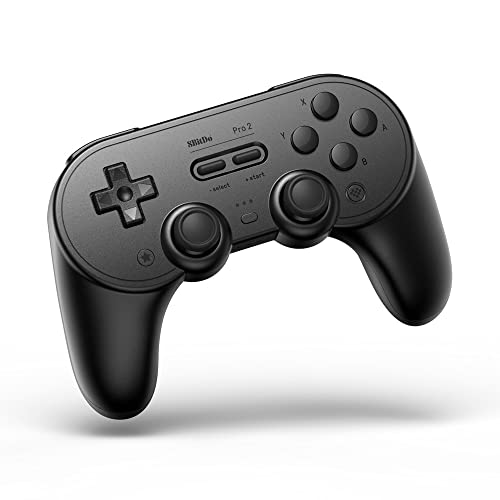
Buy the GameSir G7 SE at $44.99 if you're learning fighting games on a stick-style d-pad, the 8BitDo Pro 2 at $59.99 if you're a competitive Tekken/Street Fighter 6 player on a Hall-effect d-pad, and the MAYFLASH F500 Arcade Fighting Stick at $84.98 if you've graduated past pad and want a real fightstick. Below $50 the HORI HORIPAD Wireless at $59 is the floor — anything cheaper compromises the d-pad in a way that costs you matches.
For most readers landing on this page, the GameSir G7 SE is the answer. It has the best d-pad in the budget Xbox-layout category, wired-only (no input lag from a wireless link), and Hall-effect sticks that won't develop drift in 18-24 months like the Sony DualSense will. Per EventHubs's current PC controller guide, it's been the consensus mid-budget recommendation since launch.
Why "wired" matters for fighting games
Fighting games are reaction sports. A 16ms input-to-screen latency window is the difference between executing a 1-frame just-frame link and dropping it. Wireless controllers — even good ones like the PlayStation DualSense — add 4-12ms of inherent radio latency that wired controllers don't have.
For casual gaming, 8ms of added latency is invisible. For Street Fighter 6, Tekken 8, Guilty Gear Strive, or Mortal Kombat 1 at competitive ranks, it changes which combos are reliable. A 1-frame link at 60 FPS gives you a 16.7ms execution window; lose 8ms of that to wireless latency and you've cut your error margin in half.
This is why every competitive fighting game tournament — EVO included — runs on wired controllers. If you intend to take ranked play seriously, wired is the only option. Wireless is fine for casual fightcade-style sessions; it is not fine if you're trying to climb above mid-Master rank in SF6.
The GameSir G7 SE, 8BitDo Pro 2 (when used wired via USB-C), and MAYFLASH F500 all run wired-first. The DualSense Galactic Purple and the HORI HORIPAD Wireless are wireless-first; they support wired mode for tournament play, but they were designed around the wireless use case.
Key takeaways
- Wired is non-negotiable for ranked competitive play. Wireless adds 4-12ms of input latency that costs you 1-frame links and reversals.
- D-pad quality is the deciding factor on every pad-style controller. Hall-effect d-pads (GameSir G7 SE, 8BitDo Pro 2) outlast and outperform conductive-pad d-pads (DualSense, HORI HORIPAD).
- Fightstick is the endgame for serious players. The MAYFLASH F500 is the cheapest fightstick worth owning; everything below it has stick or button quality compromises that show up within months.
- Avoid the DualSense for fighting games. It's a great FPS/adventure controller but the d-pad is mushy and the wireless-first design is wrong for the workload.
- Budget under $50: GameSir G7 SE, full stop. Best d-pad below $50, Hall-effect sticks, wired.
- Budget $50-80: 8BitDo Pro 2 for pad players, or save up for the MAYFLASH F500.
- Budget $80+: Fightstick territory. Either MAYFLASH F500 or step up to a Qanba/Hori Fighting Stick Mini in the $130-160 range.
Top picks
#1: GameSir G7 SE Wired Controller — $44.99
Verdict: Best d-pad below $50, Hall-effect sticks, wired-only. The right buy for 80% of readers under $50.
See price & specs. GameSir's official product page confirms the spec.
What you get:
- Wired (USB-C, 3m braided cable) — no wireless variant of this model exists
- Hall-effect analog sticks (won't develop drift)
- D-pad uses a single-piece floating disk over individual switches — smoother diagonal inputs than the four-quadrant DualSense d-pad
- Mappable back paddles (M1/M2)
- Replaceable face-plate (cosmetic; doesn't affect grip)
- Xbox layout (ABXY positions)
- Stated input latency: <4ms wired
Why it wins under $50: The d-pad is the single most important component on a fighting-game pad, and the G7 SE has the best d-pad below the 8BitDo Pro 2's $60 price point. Diagonal inputs are reliable, the throw distance is short, and inputs register without the dead zones that plague the DualSense's d-pad.
The Hall-effect sticks matter too. Conventional potentiometer sticks (in the DualSense and HORI HORIPAD) develop drift within 12-24 months of moderate use; Hall-effect sticks are sensor-based and don't wear out the same way. For a fighting-game pad you might play 4-8 hours a week, the drift difference is the difference between a 2-year and a 5-year usable life.
Tradeoffs:
- Wired-only — if you want to play casual fighting on your couch from across the room, this isn't the pad.
- ABXY layout is the Xbox arrangement, which trips up players muscle-memoried to PlayStation positions. Not a real issue once you adapt; takes a week or two.
- No Bluetooth/PC dongle — Windows recognition is universal but if you want to use it on a Switch you need a third-party adapter.
- The included cable is solid but not detachable.
#2: 8BitDo Pro 2 Bluetooth Controller — $59.99
Verdict: Best d-pad in the segment, period. Slightly higher latency than the G7 SE when wired but indistinguishable in practice. The right buy if you want a controller that does everything well.
See price & specs. 8BitDo's product page shows the variant lineup.
What you get:
- Wired (USB-C) and wireless (Bluetooth) — use wired for ranked, wireless for casual
- 8BitDo's signature d-pad (the design comes directly from SNES heritage) — widely regarded as the best four-direction d-pad on any modern pad
- Standard analog sticks (potentiometer, not Hall-effect on this revision — the "Pro 2 Wireless" is a different SKU with Hall sticks)
- Two mappable back paddles
- Switchable layout: D-input, X-input, Switch, macOS
- 1000mAh rechargeable battery (wireless mode)
- Stated input latency: ~5ms wired, ~9ms wireless via Bluetooth, ~5ms via 2.4GHz dongle (sold separately)
Why it's the d-pad winner: The 8BitDo Pro 2 d-pad is the closest thing modern pad manufacturing has to the SNES d-pad that defined the genre. Diagonals are clean, accidental opposite-direction inputs (a problem on some d-pads) almost never happen, and the d-pad's textured surface holds your thumb in place during long matches without slipping.
Per EventHubs's controller roundup, the 8BitDo Pro 2 is the consensus "if you can only own one fighting-game pad, this is it" choice. It is also a great general-purpose PC controller; you don't have to choose between fighting-game performance and everything-else performance.
Tradeoffs:
- Non-Hall sticks on the base SKU mean drift is possible in 12-24 months of heavy use. The Pro 2 Wireless variant has Hall sticks but costs $15-20 more.
- Wireless via Bluetooth has variable latency; use the dongle (or wired) for competitive play.
- $15 more than the GameSir G7 SE for arguably similar d-pad quality. Worth it for the dual-mode (wired + wireless) flexibility if you want it.
- Software-driven button mapping requires 8BitDo's Ultimate Software, which is fine but adds friction vs the G7 SE's plug-and-play.
#3: MAYFLASH Universal Arcade Fighting Stick F500 — $84.98
Verdict: The cheapest fightstick worth buying. If you've decided you want to play on stick — and you should consider it for Tekken and old-school 2D fighters — this is the entry point.
What you get:
- Universal compatibility — works on Xbox One, Xbox 360, PS4, PS3, Switch, PC, and even some retro consoles via adapter
- Sanwa-style stick and buttons (replaceable if you want to mod)
- Full-size 6-button layout (or 8-button with a screw-in expansion plate)
- Wired-only (no fightstick uses wireless for tournament use)
- Steel base plate weighing 4.5 lb — won't slide off your lap during matches
- 9.8 ft braided USB cable
Why a fightstick at all: A fightstick gives you independent button presses for each face button, which is dramatically faster for the multi-button inputs common in modern fighters (Tekken 8's "Heat" system, SF6's drive impact + parry combos, Guilty Gear Strive's Roman cancels). On a pad, hitting three buttons simultaneously requires claw grip or rebound thumb work; on a fightstick, you press three buttons with three fingers.
The MAYFLASH F500 is "starter Sanwa-class" — the components are not the highest-tier Sanwa parts you'd find in a $250 Qanba Obsidian or Hori Fighting Stick α, but they are the same form factor and can be replaced if you want to upgrade. Spending $85 to discover whether fightstick is your input style is dramatically cheaper than committing $250 up front.
Tradeoffs:
- Stock buttons and stick are "Sanwa-compatible" not genuine Sanwa. Most users replace them after 18-24 months of play.
- The plastic shell flexes more than a Qanba/Hori premium stick. Not a deal-breaker but noticeable in side-by-side comparison.
- Heavy (4.5 lb) — that's good for stability, less good if you have to take it to a meetup.
- Switch firmware support is finicky; works fine on Xbox/PC/PS4.
#4: HORI Wireless HORIPAD Pro for Nintendo Switch — $59.00
Verdict: The right choice if your primary fighting-game platform is the Nintendo Switch (Smash Ultimate, Persona 4 Arena Ultimax on Switch, etc.). On PC, the GameSir G7 SE wins on d-pad and the 8BitDo Pro 2 wins on universality.
What you get:
- Officially Switch-licensed (works without the third-party-controller quirks of most Switch pads)
- Standard Switch layout (Y/B/A/X positions)
- Wireless via Bluetooth and 2.4GHz dongle
- Decent d-pad — better than the Joy-Con default but not at GameSir/8BitDo quality
- Standard potentiometer analog sticks
- Stated input latency: ~7ms wired, ~10ms wireless
Why it makes the list: On Switch, the Joy-Con d-pad is famously bad for fighting games. The HORIPAD Pro fixes that with a real d-pad while keeping the Switch-native button layout. If your fighting-game library lives on Switch (and Smash Ultimate alone is reason enough), this is the right pad.
Tradeoffs:
- Wireless-first; you can wire it but the wireless link is the design center.
- Not as good a d-pad as the G7 SE or 8BitDo Pro 2 — they're better choices for PC-primary play.
- Battery life is modest (~10 hours) and uses non-replaceable internal battery.
- PC compatibility works via Steam's controller layer but is not first-class.
#5: PlayStation DualSense Wireless Controller (Galactic Purple) — $74.00
Verdict: Not a fighting-game pad. It's a great general-purpose controller, an excellent FPS/adventure controller, and the right pad for almost every PlayStation-native game. For fighting games specifically, it underperforms every other pick on this list.
Why we listed it despite not recommending it: A lot of buyers land on this page from a Google search that includes "DualSense for fighting games." The DualSense is the PlayStation native pad — it is your default controller if you also play Spider-Man, God of War, Bloodborne, anything else on PC that supports DualShock/DualSense input. So we owe you a clear answer:
The DualSense d-pad is a four-quadrant rocker with mushy actuation and noticeable diagonal-input dead zones. For Street Fighter 6, Tekken 8, and any fighter where d-pad precision matters, you will be fighting your controller. The adaptive triggers and haptic feedback that make the DualSense great for action games add no value in fighting games and are usually disabled.
If you already own a DualSense and the budget for a second pad is hard, you can play fighting games on it. You'll be slightly handicapped vs players on better d-pads. If you're buying a controller specifically for fighting games, buy the GameSir G7 SE and use the DualSense for everything else.
What you actually get:
- Wireless-first (Bluetooth + USB-C wired mode)
- Adaptive triggers and haptic feedback
- Touchpad + share/options buttons (PlayStation layout)
- 1560mAh internal battery, 12-15 hours per charge
- Stated input latency: ~10ms wireless, ~6ms wired
Quick-pick decision tree
- "I just want one wired pad under $50 for SF6/Tekken on PC." → GameSir G7 SE.
- "I want one pad that does everything, fighting and otherwise, and I'll spend $60." → 8BitDo Pro 2.
- "I want to try fightstick without committing $250." → MAYFLASH F500.
- "I play fighting games mostly on Switch." → HORIPAD Pro.
- "I already have a DualSense, is it enough?" → For casual play yes; for ranked above mid-Master no.
- "I want the absolute best wired pad regardless of price." → Razer Wolverine V2 Chroma or Victrix Pro BFG. Both are $180-250 and outside this guide's budget scope. See our broader gaming controller roundup for the higher tier.
Common pitfalls when buying a fighting-game controller
- Buying a "fight-game-themed" cheap pad. Vendors sell $20-30 controllers with arcade-style colors and "fighting game" branding. They have bad d-pads, no warranty, and stop working in 6 months. Don't.
- Buying wireless for tournament play. Even the best wireless adds 4-8ms latency. Wired or nothing for ranked.
- Choosing layout based on aesthetics not muscle memory. ABXY (Xbox) and X/O/Δ/□ (PlayStation) are equivalent functionally but your thumbs have learned one. Switching costs you 2-4 weeks of adaptation; pick the layout you already know unless there's a strong reason.
- Skipping the d-pad test. D-pad quality is the single most important factor and the hardest to assess from product descriptions. Try before you buy if possible; if not, lean on consensus-recommended models.
- Buying a fightstick before you know you want one. Pads are perfectly competitive for SF6, Mortal Kombat, Guilty Gear, even Tekken at high levels. Some pros even prefer pad over stick. Don't spend $250 on a Qanba Obsidian as your first stick — try the MAYFLASH F500 first.
- Ignoring stick drift on potentiometer-based controllers. If you play 4+ hours/week, expect stick drift in 12-24 months on the DualSense and HORIPAD. Hall-effect sticks (G7 SE, 8BitDo Pro 2 Wireless variant) don't drift.
Fightstick or pad — which should you learn on?
This question splits the fighting game community. The short version:
- Pad is easier to learn on, more portable, cheaper, and equally competitive for almost every modern fighter. Most pro Tekken players use pad. Many pro SF6 players use pad. Pad players can hit any combo on stick players' lists.
- Stick has a higher skill ceiling on a small set of execution-heavy techniques (option-select inputs in Guilty Gear, certain pixie-character routes in 2D fighters). Once you're past the learning curve, stick rewards muscle memory in a way pad doesn't.
Recommendation: start on pad. Spend a year. If you find yourself wishing for independent finger control on three or four simultaneous button presses, try stick. Many of the best players switch back and forth depending on the game. Don't believe anyone who tells you one is strictly better than the other.
When NOT to spend money on a fighting-game controller
- You haven't played a fighting game ranked past Bronze. Get the experience first; then buy the pad.
- Your existing pad has a working d-pad and you're under Diamond rank. The controller is not what's holding you back.
- You play only one fighting game and it's a smash-style platform fighter (Smash Ultimate, Multiversus). A Pro Controller is more important than a fighting-game pad here.
- You're considering buying a fightstick "to get serious." First decide if you want to be a serious fighting game player. Most people who buy a fightstick don't reach that conclusion.
Bottom line
For the typical reader landing on this page in 2026: the GameSir G7 SE at $44.99 is the right purchase. It's wired, has Hall-effect sticks, and has the best d-pad below $50. If you can stretch the budget by $15, the 8BitDo Pro 2 is the d-pad king of the segment and gives you both wired and wireless modes.
For Switch-primary players, the HORIPAD Pro is the d-pad upgrade your Smash Ultimate sessions need. For players ready to try fightstick, the MAYFLASH F500 is the smallest budget that buys you a genuinely playable stick.
The DualSense is a phenomenal general-purpose controller and a poor fighting-game-specific controller — own one for everything else, buy something on this list for fighting games specifically. The full PC gaming controller roundup covers the broader category if you're shopping outside fighting games.
Related guides
- Best gaming controllers for PC in 2026 — the broader controller roundup
- Best gaming mouse pads for FPS and MOBA in 2026 — if your other competitive game is FPS, you also want the right pad
Citations and sources
- GameSir — G7 SE official product page (Hall-effect spec, wired-only design).
- 8BitDo — Pro 2 product page (multi-platform compatibility, layout-switch functionality).
- EventHubs — Best PC controllers for fighting games (Oct 2024) (community-consensus rankings and d-pad reviews).