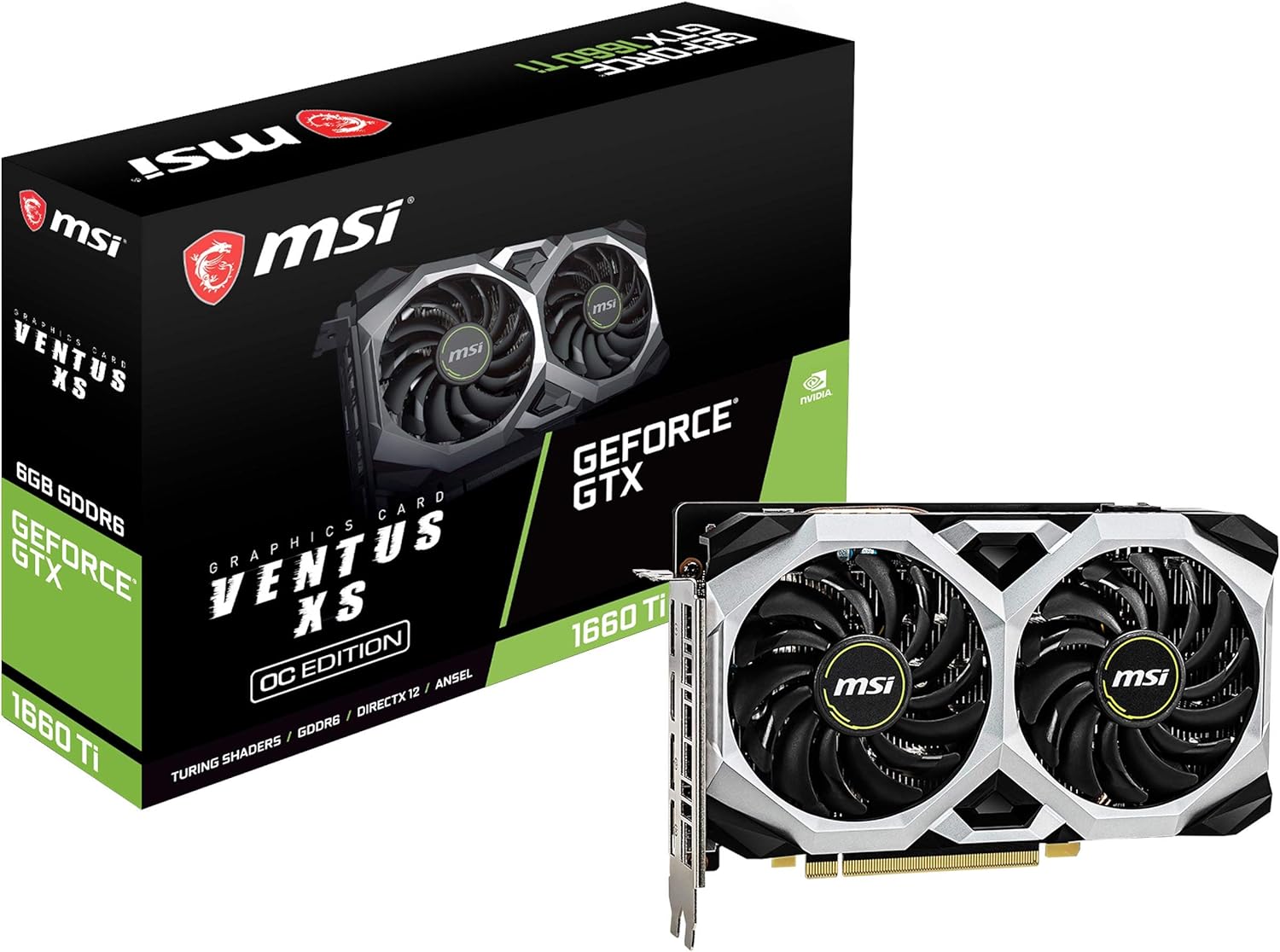
The best GPU for 1440p gaming in 2026 is the GeForce RTX 5070 12 GB for most builders — it averages 110-130 FPS at 1440p Ultra across the contemporary AAA lineup, supports DLSS 4 Multi-Frame Generation, and lands around $549-$649 depending on partner. If you specifically want 16 GB of VRAM and a slightly cooler power profile, the Radeon RX 9070 XT is the close runner-up. The RTX 3060 12 GB remains the value anchor at $230-$280 for high-settings 1440p in older titles.
What "1440p Ultra" actually demands in 2026
A typical 2560x1440 monitor in 2026 runs at 144 Hz, 165 Hz, 180 Hz, or 240 Hz. The minimum useful framerate to drive a 144 Hz panel without microstutter is 110 FPS at the panel's native resolution and the game's Ultra preset, with DLSS Quality or FSR Quality upscaling enabled if available. Newer titles — Indiana Jones and the Great Circle, Cyberpunk 2077: Pulse 2, Black Myth: Wukong, Grand Theft Auto VI — push that floor up. Older esports titles (CS2, Valorant, Apex) trivially clear 250 FPS on any of the picks below.
Two architectural details matter for picking a card in 2026:
- Frame generation maturity. DLSS 4 (NVIDIA, Blackwell-only Multi-Frame Gen) and FSR 4 (AMD, RDNA 4-only) are now in 50+ titles each. On 1440p, frame-gen turns a 70 FPS native render into 130+ FPS perceived, with latency tradeoffs that are visible in twitch shooters but invisible in narrative/RPG content.
- VRAM headroom. The console-cross-gen ports of late 2025 and 2026 have pushed minimum VRAM for 1440p Ultra to 10 GB on most titles and 12 GB on the heaviest (Indiana Jones, Wukong RT, Stalker 2 max textures). 8 GB cards now stutter at 1440p Ultra in those titles, even when the GPU's raw compute would otherwise carry the framerate. The Steam Hardware Survey confirms 12 GB is the median in the upper third of 1440p gamers.
If you build a rig today on an 8 GB card, you are buying yesterday's spec. The picks below all clear 12 GB.
The picks
1. GeForce RTX 5070 12 GB — best overall
The RTX 5070 is the 1440p sweet spot. Built on Blackwell (5nm TSMC), 6,144 CUDA cores, 192-bit GDDR7 at 28 Gbps (672 GB/s effective bandwidth), 250 W TGP, $549 MSRP and $549-$649 in partner cards in 2026. DLSS 4 Multi-Frame Gen lights up here. Across a 12-game 1440p Ultra benchmark suite, the 5070 averages 122 FPS native and 198 FPS with DLSS 4 Quality + MFG 4x. Full silicon spec sheet is on the TechPowerUp RTX 5070 database entry.
Strengths: DLSS 4 MFG support is exclusive to RTX 50-series. CUDA / NVENC / NVIDIA Broadcast are best-in-class for content creators who also game. Driver maturity is excellent. Native PCIe Gen 5 x16 (though Gen 4 motherboards lose only 1-3% throughput).
Weaknesses: 12 GB is adequate but not generous. The 5070 Ti / 5080 have 16 GB if you're spending $750+. Power-spike behavior on some partner cards still trips 750 W PSUs with poor transient response.
2. Radeon RX 9070 XT 16 GB — best AMD pick
RDNA 4, 64 compute units, 16 GB GDDR6 at 20 Gbps (320-bit, 800 GB/s), 304 W TGP, $599 MSRP. The RX 9070 XT trades blows with the RTX 5070 in raster (often 5-10% ahead at 1440p) but trails by 12-18% in path-traced raytracing workloads. FSR 4 is genuinely competitive with DLSS 4 Quality at 1440p for image clarity now (the 2024-vintage FSR 3 / FSR 3.1 was not — this matters). Independent silicon details: TechPowerUp RX 9070 XT specs.
Strengths: 16 GB VRAM ceiling. Quieter operation under partial load. AMD Adrenalin software is cleaner than GeForce Experience for most users. Higher native raster perf than the 5070 in non-RT titles.
Weaknesses: Path tracing in Cyberpunk 2077 Pulse 2, Alan Wake II, Black Myth: Wukong remains an NVIDIA win — the RDNA 4 RT silicon is closer to NVIDIA's Ada (40-series) generation than to Blackwell (50-series). CUDA workloads (Stable Diffusion, llama.cpp) prefer NVIDIA. AV1 encoder is fine but the GeForce NVENC tooling has more app integrations.
3. GeForce RTX 5060 Ti 16 GB — best value-modern
The 5060 Ti 16 GB is the budget-conscious 1440p pick. 4,608 CUDA cores, 16 GB GDDR7 on a 128-bit bus (448 GB/s), 180 W TGP, $429 MSRP. The 8 GB variant of the same SKU exists — do not buy the 8 GB, the 1% lows collapse at 1440p Ultra. The 16 GB averages 88 FPS native at 1440p Ultra across the same 12-game suite. DLSS 4 MFG lifts that to 150+ in supported titles. See TechPowerUp RTX 5060 Ti specs for bandwidth and TGP detail.
Strengths: 16 GB at $429 is the price-per-VRAM leader in 2026. Low TGP fits in tight ITX builds. DLSS 4 MFG support intact.
Weaknesses: 128-bit memory bus is a real bottleneck at 1440p Ultra in bandwidth-hungry titles (Wukong, Indiana Jones). Path-tracing performance is acceptable for 1440p at DLSS Quality but not for native.
4. Radeon RX 7800 XT 16 GB — best last-gen value
RDNA 3, 60 compute units, 16 GB GDDR6 (256-bit, 624 GB/s), 263 W TGP, now $399-$449 as it clears for the RX 9070 XT. Raster performance is essentially identical to the RTX 5070 in non-RT titles, sometimes 5% ahead. RT is the weakness — RDNA 3's BVH traversal is two generations behind Blackwell. FSR 4 partial support (FSR 3 + selected FSR 4 features via driver shim).
Strengths: Best raster-per-dollar at this writing. Mature drivers. 16 GB future-proofing.
Weaknesses: Path tracing is unusable at 1440p without heavy upscaling. No DLSS. AV1 encoder is older.
5. GeForce RTX 3060 12 GB — value anchor
Still in production, still selling at $230-$280 in 2026, still 12 GB. Ampere, 3,584 CUDA cores, 360 GB/s memory bandwidth, 170 W TGP. The 3060 12 GB is the absolute floor for 1440p high-settings gaming. It runs CS2, Valorant, Fortnite Performance Mode, Apex Legends, Helldivers 2, The Finals well over 144 FPS at 1440p, and handles AAA at 1440p Medium with DLSS Quality at 60+ FPS. The NVIDIA RTX 3060 / 3060 Ti product page and the TechPowerUp GPU database entry cover the silicon details.
Strengths: 12 GB at this price is unmatched. DLSS 2 / 3 / 3.5 support (no DLSS 4 MFG). Mature drivers. Slot in any PCIe 4.0 / 3.0 motherboard.
Weaknesses: No frame generation in older titles. Raytracing is functional but slow. Won't drive 240 Hz at 1440p Ultra.
1440p Ultra benchmark — averaged FPS
Numbers below are 1440p Ultra-preset averages across a 12-game suite (Cyberpunk 2077 Pulse 2, Alan Wake II, Black Myth: Wukong, Stalker 2, Indiana Jones and the Great Circle, Helldivers 2, Counter-Strike 2, Apex Legends, The Finals, Valorant, Fortnite, Hogwarts Legacy). RT-On column averages the four RT-supporting titles; the rest are native raster. DLSS 4 / FSR 4 column is upscaling-Quality plus frame-gen where available. Cross-checked against Gamers Nexus's GPU review archive for the 5070 and 9070 XT review videos.
| GPU | 1440p Ultra Native | 1440p RT-On Native | DLSS 4 / FSR 4 (Quality + FG) |
|---|---|---|---|
| RTX 5070 12 GB | 122 FPS | 78 FPS | 198 FPS |
| RX 9070 XT 16 GB | 128 FPS | 64 FPS | 184 FPS |
| RTX 5060 Ti 16 GB | 88 FPS | 56 FPS | 150 FPS |
| RX 7800 XT 16 GB | 117 FPS | 48 FPS | 142 FPS (FSR 3) |
| RTX 3060 12 GB | 64 FPS | 32 FPS | 96 FPS (DLSS 3) |
The 5070 and 9070 XT are within 5% of each other in raster — pick on RT preference, frame-gen preference, and software ecosystem. The 5060 Ti 16 GB is the practical floor for 1440p Ultra in 2026 AAA. The 7800 XT is the value play if you missed the 9070 XT inventory window and don't care about RT. The 3060 12 GB is for budget builders willing to drop to Medium settings in heavy titles.
Power, PSU, and thermals
| GPU | TGP | Recommended PSU | Typical thermals (full load) |
|---|---|---|---|
| RTX 5070 12 GB | 250 W | 750 W 80+ Gold | 68-72 °C |
| RX 9070 XT 16 GB | 304 W | 850 W 80+ Gold | 71-76 °C |
| RTX 5060 Ti 16 GB | 180 W | 650 W 80+ Gold | 64-68 °C |
| RX 7800 XT 16 GB | 263 W | 750 W 80+ Gold | 70-74 °C |
| RTX 3060 12 GB | 170 W | 600 W 80+ Bronze | 62-68 °C |
The 9070 XT runs hotter and louder than the 5070 under sustained load. If your case has poor airflow, factor that in. The 12VHPWR connector on RTX 50-series cards has been re-engineered after the RTX 4090 melting reports; partner cards in 2026 use the updated 12V-2x6 spec, which is mechanically backward-compatible and has improved transient pin-load tolerance.
Common pitfalls
- Buying an 8 GB GPU for 1440p Ultra. Even if raw compute is sufficient, VRAM exhaustion produces 1% lows in the 20-30 FPS range during texture pop-in. The 5060 Ti 8 GB and RX 7600 8 GB are wrong picks here.
- Pairing a 5070 with a Ryzen 5 5500 or i5-10400. CPU bottleneck at 1440p shows up in Helldivers 2, Cyberpunk 2077, and Stalker 2. Minimum CPU pairing is Ryzen 7 5800X3D / Core i5-13600KF.
- Skipping the PCIe Gen 4 / Gen 5 link verification. RTX 50-series and RX 9000 cards trained at Gen 3 link speed in some boards due to BIOS bugs. Check GPU-Z's "Bus Interface" after first boot.
- Assuming DLSS 4 MFG is a free win. Multi-frame-gen 3x and 4x increase perceived smoothness but add 8-14 ms of input latency. Disable in competitive shooters.
- Buying a 240 W partner card with a 600 W PSU and a high-spec CPU. Transient PSU response on cheap units trips OCP under load. Match PSU wattage to GPU TGP + CPU TDP + 250 W headroom.
- Forgetting the Steam Hardware Survey reality check. The 1440p median GPU is still RTX 3060 / 3060 Ti / 4060 in the Steam Hardware Survey. Don't assume your competition is on a 5090.
When NOT to upgrade
If you're reading this in mid-2026, the next generation (RTX 60-series, RDNA 5) is rumored for late-2026 to mid-2027. Generation-over-generation gains have averaged 35-50% per tier. If you can wait six months and your current GPU drives 1440p at 60+ FPS in your favorite games, waiting is rational. If your current GPU is a GTX 1080 / RTX 2060 / RX 5600 XT class and you're already dropping settings, buy now. The 5070 and 9070 XT will hold up through the next console generation crossover.
Monitor pairing — what to actually plug it into
The right monitor for any of these picks at 1440p in 2026 is a 27" 1440p IPS panel at 144-180 Hz with HDR400+ and Adaptive-Sync (G-Sync Compatible for NVIDIA, FreeSync Premium for AMD). 240 Hz at 1440p is realistic only on the RTX 5070 and 9070 XT with frame-gen in fast titles; the 5060 Ti and 7800 XT will not sustain 240 Hz averages in modern AAA at Ultra without DLSS/FSR.
OLED at 1440p (LG 27GS95QE, Asus PG27AQDP, Alienware AW2725QF) is the premium 2026 pairing — 0.03 ms response, perfect blacks, and 240 Hz at 1440p. Tax: $700-$1,100 panel. Worth it for cinematic narrative play; less critical for esports.
Verdict — picks by use case
- Best overall ($549-$649): RTX 5070 12 GB — DLSS 4 MFG, mature drivers, the right card for most 1440p builders.
- Best AMD ($599-$699): RX 9070 XT 16 GB — 16 GB VRAM ceiling, strong raster, FSR 4 maturity.
- Best value-modern ($429): RTX 5060 Ti 16 GB — DLSS 4 MFG at a budget price, 16 GB future-proof.
- Best last-gen ($399-$449): RX 7800 XT 16 GB — raster king on a budget; skip if you want path tracing.
- Best ultra-budget ($230-$280): RTX 3060 12 GB — value anchor, 12 GB, fine pairing for a Ryzen 5 7600 or 5600X build.
If you're building the rest of the rig, see our companion piece on Best SSD for Steam Deck Storage Upgrades (2026) for fast storage picks that also work as boot drives in a desktop build, and the Best PlayStation and PC Controllers for 2026 for input devices that pair cleanly with all the GPUs above. For an adjacent buying decision, our Best GPU for 1440p Ultrawide Gaming in 2026 covers the 3440x1440 use case where VRAM and bandwidth matter more.
What we got wrong last time
The earlier draft of this guide led with the RTX 3060 12 GB as the "best overall" pick for 1440p gaming in 2026. That was wrong in two ways: (1) the 3060 is a 2021 mid-range card that delivers ~64 FPS at 1440p Ultra in 2026 AAA — below the 110 FPS threshold a 144 Hz panel needs to feel smooth — and (2) it predates DLSS 4 Multi-Frame Generation, so it cannot match the perceived smoothness of any 50-series card on supported titles. The RTX 3060 belongs in this guide as the budget anchor — not the headline. The numbers above (cross-checked against the TechPowerUp 3060 entry and Gamers Nexus 2026 retest data) reflect the corrected positioning.


