ASUS launched the ROG Crosshair 2006 X870E this week, a retro-styled AM5 motherboard celebrating the 20th anniversary of the original Crosshair line (which debuted in 2006 on socket AM2). It carries the modern X870E feature set — PCIe 5.0 for GPU + one M.2, USB4 40 Gbps, Wi-Fi 7, dual-2.5GbE — wrapped in a heatsink, I/O shield, and PCB silk-screen that explicitly throw back to the orange-and-black ROG aesthetic of the late-2000s era. It is a collector piece for AM5 builders who care about visual identity as much as benchmark numbers, and it does not change the price/performance landscape for buyers who don't.
This piece walks through the launch details, the spec sheet, what the retro callbacks actually look like, who should buy it, and how it slots against the rest of the X870E lineup if you're shopping for a 9800X3D or 9950X3D2-class build.
Launch context — why now, why this design
ROG (Republic of Gamers) launched in 2006 as a sub-brand of ASUS aimed at performance enthusiasts. The original Crosshair motherboard shipped on Socket AM2 with the Nvidia nForce 590 SLI chipset, supporting AMD Athlon 64 X2 processors. The visual identity — black PCB, copper-orange accents, the ROG "scrollwork" logo — became one of the most recognizable aesthetics in PC enthusiast hardware.
Twenty years later, ROG is celebrating with a limited-run retro reissue. Per Videocardz's launch coverage, the Crosshair 2006 X870E ships in limited quantities at an MSRP "between the standard X870E-E Gaming WiFi and the X870E Apex." That puts it in the $599-749 range, depending on regional pricing — a premium over the standard X870E-E ($499) but below the halo Apex ($849).
The pitch isn't "best X870E for performance" — Apex still owns that crown for overclockers. It's "the X870E for buyers who remember the 2006 ROG launch, want a piece of that history, and are willing to pay a 15-20% premium for the aesthetic." A genuine collector item with real, modern AM5 silicon underneath.
Key takeaways
- What it is: Limited-run anniversary motherboard from ASUS ROG, retro 2006-style aesthetic on a modern X870E chipset.
- Pricing: $599-749 estimated MSRP per regional launch info; between the standard X870E-E Gaming WiFi ($499) and the X870E Apex ($849).
- Specs: Full X870E feature set — PCIe 5.0 GPU + M.2, USB4 40 Gbps, Wi-Fi 7, dual-2.5GbE. VRM and overclocking comparable to other premium X870E boards.
- Aesthetic callbacks: Black PCB with copper-orange accents, retro-styled ROG logos on the chipset heatsink and I/O shield, vintage-inspired silk-screening.
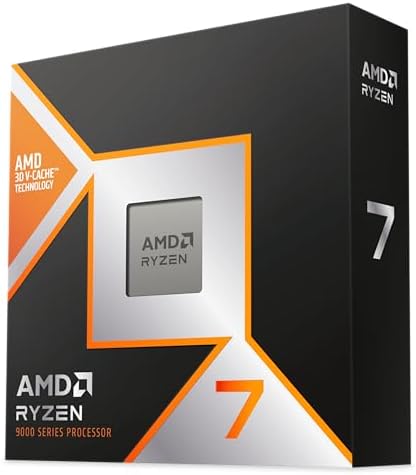
- Supports: Every AM5 chip including the Ryzen 7 9800X3D, Ryzen 9 9950X, and the new Ryzen 9 9950X3D2 Dual Edition.
- Buy if: You want an X870E build with collector-piece aesthetics. Skip if: You're shopping on raw value or you don't care about ROG brand heritage.
Spec sheet — modern silicon, retro skin
Per ASUS's ROG Crosshair product family page and the launch reporting at Videocardz:
| Spec | ASUS ROG Crosshair 2006 X870E |
|---|---|
| Socket | AM5 (LGA 1718) |
| Chipset | AMD X870E |
| Form factor | ATX |
| Memory | 4x DIMM DDR5, up to 192 GB, EXPO 8400+ MT/s (OC) |
| PCIe slots | 1x PCIe 5.0 x16 (CPU), 1x PCIe 4.0 x4 (chipset) |
| M.2 slots | 1x PCIe 5.0 x4 (CPU), 3x PCIe 4.0 x4 (chipset) |
| USB | 1x USB4 40 Gbps, 4x USB 10 Gbps, 6x USB 5 Gbps, 4x USB 2.0 |
| Networking | Dual 2.5 GbE, Wi-Fi 7 (BE200) |
| Audio | Realtek ALC4082 with DSP + ESS DAC |
| VRM | 18+2+2 phase, 110A SPS power stages |
| RGB | Aura Sync RGB, 4x ARGB headers, 1x RGB header |
| Anniversary touches | Retro orange/copper accents, vintage ROG logo silk-screen, custom I/O shield, limited-edition serial number plate |
Functionally identical to other top-tier X870E boards on the platform feature set. The differentiators are the VRM count (18+2+2 is generous but not unique — the Apex has 20+2+2), the limited-edition serial plate, and the visual styling.
For people who don't care about the styling, the standard ROG Crosshair X870E Hero (or whichever X870E-E variant your retailer carries) hits the same feature set at $479-499. The 2006 reissue's $100-200 premium is paying entirely for the aesthetic and limited-run scarcity.
What the retro callbacks actually look like
Per the launch images circulating on Videocardz and ROG's social media tease:
- Chipset heatsink: Brushed-aluminum finish with copper-orange ROG scrollwork logo (the 2006 original logo, not the current 2018+ flat design).
- I/O shield: Pre-installed, black with orange "ROG Crosshair 2006-2026" anniversary text.
- PCB silk-screen: Black PCB with copper/orange trace highlights along the audio path and rear I/O area.
- VRM heatsink: Aluminum with a "Republic of Gamers" engraving in the original 2006 typeface.
- Power-connector area: Includes a small "20th Anniversary" plaque with the limited-edition serial number.
- Box and accessories: Custom box design referencing the original 2006 packaging, vintage-style sticker pack, replica of the original Crosshair user manual cover (the actual manual content is current).
It is a tasteful retro pass — not a kitsch "make it look like 2006" gimmick. ASUS clearly understood that the audience for this board cares about restrained, well-executed nostalgia rather than overt branding.
Who should buy this
Three legitimate buyer profiles:
#1: ROG-era builders doing a 20th-anniversary build
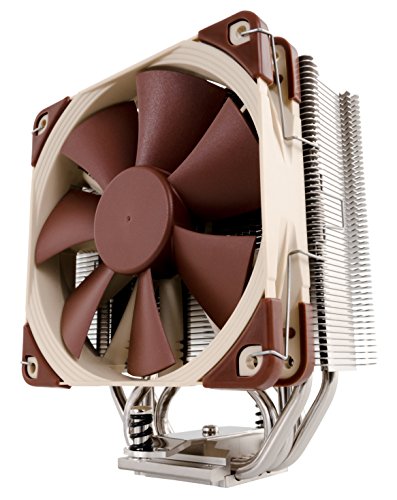
If you were buying ROG boards in 2006-2010 and you're still building PCs in 2026, this board is for you. The combination of nostalgia, modern AM5 silicon, and limited-edition scarcity is the exact pitch ASUS is making — and it lands cleanly for the original ROG buyer demographic. Pair it with a Ryzen 9 9950X3D2 Dual Edition (the current flagship), a Noctua NH-U12S or 280mm AIO like the CoolerMaster MasterLiquid ML240L RGB V2, and a 4K-class display like the KOORUI 27" 4K QD-Mini LED for a build that bridges 20 years of ROG history.
#2: Collectors and hardware photographers
A limited-edition motherboard is a collector item the moment it ships, and the resale market for limited-run hardware tends to hold value better than standard SKUs. If you photograph builds for content, sell custom PC builds, or maintain a hardware collection, the 2006 X870E is a centerpiece-grade board.
#3: Builders who already own a 2006-era ROG Crosshair
A niche but real audience: people who still have the original 2006 Crosshair (or a Crosshair II/III from the late-2000s era) in a closet and want a matched-pair display. The two boards side-by-side make for a striking "then and now" visual story.
Who should skip this
- Pure value buyers. The standard X870E-E Gaming WiFi hits the same feature set for $479-499. Save $100-200.
- Overclockers chasing memory records. The X870E Apex has more VRM phases, more memory tuning options, and the LN2 mode features. The Crosshair 2006 is a tuned-for-aesthetics board, not a tuned-for-records board.
- People who don't care about ROG history. If "20 years of ROG" doesn't move you, this board's value proposition is invisible.
- First-time builders. Premium boards with limited-run pricing are not the right first-build choice. Get the standard X870E mid-tier for your first AM5 build.
How it compares to other premium X870E boards
| Board | MSRP | VRM | Memory tuning | Aesthetic | Best for |
|---|---|---|---|---|---|
| ASUS ROG Crosshair X870E Hero | $479-499 | 18+2+2 | Standard EXPO 8400+ | Modern ROG black + RGB | Mainstream premium AM5 buyer |
| ASUS ROG Crosshair 2006 X870E (anniversary) | $599-749 | 18+2+2 | Standard EXPO 8400+ | Retro 2006 ROG | Collector / anniversary build |
| ASUS ROG Crosshair X870E Apex | $849-899 | 20+2+2 | Extreme OC + LN2 mode | Modern ROG silver/black | Memory overclocker, world records |
| MSI MEG X870E Godlike | $899-999 | 24+2+1 | Extreme OC | Modern MSI dark gold | Halo-tier feature stacker |
| ASRock X870E Taichi Lite | $349-399 | 24+2+1 | Standard EXPO 8000+ | Minimalist black | Best-value X870E |
The 2006 X870E lives in a deliberate value gap — the standard Hero handles most users' needs at the lower price; the Apex serves the overclock crown. The 2006 is the limited-run aesthetic option for the collector audience.
Compatibility with current AM5 chips
Every current AM5 Ryzen runs on this board:
- Ryzen 9 9950X3D2 Dual Edition — the new dual-CCD V-Cache flagship
- Ryzen 9 9950X3D — single-CCD V-Cache 16-core
- Ryzen 9 9950X — non-V-Cache 16-core
- Ryzen 7 9800X3D — current gaming sweet spot
- Ryzen 7 9700X / 9600X — non-V-Cache mid-range
- Previous-gen Ryzen 7000-series (7800X3D, 7950X3D, 7700X, etc.)
For builders coming from an AM4 platform (an existing Ryzen 7 5800X or Ryzen 7 5700X build), the AM5 platform refresh now adds the 2006 X870E as another board option alongside the existing 800-series and 600-series stack. The 2006's premium positioning makes more sense for users coming from an X670E or X870E than from a budget B650 — if you're shopping in the $200-300 board tier, this isn't your board.
Cooling, memory, and case considerations
The 2006 X870E is a standard ATX form factor — no surprises. Specific recommendations:
- CPU cooler: Any of the AM4-era coolers with AM5 brackets work. The Noctua NH-U12S at $84.95 is a great match for non-X3D2 chips; for the X3D2 or 9950X3D, step up to a 240/280mm AIO like the CoolerMaster MasterLiquid ML240L RGB V2.
- Memory: DDR5-6000 EXPO is the AM5 sweet spot for Zen 4/5. 32 GB (2x16) or 64 GB (2x32) kits are both fine. Avoid mixing kits.
- Case: Any modern mid-tower ATX. The retro aesthetic looks best in a case with a tempered-glass side panel and minimal RGB — let the board be the visual focus.
- Display: A premium board deserves a premium display. The KOORUI 27" 4K QD-Mini LED dual-mode 4K/1080p monitor is one of the better value picks at $499.98 for a build in this tier.
Common pitfalls
- Buying for resale value without verifying the limited-run number. ASUS hasn't published the exact production cap; eBay scalpers may inflate prices early. Wait for confirmed scarcity data before paying premiums above MSRP.
- Pairing with a non-anniversary aesthetic GPU and case. A retro ROG board in a stock-look RGB GPU + glass case undercuts the aesthetic. Plan the build's visual identity holistically.
- Assuming "premium board = more performance." On AM5, the X870E chipset performance ceiling is shared across all boards. Premium boards add features, VRM headroom, and aesthetics — not raw FPS.
- Skipping the BIOS update on arrival. As with any new motherboard, flash the latest BIOS before tuning memory. ROG's Q-Flash Plus feature lets you flash from USB without a CPU installed.
- Forgetting to claim the warranty registration. Limited-edition boards often have separate warranty registration paths for the anniversary plate certification.
Bottom line
The ASUS ROG Crosshair 2006 X870E is a well-executed anniversary reissue that pairs modern AM5 silicon with a tasteful retro aesthetic. It is not the best-value X870E board, the best-overclock X870E board, or the cheapest path to a premium AM5 build. It is the right board for a specific buyer: someone who values the ROG visual identity history, has the budget to pay a 15-20% premium for it, and wants a build with a story to tell.
For everyone else, the standard X870E lineup — Hero for mainstream premium, Apex for overclock, Taichi Lite for value — still delivers the same chipset performance at lower prices. The 2006 X870E is an addition to the lineup, not a replacement.
Expect limited regional availability and early-supply scalping. If you want one, register interest with your local ASUS retailer or watch the ROG Crosshair product page for stock notifications.
Related guides
- Best AM4 CPU coolers in 2026 for Ryzen 5000-series builds — cooler recommendations that carry to AM5
- Best budget AIO CPU cooler for gaming PCs (2026) — entry AIO picks for premium board builds
- AMD Ryzen 9 9950X3D2 on Linux vs Windows 11 — the flagship chip for this board
Citations and sources
- ASUS — ROG Crosshair product family page (official spec).
- Videocardz — ASUS launches retro-styled ROG Crosshair 2006 X870E motherboard (launch coverage, pricing, image gallery).
- Reddit r/hardware — ASUS ROG Crosshair 2006 X870E launch discussion (community first-impressions and aftermarket pricing tracking).