

Google Coral
M.2 Accelerator with Dual Edge TPU M.2-2230 (E-key)
*Price sourced from Amazon.com. Last updated 2026-07-22. Price and availability subject to change.
Bottom line: The M.2 Accelerator with Dual Edge TPU M.2-2230 (E-key) is a niche pick — read recent reviews before buying in the ai accelerators category, priced around $83.99. Read recent reviews carefully before committing.
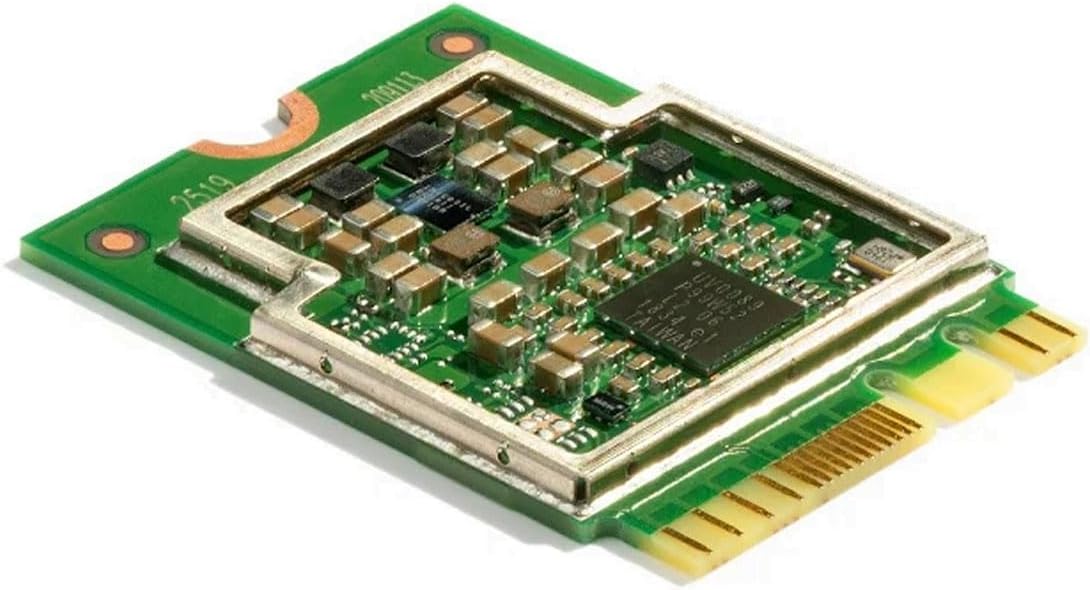
The Coral M.2 Accelerator with Dual Edge TPU is an M.2 module (E-key) that includes two Edge TPU ML accelerators, each with their own PCIe Gen2 x1 interface. The Edge TPU is a small ASIC designed by Google that accelerates TensorFlow Lite models in a power efficient manner: each one is capable of performing 4 trillion operations per second (4 TOPS), using 2 watts of power—that's 2 TOPS per watt. For example, one Edge TPU can execute state-of-the-art mobile vision models such as MobileNet v2 at almost 400 frames per second. This on-device ML processing reduces latency, increases data privacy…
SpecPicks Verdict
SpecPicks classifies M.2 Accelerator with Dual Edge TPU M.2-2230 (E-key) as a niche pick — read recent reviews before buying in the ai accelerators category, based on our editorial and benchmark analysis and our ranking model that weights rating × review-volume × price-fit. Google Coral's positioning sits within the broader category mid-tier. Use the Compare tool to put it side-by-side with two or three close alternatives before clicking through to Amazon.
Common buyer scenarios for ai accelerators of this kind: matching it to an existing build, replacing a failing part, or upgrading from a previous-generation equivalent. Check the spec table below against your current setup — particularly socket / form-factor / power-rating fields — and confirm compatibility on the Amazon listing before purchase. Prices, stock, and Prime eligibility update directly from Amazon's catalog and may have moved since this page was last verified.
Pros & Cons
Pros
- ✓ 2x PCIe Gen2 x1 interface (one per Edge TPU)
- ✓ Backed by Google Coral's warranty and support channels
- ✓ Ships via Amazon with Prime eligibility and the standard returns policy
Cons
- ✗ Confirm socket / form-factor / power-rating compatibility against your build before ordering
- ✗ Price, stock, and Prime eligibility update from Amazon and may have changed since this page was last verified
Key Features
- 2x PCIe Gen2 x1 interface (one per Edge TPU)
- M.2 - 2230 - D3 - E KEY
- 2x Google Edge TPU ML accelerator
- 8 TOPS total peak performance (int8)
- 2 TOPS per watt
Full Specifications
| ASIN | B08KTSGN7F |
|---|---|
| Brand | Google Coral |
| Item Weight | 0.634 ounces |
| Manufacturer | Google Coral |
| Model Number | G650-06076-01 |
| Item model number | G650-06076-01 |
| Product Dimensions | 2 x 2 x 1 inches |
| Date First Available | January 2, 2020 |
Ready to buy?
M.2 Accelerator with Dual Edge TPU M.2-2230 (E-key) is available on Amazon with Prime shipping and the full Amazon returns policy. SpecPicks earns a small commission on qualifying purchases — thank you for supporting independent review work.
*Price sourced from Amazon.com. Last updated 2026-07-22. Price and availability subject to change.
Related AI Accelerators



More guides & deep dives from the SpecPicks archive
Browse all articles & guides →- Best 1440p Gaming GPUs in 2026
- Best Budget Gaming PC Build 2026 — ~$1,000 ($800 on Sale)
- Best Retro Handhelds in 2026 — From $35 to $500
- Emulation Hardware in 2026: FPGA, Software, and Cart-Reader Ecosystems
- The Complete Voodoo5 5500 AGP Driver Guide (2026 Edition)
- How to Build a Windows 98 Retro PC in 2026
- RTX 4070 Super vs RX 7800 XT — Which to Buy in 2026
More reviews from the SpecPicks archive
Browse all reviews →- Ling 2.6 1T on Local Hardware: Can You Actually Run a Trillion-Parameter Model at Home in 2026?
- Best GPU Under $400 for Llama-Class 8B Models in 2026
- Best Budget GPU for Local LLMs in 2026: RTX 3060 12GB
- Best Controller for Forza Horizon 6 on PC (2026)
- Build a Raspberry Pi Zero Cyberdeck in 2026: Parts, Wiring and a Working BOM
- How to run Llama 3.1 8B on AMD Radeon RX 7900 XTX
- Raspberry Pi 4 8GB Homelab in 2026: Jellyfin, Pi-hole and Home Assistant on One Board
- Best CPU Cooler for 2026: 5 Picks for Air, AIO, and Silent Builds
- Intel Arc B580 LLM Inference: 12GB Battlemage Benchmarks
- Raspberry Pi 4 8GB vs Zero 2W for an AI Camera (2026)
- Self-Host Jellyfin on a Raspberry Pi 4 8GB: Transcoding Limits and Storage in 2026
- KOORUI 27" QD-Mini LED vs Samsung Odyssey: Best 4K Pick
- Adafruit's 2026 I2S Microphone Guide Brings Real-Time Audio to CircuitPython
- vLLM 0.21 Adds Intel GPU Support: What It Means for Budget AI Rigs
- Best CPU for Gaming in 2026: Intel vs AMD Showdown
- Local AI on Raspberry Pi 5: Real Benchmarks for Llama, Phi, and Gemma (2026)
- Period-Correct 2001 Pentium III Build: Sound Blaster Audigy Era Synthesis
- Building a 2003-Era LAN Party Rig: Pentium 4, GeForce FX 5900, Audigy 2 ZS
- Stable Diffusion vs Flux — which open image model wins in 2026?
- Best SSD to Upgrade Your PS4 Pro in 2026: SATA Drives That Actually Speed It Up
- Best Streaming and Content-Creation Gear in 2026
- Best SATA SSDs Under $100 in 2026: 5 Picks for Boot Drives, Upgrades, and Retro PCs
- Building a 2001 LAN Party Rig in 2026: GeForce 3, Pentium III, and Period-Correct Peripherals
- Ollama vs llama.cpp vs vLLM — which local LLM runtime wins in 2026?