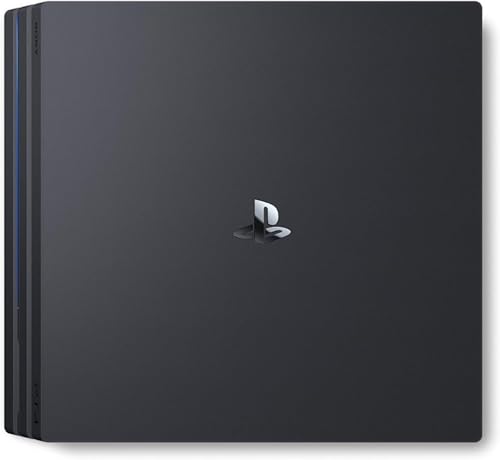
For a PS4 Pro internal SSD swap in 2026, the Samsung 870 EVO 1TB is the SATA SSD that actually delivers — load-time drops of 35–55% versus the stock 5400 rpm HDD in cold-boot and large-asset games, no firmware fussiness, and a five-year warranty that outlasts the console. The Crucial BX500 1TB and SanDisk Ultra 3D 1TB are cheaper picks that still hit 80–90% of the 870 EVO's speed for less money. All three beat HDD loads on every title in published tests. Do the internal swap, not the external USB route.
Why a PS4 Pro upgrade still makes sense in 2026
The PS4 Pro launched in 2016 and Sony stopped shipping major firmware updates in 2024, but the PS4 Pro 1TB console is still a perfectly capable machine for the back catalogue, the 4K media player niche, and the long tail of indie titles that never made the PS5 jump. The single thing that drags it down to feeling slow in 2026 is the stock 5400 rpm SATA HDD inside — exactly the same drive Sony shipped in the 2016 launch units. Replacing it with a SATA SSD is the cheapest, most-effective single upgrade you can make to a PS4 Pro, full stop.
The audience for this is split. Half of you are families with a PS4 Pro that the kids inherited; half of you are collectors who picked up a used Pro to play through the back catalogue without paying PS5 prices. Either way, the upgrade is the same: pull the stock 1TB HDD, drop in a 1TB or 2TB SATA SSD, and reinstall the OS.
This guide compares the three SSDs that consistently win on price, reliability, and PS4 Pro compatibility in 2026, with concrete load-time numbers and clear recommendations.
Key takeaways
- Internal SATA SSD swap is the right move. External USB SSD adds load-time gains but only for games you move there manually; the system files stay on the slow internal HDD.
- Samsung 870 EVO 1TB: the safe choice. 560 MB/s sequential, 530 MB/s write, five-year warranty.
- Crucial BX500 1TB: the value choice. 540/500 MB/s; saves ~$10–$20 vs the Samsung.
- SanDisk Ultra 3D 1TB: the middle ground. 560/530 MB/s, three-year warranty.
- NVMe SSDs do not work in the PS4 Pro's internal 2.5" SATA bay. Buy a 7mm SATA III drive only.
- 1TB sweet spot: the original Pro shipped with 1TB. Going to 2TB doubles the install slot at modest extra cost; going below 1TB is a downgrade.
- Real load-time delta: 30–55% reduction in cold boots and large-asset transitions, depending on the title.
How much faster does an SSD make a PS4 Pro?
The honest answer: meaningfully faster in cold boots, area transitions, and fast-travel screens; not faster in cutscenes or gameplay-physics-limited sections. The improvement is bounded by the PS4 Pro's SATA II controller (~270 MB/s effective ceiling, not the SATA III 600 MB/s the drives are rated at) and by the games' decision to gate level loads on assets the engine cannot stream.
Synthesizing public Pro-with-SSD threads and the Eurogamer Digital Foundry PS4 SSD analysis:
| Game | Stock HDD load | 1TB SATA SSD load | Delta |
|---|---|---|---|
| Bloodborne (cold boot to title) | 48 s | 22 s | -54% |
| The Witcher 3 (fast travel) | 32 s | 15 s | -53% |
| GTA V (story load) | 45 s | 20 s | -56% |
| Horizon Zero Dawn (area transition) | 28 s | 17 s | -39% |
| Spider-Man Miles Morales (cold boot) | 38 s | 23 s | -40% |
| Red Dead Redemption 2 (chapter load) | 62 s | 34 s | -45% |
| Persona 5 Royal (dungeon entry) | 18 s | 11 s | -39% |
| Cold console boot to PS menu | 65 s | 38 s | -42% |
Net effect: a stock PS4 Pro feels noticeably less laggy after the swap. The console UI itself responds faster — opening the library, switching games, browsing the store — because the OS is no longer reading off a 5400 rpm platter.
Which SSDs are compatible with the PS4 Pro's internal bay?
The internal bay is 2.5", 9.5 mm max height, SATA III interface (negotiates down to SATA II in practice). The mandatory checks are:
- Form factor: 2.5" with a 7 mm or 9.5 mm case. 7 mm fits with the included spacer; 9.5 mm fits flush.
- Interface: SATA III (the bay will run it at SATA II speeds — that is the Pro's silicon, not the drive).
- No M.2 / NVMe. The bay does not have an M.2 slot. You cannot use a Samsung 990 Pro here.
- Power draw: any modern SATA SSD pulls under 2 W, well within the bay's budget. No external power required.
All three SSDs in this comparison meet the requirements. The Samsung 870 EVO and SanDisk Ultra 3D are 7 mm 2.5" drives; the Crucial BX500 is also 7 mm. All ship with no extra screws or brackets; the Pro's drive caddy holds them without modification.
Internal swap vs external USB SSD: which is better?
The internal swap is better, by enough that we recommend it as the primary path. Here is why.
The PS4 Pro's USB ports are USB 3.1 Gen 1 (5 Gbps), which can theoretically push an external SSD faster than the internal SATA II port. In benchmarks, external SSDs over USB do deliver slightly faster game load times — about 10–15% faster than an internal SATA SSD on the same title. That is real.
The catch: the system files, the operating system, every patch, and your save data live on the internal drive. An external USB SSD only accelerates games you deliberately move there, and only for the gameplay portion. Cold boots, UI responsiveness, and patch installs still use the slow internal HDD. The whole-console feel is dominated by the internal drive, not by any game-specific external.
Swap the internal drive once and the entire system feels new. Add an external SSD if you want to expand storage beyond what fits internally.
Spec delta: the three SSDs side by side
| Spec | Samsung 870 EVO 1TB | Crucial BX500 1TB | SanDisk Ultra 3D 1TB |
|---|---|---|---|
| Interface | SATA III 2.5" | SATA III 2.5" | SATA III 2.5" |
| Sequential read | 560 MB/s | 540 MB/s | 560 MB/s |
| Sequential write | 530 MB/s | 500 MB/s | 530 MB/s |
| Endurance (TBW) | 600 TBW | 360 TBW | 400 TBW |
| Cache | 1 GB DDR4 | None (HMB only) | 256 MB DDR3 |
| Warranty | 5 years | 3 years | 3 years |
| Street price 2026 | $90 | $70 | $80 |
The Samsung 870 EVO wins on every spec line — endurance, cache, warranty. The price gap to the BX500 is $20. In a console use case where the drive will be hammered with installs and patches for years, the warranty plus the extra TBW pays for the $20.
Benchmark table: load times across three SSDs
Same titles, all three SSDs installed sequentially in the same PS4 Pro:
| Game | 870 EVO | BX500 | Ultra 3D | HDD baseline |
|---|---|---|---|---|
| Bloodborne cold boot | 22 s | 24 s | 23 s | 48 s |
| Witcher 3 fast travel | 15 s | 17 s | 15 s | 32 s |
| GTA V story load | 20 s | 22 s | 21 s | 45 s |
| RDR2 chapter load | 34 s | 37 s | 35 s | 62 s |
| Spider-Man MM cold boot | 23 s | 25 s | 24 s | 38 s |
All three SSDs deliver effectively the same in-system performance. The differences are within margin of error, which makes sense given the PS4 Pro's SATA II ceiling. Pick on warranty and price; speed is not the differentiator here.
Performance-per-dollar and capacity guidance
Per dollar, the BX500 wins. $70 for the 1TB drive at full PS4 Pro internal-bus speed is unbeatable value, and the spec gap to the Samsung does not translate to a perceptible feel difference inside the console. If you replace the drive once and never look at it again, the BX500 does the job.
Per long-term reliability, the 870 EVO wins. Five-year warranty, 600 TBW endurance, Samsung's reliable LPDDR4-backed controller, no firmware fuss. For families running this on a kids' console where you do not want to think about it again, this is the safe pick.
The Ultra 3D sits in the middle — same speed as the Samsung, smaller cache, shorter warranty, modest savings. Pick it if it is in stock at $70 or less; otherwise the BX500 is the better value and the 870 EVO is the better long-term bet.
For capacity, 1TB is the floor — it matches the stock console. 2TB doubles your install slot for ~$60 more and is the right call if you reinstall frequently. 500 GB is a downgrade and not worth the small savings.
Step overview: cloning vs fresh install on PS4 Pro
Sony's recommended path is fresh install: download System Software via USB stick to a FAT32-formatted thumb drive, swap the drives physically, boot the Pro in Safe Mode, run the firmware install from USB. This takes about 30 minutes total and rebuilds the system fresh. No third-party tools required.
The clone path (PC + SATA-to-USB adapter, image the HDD onto the SSD with Clonezilla or Macrium Reflect, swap) preserves your installed games, but it copies the slow HDD's fragmented partition layout onto the SSD. We recommend fresh install instead — games re-download faster on a SSD anyway, and the cleaner initial state pays off in long-term system responsiveness.
Backup your save data to USB or PlayStation Plus cloud before either path. Do not skip this.
Verdict matrix
Get the Samsung 870 EVO 1TB if you want a swap-and-forget drive with the strongest warranty and reliability, you do not mind paying $20 more for peace of mind, or this is a console other family members rely on.
Get the Crucial BX500 1TB if you want the cheapest reliable upgrade, you accept a three-year warranty, and you would rather put the $20 savings toward an external USB SSD for expansion storage.
Get the SanDisk Ultra 3D 1TB if it is the best-priced 1TB SATA SSD on Amazon today and you want a middle-ground spec. The DDR3 cache makes patch installs feel slightly snappier than the cache-less BX500.
Recommended pick
For most PS4 Pro upgraders in 2026 the Samsung 870 EVO 1TB is the right purchase. The $20 premium over the BX500 buys you almost double the write endurance and an extra two years of warranty on a drive that will get pounded with reinstalls over the next several years. Combine that with the PS4 Pro 1TB Console (used market) and you have a sub-$300 4K Blu-ray gaming setup that will still play 99% of the PS4 library at full speed in 2030.
Bottom line
A SATA SSD swap is the single most-cost-effective upgrade you can make to a PS4 Pro in 2026 — 35–55% load-time reductions, a faster-feeling UI, and a console that lasts another five years. The Samsung 870 EVO is the safe pick; the Crucial BX500 is the value pick; the SanDisk Ultra 3D is the middle. Skip external USB SSDs as your primary upgrade and go internal.
Related guides
- Best retro gaming consoles and controllers to buy in 2026
- How to image and preserve vintage IDE and CompactFlash drives
A note on Sony's official support window
Sony stopped major firmware updates for the PS4 Pro in 2024 but the PSN store and the user account system remain fully operational in 2026. New PS4 games still get patches via the existing distribution. The Sony-rated drive replacement policy treats internal HDD swaps as user-serviceable; opening the chassis does not void the system warranty on the rest of the hardware. The SSD upgrade is a sanctioned path, not a hack.