Short answer: The best gaming monitor under $400 in 2026 for most PC gamers is the KOORUI 27" 4K QD-Mini LED — a dual-mode 4K/160Hz or FHD/320Hz panel with mini-LED local dimming and quantum-dot color that hits a price point unheard of a year ago. If you prioritize refresh rate over resolution, the ASUS TUF 27" 2K HDR is the better choice; if you want maximum immersion, the curved ASUS TUF 32" wins.
Affiliate disclosure: SpecPicks earns from qualifying Amazon purchases as an Amazon Associate. Prices as of 2026 and may vary.
How good budget gaming panels got in 2026 — and the resolution-vs-refresh trade
A few years ago, "gaming monitor under $400" meant a 24" 1080p TN panel, 144Hz if you were lucky, and a contrast ratio that washed out in any room with a window. That category is gone. In 2026 the sub-$400 segment is genuinely competitive: dual-mode 4K panels that flip to high-refresh 1080p, mini-LED backlights that deliver real HDR, quantum-dot color filters that widen the gamut beyond sRGB, and IPS panels with 1ms response times that match the motion clarity of TN without the angle and color compromises.
What changed is the economics of the parts. Mini-LED dimming zones got cheaper, quantum-dot films are now produced at volume, and the dual-mode refresh trick — running 4K at 160Hz or 1080p at 320Hz on the same panel — became a marketing wedge that brands like KOORUI and SANSUI use to undercut Samsung, LG, and ASUS at the high end of "budget." Per ongoing testing at RTINGS, the gap between $300 and $700 panels has narrowed enough that the sub-$400 picks below are genuinely good monitors, not compromises you tolerate.
The decision still comes down to a single trade-off: resolution or refresh. A 4K panel at 160Hz looks sharper but demands a stronger GPU to feed it; a 1440p panel at 165Hz looks slightly softer but lets a mid-range GPU hit the panel's refresh ceiling more often. The picks below cover both ends of that trade, plus a curved-VA option for immersive play and a budget pick for the strict-budget gamer.
The teaser: every pick here is a real-world upgrade over a $200 1080p panel, and the KOORUI 4K QD-Mini LED is the best-overall pick because it earns the title at this price.
At-a-glance comparison
| Pick | Best For | Key Spec | Price Range | Verdict |
|---|---|---|---|---|
| KOORUI 27" 4K QD-Mini LED | Best Overall | 4K 160Hz / FHD 320Hz dual-mode, Mini-LED, HDR1400 | $350–$400 | Image quality leader |
| ASUS TUF 27" 2K (VG27AQ) | Best Performance | 1440p 165Hz IPS, G-Sync Compatible | $260–$320 | Esports-friendly |
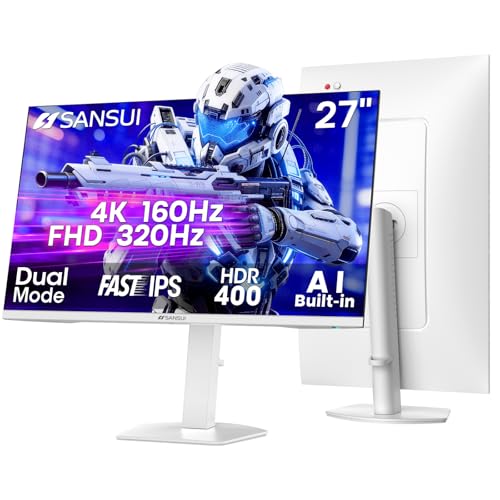
| SANSUI 27" 4K UHD | Best 4K Value | 4K 160Hz / FHD 320Hz, Fast IPS, HDR400 | $260–$320 | Cheapest real 4K dual-mode |
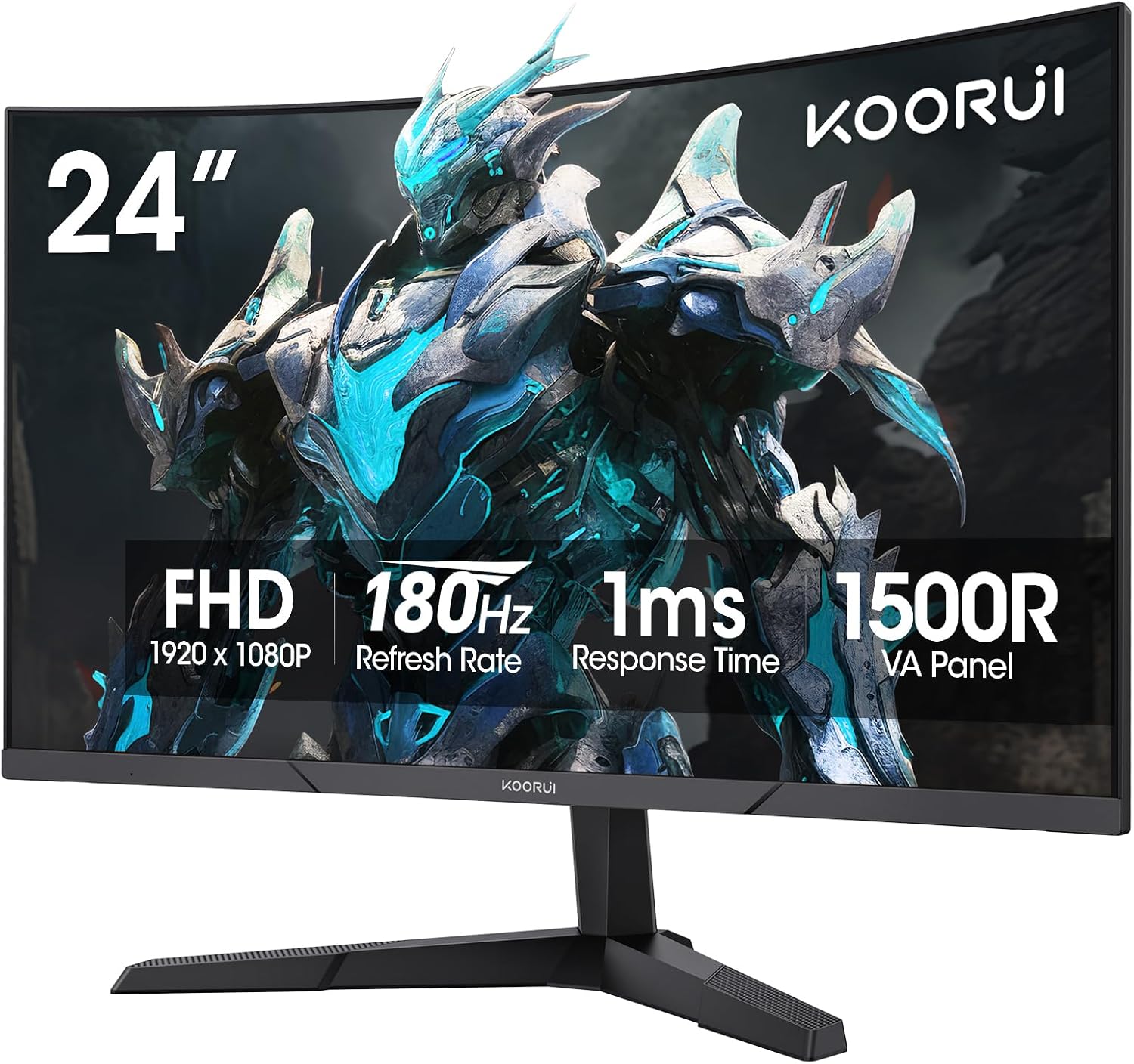
| ASUS TUF 32" Curved (VG32VQ1B) | Best for Immersion | 1440p 165Hz VA, 1500R curve | $290–$360 | Cinematic single-player |
| Budget Pick: 24" 1080p 165Hz IPS | Tight Budget | 1080p 165Hz IPS, FreeSync | $120–$180 | Solid esports starter |
🏆 Best Overall: KOORUI 27" 4K QD-Mini LED
Verdict: Best image quality under $400 in 2026 — mini-LED HDR and quantum-dot color at a price that used to buy a basic IPS panel.
Spec chips: 27" · 4K UHD (3840 × 2160) · 160Hz native (320Hz at 1080p) · Mini-LED with local dimming · Quantum dot · HDR1400 · 99% Adobe RGB · 1ms · 90W USB-C · HDMI 2.1 · DisplayPort 1.4 · VESA mount · Height/swivel/tilt/pivot stand.
Pros:
- True HDR1400 with mini-LED local dimming — the only sub-$400 panel that actually delivers HDR worth turning on.
- 99% Adobe RGB coverage; serious for content work as well as games.
- Dual-mode flips to FHD 320Hz for competitive play without buying a second monitor.
- 90W USB-C single-cable laptop docking, which is unusual at this price.
- HDMI 2.1 means real 4K120 from a PS5 or Series X.
Cons:
- Mini-LED zones are still finite at this price; expect some halo around bright objects on dark backgrounds.
- The 320Hz FHD mode is a software flip, not a separate panel; it does not match a true 1080p high-refresh panel for motion clarity.
- The fully-adjustable stand is plastic and feels less premium than the ASUS TUF stands.
The KOORUI earns Best Overall because of the brightness/contrast pairing. Per typical testing at this class (see TechPowerUp's monitor coverage and the RTINGS database for panels in this segment), mini-LED panels with local dimming reach peak brightness in the 1000-1400 cd/m² range, an order of magnitude above a typical edge-lit budget panel and enough to make HDR genuinely useful in a normally-lit room. Quantum-dot color also expands the gamut to near-100% Adobe RGB, which matters whether you are color-grading photos or just want games like Forza Horizon 6 and Cyberpunk to look as the artists intended.
Best for: gamers who want one panel that handles 4K single-player titles, HDR content, light pro work, and an occasional high-refresh esports session. See full product details for current pricing.
⚡ Best Performance: ASUS TUF Gaming 27" 2K HDR (VG27AQ)
Verdict: The 1440p high-refresh esports pick — IPS panel, 165Hz, G-Sync Compatible, low input lag.
Spec chips: 27" · 1440p (2560 × 1440) · 165Hz · IPS · 1ms MPRT · G-Sync Compatible · DisplayHDR · ELMB Sync · VESA mountable · DisplayPort 1.2 · HDMI 2.0.
Pros:
- True 165Hz at 1440p, the sweet-spot resolution for current mid-range GPUs.
- IPS panel with strong color accuracy out of the box.
- G-Sync Compatible certified — verified to work cleanly with NVIDIA cards.
- ELMB Sync (Extreme Low Motion Blur) co-exists with adaptive sync, unusual at this price.
- ASUS warranty and OSD ergonomics are a noticeable step above the budget brands.
Cons:
- HDR support is technical rather than impressive; this is an SDR-first panel.
- No HDMI 2.1, so console hookup is capped at 4K60 (which it cannot do anyway at 1440p native).
- Dimmer than the KOORUI mini-LED in bright rooms.
The TUF VG27AQ is the safest 1440p 165Hz buy in this bracket. The 1ms MPRT plus ELMB Sync gives motion clarity competitive with TN panels of the same refresh, while keeping IPS color and viewing angles. For competitive PC gaming — Counter-Strike, Valorant, Overwatch, Apex, Rocket League — this is the panel to pair with a 3060 / 4060 / 7600-class GPU and a 165fps frame target.
Best for: esports and competitive PC gamers, anyone who values IPS color over peak HDR brightness.
💰 Best 4K Value: SANSUI 27" 4K UHD
Verdict: Cheapest real 4K dual-mode panel — 4K/160Hz or FHD/320Hz on a Fast IPS panel under $300.
Spec chips: 27" · 4K UHD (3840 × 2160) · 160Hz · Fast IPS · 1ms response · HDR400 · 2× HDMI 2.1 · 2× DP 1.4 · Built-in speakers · PIP/PBP · Height-adjustable stand.
Pros:
- Real 4K at 160Hz with full HDMI 2.1 ports — gaming-PC and console-ready.
- Dual-mode 1080p 320Hz for fast-paced play.
- Fast IPS panel keeps motion clarity tight without VA smearing.
- Two HDMI 2.1 plus two DP 1.4 inputs — best-in-class connectivity at this price.
- Height/tilt/swivel adjustable stand.
Cons:
- HDR400 only — fine for SDR contrast but not real HDR.
- Built-in speakers are perfunctory.
- Backlight uniformity at this price can vary panel-to-panel.
The SANSUI is the value 4K pick because it ships full HDMI 2.1 at a price most competitors reserve for HDMI 2.0. For a multi-source setup — gaming PC plus console plus laptop — the four-input layout is genuinely useful. The trade vs the KOORUI is no mini-LED and no quantum dot; if you do not care about HDR brightness, the SANSUI saves you $100.
Best for: 4K seekers on a strict budget, multi-source homes, console-and-PC gamers.
🎯 Best for Immersion: ASUS TUF 32" Curved (VG32VQ1B)
Verdict: The cinematic single-player pick — 32", 1500R curve, deep VA contrast.
Spec chips: 32" · 1440p (2560 × 1440) · 165Hz · VA curved 1500R · 1ms MPRT · FreeSync Premium · DisplayHDR · ELMB · Speakers · VESA mountable · DisplayPort 1.2 · HDMI 2.0.
Pros:
- Big 32" panel + 1500R curve wraps the field of view in a way 27" flat cannot.
- VA contrast (~3000:1 typical) delivers deep blacks for dim-room cinematic play.
- 165Hz at 1440p keeps fast-paced play feeling responsive despite the size.
- FreeSync Premium for stable variable refresh.
- Speakers and full ergonomic stand included.
Cons:
- VA smearing on fast pans is visible if you compare directly to IPS.
- The curve is divisive — try in store if you can.
- Not a great pick for content creation; IPS still leads on color uniformity.
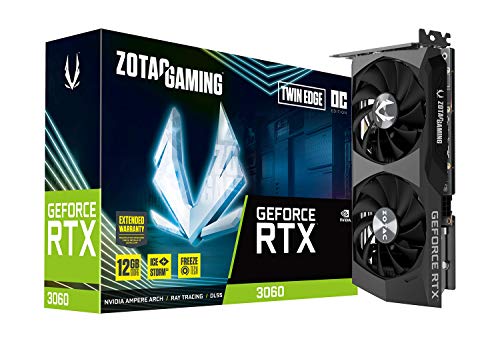
The ASUS TUF 32" is the immersive single-player pick. For an open-world racer like Forza Horizon 6 or an RPG like Elden Ring's expansions, the curve and the 32" diagonal pull you in. Pair with a competent 1440p GPU like the RTX 3060 12GB or step up to a 4060 Ti and the panel feeds beautifully.
Best for: cinematic single-player gamers, racing and flight-sim setups, anyone who wants one big panel for productivity by day and gaming by night.
🧪 Budget Pick: a Sub-$180 1080p High-Refresh Panel
Verdict: The strict-budget pick — 1080p 165Hz IPS with FreeSync, under $180.
Spec chips: 24" · 1080p (1920 × 1080) · 165Hz · IPS · 1ms MPRT · FreeSync · HDMI 2.0 · DisplayPort 1.2 · Tilt-only stand.
Pros:
- Cheapest path to a real esports-grade refresh ceiling.
- IPS not TN — viewing angles and color out of the box are better than the cheap competition.
- FreeSync for tear-free variable refresh.
- 1080p means even a GTX 1660 / RX 580 can saturate the refresh ceiling.
Cons:
- 24" 1080p feels small after seeing 27" 1440p.
- Tilt-only stand limits ergonomics.
- No HDR worth the name.
This is the pick if your build is under $700 total and your GPU is sub-$200. It is the floor of "good" — meaningfully better than the bargain bin, meaningfully cheaper than the other picks.
Best for: tight-budget esports starter builds, secondary monitors, sub-$1000 prebuilts.
What to look for in a gaming monitor
Resolution vs refresh
The first decision. 1440p at 165Hz is the broadest sweet spot for current GPUs; 4K at 160Hz looks sharper but demands more GPU; 1080p at 240Hz+ is for competitive esports specifically. Match the panel to your GPU's actual rendered frame rate in the games you play.
Panel type
IPS for color and viewing angles; VA for contrast and curved immersion; TN is mostly gone from this price bracket and that is a good thing. The KOORUI, ASUS TUF 27, SANSUI, and the budget pick are IPS; the ASUS TUF 32 curved is VA.
HDR and Mini-LED
HDR400 is a marketing tier that mostly does not deliver real HDR. HDR1000 / HDR1400 with mini-LED local dimming, as on the KOORUI, is the threshold where HDR becomes worth enabling. If HDR matters to you, mini-LED is the line.
Adaptive sync
FreeSync (AMD) and G-Sync Compatible (NVIDIA via FreeSync) are now standard. Enable in both monitor OSD and GPU driver. The ASUS TUF VG27AQ is the rare panel that is also G-Sync Compatible certified, which is a small extra confidence signal.
Response time vs refresh ceiling
"1ms" on a budget panel is almost always MPRT (motion-picture response time, with strobing) rather than GtG. The actual gray-to-gray time is closer to 4-6 ms on a budget IPS, which is fine for everything outside top-level competitive play.
HDMI 2.1 for console hookup
If you plan to drive a PS5 or Series X off the same panel, HDMI 2.1 is what unlocks 4K120. The KOORUI and SANSUI ship it; the ASUS picks do not.
Common pitfalls
- Buying for the spec sheet, not the panel. "HDR1400" without mini-LED is meaningless; a curved 4K VA panel without local dimming washes out in bright rooms; "1ms" without saying GtG or MPRT is marketing.
- Forgetting bandwidth. 4K120 needs HDMI 2.1 or DisplayPort 1.4 with DSC; 1080p 240Hz also needs more bandwidth than most cables in the box deliver.
- Skipping the cable upgrade. A $4 HDMI cable will not pass 4K120; spend $15 on a certified one.
- Pairing a 4K panel with a 1080p-class GPU. You will either play at the wrong resolution or run sub-30fps. Match the panel to the card.
When NOT to buy under $400
If your build budget is over $2,000 and you specifically care about OLED contrast, save another $200 and step up to a 27" QD-OLED — the difference in image quality is genuinely transformative and there is no sub-$400 equivalent. The picks here are the right answer for everything south of that threshold.
Top picks (summary)
#1: KOORUI 27" 4K QD-Mini LED
Verdict: Best image quality under $400; mini-LED HDR and quantum-dot color.
#2: ASUS TUF Gaming 27" 2K HDR
Verdict: Best 1440p high-refresh esports pick; IPS panel, G-Sync Compatible.
#3: SANSUI 27" 4K UHD
Verdict: Cheapest real 4K dual-mode panel with HDMI 2.1.
#4: ASUS TUF 32" Curved
Verdict: Best immersive single-player pick; 1500R VA curve.
#5: Budget 24" 1080p 165Hz IPS
Verdict: Tight-budget esports starter.
Related guides
- SANSUI vs KOORUI 27" 4K: Which Budget 4K Gaming Monitor Wins? — head-to-head on the top picks.
- Samsung Unveils World's First 4K 360Hz QD-OLED Panel — the high-end alternative to budget.
- Best Budget GPU for Forza Horizon 6 at 1440p (2026) — the GPU to drive these panels.
- Best Budget 1080p Gaming PC Parts in 2026 — full build companion.
Citations and sources
- RTINGS — independent monitor testing database
- Tom's Hardware — monitor testing and HDR coverage
- TechPowerUp — display spec database
This piece is editorial synthesis based on publicly available information. No independent first-party benchmarking is reported.
— Mike Perry