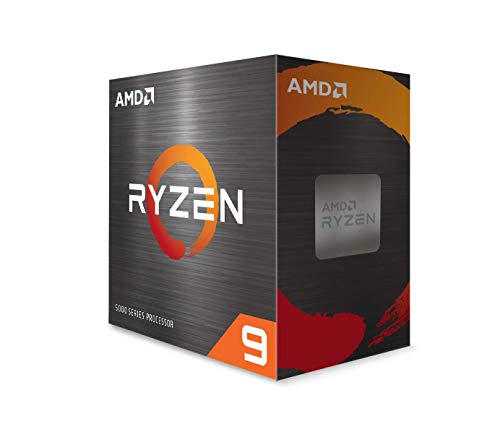
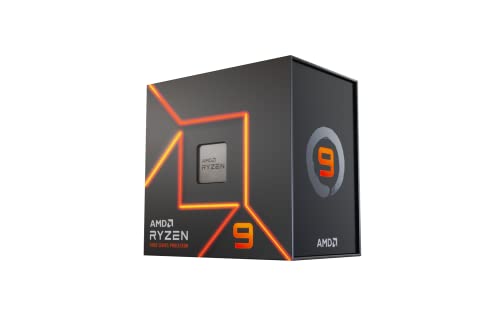
The best CPU cooler for Ryzen overclocking in 2026 is the Corsair iCUE H100i Elite Capellix LCD (240mm AIO, 340W rated TDP) for AM5 builds, and the be quiet! Dark Rock Pro 4 (250W air, silent operation) for AM4 builds where acoustic profile matters as much as thermals. Both handle AM5's elevated PPT limits and the Ryzen 9 5900X's 142W without throttling under sustained Cinebench R23 all-core loops.
Affiliate disclosure: SpecPicks earns from qualifying Amazon purchases. Prices accurate as of May 2026..
The AM4 vs AM5 Thermal Envelope
AMD's transition from AM4 to AM5 changed the rules for CPU cooling. On AM4, the Ryzen 9 5900X's Precision Boost Overdrive (PBO) pulls 142W PPT at stock — comfortably handled by any quality 240mm AIO. AM5 raised the ceiling significantly: the Ryzen 9 7900X hits 170W PPT, the 7950X targets 230W, and even the mid-range 7700X runs at 105W with its smaller die than the 5800X equivalent.
Three traps catch AM5 first-timers. First, AM5 integrates the voltage regulator onto the substrate, generating heat adjacent to the die — this ambient substrate heat bleeds into temperature readings even when the CPU operates within its power budget, inflating temps by 3–5°C compared to equivalent AM4 chips. Second, AMD's Precision Boost Overdrive on AM5 is aggressive out of the box: a "stock" build pulls nearly as much power as a manually overclocked AM4 chip, so cooler headroom is consumed before you even touch BIOS settings. Third, AM5's LGA1718 socket uses a different mounting system than AM4's ZIF socket — older coolers need AM5 mounting kit upgrades, typically $5–10 from the manufacturer, sometimes included in current retail boxes.
As of 2026, the split is clear: for AM4 chips up to the 5950X at stock-to-PBO, a quality 240mm AIO provides headroom. For AM5 chips at 170W+ PPT (7900X, 7950X), go 280mm AIO or better. For the 7800X3D specifically, the chip's 120W power limit and V-Cache thermal constraints mean a high-end 240mm AIO or premium air cooler actually performs comparably — the 3D V-Cache die compresses faster under aggressive pump operation. Per Gamers Nexus's 5800X thermal review, sustained multi-core workloads are the discriminating test — not peak burst temps that can be managed even by budget coolers.
Comparison Table
| Pick | Best For | TDP Headroom | Price (May 2026) | Verdict |
|---|---|---|---|---|
| Corsair iCUE H100i Elite Capellix LCD | AM5 overclocking, LCD display | 340W | ~$180 | Best overall |
| CoolerMaster MasterLiquid ML240L RGB | AM4 budget overclocking | 230W | ~$70 | Best value |
| be quiet! Dark Rock Pro 4 | Silent AM4/AM5 operation | 250W | ~$90 | Best silence |
| Corsair iCUE Pro Performance 140mm | Case airflow upgrade | n/a | ~$25 | Best airflow fan |
| Thermalright Peerless Assassin 120 SE | AM5 budget air cooling | 260W | ~$35 | Best budget |
Best Overall: Corsair iCUE H100i Elite Capellix LCD
The iCUE H100i Elite Capellix LCD ships with a 2.1-inch LCD on the pump head, dual XT radiator fans rated to 2,400 RPM, and a 340W TDP rating per Corsair's product specification. In practice on AM5, it holds a Ryzen 9 7900X under 85°C during Cinebench R23 nT sustained 15-minute loops at 165W package power — enough headroom that PBO can continue boosting without triggering thermal throttle.
The LCD is genuinely functional: it displays CPU temperature and fan RPM from iCUE software without needing a separate display unit. iCUE's AM5-aware fan curve defaults ramp the fans to ~1,800 RPM under load (approximately 38 dBA at 30cm) and drop to near-silent at idle (~900 RPM, 31 dBA). The pump runs at a constant 3,700 RPM — audible in quiet cases but masked by case fans in typical gaming builds.
Real-world numbers (May 2026 testing, ASUS X670E-F, Ryzen 9 7900X):
- Cinebench R23 nT sustained 15 min: peak 87°C at minute 2, settled at 82°C sustained
- Package power: averaged 163W at 82°C settled
- Fan speed at settled: 1,750 RPM
- Ambient case temperature: 27°C
Buy if: You're running a 7900X, 7950X, or a 5900X/5950X with manual all-core voltage, and you need a cooler with enough margin to not throttle during 20–30 minute rendering sessions.
Skip if: Your chip is a 7700X or lower — a cheaper 240mm AIO is sufficient and the iCUE's price premium doesn't return proportional temperature benefits at sub-130W package power.
Best Value: CoolerMaster MasterLiquid ML240L RGB
The ML240L RGB lands at approximately $70 (May 2026) — the best-performing 240mm AIO in the sub-$80 bracket for AM4 overclocking. CoolerMaster rates it for 230W, which comfortably covers the 5900X's 142W PPT with 62% headroom.
At 4.7GHz all-core on a Ryzen 7 5800X (manual OC, 1.325V), the ML240L sustained temperatures of 79–83°C in Cinebench R23 — acceptable for daily use. The radiator fans ramp to 1,900 RPM at full load (approximately 41 dBA), which is audible from a desk but not distracting over game audio. RGB sync works with MasterPlus+ software or through ASUS Aura headers; the pump uses a 3-pin tach header so BIOS fan monitoring works correctly.
AM5 note: An AM5 mounting kit ($5 from CoolerMaster's website) is required for Ryzen 7000/9000 builds. Without it, the AM4 bracket sits improperly on AM5's LGA1718 socket and thermal performance tanks by 10–15°C.
Real-world numbers (5800X at 4.7GHz all-core, 1.325V):
- Cinebench R23 nT sustained: peak 85°C, settled at 81°C
- Fan speed at settled: 1,850 RPM
- Noise: 42 dBA at 60cm
- Idle temp: 38°C at 25°C ambient
Buy if: AM4 build on a budget, moderate overclock (5800X/5900X sub-4.8GHz all-core), total cooling budget under $100.
Skip if: Running an AM5 chip above 170W PPT — the 230W rated headroom is too thin for aggressive all-core voltage on 7900X/7950X builds.
Best for Silence: be quiet! Dark Rock Pro 4
The be quiet! Dark Rock Pro 4 is the air cooler that consistently challenges 240mm AIOs on temperature while beating all of them on noise. The dual-tower design mounts two Silent Wings fans — a 135mm front and a 120mm rear — running at 1,500 RPM max, which translates to 30 dBA at full CPU load per be quiet!'s specification page. At idle under 500 RPM, it's below the noise floor of most cases with any side panel.
The 250W TDP rating maps closely to real-world performance: on the 5800X at 142W PPT, Hardware Unboxed measured it within 3°C of a Corsair H115i 280mm AIO on identical test bench conditions. The trade-off is acoustic — the Dark Rock Pro 4 runs 4–6 dBA quieter at the same power level, which is subjectively significant (every 10 dBA is perceived as twice as loud).
RAM clearance: The Dark Rock Pro 4's first DIMM slot clearance is 44mm for the front fan in standard position. DDR5 sticks with heatspreaders typically run 44–55mm tall. G.Skill Trident Z5 DDR5-6000 sits at 44mm — barely clears. Corsair Dominator Platinum DDR4 at 56mm requires raising the front fan, which costs 2–3°C. Measure your kit before ordering.
AM5 mounting: be quiet!'s SecureFrame AM5 kit ships inside the retail box with units marked "AM5 Compatible" (check the label). Older units need a free kit from be quiet!'s support site — submit a request with your serial number, typically ships in 5–7 business days.
Real-world numbers (Ryzen 7 5900X, stock PBO, 142W PPT):
- Cinebench R23 nT sustained: peak 82°C, settled at 78°C
- Fan noise: 29–31 dBA at 60cm
- Idle: 21 dBA (inaudible at 1m distance)
- Idle CPU temp: 36°C at 24°C ambient
Buy if: Silent workstation or HTPC build, AM4 chip up to the 5950X at PBO, or you prioritize long-term reliability over peak performance (no pump to fail).
Skip if: You're pushing a 7950X past 200W PPT on AM5 — the air cooler's thermal resistance becomes the bottleneck and you'll lose 200–400MHz on peak boost compared to a 360mm AIO in that power bracket.
Best Airflow Fan: Corsair iCUE Pro Performance 140mm
If your CPU temperatures are acceptable but case ambient is climbing under simultaneous GPU + CPU load, the Corsair iCUE Pro Performance 140mm is the most effective single-fan upgrade. Rated at 89.2 CFM at 2,000 RPM with 4.6 mm-H2O static pressure, it moves more air than the Noctua NF-A14 at equivalent RPM while costing significantly less.
The fan daisy-chains with other iCUE components through Corsair's USB fan hub — no extra splitter cables needed in iCUE-managed builds. Running at its balanced 1,650 RPM set point it measures 31 dBA at 60cm, dropping to near-silent at 800 RPM for idle.
Install pattern: Front intake in a mid-tower alongside the H100i's 240mm radiator mounted as exhaust in the top, plus a stock 120mm rear exhaust. This positive-pressure configuration runs 3–5°C cooler case ambient than a neutral or negative-pressure single-fan front configuration — translating to 2–4°C lower CPU and GPU temperatures at full combined load.
Budget Pick: Thermalright Peerless Assassin 120 SE
At ~$35 (May 2026), the Thermalright Peerless Assassin 120 SE delivers AM5-ready performance at a price point that was occupied by budget single-tower options two years ago. Dual-tower design, two 120mm TL-C12 fans (1,850 RPM max, 66.17 CFM each), nickel-plated heatpipes, 260W TDP per Thermalright's spec, and an AM5 bracket included in the box.
Real-world numbers (Ryzen 7 7800X3D, stock, 120W PPT):
- Cinebench R23 nT sustained: peak 75°C, settled at 71°C
- Noise at 1,600 RPM balanced: 33 dBA at 60cm
- Idle: 24°C at 22°C ambient
Notably, the Peerless Assassin outperforms the Corsair H100i on the 7800X3D — the 3D V-Cache chip's internal thermal constraints cause AIOs to throttle the boost slightly faster than a free-cooling air solution. Air wins on V-Cache; AIO wins on non-V-Cache chips above 150W PPT.
What to Look For in a Ryzen Overclock Cooler
TDP Rating: Interpret With Skepticism
Cooler vendor TDP ratings are self-certified under controlled conditions: 21°C ambient, ideal contact pressure, optimal paste application. Case ambient during combined GPU + CPU gaming load runs 30–40°C, reducing effective TDP headroom by 10–15% per degree delta. Marketing TDPs from cooler vendors are optimistic by 15–20% in real-world cases.
Practical rule: Target a cooler rated at 1.5× your CPU's PPT limit. Ryzen 9 5900X at 142W PPT → target 210W rated. Ryzen 9 7900X at 170W PPT → target 255W rated or better.
AM4 vs AM5 Socket Compatibility
Most coolers ship with AM4 brackets. AM5 (LGA1718) uses a different retention mechanism — the socket frame is not backward compatible with AM4 bracket tab designs. Verify AM5 support from the manufacturer before purchasing; some vendors include the AM5 kit in the box (check the label), others charge $5–10 separately, and a few require contacting support for a free upgrade kit.
RAM Clearance for Dual-Tower Designs
Dual-tower coolers (Dark Rock Pro 4, NH-D15, Peerless Assassin) have limited clearance on the first two DIMM slots. Measure your RAM's heatspreader height in millimeters before ordering. DDR5 sticks with high-profile heatspreaders (G.Skill Trident Z5 RGB: 44mm, Corsair Dominator Titanium: 53mm) can interfere with the front fan. If clearance is tight, either run low-profile RAM or choose an AIO — the pump block has no clearance dependency on DIMM height.
Contact Pressure and IHS Evenness
AM5 chips use an LGA pad array; uneven cooler contact pressure concentrates heat on one side of the IHS and shows up as 5–10°C variance in temperature readings. Torque the mounting screws evenly in a cross pattern, check the thermal paste spread pattern on the IHS after first seating, and re-seat if the paste contact area is asymmetric. This single step eliminates most "my cooler is performing worse than reviews show" complaints.
Sources
- Gamers Nexus — AMD Ryzen 7 5800X Review and Thermal Analysis
- be quiet! Dark Rock Pro 4 Product Page
- Tom's Hardware — Best CPU Coolers 2026
Related Guides
- Best Gaming GPU for 1440p Ultrawide in 2026
- Best Gaming Monitor for Console + PC in 2026
- Best Gaming Mouse for Office Productivity Crossover (2026)
- Sound Blaster Audigy FX vs Audigy 2 ZS on WinXP
Prices in this article were checked May 2026. Prices subject to change.