
Seagate
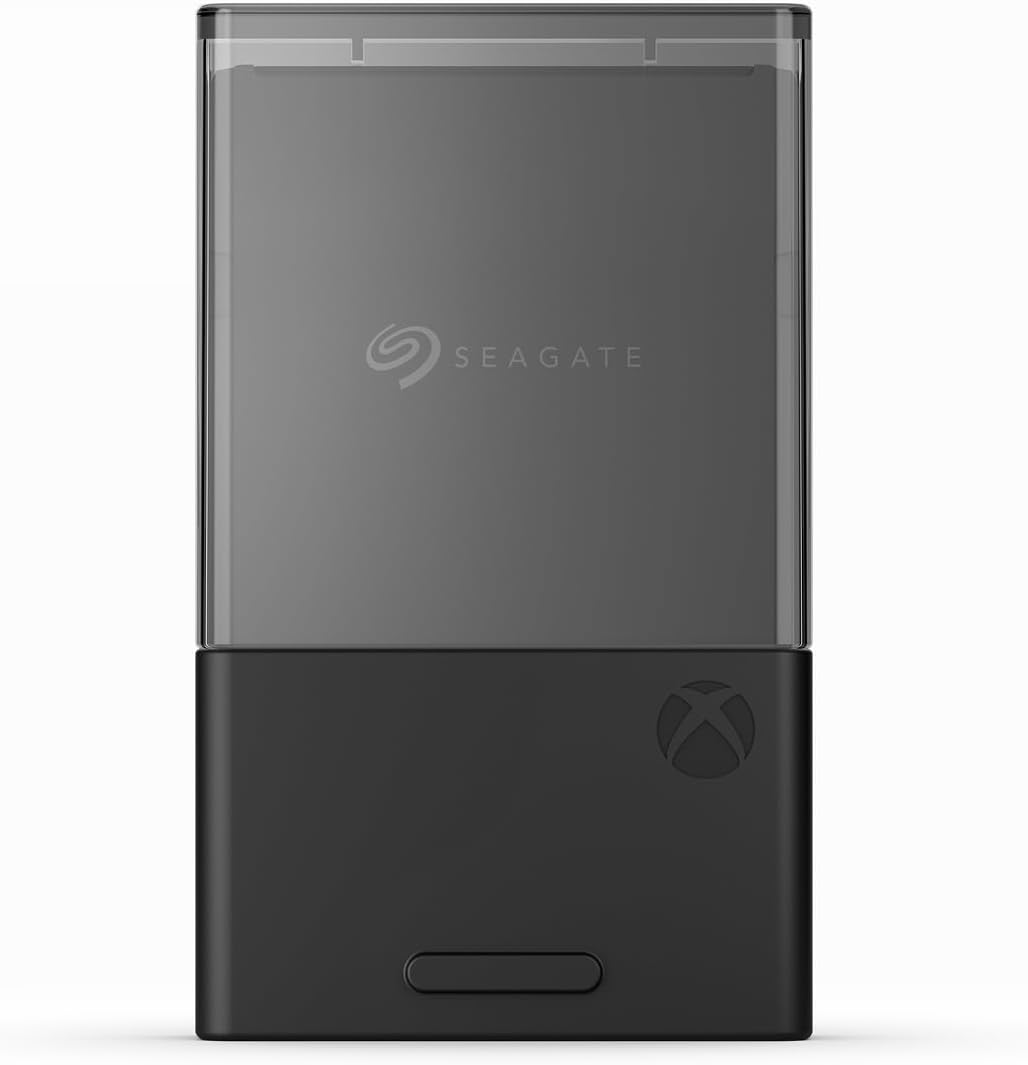
Storage Expansion Card 2TB Solid State Drive - NVMe SSD for Xbox Series X|S, Quick Resume, Plug & Play, Licensed (STJR2000400) Black
*Price sourced from Amazon.com. Last updated 2026-07-22. Price and availability subject to change.
Bottom line: The Storage Expansion Card 2TB Solid State Drive - NVMe SSD for Xbox Series X|S, Quick Resume, Plug & Play, Licensed (STJR2000400) Black is a niche pick — read recent reviews before buying in the ssds & storage category, priced around $259.99. Read recent reviews carefully before committing.
Instantly expand the next generation peak speed and performance capacity of Xbox Series X|S with the custom-engineered Seagate Storage Expansion Card. Effortlessly compatible with the Xbox Velocity Architecture, experience the fastest load times and most dynamic worlds—even improving the overall performance of thousands of Original Xbox, Xbox 360, and Xbox One games. The ultimate power, speed, and compatibility is now at your fingertips.
SpecPicks Verdict
SpecPicks classifies Seagate Storage Expansion Card 2TB Solid State Drive - NVMe SSD for… as a niche pick — read recent reviews before buying in the ssds & storage category, based on our editorial and benchmark analysis and our ranking model that weights rating × review-volume × price-fit. Seagate's positioning sits within the broader category mid-tier. Use the Compare tool to put it side-by-side with two or three close alternatives before clicking through to Amazon.
Common buyer scenarios for ssds & storage of this kind: matching it to an existing build, replacing a failing part, or upgrading from a previous-generation equivalent. Check the spec table below against your current setup — particularly socket / form-factor / power-rating fields — and confirm compatibility on the Amazon listing before purchase. Prices, stock, and Prime eligibility update directly from Amazon's catalog and may have moved since this page was last verified.
Pros & Cons
Pros
- ✓ Enjoy long-term peace of mind with the included 3-year limited warranty.
- ✓ Backed by Seagate's warranty and support channels
- ✓ Ships via Amazon with Prime eligibility and the standard returns policy
Cons
- ✗ Confirm socket / form-factor / power-rating compatibility against your build before ordering
- ✗ Price, stock, and Prime eligibility update from Amazon and may have changed since this page was last verified
Key Features
- Designed in partnership with Xbox to seamlessly play Xbox Series X|S games from the internal SSD or the expansion card without sacrificing graphics, latency, load times or framerates.
- Every game that plays from the Storage Expansion Card for Xbox Series X|S plays at the same peak levels as the console’s internal SSD. That includes thousands of Original Xbox, Xbox 360, and Xbox One games.
- Officially licensed storage expansion card designed using Xbox Velocity Architecture to provide faster load times, richer environments and more immersive game play.
- Quick resume means gamers can switch between multiple titles in seconds — directly from the internal SSD or the expansion card.
- Enjoy long-term peace of mind with the included 3-year limited warranty.
Full Specifications
| Brand | Seagate |
|---|---|
| Color | SSD |
| Item Width | 3.16 Centimeters |
| Model Name | STJR2000400 |
| Read Speed | 1200 Megabytes Per Second |
| Unit Count | 1.0 Count |
| Form Factor | 2.5-inch |
| Item Length | 0.78 Centimeters |
| Model Number | STJR2000400 |
| Compatibility | Xbox, Switch |
| Built-In Media | Seagate Expansion SSD 2TB PCIE |
| Hard-Drive Size | 2 TB |
| Mfr Part Number | STJR2000400 |
| Number of Items | 1 |
Ready to buy?
Seagate Storage Expansion Card 2TB Solid State Drive - NVMe SSD for Xbox Series X|S, Quick Resume, Plug & Play, Licensed (STJR2000400) Black is available on Amazon with Prime shipping and the full Amazon returns policy. SpecPicks earns a small commission on qualifying purchases — thank you for supporting independent review work.
*Price sourced from Amazon.com. Last updated 2026-07-22. Price and availability subject to change.
Related SSDs & Storage


More guides & deep dives from the SpecPicks archive
Browse all articles & guides →- RTX 4070 Super vs RX 7800 XT — Which to Buy in 2026
- Best Retro Handhelds in 2026 — From $35 to $500
- Emulation Hardware in 2026: FPGA, Software, and Cart-Reader Ecosystems
- Best 1440p Gaming GPUs in 2026
- Best Budget Gaming PC Build 2026 — ~$1,000 ($800 on Sale)
- The Complete Voodoo5 5500 AGP Driver Guide (2026 Edition)
- How to Build a Windows 98 Retro PC in 2026
More reviews from the SpecPicks archive
Browse all reviews →- Ryzen AI Max 400 192GB vs RTX 3060 for Local LLMs
- Best Mac for running local LLMs in 2026
- AMD Ryzen AI Halo vs NVIDIA DGX Spark — or Just an RTX 3060?
- Best CPU Cooler for AMD Ryzen in 2026
- Which GPU for Which Model: A Per-LLM VRAM Picker for Local Rigs (2026)
- Is the RTX 3060 12GB Still Worth It for 1080p and 1440p Gaming in 2026?
- AI-Driven Driver Hunt: Installing Vintage Sound Cards on Windows 98 With Claude
- GameSir G7 SE vs DualSense for PC Gaming in 2026
- What We Lost When LAN Parties Died: A 2026 Editorial
- Building a 3dfx Voodoo2 SLI Win98 Rig with a CompactFlash Boot Drive
- Qwen3.7-Plus Goes Agentic: Cloud Model vs Your Local 12GB Rig
- Lossless Scaling on Steam Deck: Is It Worth It?
- Kimi K2.7 Code: 12x Cheaper Than GPT-5.5, But Can You Run It Locally?
- Use a Raspberry Pi 4 as a Second Monitor or KVM in 2026
- Ryzen AI Max 400 'Gorgon Halo' 192GB vs RTX 3060 12GB for Local LLMs
- Ryzen 5 5600G vs Ryzen 7 5700X for a Budget LLM + Gaming Build
- Best Mechanical Keyboard for Office Work & Productivity (2026)
- Best Gaming Mouse Pad for Competitive FPS in 2026: 5 Picks Ranked by Glide, Tracking, and Sweat Resistance
- Best Mid-Range CPU for Streaming and Gaming in 2026: Ryzen 7 5800X vs 5700X vs 5600G
- Intel llm-scaler-vllm 1.4: Arc Pro B70 Inference Support Lands
- 9800X3D vs Core Ultra 9 285K — gaming vs productivity
- Imaging Vintage IDE Drives with a CompactFlash + USB Adapter
- Building a MAME Fighting Setup: Fight Stick + CF Storage for an Arcade Corner
- llama.cpp vs vLLM for Single-User Local Chat on an RTX 3060 (2026)