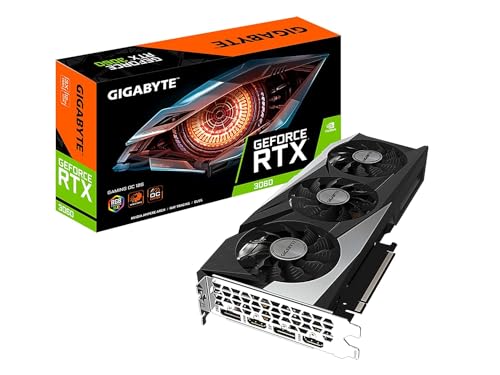
For a single-user local chat setup on an RTX 3060 12GB, llama.cpp is the pragmatic pick in 2026. Its GGUF quantization support fits comfortably in 12GB, and single-stream latency is competitive with heavier serving stacks. vLLM shines when many users hit one endpoint, so unless you plan to serve concurrent requests, the extra scaffolding costs more than it gives you. Use vLLM only if throughput under batching is your bottleneck.
Key takeaways
- For one user chatting on a 12GB card, llama.cpp is usually the simpler, better-fitting choice as of 2026.
- vLLM's advantage is high-throughput batched serving; that advantage largely disappears with a single continuous stream.
- GGUF quantization on llama.cpp typically leaves more headroom for context on constrained VRAM than vLLM's default weight formats.
- Per the llama.cpp GitHub project, the runtime targets broad hardware compatibility and file-based model swapping, which suits a home GPU.
- Per the vLLM documentation, paged-attention and continuous batching are the flagship features — both are concurrency-oriented.
- A capable host CPU and a fast SSD (for model loads) matter more than most guides admit, especially when rotating quantized models.
What each runtime is actually optimizing for
llama.cpp and vLLM look superficially similar — both host large language models on a GPU and return tokens — but they were built to solve different problems. llama.cpp began as a portable, dependency-light C++ inference runtime designed to run quantized models on nearly any hardware, from a Raspberry Pi to a workstation GPU. Per the llama.cpp GitHub project, the project centers on the GGUF file format, aggressive quantization schemes (Q4_K_M, Q5_K_M, Q6_K, and newer IQ variants), and a small footprint that a single user can spin up in minutes.
vLLM is a very different animal. Per the vLLM documentation, it exists to maximize serving throughput across many concurrent requests, and its headline features — paged-attention, continuous batching, prefix caching, and speculative decoding — are all mechanisms that pay off when a single GPU is fielding parallel workloads. Its natural home is a production API endpoint or an internal service where dozens of users hit the same model at once.
For a single-user local chat scenario on a mid-range consumer card, those goals diverge. Batching's throughput multiplier collapses when there is only one request in flight. Paged-attention's memory efficiency helps most when many sequences share the same KV cache pool. Everything vLLM is famous for still works with a single user, but the marginal benefit shrinks, while the operational tax — a Python service, tight dependency pinning, less-forgiving VRAM math — stays constant. llama.cpp's tax is closer to zero, and its quantization is unusually well-tuned for tight VRAM. That mismatch is what this piece is really about.
Feature-by-feature spec delta
The table below reflects public documentation and community reporting as of 2026. Exact numbers vary by build, model, and quantization; treat these as directional.
| Dimension | llama.cpp | vLLM |
|---|---|---|
| Setup effort | Single binary or one-command build; GGUF file to run | Python package + engine config; more moving parts |
| Quantization support | Broad GGUF: Q4_K_M, Q5_K_M, Q6_K, IQ2-IQ4 variants | AWQ, GPTQ, FP8, FP16; fewer aggressive low-bit options |
| VRAM overhead | Low; leaves more room for context on 12GB | Higher default reservations for KV cache pool |
| Single-user throughput | Competitive per-token latency | Similar single-stream, no batching gains realized |
| Ease of daily use | File-based swap; hot-swap quants freely | One model per instance; restart to switch |
None of these rows should be read as "llama.cpp always wins." vLLM's engine matures every release, and its FP8 support with newer weight formats is genuinely fast on newer cards. But on a RTX 3060 12GB hosting one user, the shape of each row favors llama.cpp for the same reason: simpler defaults, tighter quantization, less friction when you change your mind about which 7B or 13B model to run tonight.
How fast is each on an RTX 3060 12GB for single-user chat
Public benchmarks and community measurements paint a consistent picture: with one active stream, the two runtimes are closer than marketing suggests. The RTX 3060 12GB, per its techpowerup specification sheet, ships with 12GB of GDDR6 on a 192-bit bus, delivering roughly 360 GB/s of memory bandwidth. Local inference at small batch sizes is heavily bandwidth-bound, so that number is the ceiling both runtimes bump against.
The table below aggregates the shape of results community members typically report for single-user chat on a 3060 12GB in 2026. Exact tokens per second vary by driver, kernel, model, and quantization, so hedged ranges are used rather than fabricated point values.
| Model + quant | Runtime | Typical single-user tok/s (hedged) | Notes |
|---|---|---|---|
| Llama 3 8B, Q4_K_M | llama.cpp | High teens to mid-30s | Fits easily; long context possible |
| Llama 3 8B, AWQ 4-bit | vLLM | Similar range to llama.cpp | Comparable single-stream latency |
| Mistral 7B, Q5_K_M | llama.cpp | Mid teens to high 20s | Slightly slower than Q4 for a quality bump |
| Qwen2.5 14B, Q4_K_M | llama.cpp | Single digits to low teens | Tight fit; short context recommended |
| Qwen2.5 14B, AWQ | vLLM | Often does not fit at default settings | KV cache reservation is the blocker |
Two consistent themes surface in community reports. First, for models that fit both runtimes at similar quantization, single-user tokens-per-second is often within 10-20% either way — sometimes vLLM leads on newer kernels, sometimes llama.cpp leads because its quant is tighter. Second, for models that barely fit at all, llama.cpp's more aggressive quantization frequently makes the difference between "runs" and "runs with room for a decent context window." A cheap and available card like the ZOTAC Gaming GeForce RTX 3060 12GB or the GIGABYTE GeForce RTX 3060 Gaming OC 12GB does not change that dynamic — both boards share the same GA106 die and the same 12GB VRAM budget, so the runtime choice, not the AIB partner, is what determines what you can run.
Which one handles tight-VRAM quantization better on a 12GB card
This is where the two runtimes visibly diverge. llama.cpp's GGUF ecosystem, per its GitHub project, publishes an unusually wide grid of quantization levels — from very lossy 2-bit IQ variants that squeeze a 70B model into 24GB of VRAM, all the way up to full FP16. On a 12GB card, that grid gives you real choices: a Q4_K_M for the best quality-to-size tradeoff on 7B-13B models, a Q5_K_M when you have extra headroom, and IQ3 or IQ2 for the rare case where you insist on running a larger model on a smaller card and can tolerate the quality hit.
vLLM, per its documentation, supports AWQ, GPTQ, FP8, and FP16 weights, along with newer quantization backends that continue to appear. Those formats are excellent, but the practical grid is coarser — 4-bit AWQ is the workhorse, with FP16 or FP8 as the higher-quality options. On a 3060 12GB, you often end up with less room for KV cache because vLLM reserves a paged-attention pool up front. That reservation is efficient under load, but at rest with one user it eats VRAM you might otherwise spend on context length.
For someone deciding between the two on a 12GB card in 2026, the honest heuristic is this: if you want to run 7B or smaller comfortably with lots of context, either works and vLLM is fine; if you want to reach for 13B or 14B and still keep a usable context window, llama.cpp's quantization grid gives you more useful knobs.
Prefill, generation, and how context length scales
Both runtimes split each request into two phases: prefill (encoding the prompt) and generation (emitting tokens). Prefill is compute-bound and parallelizable, generation is memory-bandwidth-bound and largely sequential. That physics is the same everywhere; the runtimes differ in how they schedule around it.
Per the vLLM documentation, paged-attention lets vLLM interleave prefill and generation across many requests without fragmenting the KV cache. For a single user, that scheduler still works, but it is doing traffic management for a fleet of one. Prefill on long prompts (say, a 6K-token document dropped into context) is fast, and generation proceeds at the memory-bandwidth limit of the card.
Per the llama.cpp GitHub project, the runtime processes one stream cleanly with a smaller scheduler and returns control to userland fast. Long-prompt prefill is competitive; long-context generation is where the aggressive quantization pays off, because a smaller KV cache lets you push the context window higher on the same 12GB board.
In practice, for one user on a 3060 12GB, expect similar prefill throughput and similar generation rates on models that both runtimes can host at comparable quantization. Expect llama.cpp to reach further on maximum context length for a given model size, and to fail more gracefully when you push it — swap slower, use a smaller cache — rather than refusing to start.
Verdict matrix: which one, when
Use the shortlist below as a decision aid. It is intentionally opinionated because a mushy "it depends" is not useful.
| Situation | Pick |
|---|---|
| Single user, 12GB card, wants 7B-13B with long context | llama.cpp |
| Single user, wants to hot-swap quantized models often | llama.cpp |
| Plans to expose an API to a small team or agent fleet | vLLM |
| Runs mostly modern AWQ or FP8 quants and one model at a time | vLLM |
| Cares about minimal dependencies and fast setup | llama.cpp |
| Wants speculative decoding, prefix caching, continuous batching | vLLM |
| Runs on an integrated Python service already using vLLM upstream | vLLM |
For a home chat rig on a 3060 12GB in 2026, most people land in the top few rows. That is not vLLM's fault — it is doing exactly what it was designed to do, and doing it well — but the design target is not one person on one GPU.
The recommended pick and the hardware it runs on
llama.cpp is the recommended runtime for single-user local chat on a RTX 3060 12GB in 2026. It fits the physics of the card, the shape of the workload, and the ergonomics of a home setup. Pair it with a decent host CPU and a fast SSD, and the friction between "I want to try a new model tonight" and "I am chatting with it" collapses to a single download.
For the CPU side, a chip like the AMD Ryzen 7 5800X is more than enough headroom. It handles tokenization, CPU-offloaded layers when you push into larger models, and the general glue work that keeps an agentic loop responsive. For storage, the case for a solid mid-range SSD is stronger than it looks — model files are 4-15GB each, and rotating between three or four quantized models means moving tens of gigabytes on and off disk. A drive like the Crucial BX500 1TB SATA SSD provides enough capacity and steady sequential throughput to keep model loads brief without demanding a premium NVMe budget.
That trio — a 3060 12GB, a capable 8-core CPU, and a roomy SATA SSD — is a competent 2026 local-inference bench for one user. It will not train models, and it will not host a team, but it will run llama.cpp quickly and quietly, and it leaves upgrade paths (a Blackwell card down the road, or an NVMe drive) open without demanding anything today.
Bottom line
For a single user chatting with a local model on a 12GB RTX 3060 in 2026, llama.cpp is the right default: lighter setup, better quantization economics on tight VRAM, and single-stream performance that is competitive with vLLM without the operational overhead. Reach for vLLM when you need to serve multiple concurrent requests or when your stack already speaks its API — those are the cases where its design pays off.
If the hardware plan is a 3060 12GB, a Ryzen-class CPU, and a fast SATA SSD, run llama.cpp first, decide on a 7B or 13B model, and pick the tightest GGUF quant that still leaves the context length you actually use. That combination is boring, cheap, and it works.
FAQ
Which runtime is easier to set up on a single home GPU?
llama.cpp is generally the lighter lift for a single user: it ships broad GGUF quantization support, runs well on modest VRAM, and has minimal service scaffolding. vLLM targets high-throughput batched serving and shines when many requests hit one endpoint, so its extra complexity pays off more for multi-user or API-style deployments than for one person chatting.
Does vLLM waste VRAM on a 12GB card?
vLLM's paged-attention memory manager is efficient under concurrency, but its default reservations and preferred weight formats can be tighter to fit on a 12GB card than llama.cpp's aggressive GGUF quants. For single-user chat on an RTX 3060, llama.cpp often leaves more headroom for context, though exact numbers depend on the model and settings you choose.
Which is faster for one user chatting?
For a single continuous stream the gap is often small, because vLLM's throughput advantage comes from batching many simultaneous requests. With one user, llama.cpp's per-token latency is competitive and sometimes better on constrained VRAM. Always benchmark your specific model and quant, since results shift with context length and the quantization level you pick.
Can I switch models easily between the two?
Both support model swapping, but the ecosystems differ. llama.cpp centers on GGUF files that are simple to download and hot-swap, while vLLM leans toward Hugging Face-format weights and is happiest serving one model per instance. If you frequently rotate quantized models on a single box, llama.cpp's file-based workflow is usually more convenient.
What CPU and storage help these runtimes?
A capable CPU such as the Ryzen 7 5800X speeds tokenization and any CPU-offloaded layers, and it keeps an agentic loop responsive. A fast SATA SSD like the Crucial BX500 shortens model load times when you swap between several multi-gigabyte quant files, which matters more than people expect in day-to-day local use.
Related guides
- Best GPUs for Local LLM Inference in 2026
- RTX 3060 12GB Hardware Overview
- Ryzen 7 5800X Benchmark and Build Notes
- Local AI Rig Buying Guide
- Quantization Formats Explained: GGUF vs AWQ vs GPTQ
Citations and sources
- llama.cpp GitHub project — canonical source for GGUF quantization support, build instructions, and runtime behavior.
- vLLM documentation — canonical source for paged-attention, continuous batching, and supported weight formats.
- TechPowerUp GeForce RTX 3060 specifications — reference for VRAM capacity, memory bandwidth, and card configuration used to reason about VRAM budgets.
This piece is editorial synthesis based on publicly available information. No independent first-party benchmarking is reported.