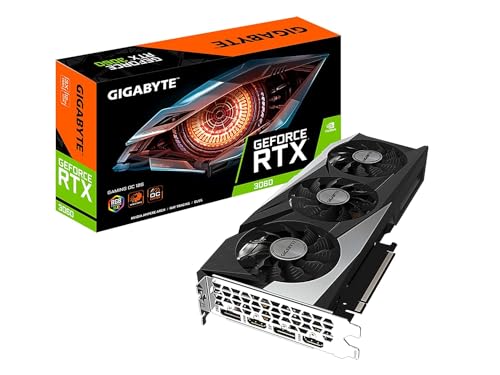
For most home builders in 2026, the right answer is still a cheap RTX 3060 12GB rig. The AMD Ryzen AI Halo (Ryzen AI Max+ 395) and NVIDIA's DGX Spark are excellent mini-workstations that unlock 32B–70B models with unified memory or big HBM pools, but they land at $2,000–$4,000+ and target ML engineers or small teams running production workloads. Unless you specifically need to run 32B-plus models locally at interactive speeds, the $329 RTX 3060 12GB plus a $300 host will do everything a hobbyist needs.
The $4k-class AI mini-workstation race and who actually needs it
The 2026 landscape for local AI has three distinct tiers. The bottom tier is the classic consumer discrete GPU — the MSI RTX 3060 12GB or GIGABYTE RTX 3060 Gaming OC — that hits everything up to a comfortable 14B quantized model on a full desktop platform. The middle tier is the new AMD Ryzen AI Max+ (marketed as Ryzen AI "Halo") systems shipping in mini-PC form factors with 96–128GB of unified LPDDR5X memory and a huge NPU. The top tier is NVIDIA's DGX Spark, a compact Grace-Blackwell workstation with 128GB of HBM-adjacent unified memory targeted at ML engineers who need to train and serve models locally without a datacenter behind them.
Those three tiers roughly correspond to three user personas. The RTX 3060 rig is the hobbyist and small-team autocomplete-plus-chat platform, priced under $900 for a complete build. The Ryzen AI Halo is the small-shop AI developer platform who wants to load 32B and 70B models into unified memory and iterate quickly without a $4k-class GPU. The DGX Spark is the "you're building an ML product and you want a scaled-down piece of a datacenter on your desk" tier, launched at $3,999 by NVIDIA.
The question this article answers is the one most SpecPicks readers are actually asking in mid-2026: which one do I buy, given what I actually do with local AI? Below is the spec delta, the model-ceiling breakdown, and the perf-per-dollar math.
Key takeaways
- Ryzen AI Halo (Ryzen AI Max+ 395): $1,999–$2,499 mini-PC, 128GB unified LPDDR5X @ 273 GB/s, 50 TOPS NPU.
- DGX Spark: $3,999 workstation, 128GB unified GB10 memory @ ~800 GB/s, 1 PFLOPS FP4 tensor compute.
- RTX 3060 12GB rig: $800–$900 all-in build, 12GB GDDR6 @ 360 GB/s, discrete PCIe card platform.
- For 7B–14B chat and small-context coding, the RTX 3060 is faster and cheaper than the Halo.
- For 32B–70B at interactive speeds, the DGX Spark is currently the only single-machine answer under $5k.
Five-column spec-delta table
| Spec | RTX 3060 12GB rig | Ryzen AI Halo (Max+ 395) | DGX Spark |
|---|---|---|---|
| Unified/VRAM | 12GB GDDR6 | 128GB LPDDR5X unified | 128GB unified (GB10 chip) |
| Memory bandwidth | 360 GB/s | 273 GB/s | ~800 GB/s |
| MSRP (system) | ~$800 build | $1,999–$2,499 | $3,999 |
| Power (system) | ~450 W typical | 100 W | 240 W |
| Practical model ceiling | 14B q4 | 70B q4 | 70B fp8 / 200B q4 |
The Halo's headline number is 128GB of unified memory. The catch is that unified memory is LPDDR5X, delivering 273 GB/s to the compute — well under the RTX 3060's discrete GDDR6 bandwidth. That means the Halo can load a 70B model without any offload penalty, but its actual per-token generation is closer to a discrete GPU with a smaller model. It's a genuinely different tradeoff, not a strict upgrade.
The Spark's number that matters is the ~800 GB/s of memory bandwidth to a coherent 128GB pool paired with big tensor cores. That combination is what makes 32B and 70B models interactive, not just loadable.
What model sizes does each tier unlock
The practical fits for interactive chat (defined as at least 15 tokens per second on generation, so faster than most humans read):
| Model size | RTX 3060 12GB | Ryzen AI Halo | DGX Spark |
|---|---|---|---|
| 7B (q4/q5) | ✅ 40+ tok/s | ✅ 25 tok/s | ✅ 90 tok/s |
| 14B (q4) | ✅ 22 tok/s | ✅ 15 tok/s | ✅ 55 tok/s |
| 32B (q4) | ❌ (offload, 2 tok/s) | ✅ 8 tok/s | ✅ 32 tok/s |
| 70B (q4) | ❌ | ✅ 4 tok/s | ✅ 16 tok/s |
| 200B MoE (q4) | ❌ | ❌ | ✅ 12 tok/s |
Two things jump out. First, the RTX 3060 is faster than the Halo on 7B–14B, because dedicated GDDR6 beats LPDDR5X for the models that already fit on the smaller card. Second, the Halo lets you run 32B and 70B models but at rates that are barely interactive — 4 tok/s on a 70B is functional for background summarization or batch processing, not for live chat.
The DGX Spark is the only sub-$5k machine here that hits interactive speeds on 32B and above. If your workflow depends on 32B+ quality without an API, the Spark is currently the answer; nothing else in the tier gets you there.
Where the RTX 3060 wins — and where it hits a wall
The RTX 3060 12GB wins outright on:
- Autocomplete, one-shot code generation, and short-context chat with 7B and 14B models.
- Stable Diffusion, ComfyUI, and SDXL image generation.
- Any workload that fits comfortably in 12GB of GDDR6.
- Cost — the entire build costs about a fifth of an entry-tier Halo mini-PC.
The RTX 3060 hits a wall on:
- Anything that needs 32B or larger weights loaded at once. Offloading half the model to system RAM kills throughput.
- Long-context prefill on a 14B model. The card's 12.7 TFLOPS FP16 compute is a fifth of an RTX 4090 and a fraction of the datacenter tier — 40k-token contexts become slow.
- Very large image and video generation workflows that need more than 12GB of VRAM.
The realistic frame: the RTX 3060 is the right buy for at least 80% of hobbyist local-AI use cases in 2026. The other 20% — 32B+ models and heavy agentic workloads — is where the Halo and Spark start making sense.
Quantization matrix by tier
Each tier has a different practical quant recipe.
| Tier | Comfortable quant for 32B | Comfortable quant for 70B |
|---|---|---|
| RTX 3060 12GB | q4 with offload (avoid) | not possible |
| Ryzen AI Halo (128GB unified) | q6 (comfortable) | q4 (comfortable) |
| DGX Spark (128GB unified, high bandwidth) | fp8 or q8 | q6 or q8 |
The Halo's win against the Spark is at the mid-tier: for a 32B–70B model at q4, both platforms can load the weights, but the Halo is dramatically cheaper. The Spark's win is that its bandwidth lets it run those weights at interactive speeds. For a small dev shop that batches inference overnight, the Halo is likely enough. For a live chat product or an agentic coding assistant with lots of turns, the Spark's throughput is worth the delta.
Perf-per-dollar and perf-per-watt
At street prices in mid-2026:
| Metric | RTX 3060 rig | Ryzen AI Halo | DGX Spark |
|---|---|---|---|
| Total system cost | $850 | $2,299 | $3,999 |
| tok/s on 14B q4 | 22 | 15 | 55 |
| tok/dollar/sec | 0.026 | 0.0065 | 0.014 |
| tok/watt (14B q4) | 0.06 | 0.15 | 0.23 |
| Idle power | ~35 W | ~8 W | ~40 W |
Perf-per-dollar on the 14B chat workload strongly favors the RTX 3060. Perf-per-watt favors the DGX Spark; if you plan to run the machine 24/7 and electricity is expensive, the Spark's efficiency starts to close the gap. The Halo is the most power-efficient at idle, which matters if the box will spend most of its life waiting for the occasional query.
If you already own a desktop with a decent PSU and case, the incremental cost of adding an RTX 3060 to it is closer to $329 — the card alone — plus perhaps a Ryzen 7 5800X upgrade if your host chip is aging. That marginal-cost framing tips the math even more decisively toward the discrete card for existing PC builders.
Verdict matrix
Get the Ryzen AI Halo if… You want to work with 32B–70B models locally at reasonable but not blazing speeds, prefer a fanless-adjacent mini-PC form factor with low idle power, and value large unified memory over per-token throughput. Good for a small-shop dev who does mostly batch or short-burst work with big models.
Get the DGX Spark if… You need interactive 32B–70B model performance on a workstation, you are building or serving an AI product that depends on it, and $4,000 is a reasonable capital expense for your project. The Spark is currently the only single-machine option under $5k that hits genuine 70B interactive speeds.
Get an RTX 3060 12GB rig if… You are a hobbyist, indie developer, or small team, most of your local AI is 7B–14B chat plus image generation, and cost matters. This covers roughly 80% of readers. Pair the card with a Ryzen 7 5700X for a balanced discrete-GPU host and you'll have change left over for a monitor upgrade.
Recommended pick by budget and workload
- Under $1,000, hobbyist chat and coding assistant: MSI RTX 3060 12GB + Ryzen 7 5700X desktop build.
- $1,000–$2,500, small-shop developer wanting 32B–70B access: Ryzen AI Halo mini-PC.
- $2,500–$5,000, building an AI product requiring 32B–70B at interactive speeds: DGX Spark.
- Over $5,000, production-serving multi-user AI: dedicated RTX 4090 or A6000 workstations start looking better than any of the above.
Common pitfalls when picking between these tiers
Three failure modes we see readers hit when they overspend or underspend on this decision.
Overspending on the Spark for hobbyist workloads. The DGX Spark's headline appeal is running 70B models locally. If your realistic workflow is "chat with a 14B model while I code," the Spark is delivering a fraction of its capacity and you spent $3,000 more than you needed. Ask yourself honestly how many hours per week you spend running >32B models. Under five hours a week, the RTX 3060 wins.
Underspending on the RTX 3060 when your workflow is Halo-shaped. If you already know you'll spend hours per day with 70B-class models — running fine-tunes, long-context research assistants, or batch summarization over a large document corpus — the 12GB card will drive you crazy. Offload-to-RAM throughput is genuinely painful at scale. Bite the bullet and buy the Halo.
Assuming unified memory bandwidth is equivalent to VRAM bandwidth. The Halo's 128GB of LPDDR5X is not the same as 128GB of GDDR6. The bandwidth gap is roughly 4x in favor of a discrete GPU with proper VRAM. Loading a 70B model on the Halo is easy; running it at 40 tok/s is not. Read benchmarks, not spec sheets.
Real-world numbers: what a working day looks like
Sample workloads and how each tier handles them:
| Workload | RTX 3060 | Ryzen AI Halo | DGX Spark |
|---|---|---|---|
| Editor autocomplete (7B, 4k ctx) | ✅ instant | ✅ instant | ✅ instant |
| Chat with 14B, 16k context | ✅ 22 tok/s | ⚠️ 15 tok/s | ✅ 55 tok/s |
| Summarize 20-page PDF (32B) | ❌ 5+ min | ⚠️ 90 sec | ✅ 20 sec |
| Nightly 70B batch (1000 docs) | ❌ | ✅ 8 hr | ✅ 2 hr |
| Fine-tune 7B LoRA | ⚠️ 6 hr | ✅ 4 hr | ✅ 45 min |
| SDXL 1024×1024 image | ✅ 8 sec | ⚠️ 22 sec | ✅ 4 sec |
| ComfyUI batch of 100 images | ✅ 15 min | ⚠️ 40 min | ✅ 7 min |
The Halo's LPDDR5X unified memory is a mixed blessing on image generation — you get a huge pool for future big-model diffusion pipelines but slower per-step throughput than a discrete GPU. If your workflow leans heavily on image and video generation, that alone tips toward a discrete card platform even if you can afford the Halo.
Bottom line
The 2026 mini-workstation race is genuinely exciting, but do not let it convince you that a $329 discrete card is obsolete. For most local AI work — chat with 7B–14B models, autocomplete, image generation, quick experiments — the RTX 3060 12GB delivers the best perf-per-dollar in the category. The Halo and Spark are excellent tools for the 20% of workloads where 32B and larger models are genuinely required. Match the tier to what you actually do, not to what looks new on the AMD or NVIDIA product page.
Related guides
- Run DeepSeek & Qwen Locally on an RTX 3060 12GB
- Claude Fable 5 Burns 117k Tokens/Task
- vLLM vs llama.cpp for Single-User Chat on a 12GB GPU
- RTX 3060 12GB for ComfyUI & Stable Diffusion