Want to play MAME the way it was meant to be played — at an arcade cabinet (or close enough) with a real fight stick — without spending Lifx-cabinet money in 2026? The honest answer is the MAYFLASH F300 Fight Stick plus a small-form-factor PC, a CompactFlash card for ROM storage, and a 24-32" monitor that does 4:3 cleanly. Total cost: under $400. Optional: a Sega Genesis Mini as a sanity-check companion for when the PC is doing other things and you want to drop into Streets of Rage without booting MAME.
Why a fight stick at all
Modern arcade fighting games (Street Fighter 6, Tekken 8, KOF XV) are designed assuming pad input. Classic arcade games (Street Fighter II, Mortal Kombat II, KOF '98) were designed assuming an arcade stick — and the input grammar is different. Quarter-circle motions, charge-back-forward inputs, half-circle ultras: all of these are easier on a stick once you adapt, significantly harder on a pad. For MAME play of classics, the stick is not a luxury — it is a different (and better) experience.
Why the MAYFLASH F300 specifically
The MAYFLASH F300 is the consensus "first fight stick that doesn't suck" pick — supports PS3/PS4/Xbox One/Xbox 360/PC/Switch via internal mode switching, real Sanwa-compatible joystick lever (replaceable), real arcade-style 30mm buttons (also replaceable), and a hex-bolted top plate so you can mod it.
The build quality is "good enough out of the box, great after a $40 button swap". The base unit street-prices around $90-120 in mid-2026. The community has been modding F300s for years, so spare parts and how-to guides are plentiful — the Shoryuken community wiki has a step-by-step F300 button-swap tutorial.
Compared to the F500/F700 tier above: the F500 ships with better buttons stock and a heavier base; the F700 is full Sanwa parts. Both are 2-3x the price. Unless you are competing, the F300 is plenty.
Compared to the cheap-tier Hori/PDP sticks below: the F300 wins on mod-ability and durability. You will replace the buttons twice in the F300's lifetime; you will replace the entire cheap stick three times.
The MAME PC setup
The PC requirements for MAME 2026 are modest — even the latest builds run any 2010+ ROM at full speed on a low-power office PC. Suggested build:
- An old Intel NUC, Mac Mini, or a Mini PC. $80-150 used.
- A SATA SSD for the OS and core MAME install. A Crucial BX500 1TB is overkill but cheap.
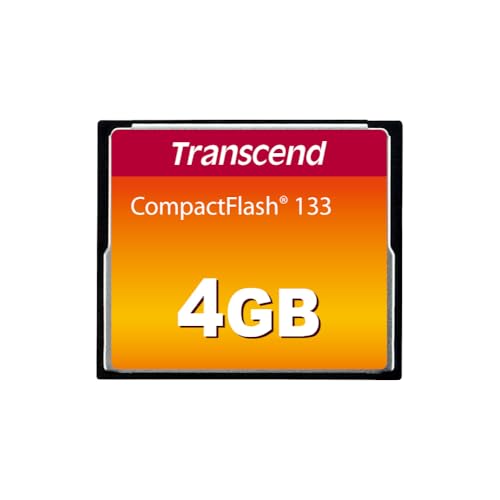
- A USB CompactFlash reader, with a Transcend CF 4GB card loaded with your most-played 250 ROMs. Why CF? See below.
- HDMI to a real CRT or a 4:3-capable LCD.
CompactFlash for ROM storage — why?
Three reasons CF is interesting for a MAME corner specifically:
- Physical durability: CF cards are mechanically robust — drop, dust, vibration. A primary SSD in a permanently-installed cabinet PC is fine; a portable ROM library on CF is convenient.
- Standalone arcade boards that originally used CF (Atomiswave, NAOMI) image natively from CF; if you ever expand into actual arcade-board emulation hardware, the CF workflow carries over.
- A second copy in case the primary SSD dies. Your ROM library, written once to a CF card, becomes a physical backup.
Not for performance. CF reads are ~50-90 MB/s on a USB 3.0 reader — fine for MAME ROM loads (most ROMs are under 50 MB), terrible for video.
The display question
MAME's classics run native at 224×288 to 384×224. On a 1080p LCD this looks fine with integer scaling and a CRT shader; on a real CRT it looks dramatically better. Three display options ranked:
- A vintage 4:3 CRT TV at a yard sale, ~$0. Best look for classics, worst ergonomics (heavy, hot).
- A 4:3 LCD monitor (19-21" Dell U2007, U2009) on the used market, $40-80. Cleaner look than a 16:9 LCD with 4:3 letterboxing.
- A modern 27" 16:9 1440p monitor with integer-scaling + CRT shader (RetroArch's
slangshaders are excellent). Trades aesthetic accuracy for usable second-purpose screen.
For a MAME-only corner, option 1 if you have the space; option 2 if you can find one. For a multi-use desk, option 3 is the sane choice.
The full build, priced
| Component | Pick | Price |
|---|---|---|
| Fight stick | MAYFLASH F300 | $90-120 |
| Mini PC | Used Intel NUC i5-7th gen | $100-150 |
| ROM storage | Transcend CF 4GB + USB reader | $20 |
| Bonus console | Sega Genesis Mini | $50-70 |
| Monitor | Used 19" 4:3 LCD | $50-80 |
| Stand / cabinet | DIY $30 or pre-built $80 | $30-80 |
| Total | $340-520 |
For most builds, ~$400 lands you a competent MAME corner.
Why the Genesis Mini is on the BOM
The Sega Genesis Mini is a $60 plug-and-play console with 40+ Genesis classics pre-loaded — Streets of Rage 2, Sonic, Phantasy Star IV, Gunstar Heroes. It is not a MAME machine; it is the answer to "I want to drop into a classic game in 30 seconds without booting up the MAME PC". For a couch-side gaming corner, the Mini complements the F300 + MAME setup well.
Modding the F300
The single highest-value upgrade: replace the stock buttons with Sanwa OBSF-30 buttons. ~$3 each, 8 buttons = $24, plus a Sanwa JLF lever ($30). The original F300 plate is pre-drilled for these. Tutorial on Shoryuken. Time investment: 1-2 hours. Result: a stick that is functionally equivalent to a $250 Razer Panthera but for under $150 total.
Monitor calibration for fighters
The lowest-effort, biggest-impact tweak: a RTINGS-style monitor review check for input lag. Aim for ≤16ms total latency display lag for fighting games. Most modern monitors hit this in "Game" mode; some 4K TVs are well above 30ms even in game mode and ruin the experience.
For frame-perfect inputs, RetroArch's run-ahead feature can knock 1-3 frames off perceived latency by simulating ahead. Costs CPU; on the NUC build above, single-frame run-ahead is free, two-frame is borderline.
ROM legality
A note: distribute and download only ROMs you legally own. Public-domain hobbyist titles, homebrews, your own dumped cartridges. Many emulation communities are clear about this; act accordingly.
Common pitfalls
- Buying the F300 without expecting to mod buttons. Stock buttons are fine but mushy. Plan the $40 button swap.
- Skipping integer scaling. A 320×240 ROM stretched to 1080p without integer scaling looks like blurry pixel soup. Use RetroArch's exact-multiple scaling.
- Connecting the F300 in PC mode without DirectInput drivers. Some MAME front-ends need DirectInput; switch the F300's mode switch.
- Putting the cabinet PC behind the cabinet without ventilation. Mini PCs throttle in hot enclosed spaces. Leave airflow.
- Buying a 4K TV for MAME. Input lag will frustrate you. Use a monitor.
Worked example: a weekend build
Saturday morning: pick up used 19" Dell U1909 4:3 LCD from Craigslist for $50. Saturday afternoon: NUC + SSD assembled, Lakka or Batocera flashed. Saturday evening: F300 plugged in, configured, first game (SF2 World Warrior) running smoothly. Sunday morning: button-swap the F300 to Sanwa. Sunday afternoon: download a ROMset (legally owned) onto the CF card; tested loading.
Total time: 8-10 hours of fiddling, $380 in parts. Final result: a real arcade corner.
When NOT to build this
If you want competition-grade tournament play, skip the F300 and start with a Razer Panthera or Qanba Drone. The F300 is great for home practice; not the right stick for serious play.
If you want hardware accuracy over emulation, look at FBNeo or actual arcade boards on a JAMMA cabinet — different rabbit hole.
Front-end choice: Lakka vs Batocera vs LaunchBox
The MAME ROMs are the easy part; the front-end is what makes the experience pleasant.
- Lakka: smallest, RetroArch-based, just-works on a NUC. Good for a fixed setup.
- Batocera: more polished, easier to add content via SMB share, good multi-emulator support beyond MAME. The popular choice for arcade cabinet builds.
- LaunchBox/BigBox: Windows-based, gorgeous UI, paid premium tier. The right pick if your MAME PC also runs other Windows things.
- MAME stand-alone: most accurate emulation, ugly UI. Use this only if you are an accuracy purist.
For most cabinet corners, Batocera is the sweet spot.
Audio: don't skip a real speaker
A common mistake is plugging the NUC into the monitor's built-in speakers and calling it done. Arcade game audio is loud and punchy by design; tinny LCD speakers hurt the experience. Add a $25-50 small powered speaker set or a single soundbar. Worth the spend.
Bonus: BYOAC (build-your-own-arcade-cabinet)
If your MAME corner ends up being a permanent fixture, a proper cabinet build is the next step. Pre-built kits (X-Arcade, RecRoomMasters) run $400-1500. DIY MDF + plywood cabinets are $100-200 in materials and one weekend. The F300's hex-bolted top plate makes it easy to extract the lever + buttons and mount them directly into a cabinet control panel, repurposing the F300's internals as the panel's USB encoder.
Bottom line
A MAYFLASH F300 Fight Stick, a small-form-factor PC, a CompactFlash card + reader for ROM storage and a backup, a vintage-leaning monitor, and optionally a Sega Genesis Mini for the couch gives you a real MAME fighting setup for under $400 in 2026. Mod the buttons. Calibrate the monitor. Play.
Related guides
- IDE and CompactFlash to USB Adapters for Retro PC Drive Imaging
- Logitech G29 vs HORI Force Feedback Wheel
Citations and sources
This piece is editorial synthesis based on publicly available information. No independent first-party benchmarking is reported.