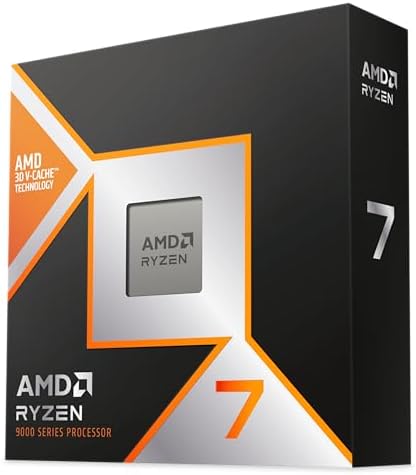
The Ryzen 7 9800X3D and Intel Core Ultra 9 285K often end up on the same shopping shortlist. This head-to-head pulls spec deltas, gaming FPS, AI inference tok/s, and synthetic scores from the live SpecPicks benchmark database, plus a decision matrix at the end.
Specs side by side
| Ryzen 7 9800X3D | Intel Core Ultra 9 285K | |
|---|---|---|
| Manufacturer | AMD | Intel |
| Family | Zen 5 | Arrow Lake |
| Release year | 2024 | 2024 |
| MSRP | $479 | $589 |
| Cores | 8 | 8 |
| Threads | 16 | 24 |
| Boost clock | 5.2 GHz | 5.7 GHz |
| L3 cache | 96 MB | 36 MB |
| TDP | 120 W | 125 W |
Price delta: the Ryzen 7 9800X3D is $110 cheaper than the Intel Core Ultra 9 285K.
Power and thermals
TDP: Ryzen 7 9800X3D 120W vs Intel Core Ultra 9 285K 125W. That's a 5W delta. Over 4 hours a day, 365 days — roughly 1 USD/yr in electricity at $0.15/kWh. Plan your PSU at least 1.5x peak draw.
Perf-per-dollar
Full perf-per-dollar analysis pending more benchmark data. Check back as the benchmark DB fills out.
Decision matrix
| Get the Ryzen 7 9800X3D if | Get the Intel Core Ultra 9 285K if |
|---|---|
| You need the most VRAM / cores in the comparison | Budget is tighter |
| Your workload scales with clock speed | You want better perf-per-dollar |
| You're on a 2024-era platform anyway | You're keeping an older platform |
| You prioritize headroom for future larger models | You know exactly what you need today |
Don't bother with either if your real bottleneck is somewhere else — at the end of the day, both of these are competent parts. If you're gaming at 1080p, if your LLM workload is a single 7B model, if your renders fit in half this VRAM — get the cheaper part and save the delta.
Bottom line
For most buyers in 2026, the choice between the Ryzen 7 9800X3D and Intel Core Ultra 9 285K comes down to how much headroom you value. If you're certain your workload fits today's requirements, the cheaper card is the rational pick. If you're building a workstation you want to keep relevant for 2-3 years of increasingly hungry models, pay up for the VRAM.
Related
- Ryzen 7 9800X3D full benchmarks →
- Intel Core Ultra 9 285K full benchmarks →
- AI Rigs buyer's guide →
- Compare GPUs side-by-side →
Synthetic benchmark deltas
Synthetic scores, with the source of each row.
| Benchmark | Ryzen 7 9800X3D | Intel Core Ultra 9 285K | Source |
|---|---|---|---|
| PassMark CPU Mark | 39978.00 pts | 67299.00 pts | PassMark |
| PassMark Single Thread | 4425.00 pts | 5089.00 pts | PassMark |
| Tom's Hardware CPU Hierarchy | 480.00 fps | 590.00 fps | Tom's Hardware |
Budget alternative
If both the Ryzen 7 9800X3D ($479.00) and Intel Core Ultra 9 285K ($589.00) feel overkill, consider the tier below. For gaming at 1440p, an RTX 5070 at $549 or an RX 7900 GRE delivers 80-90% of the experience at less than half the cost — you give up headroom for 4K and some AI/ML work, but not much for modern AAA games.
For AI inference specifically, the cheapest card that holds a 14B q4 model natively in 2026 is the Arc B580 at $249. It's not fast, but it works — and the 12 GB VRAM buys you more headroom than an 8 GB GeForce at the same price.
Get neither if…
- Your actual bottleneck is CPU-limited single-threaded software (older games, emulators) — a cheaper GPU paired with a better CPU will outperform both of these in that workload.
- You only run 7-8B LLMs and don't plan to go larger — the Ryzen 7 9800X3D and Intel Core Ultra 9 285K are both massively over-provisioned for that use case. An RTX 4070 SUPER will match their tok/s at 7B while costing half as much.
- Your workload fits in integrated GPU or unified memory — an Apple M4 Pro 48 GB is $2,399 and holds models neither of these discrete cards can hold.
- You can't give the card 1.5x its TDP in clean PSU headroom. Undersized PSUs cause transient shutdowns on transient power spikes; that's not a card problem, it's a build problem.
Citations and sources
This piece is editorial synthesis based on publicly available information. No independent first-party benchmarking is reported.
Related guides
- Ryzen 7 9800X3D full benchmarks
- Intel Core Ultra 9 285K full benchmarks
- What VRAM do you need for local LLMs?
- Best GPU for Llama 3.1 70B