To build a 3dfx Voodoo2 SLI Windows 98 rig in 2026: pair a Slot 1 BX440 motherboard with a Pentium III 500-1000 MHz Coppermine, cap RAM at 512 MB (Win98SE breaks above), drop in two matched-memory Voodoo2 cards linked by the internal SLI ribbon plus a separate 2D card with the VGA pass-through cable, and boot from a CompactFlash card on a CF-to-IDE adapter loaded with Win98SE and Amigamerlin or 3dfx reference drivers.
Why Voodoo2 SLI is still the icon of late-90s Glide gaming
The Voodoo2 holds a strange position in the history of consumer 3D. It was not the fastest card by raw triangle rate when Nvidia's TNT2 and the original Voodoo3 landed, but it shipped before either of those parts, defined the texture-mapping pipeline that every later GPU iterated on, and locked in 3dfx's proprietary Glide API as the de facto target for late-90s PC games. Per the TechPowerUp Voodoo2 entry (https://www.techpowerup.com/gpu-specs/voodoo2.c3556), the reference 12 MB Voodoo2 ran at 90 MHz with 90 Mpixel/s fill rate and shipped December 1997 — modest numbers now, but a step-change at the time over the original Voodoo Graphics.
SLI on Voodoo2 is also not the same thing as Nvidia's later SLI brand. 3dfx's Scan-Line Interleave splits rendering by alternating raster lines between two cards over a short internal ribbon, doubling fill rate and unlocking 1024x768 in titles that were otherwise capped at 800x600 with a single card. Glide-only and Glide-preferred games — Carmageddon, Need for Speed III: Hot Pursuit, Unreal Tournament 99, MDK2, the original Unreal, Tomb Raider II — are the reason this build still exists. Their D3D and software renderers are demonstrably uglier or slower; the Glide path was the path the original art was tuned for, and you cannot reproduce that look on a modern GPU without a wrapper that approximates rather than executes it.
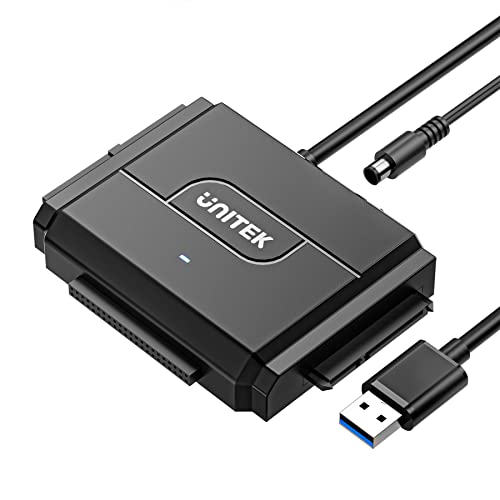
The CompactFlash boot drive is the part of the build that has shifted most in the last decade. Period IDE drives are getting old enough that even NOS spinners pulled from sealed boxes are now a coin flip; an Unitek SATA/IDE-to-USB 3.0 adapter can pull a tired Quantum Fireball back to a modern desk to image it, but you'll often find the platters are already marginal. CF flips that calculus — silent, low-heat, available in modest period-friendly capacities, and trivially re-imageable from a modern host.
Key takeaways
- Voodoo2 SLI needs two cards with identical memory configuration (8 MB pair or 12 MB pair), the internal SLI ribbon, and a separate 2D card with the external VGA pass-through cable.
- Target a BX440 chipset board (Asus P3B-F, Abit BX6, Soyo SY-6BA+IV) with a Pentium III 500-1000 MHz Coppermine and 256-512 MB of PC100 or PC133 SDRAM.
- Cap memory at 512 MB — Windows 98SE fails to boot above that without the MaxFileCache / Vcache registry patch.
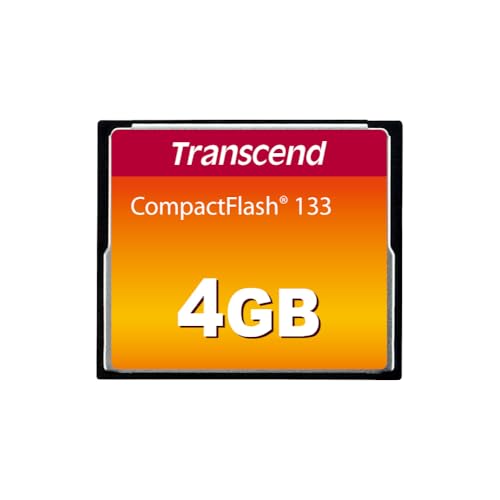
- A Transcend CF133 4 GB CompactFlash on a CF-to-IDE adapter is the most reliable boot drive available today; image it from a modern PC.
- Stick with Amigamerlin drivers for late-revision Voodoo2 — the 3dfx reference set is the period-correct baseline but Amigamerlin patches bugs the company never shipped fixes for.
- For modern-rig companion storage, a Crucial BX500 1TB SATA SSD hosts the disk images, ISOs, and driver archives off-rig.
What you'll need
The parts list splits into period-authentic hardware (which you'll source on eBay) and modern adapters used to image, transfer, and back up the build. The retro pieces follow; the modern adapters are linked inline.
| Part | Period-correct target | Notes |
|---|---|---|
| Motherboard | Asus P3B-F, Abit BX6 rev 2, Soyo SY-6BA+IV | Intel 440BX chipset, Slot 1, ATX |
| CPU | Pentium III 500-1000 MHz Coppermine | Slot 1 or Socket 370 with Slot-1 adapter |
| RAM | 256-512 MB PC100 or PC133 SDRAM | Two or three DIMMs, ECC unbuffered fine on BX |
| 2D card | Matrox G400, Diamond Viper V550 (TNT), Voodoo3 2000 PCI | Anything with a clean 2D signal; the Voodoo2 chain hands it the desktop |
| 3D cards | Two matched Voodoo2 12 MB (or both 8 MB) | Diamond Monster 3D II and Creative 3D Blaster pairs are common |
| SLI ribbon | Internal 34-pin Voodoo2 SLI ribbon | Bundled with cards originally; often missing on used sets |
| Pass-through cable | Short male-to-male VGA cable | Cheap, but a bad one will smear text at 1024x768 |
| Sound | Sound Blaster AWE32 (ISA) or Sound Blaster Live! (PCI) | AWE32 for DOS Sound Canvas authenticity; Live! for Win98 EAX |
| Boot drive | Transcend CF133 4 GB CompactFlash + CF-to-IDE adapter | Silent, low-heat, period-IDE-compatible |
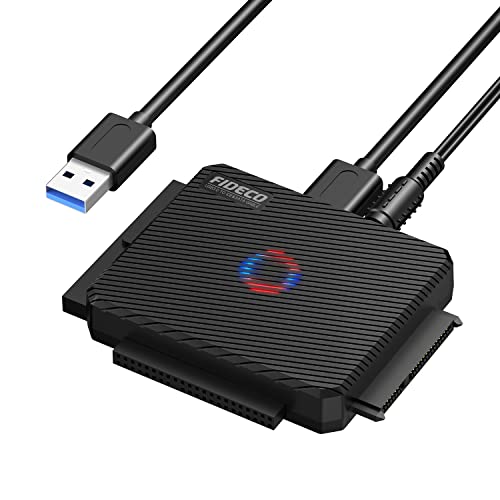
| Imaging path | FIDECO SATA/IDE-to-USB 3.0 or Unitek SATA/IDE-to-USB 3.0 | For cloning, partitioning, and emergency rescue |
| Modern storage | Crucial BX500 1TB SATA SSD | Holds ISOs, driver archives, and CF images on the modern host |
The FIDECO and Unitek adapters do the same job — pick whichever ships fastest. Both expose IDE 40-pin, IDE 44-pin laptop, and SATA, which means the same dongle handles the CF card (via a passive CF-to-IDE shim) and a spare period IDE drive if you want a second-tier swap drive for level files.
Why a CompactFlash boot drive beats a failing period hard disk
The community wiki at Vogons (https://www.vogons.org/) has been tracking flash-on-IDE retro boot drives since the early 2010s, and the consensus has hardened: CF is the right answer for almost every late-90s retro build. The reasoning is mostly about failure mode, not raw speed.
- Mechanical risk. A Western Digital Caviar from 1999 has been sitting in a closet for over a quarter of a century. Bearings dry, lubricant migrates, head sliders stick. The drive may spin once, twice, then never again. CF does not have any of those failure modes.
- Acoustic profile. A late-90s 7200 RPM IDE drive idles around 30 dB and seeks at 35-40 dB. A CF card is silent. In a build where the Voodoo2 pair has no active cooling and the CPU is on a small Intel boxed cooler, the boot drive is the dominant noise source — eliminating it changes the character of the rig entirely.
- Heat. Two Voodoo2s in slots 4 and 5 of a Slot 1 ATX board run warm at sustained load. Removing the platter drive's 5-10 W of dissipation and replacing it with a CF card's sub-1 W consumption is meaningful inside a stock ATX case without forced airflow.
- Re-imaging. A bad driver install on a CF card means pulling the card, slotting it into a modern reader, restoring the last image, and slotting it back. The same operation on a real IDE disk requires a USB-to-IDE bridge, a working drive on the other end, and patience. The Vogons threads on Win98 retro builds repeatedly land on "image early, image often" as a survival strategy.
- Availability. Period-correct IDE drives in working condition are scarce and getting scarcer. CompactFlash cards in retro-friendly capacities (1-16 GB) are still in production for industrial applications.
The one tradeoff worth naming is write endurance. CF cards use NAND flash with finite write cycles; a swap-heavy Win98 install on a small CF card with no wear leveling can chew through write endurance faster than it sounds. The mitigation is to size the card so the OS install plus games is well under half the card's capacity (so the FAT32 allocator has room to spread writes), disable the Windows swap file or pin it to a fixed size on a second CF, and keep a verified image of the boot card on the modern host.
How to set up the CF-to-IDE boot drive and image Win98
The imaging path is the same regardless of which CF card you use; what changes is the capacity ceiling and the partition scheme. The walk-through assumes a 4-8 GB CF card and a target Win98SE install with drivers and a handful of period games. Larger cards work, but the FAT32 cluster size grows and the period BIOSes on some BX440 boards refuse to enumerate above the 8.4 GB CHS barrier without a BIOS update.
- Stage on the modern host. Connect the CF card to the modern PC through a USB CF reader or via a FIDECO SATA/IDE-to-USB 3.0 adapter with a passive CF-to-IDE shim. Verify the card enumerates as a removable disk; if it shows up as a fixed disk, that's fine and actually preferred for the retro rig.
- Partition conservatively. Create a single primary FAT32 partition no larger than 8 GB. Windows 98SE's
fdiskfrom a boot floppy will misreport drives larger than 64 GB; the workaround is to use a patched fdisk from the Vogons file archive, but the simpler answer is to keep the card small. - Format. From a Win98 boot floppy or DOS environment, run
format C: /sto lay down FAT32 with the boot sector and system files. Cluster size for an 8 GB FAT32 volume is 4 KB, which is fine for Win98. - Copy the Win98SE install source. Drop the contents of the Win98SE CD's
\WIN98directory onto the CF card underC:\WIN98. Installing from local source rather than CD is faster on a slow BX440 CD drive and means you don't need the CD again for.cablookups during driver installs. - First boot in the retro rig. Move the CF card to the CF-to-IDE adapter inside the retro chassis. Set the BIOS to detect the IDE drive automatically. If the board refuses to see the card, try forcing CHS rather than LBA — some early BX boards mis-detect CF as a non-disk device.
- Run Win98 Setup.
C:\WIN98\setup.exefrom the local copy. Take the defaults; let the installer reboot through its phases. - Apply the Win98SE memory patch. If you populated more than 512 MB of RAM, edit
C:\WINDOWS\SYSTEM.INIand addMaxFileCache=393216plusMinFileCache=65536under[vcache], then addMaxPhysPage=40000under[386Enh]. Without these, Win98SE will not boot above 512 MB. - Apply the USB stack patch. The native Win98SE USB stack is fragile. The community-maintained NUSB 3.3 driver pack (mirrored on archive.org under the Win98SE patch repository) replaces the USB stack with a stable build that supports modern flash drives — useful for moving driver archives onto the rig later.
- Image the card before installing the Voodoo2 drivers. Pull the card, image it from the modern host using
ddor Win32 Disk Imager, and store the image on the Crucial BX500 SSD on the modern rig. This is your rollback point.
The image-early step matters because Voodoo2 driver installation is the single most likely failure point in the build. Recovering from a corrupted install on a fresh image takes minutes; recovering by hand can take an afternoon.
Spec and compatibility table: Voodoo2 SLI requirements
| Constraint | Value | Notes |
|---|---|---|
| Slots required | 2 PCI slots adjacent or near-adjacent | SLI ribbon is short, ~50 mm internal |
| Memory match | Both cards 8 MB or both 12 MB | Mixed pairs run as single Voodoo2, not SLI |
| Max output resolution | 1024x768 @ 16-bit in SLI | Single Voodoo2 capped at 800x600 |
| Texture memory per card | 8 MB or 12 MB EDO DRAM | Texture pool is per-card, not pooled |
| Power | 5V PCI, ~5 W per card idle, ~9 W load | Stock BX440 PSU handles two with margin |
| 2D card requirement | Yes, separate; Voodoo2 has no 2D | Output chains 2D card -> Voodoo2 1 -> Voodoo2 2 -> monitor |
| IRQ | Each card needs an IRQ | Some BX boards share IRQs across PCI slots; check BIOS |
| Win98 PnP behavior | Detects both cards on PnP enumeration | Install reference driver before adding second card to avoid duplicate device entries |
The IRQ-sharing footnote bites people. On boards where PCI slots 4 and 5 share an IRQ with USB or the onboard sound, dropping two Voodoo2s into those slots can cause intermittent lockups during long Glide sessions. The fix is to disable onboard sound in BIOS, add an ISA Sound Blaster AWE32, and leave PCI slot 5 to the second Voodoo2 with a clean IRQ.
Glide vs Direct3D vs OpenGL: which path each game needs
Late-90s games shipped with one to three rendering backends, and the visual and performance difference is not subtle. A short matrix of the canonical Voodoo2 SLI targets:
| Game | Best path | Notes |
|---|---|---|
| Carmageddon (1997) | Glide | D3D backend is buggy and slower; Glide is the official target |
| Need for Speed III: Hot Pursuit | Glide | D3D works but environment lighting is washed; Glide path preserves the original look |
| Unreal (1998) | Glide | Software renderer chugs; D3D blurs textures; OpenGL exists but is unstable on Voodoo2 |
| Unreal Tournament 99 | Glide | Same engine; OpenGL is a later patch and runs better on TNT2/Voodoo3 than Voodoo2 |
| MDK2 | Direct3D or Glide | Both work; Glide has marginally better fog blending |
| Quake II | OpenGL (mini-GL) | 3dfx mini-GL driver is the authentic path; Glide port exists but is not the reference |
| Tomb Raider II | Glide | Without Glide the engine falls back to software with terrible draw distance |
| Half-Life (1998 release) | Direct3D | Glide path is slower than D3D on Voodoo2 in this engine |
The pattern: anything Epic-engine or anything that shipped before mid-1998 wants Glide. Later Quake-engine titles (Quake II, Quake III) want OpenGL via the 3dfx mini-driver. A handful of late-1998 and 1999 D3D titles run better in D3D mode because the Voodoo2 D3D path matured in driver revisions and the games were tuned against TNT2-class hardware.
Benchmark expectations (sourced where possible)
Voodoo2 SLI benchmark numbers from the period press are scattered but consistent. Tom's Hardware and Anandtech reviews from spring 1998 placed a 12 MB Voodoo2 SLI pair around 60-70 fps in the Quake II demo1.dm2 timedemo at 1024x768x16, with a single 12 MB card landing in the high 30s to low 40s at 800x600 on a Pentium II 300. CPU scaling above 500 MHz is largely flat — by Pentium III 500 the Voodoo2 SLI is the bottleneck, and going past 700 MHz doesn't move the timedemo number much.
Unreal's flyby benchmark on Voodoo2 SLI at 1024x768 lands in the 40-50 fps range on Pentium III 500-class hardware in period reports, with single-Voodoo2 numbers roughly half that at 800x600. The original Unreal engine is fill-rate-bound on Voodoo2, so SLI's doubled fill rate produces close to linear scaling. Per Phoronix's archived retro-GPU coverage (https://www.phoronix.com/), modern Glide wrappers like nGlide on a current Linux or Windows desktop match or exceed period Voodoo2 SLI in raw frame rate, but they emulate the Glide pipeline rather than execute it natively, which is exactly the reason a period-correct rig exists in the first place.
Do not chase benchmark numbers as the goal of this build. The goal is correct rendering — Glide fog, dithered 16-bit color, point-sampled textures at the original resolution. A modern PC running nGlide does not produce that image; the Voodoo2 does.
Driver-install gotchas
The single most common failure mode on a fresh Voodoo2 SLI build is a botched driver install. The trap is that running the 3dfx reference driver's setup.exe does not always register the cards in the Win98 registry the way Plug and Play expects. The result is a device that appears in Display Properties but renders garbage or fails to enumerate the second card in SLI mode.
The Vogons-recommended sequence:
- Boot Win98SE with only the 2D card installed. Verify the desktop is stable.
- Power down. Install one Voodoo2 in a PCI slot with the pass-through cable to the 2D card. Boot.
- Let PnP detect the new PCI device. When prompted for a driver, point at the extracted INF files from the Amigamerlin or 3dfx reference driver package, not at the bundled
setup.exe. - Reboot. Verify Glide works (the 3dfx test app or a Glide-only game).
- Power down. Install the second Voodoo2 with the SLI ribbon connected. Boot.
- PnP will detect the second card. Point it at the same INF set.
- Reboot. The 3dfx control panel applet should now report SLI mode active.
If the second card is misdetected, open Device Manager, expand Display Adapters, remove every Voodoo2 entry, and let PnP re-enumerate on the next reboot. Ghost device entries — devices that were once present but are no longer — also break driver assignment; the set devmgr_show_nonpresent_devices=1 trick is the Win2K way but does not work on Win98, so the workaround is to remove and re-detect.
Amigamerlin versus the 3dfx reference driver is a real choice. Reference drivers are the period-authentic baseline. Amigamerlin patches bugs, adds resolution options, and is the de facto modern default in the retro community. For a true period-correct build, install the last 3dfx reference (Voodoo2 driver 3.02.02). For a build optimized for working games today, install Amigamerlin (the 2.9 series for Win98 is the standard target).
Modern wrapper alternatives
It is worth naming the alternative honestly. nGlide on modern Windows and dgVoodoo2 on modern hardware can run Voodoo2-era Glide titles on a current GPU. They are excellent wrappers — visually convincing, dramatically faster, and zero hardware-sourcing pain.
They are also not the same thing. A wrapper translates Glide calls into Direct3D or Vulkan calls; the resulting image is approximated, not generated by the original silicon. Dithering, fog tables, color compression, and texture filtering all behave slightly differently. For most players this difference is invisible. For the audience building a Voodoo2 SLI rig, it is the whole point.
The practical recommendation: if you want to play Carmageddon today with the least friction, run nGlide on a modern PC. If you want the exact image Carmageddon shipped against, build the Voodoo2 SLI rig.
Bottom line
A period-correct Voodoo2 SLI Win98SE build is now more about storage than about silicon. The Voodoo2 cards, BX440 board, and Pentium III CPU are stable, well-documented, and inexpensive on the secondary market. The boot drive is where most builds fail — and where a Transcend CF133 CompactFlash on a CF-to-IDE adapter, imaged from a modern host with a FIDECO SATA/IDE-to-USB 3.0 adapter or Unitek SATA/IDE-to-USB 3.0 adapter, backed by a Crucial BX500 SSD for image storage, replaces the single most failure-prone subsystem with one that's silent, modern-friendly, and trivially recoverable. Keep the rest period-correct, install Amigamerlin or the last 3dfx reference set via PnP rather than setup.exe, and the rig will run the Glide library exactly the way it was meant to.
Related guides
- Retro PC build basics: BX440 motherboards and Slot 1 CPUs
- CompactFlash vs SD-to-IDE: which retro boot drive wins
- Sound Blaster AWE32 vs Sound Blaster Live! for Win98 gaming
- Voodoo2 vs Voodoo3 vs TNT2: late-90s 3D card showdown
- Amigamerlin vs 3dfx reference drivers: which to install in 2026
Citations and sources
- Vogons community wiki and forums on retro PC builds, CompactFlash boot drives, and Voodoo2 driver installation: https://www.vogons.org/
- Phoronix retro-GPU and Glide-wrapper coverage: https://www.phoronix.com/
- TechPowerUp 3dfx Voodoo2 specification database entry: https://www.techpowerup.com/gpu-specs/voodoo2.c3556
This piece is editorial synthesis based on publicly available information. No independent first-party benchmarking is reported.