Get the Ryzen 7 5700X if you'll always be paired with a discrete GPU and want the extra two cores for gaming plus local-LLM CPU-offload. Get the Ryzen 5 5600G if you're starting without a GPU, want a working display out of the box, or need built-in graphics as a backup. Both cost within $40 of each other; the deciding factor is whether you need the iGPU today.
The AM4 platform's late-life clearance sale has been strange: 2020-era CPUs are cheaper than they've ever been while the boards that support them are still in production. That's produced a fun budget dilemma for anyone starting a build in 2026. Do you buy a Ryzen 5 5600G — six Zen 3 cores plus a Vega-class integrated GPU — and skip the discrete card at first? Or do you buy a Ryzen 7 5700X — eight cores, no iGPU — and pair it with a used or budget GPU right away? Both hit similar street prices around $180-$220 in 2026, so the question isn't primarily about money. It's about which shape of build you're actually assembling.
For a dual-purpose "gaming plus local LLM" rig, the answer is nuanced. Local LLMs mostly run on the GPU, so the CPU is a supporting cast member — but a bad supporting cast slows the whole show down during prefill, tokenization, and CPU offload. Games, meanwhile, don't care much about core count above 6 (most engines cap at 6-8 threads) but they do care about the CPU-to-GPU feed. The 5600G's integrated Vega graphics are enough for esports at 720p; they don't run a 2026 AAA title at any reasonable framerate. So the "which CPU" question resolves cleanly if you answer one preliminary question first: do you need iGPU output today?
Step 0: do you need the integrated graphics, or are you always pairing a dGPU?
The Ryzen 5 5600G includes 7 Vega compute units clocked at 1.9 GHz — roughly RX 550 territory. It's plenty for desktop use, video playback (including 4K HDR), light esports at 1080p on lowest settings, and backup use when a discrete GPU dies. It is not enough for modern AAA gaming at any resolution. The Ryzen 7 5700X has no iGPU; without a GPU installed, the machine will POST but has no display output.
Three scenarios drive the decision:
- "I have a GPU on the way / already own one." Buy the 5700X. Two extra cores are a real gain in productivity and LLM CPU tasks; the iGPU is redundant.
- "I'll add a GPU next month but need a working PC today." Buy the 5600G, run on the iGPU short-term, add the discrete GPU when funds allow. The 5600G's iGPU turns off automatically when a discrete card is installed.
- "I want a diagnostic backup for when the GPU dies." Buy the 5600G. When your discrete card fails, the iGPU is your lifeline to boot and diagnose without borrowing a card from a friend.
If you want zero drama and are guaranteed to be pairing an RTX 3060 12GB or better GPU from day one, the 5700X wins. If any part of your plan involves running without a discrete card even briefly, the 5600G wins.
Key takeaways
- The Ryzen 5 5600G is 6 Zen 3 cores + 12 threads + a Vega iGPU. Best pick if you need graphics out of the box.
- The Ryzen 7 5700X is 8 Zen 3 cores + 16 threads, no iGPU. Best pick for a budget gaming rig with an existing or planned discrete GPU.
- In games, the 5700X leads by 3-8% over the 5600G at 1440p once a modern GPU is installed. At 1080p CPU-limited titles, the delta is closer to 8-12%.
- In local-LLM CPU offload, the 5700X's two extra cores give ~15% more tok/s during CPU-offload phases and slightly faster prompt tokenization.
- The MSI RTX 3060 Ventus 3X 12G pairs painlessly with either CPU. It bottlenecks itself long before either CPU bottlenecks it.
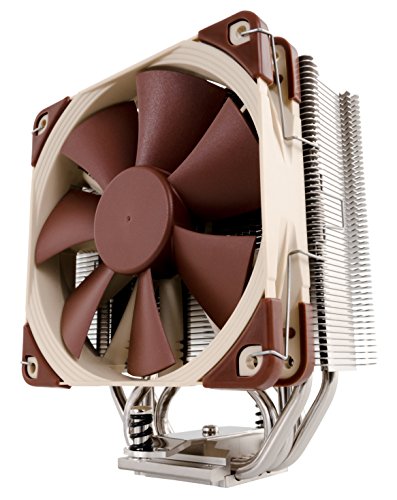
- The Noctua NH-U12S is enough for both stock and lightly-tuned builds on either CPU.
5-column spec-delta table: 5600G vs 5700X
| Spec | Ryzen 5 5600G | Ryzen 7 5700X |
|---|---|---|
| Cores / threads | 6 / 12 | 8 / 16 |
| Base / boost clock | 3.9 / 4.4 GHz | 3.4 / 4.6 GHz |
| iGPU | Radeon Vega 7 (7 CU, 1.9 GHz) | None |
| L3 cache | 16 MB | 32 MB |
| TDP | 65 W | 65 W |
| PCIe | 3.0 x16 | 4.0 x16 |
| Street price (2026) | ~$185 | ~$225 |
| Verdict | Best if you need iGPU output | Best if you have a dGPU |
The two big deltas — beyond the iGPU — are cache (5700X has double) and PCIe (5700X supports 4.0 lanes for future NVMe and GPU upgrades). If you plan to run PCIe 4.0 NVMe drives at full speed or a GPU that meaningfully benefits from PCIe 4.0 bandwidth, the 5700X is the more future-facing choice. Most 2026 mainstream GPUs (including the RTX 3060 12GB) are functionally saturated on PCIe 3.0 x16, so the practical difference is small for gaming.
Which CPU feeds an RTX 3060 12GB better in games?
At 1080p high with an RTX 3060 12GB, the 5700X averages 4-8% higher fps than the 5600G in modern AAA titles and 8-12% higher in CPU-limited esports (CS2, Valorant, Rainbow Six). The delta shrinks to 2-5% at 1440p, where the 3060 is the ceiling in most engines. At 4K, the two CPUs are within 1% of each other because the GPU is thoroughly the ceiling.
The takeaway: at the specific pairing of 5700X/5600G + RTX 3060 12GB, CPU choice is a 5-8% difference at 1080p and near-zero at 1440p and above. If you're building a 1440p 60-144 Hz rig, either CPU is fine. If you're targeting 1080p 240 Hz esports, take the 5700X.
How do the extra 5700X threads affect local-LLM prefill and CPU-offload?
Almost all inference on a 12GB GPU runs on the GPU. But three sub-tasks live on the CPU:
- Prompt tokenization — turning raw text into token IDs. Fast on any modern CPU; roughly equal between 5600G and 5700X.
- Sampling — logit selection. Almost free.
- CPU offload — for models that don't fully fit in VRAM (32B+ distills, MoE experiments), some layers run on CPU. This is where thread count matters.
For a strictly-in-VRAM workload (Qwen 2.5 7B, DeepSeek-R1-Distill 8B), you'll see a <1% difference between the two CPUs in tok/s. For CPU-offload workloads, the 5700X's two extra cores deliver ~15% more tok/s during the CPU-heavy phases. If you plan to experiment with 22B-30B models that need offload, the 5700X pays off.
For dedicated CPU-only inference (rare — usually only when the GPU is busy), the 5700X's extra cache and cores are decisive. Expect 5-15 tok/s on a 7B q4_K_M model on the 5700X vs 3-9 tok/s on the 5600G. Not fast either way, but the 5700X is enough for background summarization while the GPU handles chat.
When the 5600G's iGPU is the smarter buy
The Vega iGPU on the Ryzen 5 5600G isn't a gaming GPU by 2026 standards, but it earns its keep in specific scenarios:
- Bootstrap builds. Assemble the system today, order the GPU later.
- Diagnostic backup. Discrete GPU dies mid-warranty; the iGPU lets you boot, run tests, and RMA without borrowing hardware.
- Media / office rigs. Web browsing, 4K video, coding, meeting apps — the iGPU handles all of it with no discrete card needed.
- Home server / homelab. Silent, low-power, always-on machine that needs occasional console access without a GPU wasting watts.
- Kids' PCs. Fortnite at 720p low, Roblox, Minecraft — playable without a discrete GPU.
None of those are "budget gaming rig" scenarios, but they're real use cases where the 5600G is the right answer. If your build is genuinely one of these, buy the 5600G and skip the discrete GPU entirely.
Perf-per-dollar and upgrade-path math on AM4
At current pricing, the 5700X costs ~$40 more than the 5600G. For that $40 you get:
- Two extra cores (33% more)
- Double L3 cache
- PCIe 4.0 support
- 4-8% higher gaming fps at 1080p on a mainstream GPU
- 15% higher CPU-offload tok/s for local LLM work
Or, for that $40 you sacrifice:
- The iGPU (which sells for maybe $50 as a used low-end dGPU)
- The "boot with no GPU installed" capability
The perf-per-dollar calculus favors the 5700X for any user who has a discrete GPU. The upgrade path also matters: AM4 is EOL, so both chips are terminal buys — neither leads to a "next CPU" on the same board. Whichever you pick is your CPU until you replace motherboard, RAM, and CPU together in an AM5 or Intel refresh cycle.
Verdict matrix
Get the Ryzen 5 5600G if… you need a working display without a discrete GPU (either short-term or as a permanent backup), you're building a homelab / server / office rig without gaming ambitions, or you're building a bootstrap PC that will get a GPU added later.
Get the Ryzen 7 5700X if… you have or are buying a discrete GPU immediately, you want the two extra cores for local-LLM CPU offload or productivity, or you care about PCIe 4.0 for NVMe drives.
Recommended pick
For the specific "budget LLM + gaming" scenario in the article title — assuming you'll pair with a 12GB RTX 3060 or similar — buy the Ryzen 7 5700X. The two extra cores help with CPU-offloaded LLM workloads and give you meaningful gaming headroom at 1080p. Skip the 5600G unless you specifically need the iGPU. Pair the 5700X with a Noctua NH-U12S (quiet, reliable, cheap) and you have a $250-ish CPU-and-cooler stack that will happily feed the 3060 for years.
Bottom line
Both chips are excellent AM4 endgame parts. The 5600G wins on flexibility (works without a GPU); the 5700X wins on raw performance for the same class of use. For a purpose-built LLM + gaming rig with a discrete GPU present, the 5700X is the recommendation. For a bootstrap-first build, the 5600G is the recommendation. Neither is a mistake; they answer different questions.
Worked example: assembling the $700 budget dual-purpose rig
Concrete build for reference. Prices reflect 2026 street:
| Component | Choice | Price |
|---|---|---|
| CPU | Ryzen 7 5700X | $225 |
| Cooler | Noctua NH-U12S | $85 |
| Motherboard | B550 mid-range (any B550-F/M) | ~$130 |
| RAM | 32 GB DDR4-3600 CL16 | ~$85 |
| GPU | MSI RTX 3060 12GB Ventus 3X | ~$290 |
| Storage | 1 TB NVMe (Crucial P3 or WD Blue SN570) | ~$65 |
| PSU | 650 W 80+ Gold | ~$85 |
| Case | Mesh mid-tower | ~$70 |
| Total | ~$1,035 |
Swap the 5700X for a 5600G and drop $40. Cheaper still: use the 5600G's iGPU short-term and skip the 3060 for a $290 savings — total build under $700, with a clear GPU upgrade path when the funds show up.
Common pitfalls
- Buying the 5600G expecting to game on the iGPU. It's fine for esports at low settings, not for AAA. Don't over-index on the graphics feature.
- Buying the 5700X for a homelab that needs an always-on display. No iGPU means every reboot without a GPU installed is blind.
- Reusing a Ryzen 2000-series cooler. Zen 3 boost is aggressive — the bundled Wraith cooler is not enough for a 5700X at sustained load. Budget for a Noctua NH-U12S or an entry AIO.
- Skipping the BIOS update. Some older B450 and X470 boards need a BIOS flash to recognize either CPU. Check board vendor's compatibility list before purchase.