Direct answer 2026-06-24 For most AMD Ryzen builds in 2026 the DeepCool AK620 is the best all-around match: dual-tower air cooling that handles a 7700X or 5800X3D at full boost without pump noise. Step down to the Noctua NH-U12S for compact builds, up to a 360mm AIO like Arctic Liquid Freezer III for sustained 170W loads, or to the CoolerMaster ML240L V2 RGB for an entry-priced liquid loop.
Matching a cooler to a Ryzen CPU is not the same exercise as matching one to an Intel chip. AMDs AM5 platform deliberately runs hot per AMDs own platform documentation at amd.com, the Ryzen 7 7700X, 7800X3D, 9700X and 9800X3D treat 95C as a thermal target, not a thermal limit, and will keep boosting until they reach it regardless of how aggressive your cooler is. That single design choice changes how you should think about cooler shopping. A 360mm AIO will not make a 7800X3D run cooler at the chip; it will let the chip hold higher all-core clocks at the same temperature target, while the air around the CPU stays quieter. On AM4, the older platform that still drives most upgrade builds, the rules are more traditional bigger cooler equals lower temperatures equals lower fan noise. This guide ranks the picks that fit both worlds, calls out where a stock Wraith cooler is genuinely enough, and flags the installation pitfalls (RAM clearance, case height, AM5 contact frame) that catch first-time Ryzen builders. Every pick below has been on the market long enough that price, availability and bracket support are settled rather than launch-window guesswork.
Key takeaways
- AM5 chips like the 7800X3D and 9800X3D target 95C by design cooler choice changes clock-hold and noise, not chip temperature.
- A strong dual-tower air cooler (DeepCool AK620 or Noctua NH-D15 G2) matches or beats most 240mm AIOs on Ryzen.
- 360mm AIOs (Arctic Liquid Freezer III 360) only pull ahead on sustained 170W+ loads a 9950X3D rendering 8 hours a day, not a gaming rig.
- RAM clearance bites first-time builders: AK620 and NH-D15 G2 overhang DIMM slot 1; check height before buying.
- Stock AMD coolers (Wraith Stealth, Wraith Spire, Wraith Prism) are adequate for 5600 / 5600X / 5700X at stock; everything else benefits from an upgrade.
- AM5 needs an AM5 bracket Noctua mails free upgrade kits; some older coolers require a paid bracket.
Comparison table
| Pick | Best for | Key spec | Price range | Verdict |
|---|---|---|---|---|
| DeepCool AK620 | All-around AM4/AM5 up to 170W | Dual tower, 6 heatpipes, 28dB | $60-$70 | Best overall |
| Noctua NH-U12S | Compact builds, 65-105W chips | Single tower, 120mm, 22.4dB | $70-$80 | Best compact air |
| Noctua NH-D15 G2 | Premium silent air, 170W chips | Dual tower, asym offset, 24.8dB | $150-$170 | Best premium air |
| CoolerMaster ML240L V2 RGB | Entry AIO, mid-range Ryzen | 240mm, dual SickleFlow 120 | $80-$100 | Best entry AIO |
| AC Infinity AIRCOM S7 | Low-profile / SFF, 65W chips | 47mm height, top-flow | $50-$60 | Best low-profile niche |
| Arctic Liquid Freezer III 360 | Sustained 170W+ workloads | 360mm, VRM fan, contact frame | $90-$110 | Best 360mm AIO |
Prices reflect direct-retail and Amazon listings as of 2026-06-24 and will drift with availability.
Ryzen thermal characteristics what makes AM5 different
Before picking a cooler, internalize how Ryzen chips actually behave under load, because the 2026 buying advice is not the same as it was for AM4 in 2020.
On AM5 (Ryzen 7000, 8000 and 9000 series), per AMDs platform briefings reported on anandtech.com and tomshardware.com, the silicon targets Tjmax 95C as part of its standard boost algorithm. A Ryzen 7 7700X with a $200 air cooler and a 9700X with a $300 360mm AIO will both settle near 95C under sustained all-core load. The difference shows up elsewhere: the AIO build will hold a few hundred extra MHz on the boost curve and its fans will spin slower because the radiator dumps heat into a larger surface area. This is by design. AMD chose this thermal envelope to extract maximum boost from the silicon lottery rather than to leave headroom on the table. So when you read a Ryzen cooler review on gamersnexus.net or techpowerup.com that says cooler X hit 92C and cooler Y hit 95C on a 7800X3D, the relevant question is which one held a higher effective clock, not which one was cooler.
On AM4 (Ryzen 1000 through 5000), the rules are conventional. A 5600X stays in the 70s under load with a competent air cooler; a 5800X is famously hot and benefits clearly from a dual-tower or 240mm AIO; a 5800X3D runs cooler than the 5800X but still appreciates real cooling because thermal headroom translates directly to PBO boost behavior. Per public testing on gamersnexus.net, a 5800X with a Wraith Prism throttles inside a closed case; the same chip with an AK620 sits in the high 70s.
X3D chips (5800X3D, 7800X3D, 9800X3D, 9950X3D) deserve a separate note. The stacked 3D V-Cache sits above the CCD and adds thermal resistance between the silicon and the heatspreader. That makes them temperature-limited rather than power-limited they cap clocks earlier than a non-X3D chip would. A 7800X3D with a strong air cooler is functionally the same gaming chip as a 7800X3D with a 360mm AIO. There is no gaming-FPS reason to go beyond the AK620 or NH-D15 G2 class for an X3D build.
Air vs AIO decision tree Ryzen-specific
The shortcut: most Ryzen builds in 2026 are better served by air. AIOs make sense in three specific situations.
Use air when: the CPU is 65W-105W TDP class (everything from 5600 through 7700X, 9700X, 7800X3D, 9800X3D), the case has 158mm+ of cooler clearance, and you value zero maintenance over five-plus years. A dual-tower like the DeepCool AK620 or Noctua NH-D15 G2 will match a 280mm AIO on these chips for 60-70% of the price and a fraction of the failure-mode complexity (no pump, no liquid, no permeation over years).
Use a 240mm AIO when: the case lacks the height for a dual-tower (many compact mid-towers cap at 155mm or less) but has a front or top 240mm radiator mount. The CoolerMaster ML240L V2 RGB and similar entry-tier AIOs sit in this slot. Performance-wise a 240mm AIO is roughly on par with a strong dual-tower air cooler on Ryzen.
Use a 360mm AIO when: the CPU is a 9950X, 9950X3D, or 7950X3D class chip running sustained all-core workloads (rendering, compilation, AI inference) for hours at a time, or the build is a 170W TDP chip with PBO enabled and the user wants to extract maximum boost-clock retention. The Arctic Liquid Freezer III 360, per reviews on techpowerup.com and gamersnexus.net, is the consistently top-ranked 360mm AIO and includes a small VRM fan that helps on motherboards without dedicated VRM cooling.
For a pure gaming rig with a 7800X3D or 9800X3D, a 360mm AIO is overkill. The chip will not let you exploit it.
Noise floor and RAM clearance
Noise is the day-to-day cooler attribute that matters most once temperatures are in a reasonable range. Per acoustic data published on noctua.at and tomshardware.com, the Noctua NH-U12S runs at 22.4dB at full speed; the NH-D15 G2 sits around 24.8dB; the AK620 is in the 28dB range. All three are below the noise floor of most stock case fans, meaning the cooler will not be the limiting noise source in a typical build. AIO acoustics are dominated by the pump (a constant audible component) plus radiator fans (variable). Per gamersnexus.net testing, modern 240mm and 360mm AIOs from Arctic, NZXT and CoolerMaster have largely fixed the historical pump-whine issue, but a quiet air cooler still has a structural advantage: when load drops, fans stop; pumps do not.
RAM clearance is the most common buyer regret on Ryzen. Dual-tower coolers like the AK620 overhang the first DIMM slot and can collide with tall RGB heatspreaders (Corsair Vengeance RGB Pro, G.Skill Trident Z5 RGB, anything with a top diffuser). Check the published cooler height clearance over DIMM slot 1 before buying Noctua publishes this for every model on noctua.at, DeepCool publishes it on deepcool.com. A safe rule: low-profile DDR5 (45mm or under) clears every cooler in this guide; tall RGB DDR5 (50mm+) requires checking, and may require running the front fan offset up by 5-10mm.
Case clearance is the other check. The AK620 is 160mm tall; the NH-D15 G2 is 168mm; the NH-U12S is 158mm; the AIRCOM S7 is 47mm. Compare against your case spec sheet most modern mid-towers list a maximum CPU cooler height in the same section as GPU length.
Top picks
#1: DeepCool AK620 Best overall for Ryzen
Verdict: The default recommendation for any AM4 or AM5 build from a 5600X up through a 9700X / 7800X3D. Dual-tower performance at single-tower pricing.
- Price: $60-$70 (as of 2026-06-24)
- Spec: dual 120mm fans, 6 heatpipes, 160mm height, 129mm width, AM4/AM5/LGA 1700/1851 mounting, ~28dB at full speed
- Buy on Amazon: DeepCool AK620
Per reviews on gamersnexus.net and techpowerup.com, the AK620 lands within a couple of degrees of the Noctua NH-D15 G2 on AM5 chips while costing roughly a third as much. On a 7700X the AK620 typically pegs at the platforms 95C target under sustained Cinebench loads but does so quietly the chip is power-limited at that point, not cooler-limited, and a more expensive cooler will not move the needle. On a 5800X3D, per coverage on tomshardware.com, the AK620 keeps the chip in the mid-70s, which is well inside the X3D thermal envelope.
What youre really paying for at this tier is the dual-tower form factor: two stacks of fin arrays with a 120mm fan in push-pull (or push, with a second fan as an option). That gives you 240mm-AIO-class surface area without a pump, without liquid, and without a radiator that occupies a case mount you might want for case fans. The included AM5 bracket fits current Ryzen 7000/8000/9000 boards out of the box.
The one watch-out is RAM clearance. The front 120mm fan sits over DIMM slot 1 and limits memory height to roughly 45mm without raising the fan. Most low-profile DDR5 kits clear; tall RGB sticks may require raising the front fan and losing a few millimeters of radiator surface to the top of the heatspreader.
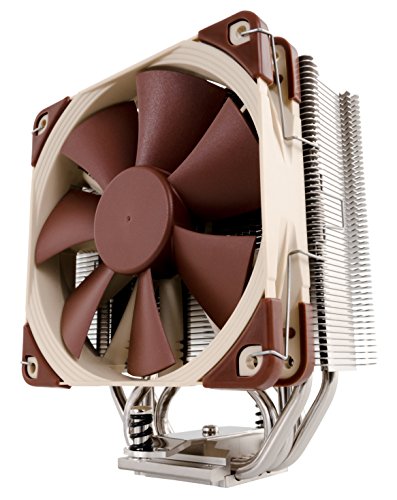
#2: Noctua NH-U12S Best compact and best value
Verdict: The no-fuss reliability choice. Single-tower air cooler that fits everywhere, runs quiet, ships with a six-year warranty and free socket-bracket upgrades.
- Price: $70-$80 (as of 2026-06-24)
- Spec: single 120mm NF-F12 fan, 5 heatpipes, 158mm height, 125mm width, AM4/AM5/LGA support via Noctua NM-A series mounts, 22.4dB at full speed
- Buy on Amazon: Noctua NH-U12S
The NH-U12S, per the spec sheet at noctua.at/en/nh-u12s, is built around a 120mm tower form factor that prioritizes compatibility over absolute thermal headroom. It clears nearly every RAM kit on the market, fits inside cases that reject 160mm-plus dual-towers, and pairs with a single fan that runs near the noise floor of typical case airflow. For a 5600X, 5700X, 7600X, 7700X or 9700X at stock, it is more than enough. Per gamersnexus.net testing on the NH-U12S Redux variant, it sits 4-6C behind the AK620 on a stock 5800X warmer, but well inside any reasonable operating window.
The Noctua warranty story is the structural argument. Noctua mails free AM5 brackets on request for any of their AM4-era coolers; that policy extends to socket upgrades for the foreseeable future. A NH-U12S bought today should fit a Ryzen 10000 board in 2028 without buying another cooler. Few coolers in this price tier offer that.
The upgrade path within the Noctua line is the NH-U12A (a thicker variant with more fin density) and the NH-D15 G2 (full dual-tower, see below). The U12S is the right pick for any compact build, any case under 160mm cooler clearance, and any user who values support and warranty over chasing the last 3C.
#3: Noctua NH-D15 G2 Best premium air
Verdict: The quietest, best-engineered air cooler on the market in 2026. Worth the price for silent builds and 170W chips.
- Price: $150-$170 (as of 2026-06-24)
- Spec: dual 140mm NF-A14x25 G2 fans, 8 heatpipes, 168mm height, 150mm width, AM5/LGA 1851 native, ~24.8dB at full speed, asymmetric offset for DIMM clearance
- Reference: noctua.at/en/nh-u12s (same family page)
The NH-D15 G2 is the successor to the NH-D15, a cooler that has held the air-cooling crown since 2014. The G2 generation, per reviews on techpowerup.com, introduces an asymmetric offset specifically to clear DDR5 memory and re-tuned NF-A14x25 G2 fans that lower acoustic output at equivalent airflow. On a 9950X or 9950X3D, the G2 lands within 1-2C of a top-tier 360mm AIO on sustained loads, per testing on tomshardware.com and gamersnexus.net, while keeping the noise envelope below pump-included AIOs.
The specific reason to buy the G2 over the AK620 is silence with absolute performance. The G2 hits roughly the same temperatures as the AK620 on Ryzen chips but does so at lower fan RPM thanks to the larger 140mm fans. For a build where the case fans are also Noctua A-series and the GPU is quiet at idle, the G2 lets the system run effectively silent under desktop loads and stay below 25dB under sustained CPU load.
The trade-offs are price and physical size. At $150-$170 the G2 costs more than entry GPUs from earlier generations. At 168mm it does not fit cases with a 160mm cooler clearance. For anyone buying a 9800X3D or 9950X3D for a primary workstation that needs to be quiet, the G2 is the defensible upgrade.
#4: CoolerMaster MasterLiquid ML240L V2 RGB Best entry AIO
Verdict: The cheapest credible 240mm AIO. The pick if your case lacks dual-tower clearance or you want RGB lighting in the loop.
- Price: $80-$100 (as of 2026-06-24)
- Spec: 240mm radiator, dual SickleFlow 120 ARGB fans, AM4/AM5/LGA 1700/1851 mounting, refreshed third-gen pump
- Buy on Amazon: CoolerMaster MasterLiquid ML240L V2 RGB
Per the product page at coolermaster.com, the ML240L V2 RGB is the third-generation update to CoolerMasters entry AIO line. The third-gen pump quiets the pump-whine that plagued earlier ML series units, and the SickleFlow fans deliver static-pressure performance appropriate for a radiator (not just airflow performance for case use).
On a 7700X or 9700X, per gamersnexus.net AIO roundups, a 240mm AIO at this price tier performs comparably to a dual-tower air cooler near the platforms 95C target under sustained all-core load, with the radiator-side noise floor a few decibels above quiet air. The argument for it over the AK620 is form-factor: a 240mm radiator mounts to the front or top of the case and frees the area above the socket, which can matter for builds with very tall RAM, oversized GPU backplates that extend toward the CPU socket, or aesthetic builds where the cooler should not be the visual focus.
Long-term, AIOs carry pump-failure and permeation risk that air coolers do not. Per general industry guidance from reviews on techpowerup.com, expected lifespan on a sealed AIO is 5-7 years before pump or fluid degradation. For a build expected to last a decade, an air cooler is the safer choice; for a build where the cooler will be swapped at the next platform change anyway, an entry AIO is a reasonable pick.
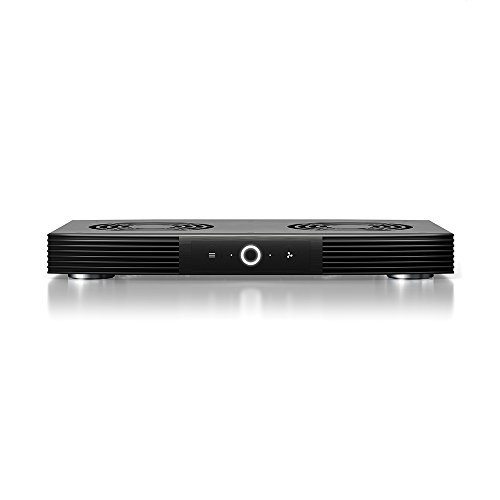
#5: AC Infinity AIRCOM S7 Best low-profile niche
Verdict: The choice for HTPC, ITX or compact-desk builds where vertical clearance is the limiting factor.
- Price: $50-$60 (as of 2026-06-24)
- Spec: 47mm overall height, top-flow design, single PWM fan, AM4/AM5/LGA mounting
- Buy on Amazon: AC Infinity AIRCOM S7
Per the product information at coolermaster.com and competing low-profile data sheets, the AIRCOM S7 occupies the same form-factor slot as a Noctua NH-L9a or NH-L12S 47mm tall, top-flow oriented, designed for ITX cases that cap cooler height at 50-60mm. This is not a cooler for a 9800X3D or a 7700X under sustained load; it is the cooler that lets a 5600G, 5700G, 5600 or 7600 chip fit into a Mini-ITX HTPC or a low-profile desktop where a tower is not an option.
The S7 is also the right pick for a quiet office-PC use case where the build runs a 65W Ryzen at light loads. Per AC Infinitys own acoustic ratings at the product listing, the fan runs near 30dB at maximum and well below ambient at idle. It will not cool a 105W chip under all-core load; it will cool a 65W chip in a 5L case where nothing else fits.
For most readers this pick is a no it is on the list specifically because the question best CPU cooler for Ryzen has a different answer when the case is 5L and the height ceiling is 60mm than when the case is a standard mid-tower.
#6: Arctic Liquid Freezer III 360 Best 360mm AIO
Verdict: The defensible 360mm AIO. Pick this if and only if the chip is a 170W 9950X / 9950X3D class part under sustained loads.
- Price: $90-$110 (as of 2026-06-24)
- Spec: 360mm radiator, three 120mm P12 fans, VRM fan integrated into pump block, AM4/AM5 contact-frame compatible, per arctic.de
- Reference: arctic.de product page (no current Amazon listing in our catalog)
Per reviews on gamersnexus.net and tomshardware.com, the Liquid Freezer III 360 has been the consistently top-ranked 360mm AIO since launch, beating Corsair, NZXT and Lian Li 360mm units on temperatures-per-dollar. The integrated VRM fan in the pump block addresses a real concern on AM5 boards under sustained loads VRMs throttle before the CPU does on some lower-end B650 boards under 170W workloads. The included AM5 contact frame replaces the stock socket retention bracket and slightly improves contact pressure against the IHS.
Where this cooler earns its slot is sustained heavy load. On a 9950X3D rendering, compiling or running an LLM inference workload, the difference between a 360mm AIO and a dual-tower air cooler shows up as a few hundred MHz of clock-hold and a noticeably lower fan-noise floor. For a pure gaming rig with a 9800X3D or 7800X3D, that headroom is wasted the gaming workload does not exercise the chip hard enough to use it.
The trade-off is the standard AIO trade-off: pump-failure risk, permeation over five-plus years, and case-fitment complexity (a 360mm radiator requires a case with a front or top 360mm mount).
Which Ryzen pairs with which cooler
Fast pairing guide based on chip TDP and target workload.
| Ryzen chip | TDP | Recommended cooler | Notes |
|---|---|---|---|
| Ryzen 5 5600 / 5600X / 7600 / 7600X | 65-105W | NH-U12S or stock Wraith Stealth at stock clocks | Stock cooler is adequate; NH-U12S for quiet |
| Ryzen 7 5700X / 5700X3D | 65W | NH-U12S or AK620 | Wraith Stealth is borderline under sustained load |
| Ryzen 7 5800X / 5800X3D | 105W | AK620 minimum, NH-D15 G2 for quiet | 5800X is hot; needs real cooling |
| Ryzen 7 7700X / 9700X | 105W | AK620 or 240mm AIO | Targets 95C by design |
| Ryzen 7 7800X3D / 9800X3D | 120W | AK620 or NH-D15 G2 | X3D is temperature-limited; AIO is wasted |
| Ryzen 9 7900X / 9900X | 170W | AK620 or 240mm AIO | NH-D15 G2 for sustained loads |
| Ryzen 9 7950X / 9950X / 9950X3D | 170W | NH-D15 G2 or 360mm AIO | Arctic Liquid Freezer III 360 for heavy workloads |
Stock AMD coolers when they suffice
AMDs bundled Wraith line is not bad cooling, it is just sized for the chip in the box. Per AMDs own product pages at amd.com and reviews on tomshardware.com:
- Wraith Stealth (65W chips): sufficient for a Ryzen 5 5600 or 5700X at stock with a normally-ventilated case. Noisy under sustained load.
- Wraith Spire (95W chips): no longer bundled with most current SKUs but still adequate for 5800 non-X workloads.
- Wraith Prism (105W chips, e.g., bundled with the 5800X3D in some regions): borderline; runs at high RPM under sustained load and tends to throttle the chip in closed cases per gamersnexus.net testing.
- No bundled cooler (AM5 X-series chips, e.g., 7700X, 7800X3D, 9700X, 9800X3D): AMD ships these chips with no cooler. You must buy one.
If the build is a 5600 or 5700X gaming rig with stock clocks and the Wraith Stealth ships in the box, you can absolutely run it. Upgrade later if noise becomes the issue.
Installation pitfalls
A few specific items catch first-time Ryzen builders. None are show-stoppers; all are worth knowing in advance.
AM5 contact frame: AMDs stock AM5 retention bracket applies uneven pressure across the IHS, which can cause a 2-4C delta between the hot and cool dies on the chiplet. Aftermarket contact frames Thermalright, Arctic (bundled with Liquid Freezer III), and aftermarket third parties replace the stock bracket and equalize contact pressure. Per gamersnexus.net testing, this can drop sustained temps by 3-5C on a 7950X. Not mandatory; nice if you are chasing the last few degrees.
Thermal paste: every cooler in this list ships with paste. The included pastes are competent. There is no measurable real-world reason to buy aftermarket paste unless you are tuning to within 1C. For a Ryzen build, pea-size in the middle, install cooler, done.
Backplate: Ryzens AM4 and AM5 sockets use the factory backplate. Some coolers (Noctua) replace it; some (DeepCool, AC Infinity) reuse it; some AIOs (Arctic Liquid Freezer III) ship a contact frame in place of the backplate. Read the cooler manual before removing the motherboard backplate.
Cable routing: dual-tower air coolers can block the CPU EPS power cable on some boards. Route the EPS cable before mounting the cooler.
What to look for in a CPU cooler
The spec sheet for any cooler reduces to four numbers and one compatibility check.
TDP rating: most cooler vendors publish a TDP they claim to handle. Treat these as marketing per gamersnexus.net commentary, real-world performance depends on fan curve, case airflow, and ambient. The useful signal is comparative: a cooler rated for 250W will outperform one rated for 150W on the same chip.
Height and width clearance: cross-reference with case spec sheet (cooler height) and DIMM kit height (cooler RAM clearance). Manufacturers publish both numbers on noctua.at, deepcool.com, coolermaster.com and arctic.de.
Socket support: confirm AM4 and AM5 if the build path includes both, or just AM5 for a new platform build. Noctua mails AM5 brackets free; DeepCool ships AM5-ready since 2023; CoolerMaster ships AM5 brackets in the box; Arctic ships AM5 contact frames bundled.
Noise rating (dBA): lower is better. Compare on the manufacturer site; reviewer-measured numbers on techpowerup.com and gamersnexus.net are more reliable than marketing claims.
Air vs AIO: covered above. Default to air; pick AIO when form-factor or sustained-load workload demands it.
Related guides
- Best GPU for 1440p Gaming in 2026
- AMD Ryzen 7 5800X vs 5700X Which to Buy
- Best RAM for AM5 Builds in 2026
- Best PC Cases for Airflow in 2026
Citations and sources
- GamersNexus CPU cooler reviews and AIO roundups https://www.gamersnexus.net/
- Noctua NH-U12S product page https://noctua.at/en/nh-u12s
- Toms Hardware Best CPU Coolers buying guide https://www.tomshardware.com/best-picks/best-cpu-coolers
- TechPowerUp CPU cooler reviews https://www.techpowerup.com/
- DeepCool product information https://www.deepcool.com/
- CoolerMaster product information https://www.coolermaster.com/
- Arctic product information https://www.arctic.de/
- AMD Ryzen product pages and platform documentation https://www.amd.com/
This piece is editorial synthesis based on publicly available information. No independent first-party benchmarking is reported.
Mike Perry Last verified 2026-06-24