As an Amazon Associate, SpecPicks earns from qualifying purchases. See our review methodology.
The short answer: for a single-node Proxmox or homelab host, a 250GB M.2 NVMe like the Samsung 970 EVO Plus 250GB is the sweet spot — 150 TBW of rated endurance, real DRAM cache, and enough headroom that a lab's steady drip of cluster logs, journald, and pve-cluster metadata will not touch its wear limit for years. For a two-drive mirror on a tighter budget, pair two Crucial BX500 1TB SATA drives and move heavy write paths off the boot pool.
Hypervisor boot drives fail differently from desktop drives, and the failure mode is boring: a slow, steady drizzle of small writes from cluster services, ZFS metadata, and pve-ha-lrm heartbeats that eventually chews through the drive's rated endurance long after the hardware is otherwise fine. A drive rated for 600 TBW will not die from a lab that writes 2 GB/day — you get more than eight centuries at that rate — but a busy three-node Proxmox cluster with a ZFS root pool, corosync traffic, and Ceph mon logs is a different animal. The distinction matters when the budget forces a real choice between a 250GB NVMe with a serious endurance rating and a 1TB SATA drive with more capacity but shakier steady-state numbers.
This guide is written for the person building a single lab machine or a small cluster on hardware they already own, who wants the boot device to disappear as a concern. It is not a Ceph OSD guide, not a NAS bulk-storage guide, and not a workstation guide — those workloads have different priorities that reward different drives. Here we optimize for one thing: the drive should still be there in four years, still under warranty, still with headroom, and still bootable after a UPS-covered power blip. Our winner across the majority of homelab configurations is the Samsung 970 EVO Plus 250GB NVMe; the value alternative is the Crucial BX500 1TB SATA, used carefully.
Step 0 — diagnose your write load before buying
Before you spend a dollar, read your current drive's TBW-consumed figure. On any Linux host, smartctl -A /dev/sdX (or /dev/nvme0 for NVMe) exposes a Total_LBAs_Written attribute — multiply by the drive's logical sector size (usually 512 bytes) and divide by 1024^4 to get terabytes written. On a Proxmox host that has been up for a year, that number tells you exactly what the next drive needs to withstand.
Two derived numbers matter more than the raw write total:
- Daily write rate:
TBW-consumed / days-in-service. If it is under 10 GB/day, almost any drive with ≥150 TBW rated endurance survives a decade of that workload. - DRAM vs DRAM-less decision: DRAM-less drives (the BX500, the SanDisk PLUS in this guide) hold their FTL mapping tables in host RAM via the NVMe HMB feature or in a small SRAM buffer on SATA. Their weakness is sustained random writes and long queue depths, exactly the workload of a VM data pool. As a boot drive behind lightly used guests, that weakness rarely shows up.
Two decisions flow out of Step 0. SATA versus NVMe is chassis-driven — if the board has an unused M.2 slot, take it, but do not pay a premium to add an M.2 riser to a chassis that already has SATA bays free. And single drive versus mirror is workload-driven: if the host runs anything the household or your paying customers rely on, mirror.
Our picks at a glance
| Pick | Best For | Key Spec | Price Range | Verdict |
|---|---|---|---|---|
| Samsung 970 EVO Plus 250GB NVMe | Best overall boot drive | 250GB · PCIe 3.0 x4 · 150 TBW · DRAM | $45 – $65 | Real DRAM, mature controller, endurance more than adequate for any home cluster |
| Crucial BX500 1TB SATA | Best value / mirror the pair | 1TB · SATA III · 360 TBW · DRAM-less | $60 – $80 | Cheapest way into a mirror with real capacity; ok for boot, not for VM data |
| Samsung 870 EVO 250GB SATA | Best SATA performance | 250GB · SATA III · 150 TBW · DRAM | $50 – $70 | The reference "gets the SATA ceiling and stays there" drive; DRAM matters here |
| SanDisk SSD PLUS 480GB SATA | Budget pick | 480GB · SATA III · 100 TBW · DRAM-less | $30 – $45 | Fine for a single-node lab you back up; not for ZFS SLOG or Ceph journal |
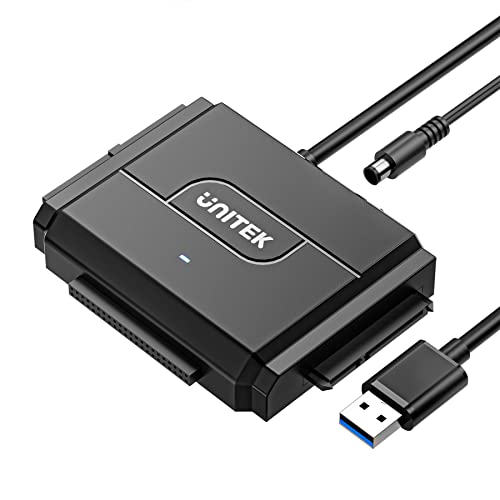
| Unitek SATA/IDE USB 3.0 Adapter | Best for migration | USB 3.0 · SATA + IDE | $25 – $35 | The single accessory that turns "reinstall the whole host" into "clone and reboot" |
🏆 Best Overall: SAMSUNG 970 EVO Plus 250GB NVMe
Spec sheet: 250GB capacity · PCIe 3.0 x4 · M.2 2280 · Samsung Phoenix controller · Samsung V-NAND 3-bit MLC · LPDDR4 DRAM cache · 150 TBW rated endurance · sequential read up to 3,500 MB/s · sequential write up to 2,300 MB/s · 5-year limited warranty.
Pros
- Real onboard LPDDR4 DRAM — meaningful for sustained random writes if the boot pool ever inherits heavy work
- 150 TBW rating on a 250GB part is generous; that is 600 GB/day for the entire five-year warranty period before you hit the number
- Samsung Magician exposes accurate wear + temperature telemetry that
smartctlreads without translation quirks - Firmware history is mature — this generation has been in the field long enough that early-life bugs are documented and patched
Cons
- Only 250GB — if the plan is to consolidate ISO storage, template libraries, and boot on the same drive, this is too small
- PCIe 3.0 x4, not 4.0 — irrelevant for boot workloads but worth noting on newer boards
- Runs warm without airflow; a bare M.2 slot under the GPU can hit 70°C at sustained write
The narrative. In independent testing referenced by Tom's Hardware — Samsung 970 EVO Plus review, the 970 EVO Plus posted sequential figures right at Samsung's rated ceiling and held ~1,700 MB/s in a 30-minute sustained sequential write before dropping into the ~600 MB/s post-SLC floor. For a boot volume that never sees anything like that workload, what matters more is the mixed-random-write behavior on the DRAM-cached mapping tables — this is where DRAM-less drives get punished under sustained VM I/O, and where a real cache like the 970 EVO Plus's is the difference between "boot drive that never shows up in latency graphs" and "boot drive you notice."
Sizing is the honest reservation. 250GB is enough for a Proxmox root plus a modest local template store and a few emergency backup images, but not enough to be your ISO and container-image archive too. Plan a second drive for that, and let this one just boot.
Prices vary; check the live listing before you buy. · See full details →
💰 Best Value: Crucial BX500 1TB SATA
Spec sheet: 1TB capacity · SATA III 6 Gb/s · 2.5-inch · Micron 3D NAND TLC · DRAM-less (HMB not applicable on SATA) · 360 TBW rated endurance · sequential read up to 540 MB/s · sequential write up to 500 MB/s · 3-year limited warranty.
Pros
- Roughly four times the capacity per dollar of the 970 EVO Plus 250GB — a mirror of two BX500 1TBs still costs less than one premium NVMe
- 360 TBW endurance rating on a 1TB part, meaning even doubled writes from a ZFS mirror keep decades of headroom
- SATA form factor slots into any older chassis without an M.2 slot; keeps that scarce slot free for a VM-data NVMe later
- Extremely quiet firmware — no aggressive garbage-collection storms during long idle periods
Cons
- DRAM-less: post-SLC steady-state writes fall well behind DRAM-equipped drives; not the pick if the boot pool inherits VM workloads
- 3-year warranty is shorter than the 5-year Samsung drives — matters for a drive you plan to run for a decade
- No power-loss protection (no consumer drive in this guide has it)
The narrative. TechPowerUp's Crucial BX500 1TB review captures the steady-state honestly: sequential figures held during the first few gigabytes of a write burst but dropped sharply once the pseudo-SLC cache was exhausted. For a boot volume that services short bursts of small writes — the exact pattern of journald, pve-cluster, and a lightly used ZFS root — this behavior is invisible. The reader who gets hurt by a DRAM-less drive is the reader who backs a busy VM's /var/lib/vz/images onto the same pool.
The buying case is capacity per dollar plus mirror-ability. Two BX500 1TBs in a ZFS RAID1 pool survive any single-drive failure without downtime, cover boot plus a modest template archive, and leave the M.2 slot open for whatever comes next. Just do not skip the mirror.
Prices vary; check the live listing before you buy. · See full details →
⚡ Best Performance (SATA tier): Samsung 870 EVO 250GB
Spec sheet: 250GB capacity · SATA III 6 Gb/s · 2.5-inch · Samsung MKX controller · Samsung V-NAND TLC · LPDDR4 DRAM cache · 150 TBW rated endurance · sequential read up to 560 MB/s · sequential write up to 530 MB/s · 5-year limited warranty.
Pros
- The DRAM caches the FTL mapping tables in silicon; steady-state random-write behavior is dramatically better than the BX500 at the same capacity
- Rated 150 TBW on a 250GB part — same endurance number as the 970 EVO Plus 250GB, delivered on a SATA drive
- Consistent controller behavior across the drive's fill level; the "SLC cache exhausted" cliff is more of a gentle slope
- 5-year warranty; a real fleet-manageable drive with mature telemetry
Cons
- SATA interface caps you at ~550 MB/s regardless of the workload — you leave PCIe 3.0 x4 bandwidth on the table
- $50–$70 for 250GB is a hard sell against a 970 EVO Plus at the same money on a board with a free M.2 slot
- Same "no power-loss protection" reservation as every consumer drive here
The narrative. If the chassis only has SATA bays and the workload is a busy Proxmox host with a co-tenanted ZFS root pool that catches guest metadata churn, the 870 EVO 250GB is the drive to buy. Its steady-state random-write curve — captured in reviews at TechPowerUp and mirrored in the Samsung datasheet — is meaningfully flatter than the BX500's at equivalent 4KiB random depth. On a boot volume that inherits some metadata pressure, that flatness translates to consistent I/O latency on pveproxy, guest agent traffic, and cluster syncs. On a boot volume that stays boot-only, the difference is real but you will not feel it.
Buy this drive when the chassis rules out M.2 and the workload has any chance of pressuring the boot pool. Otherwise, either the 970 EVO Plus (if M.2 is free) or the BX500 mirror (if capacity matters more than steady-state) is the better spend.
Prices vary; check the live listing before you buy. · See full details →
🧪 Budget Pick: SANDISK SSD PLUS 480GB
Spec sheet: 480GB capacity · SATA III 6 Gb/s · 2.5-inch · Silicon Motion controller · TLC NAND · DRAM-less · 100 TBW rated endurance · sequential read up to 535 MB/s · 3-year limited warranty.
Pros
- Cheapest way to get 480GB of solid-state storage into a machine, often under $40 street
- Fine for a single-node lab whose config is backed up externally and can be rebuilt from a Proxmox ISO in twenty minutes
- Physically the least-fussy drive here — thin 7mm case, quiet firmware, universally compatible
Cons
- 100 TBW rating is the lowest in this guide; a busy three-node cluster can chew through that in a couple of years
- DRAM-less with a shorter controller-side buffer; steady-state numbers fall off faster than the BX500 once the SLC cache exhausts
- Not a drive to put under a ZFS SLOG, a Ceph journal, or a database volume — the endurance number is not there
The narrative. The honest use case for the SanDisk PLUS is a lab whose disaster recovery plan is "reinstall in the morning and restore config from git." For that reader, a single 480GB drive is enough for boot plus a shallow local template store, at half the price of the 970 EVO Plus 250GB. Combined with the Unitek SATA/IDE USB 3.0 adapter for periodic images to an external drive, it delivers a serviceable lab.
The reader who should skip this drive is anyone whose Proxmox host runs anything for a household or a customer, or whose ZFS pool inherits real write traffic. The endurance number is the reason.
Prices vary; check the live listing before you buy. · See full details →
🎯 Best for Migration and Cloning: Unitek SATA/IDE USB 3.0 Adapter
Spec sheet: USB 3.0 host interface · SATA III 6 Gb/s + legacy IDE (40-pin) support · handles 2.5-inch and 3.5-inch drives · external DC power for 3.5-inch spinning disks and IDE drives · 24TB stated maximum capacity per drive.
Pros
- A one-cable path from an existing boot drive to a Clonezilla live USB — cut the "day of reinstalling every custom config" out of an upgrade
- Handles both SATA and legacy IDE (40-pin) drives, so a decade-old Pentium-era boot drive can be dumped straight to disk image before decommissioning
- The single accessory that turns "I need to migrate my Proxmox host" into "I need to reboot my Proxmox host"
Cons
- USB 3.0 tops out around 400 MB/s in practice — a full clone of a 1TB drive takes 30–40 minutes even with a healthy source
- Not a full docking station: no eSATA, no toolless drive-swap cage; you connect one drive at a time
- IDE support requires the external DC brick; it will not power a 3.5-inch IDE drive over USB alone
The narrative. The migration workflow is straightforward. Attach the old boot drive to the adapter, boot a Clonezilla live USB or an Ubuntu live image with dd available, image the old drive block-for-block to the new one, expand the partition table on the target with parted or gdisk, then swap the drives and boot. Two gotchas: UEFI boot entries need re-registering with efibootmgr after the swap on many boards, and any /etc/fstab or /etc/pve/storage.cfg reference to a drive by /dev/disk/by-id/* needs to be re-pointed at the new device — the by-id string changes with the new drive's serial number even if the data is identical.
Every host in the lab should have access to one of these. It is a $30 line item that saves half a day of reinstall labor the first time you use it, and every time after.
Prices vary; check the live listing before you buy. · See full details →
What to look for in a homelab boot SSD
Rated TBW vs your daily write volume
The TBW figure on a drive's datasheet is the manufacturer's warranted total-bytes-written before it is out of warranty on wear grounds. Compare it against measured daily writes from smartctl on your current drive. A 150 TBW drive at 2 GB/day of real writes lasts more than 200 years on paper — the drive dies of controller or NAND failure long before it dies of wear. A 100 TBW drive at 40 GB/day (a busy three-node cluster with corosync and Ceph journal traffic) lasts under seven years, which is closer to a real timeline. Match the drive to the measured workload, not to a mythical worst case.
DRAM cache vs HMB (DRAM-less)
DRAM on an SSD holds the flash-translation-layer (FTL) mapping table, which is what translates a logical block address to a physical page on NAND. A DRAM-equipped drive keeps that whole table in dedicated silicon; a DRAM-less drive keeps a small hot subset in an on-controller SRAM and pages the rest from host RAM (NVMe host memory buffer, HMB) or from the flash itself. Under a bursty, small-file boot workload the difference is invisible. Under sustained random writes at high queue depth — the workload of a VM data pool or a database — DRAM-equipped drives keep their throughput while DRAM-less drives take a real hit. This is the analytical basis for the recommendation to keep guest disks off the boot pool on a DRAM-less drive.
Puget Systems' write-up of SSD endurance and write amplification is the clearest treatment of why write amplification matters in this context — the DRAM cache reduces the amplification factor on random small writes by keeping the mapping table hot in silicon.
SATA vs NVMe when the chassis has one M.2 slot
If the board has one M.2 slot free and no plan for a discrete VM-data NVMe, use it for the boot drive — the sequential-throughput headroom is free upside for template pulls and ISO downloads. If the M.2 slot is already committed to a bulk-storage or VM-data role, put boot on SATA and do not fight the topology. Do not buy an M.2-to-PCIe riser to add slots on a homelab board — the failure surface (link training issues, added latency, cable retention) is not worth it for a boot drive.
Power-loss protection and why consumer drives lack it
Enterprise SSDs ship with a bank of onboard capacitors that hold the drive up long enough after a power cut to flush the write cache to NAND — power-loss protection, or PLP. Consumer drives, including every drive in this guide, do not. For a boot volume behind a UPS the omission does not matter. For a ZFS SLOG or a Ceph journal — either of which acknowledges writes at the drive-cache level — an unclean shutdown can lose data that the OS considered committed. If your workload includes either, do not put it on a consumer SSD. Buy a used enterprise drive with PLP.
Mirroring two cheap drives instead of buying one expensive one
Two BX500 1TBs in a ZFS RAID1 mirror cost less than one premium NVMe of comparable capacity, and they survive a single drive failure with zero downtime. The Proxmox installer supports ZFS RAID1 on the boot device natively — check the "Options" screen when selecting the boot disks. The cheap-mirror plan works for the vast majority of homelab configurations. The one exception is a chassis with only one M.2 slot and no SATA bays free — there, buy the one better drive and back up config nightly.
When to move logs off the boot device
The signature workload that eats homelab boot drives is journald and pve-cluster writing rotation-heavy log data into the boot pool. On a healthy cluster you can move /var/log to a dedicated dataset (or, on a real budget, tmpfs if you accept losing logs on reboot) and cut the daily write rate on the boot pool by 5-10x. The same trick applies to ZFS pool metadata: relocate the intent log (SLOG) to a mirrored pair of dedicated small drives, and the boot pool stops carrying the burst-write load.
The most-missed step (anticipate this)
Buyers size for capacity and ignore TBW. The result is a 2TB QLC drive with a 360 TBW rating serving as a Proxmox boot drive under a ZFS root pool, dying of wear in three years while everyone assumes it should have lasted a decade. The lookup takes five minutes: read your current drive's TBW-consumed figure, divide by days-in-service, and multiply by 365 × 5 to get a five-year write projection. Compare it to the datasheet TBW of the drive you are about to buy. If the projection is more than 30% of the rating, buy a higher-endurance drive.
The second-most-missed step is relocating /var/log/pve and ZFS pool metadata off a DRAM-less boot drive. Do it once, in a config-management script, and every future host inherits the fix.
FAQ
How much endurance does a Proxmox boot drive actually need?
A single-node Proxmox host with a handful of VMs typically writes a few gigabytes per day to the boot device — cluster services, journald, and pve-cluster metadata dominate. Consumer drives in the 150-600 TBW class therefore last years in that role. The failure cases are clustered hosts running corosync plus HA services, and ZFS root pools where metadata churn multiplies writes; there, move logs to a separate dataset or mirror two drives rather than buying one premium drive.
Is a DRAM-less SSD like the BX500 a mistake for a hypervisor?
Not for boot duty. DRAM-less drives use host memory buffer for mapping tables, so their weakness is sustained random writes and long queue depths — VM data workloads, not the near-idle write pattern of a boot volume. Per public steady-state testing, DRAM-less SATA drives fall well behind DRAM-equipped models once the SLC cache is exhausted. Keep guest disks on a separate pool and the tradeoff mostly disappears.
Should I mirror two cheap SSDs or buy one better drive?
Mirror, in almost every homelab. Two sub-$45 drives in a ZFS mirror or mdraid1 survive a single-drive failure with no downtime, which a single premium drive cannot do at any price. Proxmox's installer supports ZFS RAID1 on the boot device directly. The exception is a chassis with only one M.2 slot and no SATA bays — there, buy the higher-endurance single drive and take nightly config backups.
Do I need power-loss protection for a lab machine?
Consumer SSDs, including every drive in this guide, lack capacitor-backed power-loss protection. That matters if you use the drive as a ZFS SLOG or a Ceph journal, where an unclean shutdown can lose acknowledged writes. For a boot volume behind a UPS it is a non-issue. If you want sync-write safety, budget for a used enterprise drive with PLP instead of stretching for a faster consumer model.
Can I clone my existing boot drive instead of reinstalling?
Yes, and it is usually faster than rebuilding. Attach the old drive over a USB-to-SATA/IDE adapter, boot a live environment, and image the source with Clonezilla or dd, then expand the partition table on the target. Watch two things: UEFI boot entries need re-registering with efibootmgr after the swap, and any hardcoded disk-by-id reference in /etc/fstab or a ZFS pool must be re-pointed at the new device.
When should I skip SATA entirely and go NVMe?
Go NVMe when the board has a free M.2 slot and the host does anything latency-sensitive at boot scale — container image pulls, frequent VM restores, or a busy Docker root. Sequential throughput is roughly a five-to-six-times step up from SATA's 550 MB/s ceiling on Gen3 x4 parts. If the M.2 slot is already committed to VM storage, a SATA boot drive costs you nothing measurable in day-to-day hypervisor use.
Sources
- Tom's Hardware — Samsung 970 EVO Plus SSD review (accessed 2026-08-08)
- TechPowerUp — Crucial BX500 1TB review (accessed 2026-08-08)
- Puget Systems — SSD endurance and write amplification considerations (accessed 2026-08-08)
Related guides
- Best Budget 1TB SATA SSD 2026: BX500 vs WD Blue vs SanDisk vs Samsung 870 EVO
- Best Storage for a Raspberry Pi Homelab: SATA SSD over USB vs microSD
- SATA SSD vs NVMe for Gaming: Does It Actually Load Faster?
- Best Internal SATA SSDs for PC Upgrades (2026)
— Mike Perry · Last verified 2026-08-08