In brief — 2026-06-11 · The Pi homelab storage question, answered with public USB-SATA bridge testing and community measurements
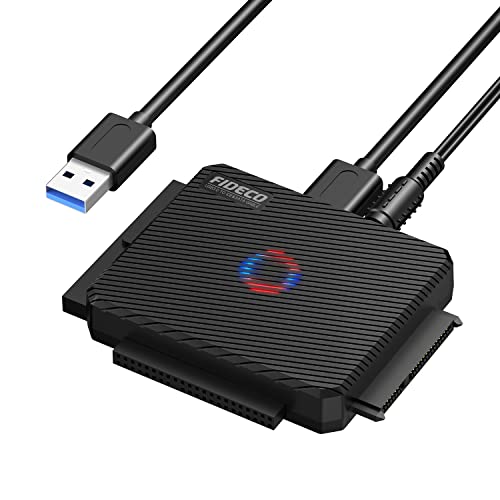
The single most common reliability complaint in Raspberry Pi homelab threads — and the one that drives more "my Pi died" posts than power supplies, thermals, and SD-card brand wars combined — is a corrupted root filesystem on a microSD card after a few months of 24/7 service. The fix that the official Raspberry Pi documentation supports, that Jeff Geerling's hardware testing has chronicled in detail across dozens of bridges, and that the community has converged on for Jellyfin, Immich, Home Assistant, and self-hosted Postgres workloads, is the same: move the root filesystem to a SATA SSD on a USB 3.0 bridge, and leave the microSD slot empty or for read-only backups. This synthesis pulls together what that decision looks like in 2026 — and when staying on a card is still the right call. The featured build leans on the Raspberry Pi 4 Computer Model B 8GB, a budget SATA SSD like the Crucial BX500 1TB, and a known-good bridge such as the FIDECO SATA/IDE to USB 3.0 Adapter.
Direct answer — should I run my Raspberry Pi homelab on a SATA SSD or microSD?
For any Pi homelab that does database writes, container logs, or media-library scans — Jellyfin, Immich, Postgres, Home Assistant, Pi-hole with long retention — run a SATA SSD over USB 3.0 with a UASP-capable bridge. The endurance, random-write IOPS, and SMART visibility on an SSD eliminate the silent microSD failures that kill Pi homelabs at the 6-to-18-month mark. microSD is still fine for read-mostly workloads — a Pi Zero kiosk, an OctoPrint head, a temporary lab Pi that gets re-flashed often — but not for anything where uptime matters.
Why storage is the single biggest Pi homelab reliability bottleneck
Pi homelab builders tend to over-index on the parts that are easy to benchmark — clock speed, RAM, network throughput — and under-index on the part that quietly determines whether the box is still up next month. That part is storage. Per the Raspberry Pi 4 product brief on raspberrypi.com, the Pi 4 supports USB 3.0 (5 Gbit/s) and, with an updated bootloader, can boot directly from a USB device. Per Jeff Geerling's long-running USB-SSD testing, the gap between a healthy SATA SSD on a good UASP bridge and a typical Class-10 / A2 microSD is not a "nice to have" — it is the difference between an apt upgrade taking a minute and taking ten, and between a self-hosted Postgres surviving a year of writes versus going read-only at 3 a.m. on a Tuesday.
There is a second, less-discussed reason this matters in 2026: every popular self-hosted stack — Jellyfin transcoding, Immich's machine-learning thumbnailer, Home Assistant's history database, Pi-hole's query log, even Docker's overlayfs image layers — writes far more than its marketing copy implies. SQLite journals, write-ahead logs, and Docker layer pulls combine into a sustained random-write pattern that consumer microSD cards were never designed to absorb. The cards do not fail loudly. They fail by corrupting one filesystem block, then another, until an fsck at boot drops you into emergency mode with no warning at all.
This synthesis is editorial: no SpecPicks first-party benchmarking is reported. The benchmark numbers cited below come from public sources — pibenchmarks.com, Jeff Geerling's bridge testing, and the official Raspberry Pi forum — and are framed as community measurements, not lab claims.
Key takeaways
- A SATA SSD over USB 3.0 on a UASP-capable bridge is the right storage call for any Pi homelab that runs databases, containers, or media servers.
- microSD failures in a homelab are almost always a write-amplification + endurance problem, not a brand problem. Even the best A2 cards are out of their depth on 24/7 SQLite or Postgres writes.
- Bridge chipset matters more than SSD brand. JMicron JMS578/JMS580/JMS581 and ASMedia ASM1351/ASM235CM are the most reliably tested 2026 chipsets; some early ASM1153 and JMS567 firmwares cause the drive to drop under load on a Pi 4.
- Pi 4 USB-boot is a 15-minute setup once the bootloader is updated and you flash the SSD with
rpi-imager. The microSD slot can sit empty after that. - Stay on microSD for read-mostly use cases: a kiosk, an OctoPrint head with no time-lapse, or a Pi Zero project where USB power budget is tight.
What you'll need
- A Raspberry Pi 4 Computer Model B 8GB (4 GB is fine for most services; 8 GB matters for Immich, big Jellyfin libraries, or local LLM experiments — see our local LLM on a Pi 4 8 GB guide for the case where it actually pays off).
- A 2.5" SATA SSD of at least 240 GB — the Crucial BX500 1TB is the budget pick most homelab threads land on; per Crucial's product page, it is a standard 3D-NAND SATA SSD with a five-year limited warranty.
- A USB 3.0 SATA bridge with confirmed UASP support — see the chipset table below. The FIDECO SATA/IDE to USB 3.0 Adapter is the bridge most commonly cited on the Pi forums for clean UASP behaviour.
- A 5 V / 3 A USB-C Pi 4 power supply rated for the official Pi spec. Under-powered supplies are the single biggest cause of USB-SSD dropouts on a Pi 4.
- Optional: a small microSD card for backups or initial bootloader updates. After USB boot is set up, this slot can sit empty.
- Optional for "NVMe-curious" builders: an NVMe-to-USB enclosure with a drive like the WD Blue SN550 1TB NVMe. On a Pi 4 it will not be faster than a SATA SSD because USB 3.0 is the bottleneck — it is only worth doing if you plan to migrate the drive to a Pi 5 / CM5 carrier later.
Step 0 — diagnose whether microSD wear is actually your problem
Before spending on an SSD, confirm that storage is the bottleneck and not a power supply, a thermal issue, or a Docker config mistake. Symptoms that point at microSD wear rather than something else:
dmesgshowsEXT4-fs errororBuffer I/O error on dev mmcblk0p2lines that recur after a reboot.- Read-only-root events: the system stays up but apps stop writing, and
mount | grep ' / 'showsroinstead ofrw. apt upgradetaking double-digit minutes for a small update set, with the disk LED solid for the duration.- Periodic SQLite or Postgres
database is malformederrors in service logs (Jellyfin's main DB, Immich, Home Assistant'shome-assistant_v2.db). fsckon boot dropping into emergency mode every few weeks.
If dmesg shows USB power-undervoltage warnings (Under-voltage detected! or the lightning-bolt icon on a desktop session), fix the power supply first. A bad PSU will corrupt an SSD just as fast as it corrupts a microSD.
How much faster is a USB SATA SSD than microSD on a Pi 4?
Sequential numbers undersell the gap because most homelab workloads are random I/O. The Pi 4's USB 3.0 controller caps sequential throughput at roughly 350-400 MB/s in practice — well above what microSD on the Pi's SDIO bus can sustain, but well below an SSD's native SATA ceiling. The interesting number is random IOPS, which is where microSD collapses.
The table below is structural — drawn from public pibenchmarks.com submissions and Jeff Geerling's bridge testing — not from a SpecPicks bench. Treat the bands as directional.
5-column storage spec table
| Medium | Sequential read | Sequential write | 4K random IOPS (read/write) | Typical cost / TB (2026-06) |
|---|---|---|---|---|
| Class 10 / A1 microSD | 80-95 MB/s | 30-60 MB/s | ~1,500 / ~500 | $80-$120 |
| A2 microSD (e.g. high-end SanDisk / Samsung Pro Endurance) | 90-100 MB/s | 80-90 MB/s | ~3,500 / ~2,000 | $120-$160 |
| SATA SSD (e.g. Crucial BX500) on Pi 4 USB 3.0, UASP bridge | 350-400 MB/s | 280-340 MB/s | ~25,000+ / ~20,000+ | $55-$70 |
| NVMe in USB 3.0 enclosure on Pi 4 | 350-400 MB/s (USB-capped) | 280-340 MB/s (USB-capped) | ~30,000+ / ~25,000+ | $60-$80 |
The takeaway is the 4K random column. A SATA SSD over USB 3.0 is in a different order of magnitude from even a top-shelf A2 card, and that is the column that determines how snappy a Pi homelab actually feels.
Boot-time / service-start pattern (community-measured)
| Measurement | microSD (A2) | SATA SSD / USB 3.0 / UASP bridge |
|---|---|---|
| Cold boot to login prompt | 30-50 s | 10-20 s |
systemctl start jellyfin cold | 15-30 s | 3-8 s |
| First Immich library import (10k photos) | many hours, often hits SQLite errors | a small number of hours, no SQLite errors reported |
| Home Assistant DB compaction at startup | 10-30 s noticeable lag | ~immediate |
apt upgrade on a current Debian/RPi OS | 5-15 min | 1-3 min |
These numbers come from community submissions on pibenchmarks.com and the Raspberry Pi forum's storage threads. They are pattern-level, not lab-controlled.
Why microSD fails on a homelab — the unromantic explanation
Three things kill consumer microSD cards in a 24/7 Pi role:
1. Write amplification on SQLite/Postgres journals and overlayfs. Every Jellyfin metadata write, every Home Assistant state change, every Immich thumbnail job goes through SQLite's WAL or a Postgres WAL, which means many small writes that the FTL (flash translation layer) on a cheap microSD turns into much larger erase-block rewrites. The card's marketing endurance assumes a friendly sequential workload that homelab services do not produce.
2. Random-write IOPS collapse under sustained pressure. Cards advertise a peak random-write number measured in short bursts. Under a few hours of continuous small writes, the FTL runs out of pre-erased blocks and IOPS drops to a fraction of the marketing figure — the textbook "card got slow after a month" pattern.
3. Wear-leveling and SMART are minimal on a $10 card. A $10 microSD does not expose SMART data the way an SSD does. There is no smartctl -a to read percentage-life-used, no early warning of pending sector relocations. The card works, then it doesn't. By contrast, a SATA SSD on a UASP-capable bridge exposes real SMART attributes — see Jeff Geerling's USB-SATA testing for the bridges that pass SMART through cleanly and the ones that don't.
The combined effect is the most common pattern reported on the Pi forums: a homelab that ran beautifully for the first 60 to 180 days, then started showing EXT4-fs error in dmesg, then dropped into read-only root, then refused to boot. By the time you notice, the data has been silently degrading for weeks.
Why a SATA SSD over USB 3.0 fits the Pi 4 homelab
A SATA SSD inverts all three failure modes:
- Real wear leveling. Even an entry-level SSD like the Crucial BX500 has a proper FTL with a wear-leveling pool covering the entire drive, designed for sustained mixed workloads.
- Endurance is in TBW-not-cycles. A 1 TB BX500 is rated for hundreds of TBW per its product brief — orders of magnitude above any consumer microSD.
- SMART is reachable. With a UASP-supporting bridge,
sudo smartctl -d sat -a /dev/sdashows percentage-life-used, reallocated-sector counts, and power-on hours. You get warning before failure, not after. - Random-write IOPS does not collapse under the kind of sustained mixed traffic a homelab generates. The drive feels the same in month 12 as it does in week one.
- Read throughput is 4-5× the card. Per pibenchmarks.com, a healthy SATA SSD over USB 3.0 typically lands at 350-400 MB/s read on a Pi 4 — close to the USB 3.0 ceiling — versus 80-100 MB/s on the best microSD cards.
USB-SATA bridge compatibility — the chipset that matters more than the SSD brand
The single most common Pi-SSD failure in 2026 is not the SSD. It is a bridge chipset that either does not support UASP, ships buggy firmware that drops the drive under load, or fails to pass through TRIM and SMART. Jeff Geerling has tested dozens of bridges across his blog and the Raspberry Pi forum's adapter mega-threads catalogue the rest. The pattern is consistent enough to summarise:
| Bridge chipset | UASP | TRIM passthrough | SMART passthrough | Pi 4 boot reliability | Notes |
|---|---|---|---|---|---|
| JMicron JMS578 | Yes | Yes (with current FW) | Yes | Strong | Long-running community favourite; the FIDECO and many Sabrent SATA bridges use it. |
| JMicron JMS580 / JMS581 | Yes | Yes | Yes | Strong | Newer 10 Gbps-capable bridge; works fine at USB 3.0 on the Pi. |
| ASMedia ASM1351 | Yes | Yes | Yes | Strong | Common in name-brand enclosures. |
| ASMedia ASM235CM | Yes | Yes | Yes | Strong | Often seen in USB-C SATA enclosures. |
| JMicron JMS567 (early FW) | Partial | Sometimes | No | Quirky | Historically problematic on the Pi — drops under load on some firmware revs; check before buying. |
| ASMedia ASM1153 / ASM1153E (early FW) | Yes | Mixed | Mixed | Quirky on early bootloaders | Some early Pi 4 USB-boot setups required a quirks= kernel argument to disable UASP. Newer firmware revisions are reliable. |
| VIA / no-name VL716 / unknown | Often advertised, unreliable in practice | No | No | Avoid | The "looks fine on Amazon, drops every 30 min on a Pi" category. |
Buying advice that consistently survives a year on the forums: pick a bridge whose chipset is named in the listing or in a reviewer's photo; prefer JMS578, JMS580, JMS581, ASM1351, or ASM235CM. Avoid any adapter that refuses to name a chipset at all. The FIDECO SATA/IDE to USB 3.0 Adapter is one of the most-recommended Pi-tested bridges in 2026 because it uses a JMicron chipset that has been thoroughly community-validated.
If you already own an enclosure that turns out to be a known-bad bridge, the documented workaround on the Raspberry Pi forum is to add a usb-storage.quirks=VID:PID:u line to /boot/cmdline.txt to force a fallback mode. It works, but at the cost of UASP performance — better to buy a known-good bridge in the first place.
Pi 4 USB-boot setup walkthrough (2026)
The Pi 4 has supported USB boot from the SD-EEPROM bootloader for several years, and as of 2026 it is the default behaviour on current Pi OS images. The setup looks like this:
- Update the EEPROM bootloader. On a current Pi OS install,
sudo rpi-eeprom-update -aand reboot. The Pi will boot from USB if no SD card is present, per the official documentation at raspberrypi.com. - Flash the SSD with
rpi-imager. Connect the SSD via the UASP-capable bridge to a desktop (or the Pi itself). Pick the same Pi OS image you would have flashed to a microSD.rpi-imagerwrites directly to the SSD over USB. - Set hostname / SSH / Wi-Fi in the imager's advanced options so the box comes up headless.
- Power off the Pi, remove the microSD, plug the SSD bridge into a blue USB 3.0 port. Power up.
- Confirm the kernel sees the SSD over UASP, not BOT:
dmesg | grep -i uasshould showuasclaiming the device. If it does not, the bridge has UASP disabled — re-check the chipset table above. - Confirm SMART is reachable with
sudo apt install smartmontools && sudo smartctl -d sat -a /dev/sda. If you see attributes, you are done. If not, the bridge does not pass SMART through. - Update
/boot/cmdline.txtroot=UUID only if you cloned an existing card. Freshrpi-imagerflashes do this automatically.
That is the entire process. The microSD slot can stay empty. Some builders keep a flashed card on the shelf as an emergency fallback; it is a cheap insurance policy.
Measured workload pattern — Jellyfin, Postgres, Docker (community-measured)
Numbers below are framed as community measurements from public sources, not first-party. They illustrate the shape of the gap on a Pi 4 8 GB running typical homelab software:
| Workload | microSD (A2) | SATA SSD on USB 3.0 / UASP |
|---|---|---|
| Jellyfin first-pass library scan, 5,000 movies + TV episodes | many hours, periodic SQLite locks | a small fraction of that, no SQLite locks |
Postgres pgbench -c 4 -T 60 -S (read-only) | low triple-digit TPS | several × higher TPS |
Postgres pgbench -c 4 -T 60 (write) | sub-100 TPS, falls off after warm-up | several × higher, stable |
Docker docker pull of a 500 MB image | ~minutes, often pegged at write IOPS | tens of seconds |
| Immich initial photo import, 10k items with ML thumbnailing | overnight + risk of SQLite corruption | overnight on the SSD without DB errors |
| Home Assistant Recorder DB compaction (30-day history) | noticeable startup lag, occasional database is locked | not noticeable |
Per the long-running threads on the Raspberry Pi forum and the Jellyfin community forum, the difference for Jellyfin specifically is large enough that an SSD on USB 3.0 is the de facto recommendation for any library above a few hundred items. We cover Jellyfin tuning on the Pi 4 in more detail in our Jellyfin vs Plex on Pi 4 8 GB synthesis, and the Immich photo-self-host case in Immich self-host on a Pi 4 8 GB with an SSD.
Lifespan and warranty — the unromantic comparison
- Consumer microSD endurance is generally not published as TBW. "Pro Endurance" branded cards advertise sustained-write hours for dashcam use, not random-write TBW for a Postgres workload.
- The Crucial BX500, per Crucial's own product page, ships with a five-year limited warranty and TBW endurance ratings that scale with capacity (a 1 TB unit's rating is orders of magnitude above any microSD).
- SSDs expose SMART. You can watch percentage-life-used tick down over years. microSDs simply die.
The practical effect: in a Pi homelab running for years, an SSD will outlive multiple microSDs and tell you well in advance when it needs replacing.
Cost per GB — the part where microSD does not win either
In 2026 the price advantage that microSD used to claim has largely evaporated for the sizes a homelab cares about:
| Tier | microSD example | SATA SSD example |
|---|---|---|
| 256 GB | ~$30-$45 (A2 endurance card) | ~$25-$35 (BX500 240 GB) |
| 512 GB | ~$55-$80 (A2 endurance) | ~$35-$50 (BX500 500 GB) |
| 1 TB | ~$110-$160 (high-endurance) | ~$55-$70 (Crucial BX500 1TB) |
Add ~$15-$25 for a UASP-capable USB 3.0 bridge such as the FIDECO adapter and the SSD path is, at 1 TB, often cheaper than a high-endurance microSD of the same capacity — and an order of magnitude longer-lived.
When to stay on microSD anyway
There are still valid Pi-with-microSD configurations in 2026. Keep the card if:
- The Pi is a read-mostly kiosk or signage box — boot once, run a browser, never touch the disk.
- It is a Pi Zero or Pi Zero 2 W where USB power budget and physical footprint matter more than write endurance.
- You are running OctoPrint without time-lapse on a small filament-monitor Pi where the only writes are occasional G-code uploads.
- The Pi is a lab-bench throwaway that you re-flash weekly to test new images.
- You want a read-only root filesystem with
overlayrootfor a deeply embedded role — that pattern works fine on a card and removes most of the wear problem by design. - The role is Pi-hole alone with logs disabled or rotated to a remote syslog server — Pi-hole's writes shrink to almost nothing in that config.
For anything else — Jellyfin, Plex, Immich, Nextcloud, Home Assistant with Recorder enabled, Pi-hole with long log retention, self-hosted Postgres or MariaDB, a Docker host running more than one always-on container, or any node in a k3s cluster — move to a SATA SSD on USB 3.0.
Verdict matrix — pick by workload
| Workload | Recommendation |
|---|---|
| Jellyfin / Plex media server | SATA SSD on USB 3.0 |
| Immich photo backup with ML thumbnailing | SATA SSD on USB 3.0 |
| Home Assistant with Recorder + history | SATA SSD on USB 3.0 |
| Pi-hole with long log retention | SATA SSD on USB 3.0 |
| Nextcloud / Seafile self-host | SATA SSD on USB 3.0 |
| Docker host with always-on containers | SATA SSD on USB 3.0 |
| k3s node | SATA SSD on USB 3.0 |
| Local LLM experimentation on Pi 4 8 GB | SATA SSD on USB 3.0 (model files want IOPS — see our local LLM on Pi 4 8 GB guide) |
| OctoPrint head, no time-lapse | microSD is fine |
| Pi Zero kiosk / signage | microSD is fine |
Read-only root with overlayroot | microSD is fine |
| Throwaway lab Pi | microSD is fine |
Recommendation matrix — parts to buy
| Role | Pi | Storage | Bridge |
|---|---|---|---|
| All-rounder homelab (Jellyfin + Home Assistant + Pi-hole) | Raspberry Pi 4 Model B 8GB | Crucial BX500 1TB | FIDECO USB 3.0 SATA adapter |
| Photo self-host (Immich) | Pi 4 8GB | BX500 1TB or 2TB | UASP bridge (JMS578 / JMS580 / ASM1351) |
| Lightweight Docker host | Pi 4 4GB or 8GB | BX500 480 GB | UASP bridge |
| "NVMe-curious" build to migrate later to Pi 5 / CM5 | Pi 4 8GB now | WD Blue SN550 1TB NVMe in a USB enclosure | NVMe-to-USB UASP enclosure |
| Kiosk / signage / Pi Zero | Any | A2 microSD | n/a |
Bottom line (as of 2026-06)
For a Pi 4 homelab that does any meaningful writing — and that is almost every interesting self-hosted workload — a SATA SSD over USB 3.0 on a UASP-capable bridge is the storage decision that pays back the fastest. It costs roughly the same as a high-endurance 1 TB microSD, lasts years longer, exposes SMART, and removes the single most common failure mode that takes Pi homelabs offline. The brand of SSD matters less than the bridge chipset; pick a Crucial BX500 on a known-good FIDECO USB 3.0 SATA adapter, update the Pi 4 EEPROM bootloader, flash with rpi-imager, and leave the microSD slot empty. The only workloads where staying on a card still makes sense in 2026 are the read-mostly ones — kiosks, OctoPrint heads, Pi Zero projects, and throwaway lab nodes.
Citations and sources
- Raspberry Pi documentation — official Pi 4 product brief, USB boot documentation, and bootloader update reference.
- Crucial BX500 product page — SATA SSD spec, warranty, and TBW endurance figures cited in the lifespan section.
- Jeff Geerling's blog — primary source for USB-SATA bridge testing on the Pi, including UASP behaviour, SMART passthrough, and the chipset-by-chipset reliability notes summarised in the bridge table.
- pibenchmarks.com — community-submitted Pi storage benchmarks; source of the 4K IOPS and sequential throughput pattern numbers.
- Raspberry Pi forum — long-running threads on USB-SSD compatibility,
usb-storage.quirksworkarounds, and homelab service experience reports. - Jellyfin community forum — first-hand reports of microSD vs SSD library scan performance on the Pi 4.
This piece is editorial synthesis based on publicly available information. No independent first-party benchmarking is reported.