Classic retro RPGs remain some of the most replayed games in the medium — not out of nostalgia alone, but because turn-based and semi-real-time combat systems from the 16-bit and early-3D eras still hold up as tightly designed games. This guide rounds up 15 of the most consistently recommended classic RPGs, plus what it actually takes to run them well on hardware you probably already own.
Why Classic Retro RPGs Still Hold Up
The genre conventions that define modern RPGs — job systems, branching narratives, party-based tactics — were largely established during the 16-bit and 32-bit eras. Per Wikipedia's entry on Chrono Trigger, the game's active time battle system and New Game+ structure are frequently cited as influential on later RPG design, and the game continues to see modern ports decades after its original release. Similar staying power shows up across the genre: Square's Final Fantasy VI is regularly cited by critics and retrospectives as one of the strongest ensemble narratives of the era, and EarthBound built a cult following that directly inspired later indie RPGs, including Toby Fox's Undertale.
These games also benefit from a practical advantage modern AAA RPGs don't have: they were designed for the hardware constraints of their time, which means they run on essentially anything today — a Raspberry Pi, a low-power mini PC, or a phone.
The 15 Classic Retro RPGs Worth Playing First
This list spans console JRPGs, action-RPGs, and classic PC computer RPGs (CRPGs) — the three sub-genres readers usually mean when they ask for "classic retro RPGs."
| Game | Original Platform | Sub-genre | Where to Play Now |
|---|---|---|---|
| Chrono Trigger | Super Nintendo (1995) | Turn-based JRPG | Steam, mobile, Nintendo Switch |
| Dragon Quest IV: Chapters of the Chosen | NES (1990), remade for DS | Turn-based JRPG | Nintendo DS, mobile |
| Phantasy Star IV: The End of the Millennium | Sega Genesis (1994) | Turn-based sci-fi JRPG | Sega Genesis Mini, emulation |
| Final Fantasy VI | Super Nintendo (1994) | Turn-based JRPG | Steam, mobile, Switch |
| EarthBound | Super Nintendo (1994/1995) | Turn-based JRPG | Nintendo Switch Online |
| Secret of Mana | Super Nintendo (1993) | Real-time action RPG | Steam, mobile |
| Suikoden II | PlayStation (1998) | Turn-based JRPG | PS4/PS5 via PS Classics |
| Illusion of Gaia | Super Nintendo (1994) | Action RPG | Emulation |
| Fallout 2 | PC (1998) | Isometric CRPG | GOG, Steam |
| Baldur's Gate II: Shadows of Amn | PC (2000) | Party-based CRPG | GOG, Steam (Enhanced Edition) |
| Ultima VII: The Black Gate | PC (1992) | Open-world CRPG | GOG |
| Wizardry: Proving Grounds of the Mad Overlord | Apple II (1981), various ports | Dungeon-crawler CRPG | Modern remakes/collections |
| Lunar: Silver Star Story | Sega CD (1992) | Turn-based JRPG | PSP/mobile remakes |
| Breath of Fire II | Super Nintendo (1994) | Turn-based JRPG | Wii U Virtual Console (historically) |
| Shining Force II | Sega Genesis (1993) | Tactical RPG | Sega Genesis Mini, emulation |
A few notes on picking where to start: if you want the shortest path into the genre's most influential design ideas, start with Chrono Trigger or Final Fantasy VI. If you'd rather play something closer to a modern CRPG's ancestor — the games that directly inform titles like Baldur's Gate 3 — start with Fallout 2 or Baldur's Gate II, both documented in detail on Wikipedia. If you're coming from console emulation and want a side-by-side on which retro plug-and-play device or emulation box gets you there fastest, our SNES Classic vs. Sega Genesis Mini vs. RetroPie comparison covers exactly that decision.
How to Play These Games on Modern Hardware
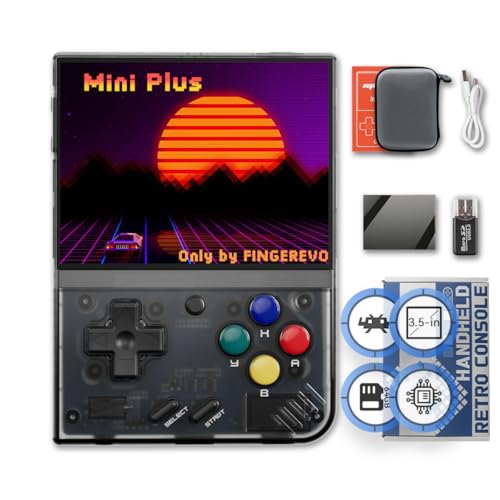
The good news: none of these games need serious hardware. RetroArch's own project documentation describes its 16-bit-era cores (Super Nintendo, Genesis) and PS1-era cores as designed to run comfortably on low-power devices, which is why RetroArch and similar frontends are the standard way enthusiasts play this catalog on PC, Raspberry Pi, and handheld emulation devices like the Miyoo Mini Plus alike, per RetroArch's official site.
That headroom matters more once you start layering enhancements on top of the base emulation:
- Upscaling filters (xBRZ, HQx, CRT shaders) smooth out pixel art for large 4K displays, at the cost of extra GPU work per frame.
- HD texture packs for PS1-era titles increase VRAM and shader load compared to native rendering.
- Save states, rewind, and netplay add modest CPU overhead on top of the base emulation core.
None of this pushes a modern GPU — even a mid-range one — anywhere near its limits, since the underlying game logic was written for 1990s consoles. If you're already weighing CPU choices for a local AI or emulation-adjacent build, our breakdown of CPU core counts for a local-LLM rig is a useful reference point for how modest workloads like emulation compare to genuinely CPU-heavy tasks.
Building (or Borrowing) a Retro-Capable PC
You don't need a dedicated retro rig. A few practical paths, in order of effort:
- Use whatever PC or laptop you already own. Emulating SNES, Genesis, and PS1-era RPGs is a light workload; almost any machine from the last decade handles it.
- Add a Raspberry Pi as a dedicated retro box. If you go this route, make sure the power supply is actually rated for the board — the Raspberry Pi 5 is the standard dedicated retro-box choice, and our Raspberry Pi 5 power supply guide covers the common under-powering mistakes that cause crashes mid-game.
- Pair a 4K monitor for upscaled pixel art. Sprite-based RPGs benefit from a sharp, color-accurate panel when run through upscaling filters — see our look at the KOORUI 27-inch 4K QD-Mini LED paired with an RTX 3060 for a budget-friendly setup that handles both retro emulation and modern titles.
If your retro PC build is missing analog audio output — common on modern motherboards that have trimmed onboard audio jacks — a plug-and-play USB sound card like the Sabrent USB External Stereo Sound Card ($8.99) is a cheap way to restore a dedicated audio line for speakers or a CRT-style setup without touching drivers.
Getting the Most Out of the Experience
Controls and audio matter more for RPGs than raw horsepower does. A few areas worth a small investment:
- Input: turn-based RPGs are forgiving of input lag compared to action games, but a responsive mouse still matters for menu-heavy CRPGs like Fallout 2 or Baldur's Gate II, where you're clicking through inventories and dialogue trees constantly. The Razer DeathAdder V2 ($19.99) is a reasonable, inexpensive option if your current mouse is showing its age. If you're weighing whether dedicated peripherals are worth the money at all for a given genre, our sim-racing shifter breakdown walks through that cost/benefit logic in a different context, but the same reasoning applies here.
- Audio: JRPG soundtracks — Yasunori Mitsuda's Chrono Trigger score and Nobuo Uematsu's Final Fantasy VI score in particular — are frequently singled out in retrospectives as some of the best video game music of the era. A comfortable pair of over-ear headphones, like the Million Sold Classic E7 active noise-cancelling headphones ($39.99), makes long RPG sessions more pleasant, especially if you're playing somewhere shared.
- Streaming/cloud alternatives: if you'd rather not manage local emulation at all, cloud gaming services have expanded their retro and back-catalog libraries; our Xbox Cloud Gaming hardware breakdown covers what you actually need on the client side to make cloud-streamed play feel responsive.
Quick Decision Table
| If you want... | Start with |
|---|---|
| The most influential JRPG design template | Chrono Trigger |
| A tactical, ensemble-cast JRPG | Final Fantasy VI or Shining Force II |
| A cult classic with a strong sense of humor | EarthBound |
| The ancestor of modern isometric CRPGs | Fallout 2 or Baldur's Gate II |
| An open-world CRPG with unusual narrative freedom | Ultima VII: The Black Gate |
| A real-time action RPG rather than turn-based | Secret of Mana |
FAQ
What's the single best classic retro RPG to start with? Chrono Trigger is the most commonly recommended entry point — its active time battle system and multiple endings hold up without much of a learning curve, per its long-standing critical reputation.
Do I need the original console hardware to play these games? No. Most titles on this list have official re-releases on Steam, mobile, or Nintendo's online services, and the rest are commonly played through open-source emulators like RetroArch.
What PC specs do I need to emulate 16-bit and PS1-era RPGs? Very little. RetroArch's documentation notes its cores for these eras are built to run on low-power hardware, so nearly any CPU/GPU from the last several years has ample headroom.
Are there official remasters of these classic RPGs? Several — Chrono Trigger, Dragon Quest IV, Final Fantasy VI, and EarthBound all have official modern re-releases, which is the safest way to replay them.
Is emulating classic RPGs legal? Emulator software itself is generally legal; the risk is in how ROM files are sourced. Official re-releases avoid the question entirely where available.
What's a good display for playing upscaled retro RPGs? A color-accurate 4K monitor makes upscaled pixel art look sharp — see our KOORUI 27-inch 4K QD-Mini LED breakdown for a budget-friendly option.
Citations and sources
- Chrono Trigger — Wikipedia
- Chrono Trigger — Steam store page
- Dragon Quest IV — Wikipedia
- Phantasy Star IV: The End of the Millennium — Wikipedia
- Final Fantasy VI — Wikipedia
- EarthBound — Wikipedia
- Secret of Mana — Wikipedia
- Suikoden II — Wikipedia
- Fallout 2 — Wikipedia
- Ultima VII: The Black Gate — Wikipedia
- RetroArch — official project site and documentation
This piece is editorial synthesis based on publicly available information. No independent first-party benchmarking is reported.