Building a late 2000s Windows XP gaming PC means choosing between two rival platforms — Intel's Pentium 4/D line and AMD's Athlon 64 — pairing one with a period-correct GPU like the GeForce 7900 GT or Radeon X1950 Pro, and then deciding how much modern reliability to graft onto an otherwise 2006-era machine. This synthesis walks through the parts list, the driver and compatibility gotchas that trip up most XP restorations, and where it makes sense to use a modern drive or cable instead of hunting down a period-correct original.
Essential components for a late 2000s Windows XP gaming PC
The core of any XP-era gaming rig is the CPU/GPU pairing, and restoration communities have converged on a fairly narrow set of options that were considered mainstream-to-enthusiast hardware between roughly 2005 and 2008.
CPU: Pentium 4/D vs. Athlon 64
| Platform | Socket | Notes |
|---|---|---|
| Intel Pentium 4 / Pentium D | LGA775 | Clocked up to the high 3GHz range in its final revisions; widely available and cheap today, per Wikipedia's Pentium 4 entry |
| AMD Athlon 64 | Socket 939 / AM2 | K8 architecture; period reviews and Wikipedia's Athlon 64 page both document AMD's per-clock gaming advantage over the contemporary Pentium 4 line |
Either platform is period-correct. Athlon 64 builds tend to feel snappier in period benchmarks at similar clock speeds, while Pentium 4/D boards and chips are generally easier to find secondhand, which matters more for a restoration project than a small performance gap that few will notice outside of frame-time analysis.
GPU: GeForce 7900 GT vs. Radeon X1950 Pro
| GPU | Vendor | Notes |
|---|---|---|
| GeForce 7900 GT | NVIDIA | Based on the G71 chip, part of the GeForce 7 series launched in 2006, per Wikipedia |
| Radeon X1950 Pro | ATI | Based on the RV570 chip, part of the Radeon R500 series, launched later in 2006, per Wikipedia |
Both cards support DirectX 9.0c and Shader Model 3.0, which covers essentially the entire XP-era game library — Half-Life 2, Half-Life 2: Episode One/Two, Oblivion, and World of Warcraft all target this feature set, per PCGamingWiki's Half-Life 2 entry. Driver support for both cards ended years ago on Windows Update, so legacy driver packages have to be sourced from vendor archives or community mirrors such as VOGONS, the long-running vintage-computing forum where driver archival threads for this exact hardware generation are actively maintained.
RAM: DDR2 in the 512MB–2GB range
DDR2 at 533–800MHz was the mainstream memory standard across this entire window, and 1-2GB was the practical ceiling for a 32-bit Windows XP install (XP's 32-bit kernel caps usable RAM around 3.2-3.5GB regardless of how much is installed). More than 2GB rarely helps gaming performance on period titles and mostly matters if the build will also run period productivity or modding tools.
For a broader look at how memory requirements have shifted since this era, see how 48GB vs. 64GB of DDR5 changes gaming and AI workloads on current hardware — useful context for understanding just how far memory capacity expectations have moved in twenty years.
Modern upgrades for reliability without sacrificing period accuracy
A period-correct build doesn't mean every component should be a 20-year-old part on borrowed time. A few substitutions preserve the look and software behavior of the original machine while removing the most common points of failure.
Power supply
Original PSUs from this era are now well past their intended service life, and a failing PSU is one of the more common causes of collateral hardware damage in restoration projects. Swapping in a modern 80 PLUS Bronze-certified unit — a certification tier defined as a minimum of 82% efficiency at 20%, 50%, and 100% load (85% at 50% load), per Wikipedia's 80 Plus entry — is the standard fix. The case exterior stays untouched, so the build still looks the part.
Storage
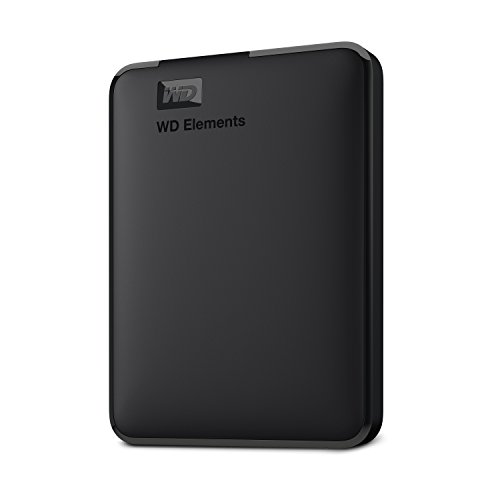
Original IDE or early SATA hard drives from this generation are mechanically at end-of-life, and clicking or slow-degrading drives are a frequent cause of corrupted XP installs. Rather than gambling on a 20-year-old spinning disk for anything beyond a nostalgia demo, most restorers keep the era-correct drive (or a small period SSD adapter) for the boot install and move bulk game files, ISOs, and backups to a modern external drive over USB. The WD Elements line covers this well across capacities — the 4TB, 5TB, and 6TB models — as does the Seagate One Touch 8TB for larger game archives. Windows XP recognizes USB mass-storage drives natively as long as the drive doesn't require a driver newer than what XP's built-in USB stack supports, which none of these do.
For a modern take on pairing storage with a gaming rig, see this breakdown of SSD and controller pairing for a living-room gaming PC — the reliability logic (keep the boot drive simple, offload bulk storage) carries over directly from retro builds to current ones.
Audio
A Creative Sound Blaster X-Fi card, launched in 2005, is the audio card most restoration guides point to for authentic EAX-era positional audio, per Wikipedia's Sound Blaster X-Fi entry. Its optical S/PDIF output pairs with a standard Toslink optical cable to feed a modern AV receiver or soundbar digitally, skipping the analog output stage entirely and avoiding the hum and noise floor issues common to two-decade-old analog audio circuitry.
Achieving authentic 2000s aesthetics: case and peripherals
A steel-tower case with front-panel USB 2.0 ports is the visual signature of this era — beige had largely given way to brushed steel and the first wave of case-window builds by the mid-2000s. A 19–22 inch CRT monitor is the single biggest aesthetic and functional differentiator versus a modern build: CRTs display period-correct low resolutions (1024×768, 1280×1024) without the scaling artifacts an LCD introduces, and many period games were tuned assuming CRT color response and lack of input lag.
For a sense of how far case and cooling design has moved since this generation, see this watercooled gaming and networking rack build guide — useful contrast for anyone deciding how much of the original case philosophy to keep versus modernize.
Windows XP gaming: software and driver compatibility
DirectX 9.0c is the baseline redistributable to install immediately after a fresh Windows XP setup — it's the version most XP-era titles, including Half-Life 2 and World of Warcraft, shipped against, per Wikipedia's DirectX entry and PCGamingWiki's Half-Life 2 page. Because NVIDIA and ATI stopped shipping XP drivers for this hardware generation years ago, legacy driver installers have to be sourced from archived vendor pages or community-maintained mirrors; VOGONS is the most consistently cited source for this specific hardware generation's driver archive.
For titles that predate this era's Windows 98/ME-era assumptions, DOSBox remains the standard compatibility layer rather than trying to coax XP itself into running them natively.
Comparing this build to where PC gaming hardware has gone since
A GeForce 7900 GT or Radeon X1950 Pro was a genuinely capable mid-to-high-end card in 2006. Placed next to current-generation hardware, the gap illustrates just how much GPU performance has scaled: see how the RTX 5090 compares to the RTX 3090, the RTX 5090 against RTX 4080, and the RTX 5090 against RX 9070 XT for a sense of scale. For readers weighing whether local hardware is even necessary anymore, this overview of Xbox Cloud Gaming's hardware requirements is a useful counterpoint — cloud streaming solves the access problem the opposite way a restoration project does, by removing local hardware from the equation entirely rather than restoring it.
FAQs
What CPU is best for a period-correct Windows XP gaming PC? A late-model Pentium 4/Pentium D on LGA775 or an AMD Athlon 64 on Socket 939/AM2 are the two mainstream choices restoration guides point to; per Wikipedia's entries on both platforms, AMD's K8 architecture generally had a per-clock gaming edge, while Pentium 4/D parts are more commonly available secondhand today.
Can I use a modern SSD or external drive in a Windows XP gaming PC? Yes — Windows XP's native USB mass-storage support handles external drives like the WD Elements or Seagate One Touch lines without extra drivers, making them a straightforward way to add reliable bulk storage without touching the internal boot drive.
What GPU should I use for authentic 2000s gaming on Windows XP? The GeForce 7900 GT and Radeon X1950 Pro are the two cards most consistently cited, both supporting DirectX 9.0c and Shader Model 3.0, which covers the full XP-era game library.
Do XP-era games need DirectX 9.0c specifically? Most do — Half-Life 2 and World of Warcraft both target DirectX 9.0c and Shader Model 3.0, per PCGamingWiki and Wikipedia's DirectX version history, making the 9.0c redistributable a standard first install step.
Is it safe to replace the original power supply in a vintage build? Yes, and it's the most commonly recommended reliability upgrade. Original-era PSUs are past their designed service life; an 80 PLUS Bronze-certified replacement removes the single largest point of failure without changing the case's external appearance.
How do I get period-accurate sound out of a Windows XP retro build? A Creative Sound Blaster X-Fi card paired with a standard Toslink optical cable into a modern receiver reproduces period EAX-era audio while avoiding the noise-floor issues common to aging analog output stages.
Citations and sources
- Pentium 4 — Wikipedia
- Athlon 64 — Wikipedia
- GeForce 7 series — Wikipedia
- Radeon R500 series — Wikipedia
- DirectX — Wikipedia
- 80 Plus — Wikipedia
- Sound Blaster X-Fi — Wikipedia
- Half-Life 2 — PCGamingWiki
- VOGONS vintage computing forum
This piece is editorial synthesis based on publicly available information. No independent first-party benchmarking is reported.