Why Windows XP Still Matters for Retro PC Gaming in 2026
Windows XP shipped in 2001, and Microsoft ended extended support in April 2014, per Microsoft's own product lifecycle documentation. More than a decade past end-of-life, XP remains the preferred environment for a specific slice of PC gaming history: early-2000s titles built against DirectX 8/9, games with copy-protection schemes (SafeDisc, SecuROM) that modern Windows no longer supports natively, and software that assumes a 32-bit-only driver stack. Community references like PCGamingWiki and the Vogons retro-hardware forum catalog hundreds of titles — Half-Life, the original Warcraft III, and early-2000s Need for Speed and Sims entries among them — where XP still offers the most reliable out-of-the-box compatibility path, ahead of compatibility layers on Windows 10/11.
The catch: nobody manufactures a "Windows XP gaming laptop" in 2026. The search term describes an assembly problem, not a shopping list — pairing a laptop chassis that still has usable legacy I/O and driver support with either a genuine XP install or a virtualized one. This guide covers what's realistic to build today, alongside our companion Windows XP Gaming Setup Guide, which walks the desktop side of the same problem in more install-level detail.
What "Windows XP Gaming Laptop" Actually Means in 2026
There are three practical paths, and they trade compatibility against convenience:
| Approach | Compatibility | Setup difficulty | Best for |
|---|---|---|---|
| Native dual-boot on period hardware (2005–2009 laptop) | Highest — real XP drivers, real hardware | Low if the laptop's battery/screen still work | Purists chasing exact-era accuracy |
| Dual-boot XP on modern hardware via legacy BIOS/CSM | Medium — depends entirely on chipset driver availability | High — most 2020s laptops have no XP drivers at all | Enthusiasts willing to do driver archaeology |
| XP inside a VM (VirtualBox/VMware) on a modern Windows 11 laptop | Medium — GPU passthrough is limited, but CPU-bound titles run fine | Low | Most readers — best balance of practicality and modern hardware |
Per discussion threads on Vogons and retro-gaming community forums, the VM route has become the default for anyone not specifically chasing hardware-accuracy — modern CPUs are so far ahead of XP-era chips that even a software-rendered graphics path handles most 2001–2006-era titles comfortably. Dual-boot on genuinely modern hardware is the hardest of the three, because current chipsets, Wi-Fi, and audio controllers were never issued XP drivers by their vendors in the first place.
Hardware to Target If You're Buying a Laptop for This
If dual-boot compatibility — not a VM — is the goal, the driver-availability reality points at older, not newer, hardware:
- CPU: A pre-2010 dual-core chip is often easier to drive under XP than newer silicon, since Intel and AMD stopped shipping XP chipset drivers for platforms released after roughly the Sandy Bridge / early Bulldozer generation.
- GPU: DirectX 9-class GPUs (GeForce 6/7/8 series, Radeon X1000–HD 4000 series) have the most mature, best-tested XP driver packages. Later discrete mobile GPUs largely dropped official XP support entirely.
- RAM: XP is fundamentally a 32-bit-oriented OS; 2GB is workable and 4GB is comfortable. Going past roughly 3.2GB of usable RAM requires the little-tested PAE-enabled 64-bit XP builds most games were never validated against.
- Storage: Swapping in an SSD on period hardware is one of the few universally safe upgrades — XP's IDE/AHCI stack handles SATA SSDs without extra configuration on most 2006-and-later chipsets, and it meaningfully cuts both boot and load times versus the original spinning HDD.
For display pairing on the same era of games, see our CRT Monitor for Retro Gaming guide and the companion Best CRT Monitor for Retro Gaming: 2026 Buying Guide.
Storage and Accessories Worth Adding to an XP Retro Build
Whichever route you take, plan for file-transfer and archive storage that doesn't depend on XP's native USB mass-storage driver behaving perfectly on the first try (it usually does, but budget for the exception). External drives are also the simplest way to keep game ISOs, no-CD patches, and driver packages organized outside an aging internal drive:
- WD's 2TB Elements portable drive ($105.99) covers a modest working ISO/patch archive.
- For a larger library, step up to the WD 5TB Elements ($238.88) or WD 6TB Elements ($297.00) — both stay on plain USB mass-storage, which XP handles natively without extra drivers.
- If the build lands on a modern USB-C-only laptop running XP in a VM, the Seagate One Touch 8TB desktop drive ($286.76–$289.99) is worth considering for the host-OS side of the archive.
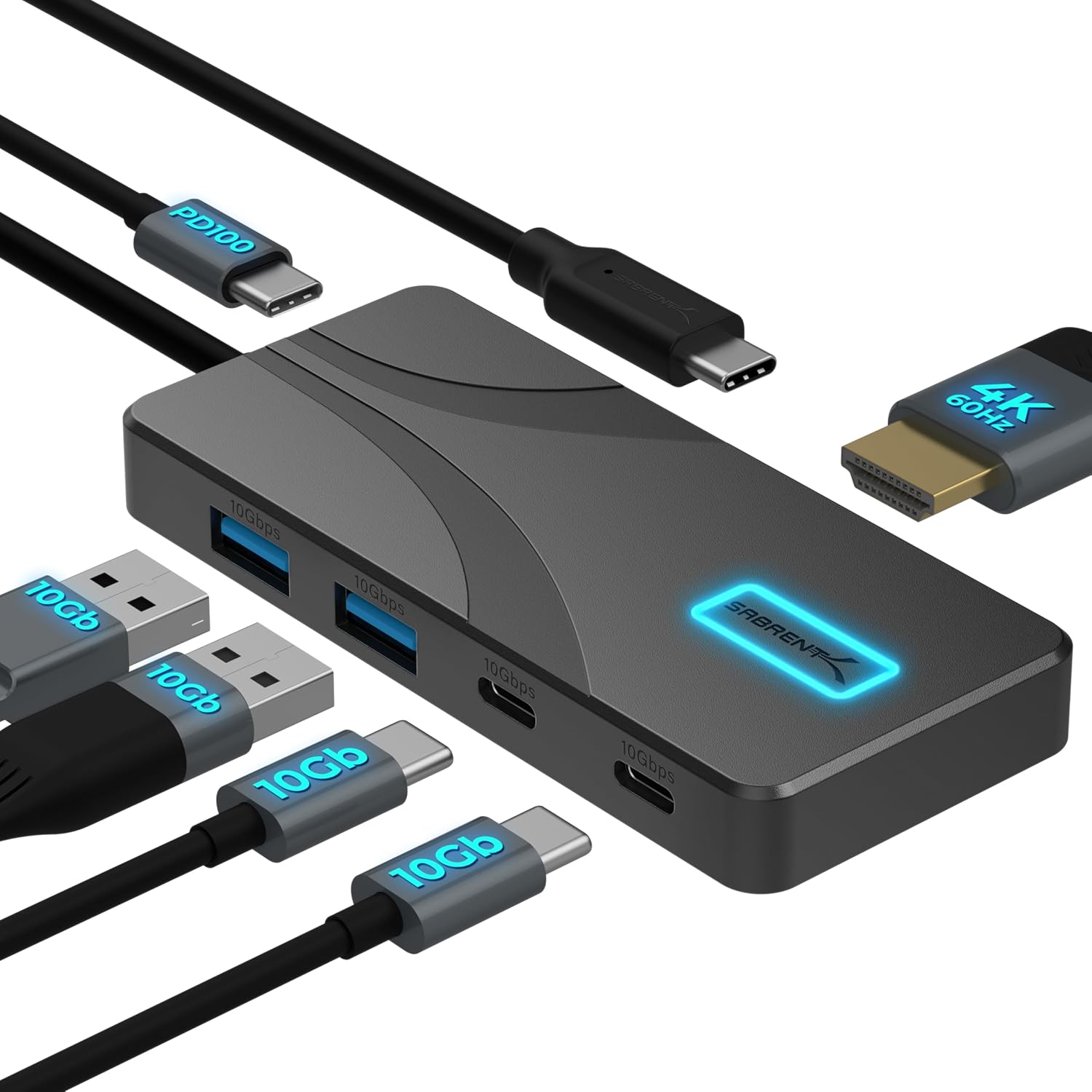
- A SABRENT 5-in-1 USB-C hub ($24.95) helps bridge legacy USB-A peripherals — controllers, dongles, card readers — to a modern chassis that dropped USB-A ports entirely.
None of this hardware needs to be XP-certified itself; it sits on the modern side of the setup, feeding files into whichever XP environment you land on. (Amazon prices shown reflect the last recorded catalog price and may vary — check the listing for current pricing.)
Installing and Configuring Windows XP on Modern Hardware
For readers attempting the harder dual-boot-on-modern-hardware path rather than a VM, the general community-documented sequence — covered step by step in our Windows XP Gaming Setup Guide — runs roughly as follows:
- Enable legacy BIOS / CSM boot mode and disable Secure Boot; XP's installer cannot boot under pure UEFI.
- Partition storage with MBR, not GPT — XP's installer does not support booting from a GPT disk without extra tooling.
- Slipstream storage-controller drivers into the install media ahead of time if the laptop uses NVMe or a newer AHCI controller XP doesn't recognize out of the box; this is the most commonly reported install-blocking failure on Vogons.
- Install chipset, GPU, and audio drivers from the manufacturer's own late-2000s driver archive rather than Windows Update, since XP's built-in driver set is minimal.
- Budget meaningfully more disk space than XP's official minimum — 20GB or more leaves headroom for a game library, patches, and DirectX/runtime redistributable installs.
Driver and Compatibility Pitfalls to Expect
The most consistent complaint across retro-hardware communities isn't CPU or GPU performance — it's peripheral and connectivity support. Modern Wi-Fi chipsets, USB-C controllers, and NVMe storage controllers were never issued XP drivers by their vendors, which is exactly why VM-based approaches have become the more common recommendation for anyone without a specific hardware-purist goal. If networking matters for a build (patch downloads, local multiplayer), a wired USB-to-Ethernet path is generally more reliable under XP than sourcing a working Wi-Fi driver for hardware released after roughly 2012.
For adjacent display considerations on genuinely period-accurate builds, see CRT PC Monitors for Retro Gaming: 2026 Buying Guide, Modern CRT Monitor for Retro Gaming: The 2025 Reality Check, and CRT vs Monitor for Retro Gaming: Which Wins in 2026 — the display side of an XP build carries as many compatibility quirks as the OS install itself. If the build pairs a modern SSD with an older chassis, our Best Budget SSDs for Gaming PCs and Consoles in 2026 roundup covers drives suited to that internal swap.
The Bottom Line
There's no shortcut back to a genuine, factory-fresh Windows XP gaming laptop in 2026 — that hardware window closed with Microsoft's 2014 end-of-support date. What's left is a choice between chasing period-accurate dual-boot hardware from the mid-to-late 2000s for maximum compatibility, or running XP as a VM on any current Windows 11 laptop for far less setup effort at the cost of GPU-bound title support. For most readers who just want early-2000s titles running reliably without a driver-archaeology project, the VM path — paired with an external archive drive for the game library — is the more realistic 2026 answer.
Citations and sources
- https://learn.microsoft.com/en-us/lifecycle/products/windows-xp
- https://www.pcgamingwiki.com/wiki/Windows_XP
- https://www.vogons.org/
- https://www.techpowerup.com/
- https://www.reddit.com/r/retrogaming/
This piece is editorial synthesis based on publicly available information. No independent first-party benchmarking is reported.