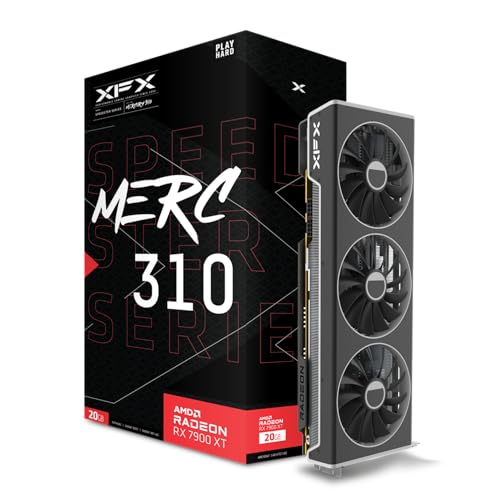
Hardware outlets don't hand out "greatest GPU" recognition for raw frame counts alone. Looking back across roughly a decade of releases — from Nvidia's Maxwell-era GeForce GTX 980 through AMD's CDNA 3 Instinct MI300X — the cards that earned lasting recognition are the ones that reset expectations for memory capacity, power efficiency, or a workload nobody expected at that price. This synthesis walks through the GPUs public benchmarks and manufacturer specifications repeatedly single out, from consumer gaming flagships to data-center accelerators, and what actually separated them from the pack.
The 2010s: How Award-Winning GPUs Redefined Gaming
GeForce GTX 980 (2014)
Nvidia's GeForce GTX 980 launched in September 2014 as the first consumer card built on the Maxwell architecture, pairing 4GB of GDDR5 with a 165W TDP that was unusually low for a flagship of its era, per its Wikipedia specification history. At a time when 1440p was still considered a demanding target for most gaming rigs, the efficiency-per-watt gain over the prior Kepler generation — not a specific resolution milestone — is what period coverage flagged as the real breakthrough.
Radeon RX 580 (2017)
AMD's Radeon RX 580 arrived in April 2017 as a refined, higher-clocked revision of the RX 480, built on the Polaris architecture with 8GB of GDDR5 available on its higher-capacity SKU. That memory headroom at a mid-range price point was uncommon in 2017, which is why the RX 580 became a recurring pick in early VR-readiness buying guides even though it wasn't a flagship part.
| Card | Launch | Architecture | Memory | Notable trait |
|---|---|---|---|---|
| GeForce GTX 980 | Sep 2014 | Maxwell | 4GB GDDR5 | Efficiency-per-watt leap over Kepler |
| Radeon RX 580 | Apr 2017 | Polaris | 8GB GDDR5 | Mid-range VRAM headroom |
2020s Innovations: Ray Tracing and AI Acceleration
GeForce RTX 3090 (2020)
The RTX 3090 launched in September 2020 on Nvidia's Ampere architecture with 24GB of GDDR6X — the largest VRAM pool shipped on a consumer GeForce card at that point — and Nvidia marketed it explicitly around 8K gaming when paired with DLSS upscaling. That memory capacity, more than raw shader throughput, is what made the RTX 3090 a crossover pick for early local machine-learning experimentation as well as gaming. Current RTX 3090 benchmark data tracks how it holds up against newer silicon.
Radeon RX 6900 XT (2021)
AMD answered in December 2020 with the RX 6900 XT, its RDNA 2 flagship pairing 16GB of GDDR6 with a large on-die Infinity Cache designed to narrow the effective bandwidth gap against Nvidia's wider GDDR6X bus. It was the release that convinced much of the enthusiast press AMD could contest the high end again after several generations spent focused on mid-range value — see the RX 6900 XT benchmark page for current standing.
Professional GPU Awards: From MI210 to MI300X
Award conversations shift entirely once workloads move to the data center, where memory capacity and bandwidth — not gaming frame rates — decide which accelerators win recognition.
AMD Instinct MI210
The MI210 is the single-die, PCIe-card member of AMD's MI200 accelerator family introduced in late 2021, built on the CDNA 2 architecture with 64GB of HBM2e. It gave AMD a mainstream server-card counterpart to the dual-die MI250X without requiring the larger OAM form factor.
AMD Instinct MI300X
By December 2023, AMD's MI300X moved to CDNA 3 with 192GB of HBM3 — roughly three times the MI210's capacity — and up to 5.3 TB/s of memory bandwidth. That capacity jump is aimed squarely at large-language-model inference, where fitting a bigger model on a single card matters as much as raw compute throughput. Nvidia's competing H100 accelerator, built on the Hopper architecture, ships with 80GB of HBM3 in its SXM5 configuration, per Nvidia's own data-center product page — making memory footprint one of the clearest differentiators between the two platforms.
| Accelerator | Architecture | Memory | Launched |
|---|---|---|---|
| AMD Instinct MI210 | CDNA 2 | 64GB HBM2e | Late 2021 |
| Nvidia H100 (SXM5) | Hopper | 80GB HBM3 | 2022 |
| AMD Instinct MI300X | CDNA 3 | 192GB HBM3 | Dec 2023 |
What Makes a GPU an Award Contender Today
Radeon RX 7900 XTX
AMD's RX 7900 XTX, launched December 2022 on the RDNA 3 architecture, pairs 24GB of GDDR6 with a 384-bit memory interface — matching the RTX 3090's VRAM total at a lower launch price. That price-to-capacity argument is what earned it repeated "best value flagship" recognition from hardware outlets covering the generation, even where it trailed Nvidia's top card in ray-traced workloads.
Where the H100 fits the conversation
The H100 isn't a gaming part, but it's routinely cited alongside consumer flagships in "greatest GPU" retrospectives because Hopper's 80GB HBM3 configuration became the reference point every subsequent AI-training accelerator — including the MI300X — was measured against.
How to Choose a GPU Beyond Awards
An award tells you a card reset expectations for its class at launch. It doesn't tell you which card fits your workload today.
- Match architecture to workload. A card praised for ray-tracing performance isn't necessarily the best pick for memory-bound tasks like large local AI models, where VRAM capacity (as with the RTX 3090's 24GB or the MI300X's 192GB) matters more than shader count.
- Weigh software ecosystem maturity. Nvidia's CUDA tooling has a longer track record across AI and compute frameworks than AMD's ROCm stack, which is a real consideration for anyone buying a card for compute rather than gaming.
- Check current pricing before assuming a spec sheet win means value. A side-by-side compare of current listings is a faster way to judge value than reading a launch-era award writeup years later.
Frequently Asked Questions
What made the GTX 980 stand out when it launched in 2014? Per Wikipedia's GeForce 900 series entry, the GTX 980 was Nvidia's first Maxwell-architecture flagship, pairing 4GB of GDDR5 with a 165W TDP that was notably low for a flagship of that era — reviewers at the time framed the efficiency gain, not a specific resolution target, as the real breakthrough.
Is a 24GB card like the RTX 3090 or RX 7900 XTX still relevant years after launch? Both cards' large VRAM pools (24GB GDDR6X and 24GB GDDR6 respectively) keep them relevant for memory-bound workloads like local AI inference and high-resolution texture work, even as raw shading throughput is surpassed by newer generations.
What's the practical difference between AMD Instinct MI210 and MI300X? The MI210 is a single-die CDNA 2 accelerator with 64GB of HBM2e, while the MI300X moves to CDNA 3 with 192GB of HBM3 and roughly 5.3 TB/s of bandwidth — about triple the memory capacity, which matters most for fitting larger AI models on a single card.
Does an "award-winning" GPU always mean the best value? Not necessarily — awards typically recognize a card that reset expectations for its class, which is a different question than which card is the best buy for a specific budget or workload today.
How does AMD's RX 7900 XTX compare to Nvidia's data-center-class H100? They aren't direct competitors — the RX 7900 XTX is a 24GB GDDR6 gaming flagship on a 384-bit bus, while the H100 is an 80GB HBM3 data-center accelerator built for AI training and inference, not gaming.
What should I check before buying a GPU instead of just chasing awards? Match the architecture to the actual workload, and factor in software ecosystem maturity — Nvidia's CUDA tooling versus AMD's ROCm stack — since that affects long-term usability for compute workloads more than the spec sheet does.
Citations and sources
- GeForce 900 series — Wikipedia
- Radeon 500 series — Wikipedia
- GeForce 30 series — Wikipedia
- Radeon RX 6000 series — Wikipedia
- AMD Instinct — Wikipedia
- Radeon RX 7000 series — Wikipedia
- Hopper (microarchitecture) — Wikipedia)
- Nvidia H100 data center GPU — official product page
- TechPowerUp GPU Database
This piece is editorial synthesis based on publicly available information. No independent first-party benchmarking is reported.