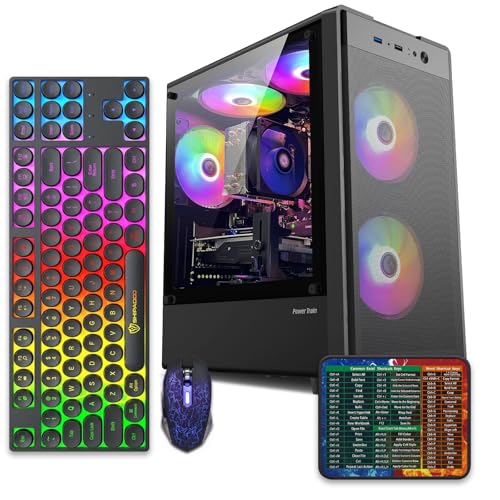
A CPU fan or tower cooler that sits at a visible angle inside a freshly delivered prebuilt is, in the overwhelming majority of cases, intentional — a mounting-bracket rotation chosen for RAM clearance, case airflow, or cable routing — not a defect. A small number of angles are genuine assembly mistakes, though, and the difference matters because most retailers only give you a narrow window to act. Here's how to tell which one you're looking at before you decide whether to leave it alone, fix it yourself, or box the system back up.
Why the Cooler Might Be Angled on Purpose
Builders configuring a prebuilt gaming PC are working inside a fixed case footprint, and a handful of design realities routinely produce a cooler that doesn't sit dead square to the motherboard:
- Tower air coolers rotate on their bracket. Air-cooler mounting kits for AM4/AM5 and most modern Intel sockets attach via a bracket that can be turned roughly 90 degrees. Builders commonly rotate the cooler so its fins clear the tallest RAM module or line up with the case's front-to-back airflow path instead of blowing straight into a side panel.
- All-in-one (AIO) liquid coolers route tubes deliberately. On an AIO, what looks like an angled fan is often the radiator or pump-head orientation chosen so the tubing isn't kinked against the top of the case or a fan shroud. That's a tubing-routing decision, not a loose fan.
- Stock coolers bundled with budget CPUs are symmetric by design. AMD's boxed Wraith Stealth and Wraith Spire coolers are top-down, socket-centered units — Noctua's own installation guidance for its tower coolers likewise documents 90-degree bracket rotation as a supported, intentional configuration for RAM and case clearance, not something that needs correcting.
- Cable management in compact mid-tower cases. Budget and mid-range towers — the class of case used on builds like the STGAubron Radeon RX 560 desktop — often route CPU fan and cooler-support cables behind the motherboard tray, and a technician will sometimes nudge a cooler a few degrees to keep a cable channel clear of the fan blades.
None of that means every angled cooler is fine. It means an angle alone isn't the signal to look for — what the angle is doing is.
The 2-Minute Checklist
Before touching anything inside the case, do a visual pass with the side panel off and the system unplugged from the wall.
| What you see | Likely verdict |
|---|---|
| Cooler is rotated but sits flush against the CPU, all four corner screws are seated, and nothing touches RAM, the VRM heatsink, or a cable | Intentional — leave it alone |
| Fan blades brush against a case wire tie, RAM heat spreader, or motherboard chipset heatsink | Needs adjustment — reseat or reroute |
| One or more corner mounting screws sits loose or visibly proud compared to the others | Possible poor thermal contact — check temps before deciding |
| Cooler mounting bracket looks bent, cracked, or the backplate is only partially attached | Return-eligible defect |
| AIO tubing is pinched, kinked at a sharp angle, or pressed against a fan shroud hard enough to deform | Return-eligible or requires reseating by someone comfortable with liquid coolers |
If everything in row one applies, you almost certainly have a cosmetic non-issue and can skip straight to a temperature check rather than opening anything up.
Fix It Yourself vs. Send It Back
| Situation | Recommended action |
|---|---|
| Angle is cosmetic only; idle and load CPU temps look normal for the chip (check with HWiNFO64 or the motherboard's own monitoring utility) | Do nothing — this is normal build variation |
| Angle is cosmetic, but you'd prefer it squared up for looks | Safe DIY fix: power down, unplug, ground yourself, loosen the four corner screws in a diagonal star pattern, rotate, and re-tighten diagonally to even, finger-tight-plus-a-quarter-turn pressure |
| Cooler contacts RAM or a heatsink, or a mounting screw is unseated | DIY fix if you're comfortable reseating a cooler and reapplying thermal paste; otherwise use retailer support before the return window closes |
| Bent bracket, cracked plastic, damaged backplate, or the system shows elevated idle temps and the seller won't remote-diagnose it | Return or request an exchange — don't attempt a repair on a system that's still covered |
Retailers' return windows for prebuilt systems vary by seller and by whether the listing is sold by the manufacturer or a marketplace reseller — check the specific listing's return-eligibility date rather than assuming a standard window, and start that process immediately if you suspect a hardware defect rather than a cosmetic angle.
What Normal Looks Like on Common Prebuilt Coolers
Budget and mid-range prebuilts — the segment that includes systems like the AMD Ryzen R5 tower, the Intel Core i7 / RTX-class tower, and the Intel Core i7 / Radeon RX tower — typically ship with one of three cooler classes:
- Boxed stock coolers (AMD Wraith Stealth/Spire, Intel's older boxed coolers) — compact, top-down blower designs. Rotation is largely cosmetic since the fan pulls air from directly above the socket regardless of orientation.
- Small tower air coolers (Noctua NH-U12S-class and similarly sized third-party units) — these are the coolers most likely to be intentionally rotated for RAM clearance, per cooler manufacturers' own installation documentation.
- Entry-level AIO liquid coolers — radiator and pump-head orientation is chosen for tube routing, and what reads as an angled fan is usually the pump block, not the radiator fan itself.
If your system falls into category 1, an angle is nearly always cosmetic. Categories 2 and 3 are where a genuine clearance conflict is more likely, which is why the checklist above focuses on contact points rather than the angle in isolation.
If You Decide to Reseat the Cooler Yourself
- Power down fully and unplug the system from the wall — don't work on a system that's merely sleeping.
- Ground yourself (touch the case chassis or use an anti-static wrist strap) before touching any internal component.
- Note the current screw pattern, then loosen the four corner screws in a diagonal star pattern to release even pressure — never spin one screw all the way down before starting the next.
- Lift the cooler straight up. If the factory thermal paste is undisturbed and you're not changing orientation for a functional reason, some builders reseat without reapplying paste; if you're rotating the cooler or the paste layer is disturbed, clean both surfaces with isopropyl alcohol and apply a fresh pea-sized dot before reseating.
- Re-tighten the same four screws diagonally, snug but not overtightened — enough that the cooler doesn't rock, no more.
- Reboot, let the system idle for a few minutes, then check temps against typical figures for your specific CPU under the monitoring utility of your choice.
If temps look reasonable and nothing physically contacts another component, you're done — no return needed. If you're not comfortable with steps 2 through 5, that discomfort is itself a reasonable reason to lean on the retailer's support line instead of DIY-ing it on a brand-new system still inside its return window.
Frequently Asked Questions
Is an angled CPU cooler covered under warranty if it's not actually broken? No — a cosmetic angle with no contact issue and normal temperatures isn't a defect, so there's nothing for a warranty claim to cover. Save the claim for an actual thermal or contact problem.
Will a slightly rotated cooler hurt my cooling performance? Generally no. Tower air coolers and AIO pumps are designed to perform across their supported mounting orientations; performance differences from rotation alone are typically within normal variance rather than a measurable regression.
How do I know if my temps are actually too high? Compare idle and gaming-load temps for your specific CPU model against publicly documented figures for that chip rather than a generic number — acceptable ranges vary meaningfully between a boxed stock cooler and a mid-tower AIO.
Should I remove and reapply thermal paste just because the cooler looks angled? Not unless you're already lifting the cooler to reseat or reroute it. Disturbing an intact factory paste application for a purely cosmetic angle adds risk (air bubbles, uneven spread) without a clear benefit.
What if the seller won't help me diagnose it remotely? Document the angle and any contact points with photos, check temps yourself using the checklist above, and if you still suspect a genuine defect, use the listing's return process before the eligibility window closes rather than waiting on unresponsive support.
Related reading
For more on what's actually inside budget and mid-range prebuilt towers, see the breakdown of a $850 prebuilt against its retail parts value and the coverage of budget Ryzen 7 4700LE prebuilts pairing older silicon with an RTX 3050. If you're comparing a high-end prebuilt against a smaller custom build, the RTX 5090 prebuilt vs. a $700 RTX 3060 local-LLM box breakdown covers where the extra spend actually goes.
Citations and sources
- AMD support documentation — boxed cooler design and mounting guidance for Wraith-series coolers
- Noctua support — tower air cooler bracket rotation for RAM and case clearance
- r/buildapc — community troubleshooting reports on prebuilt cooler mounting and orientation
- Amazon returns homepage — checking listing-specific return eligibility windows
This piece is editorial synthesis based on publicly available information. No independent first-party benchmarking is reported.