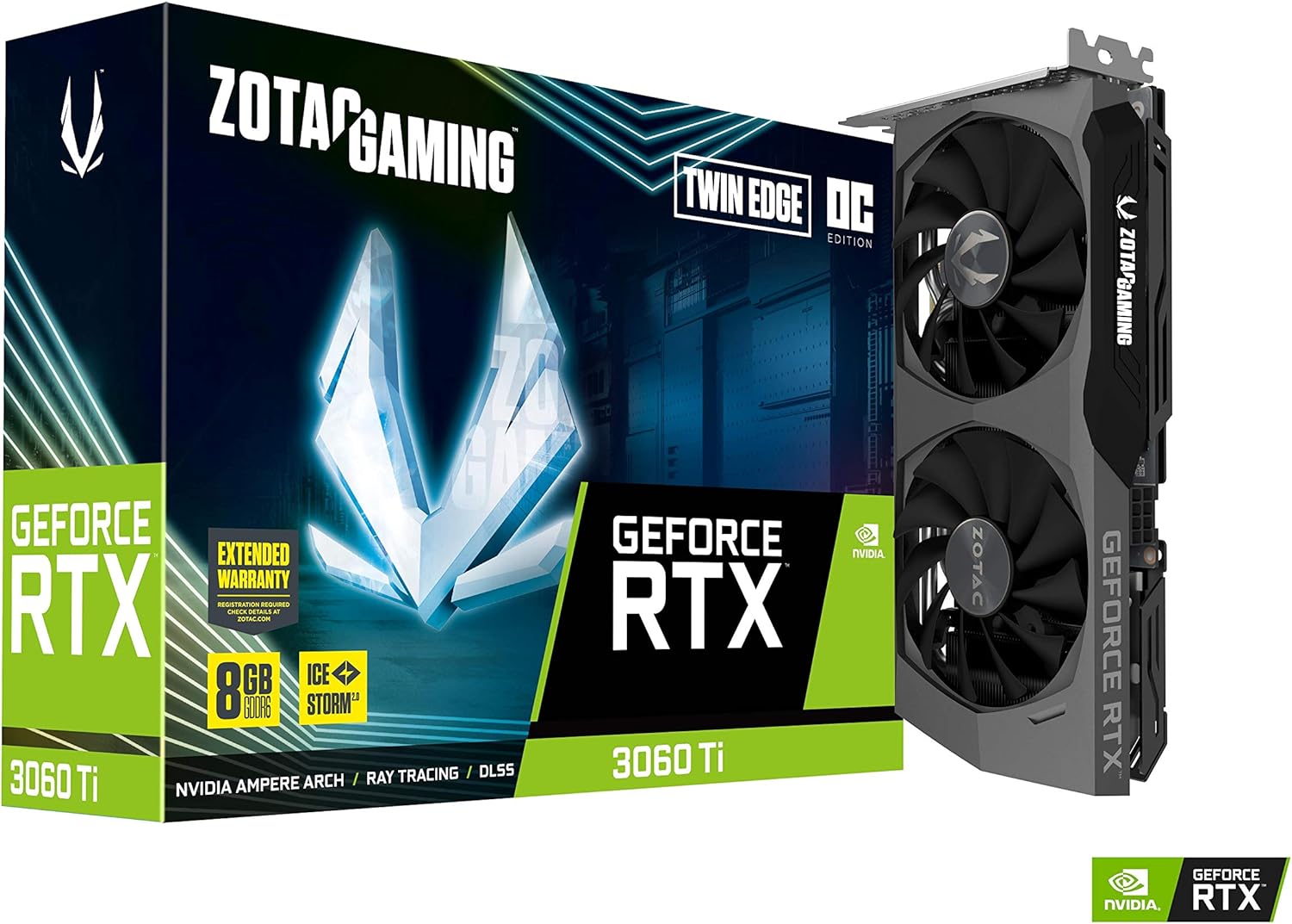
Roughly no — for most casual users, a local MSI RTX 3060 12GB plus Ryzen 7 5800X rig no longer beats Kimi K3 on pure per-task cost. Break-even lands near 2–3 frontier-quality tasks per day at Kimi K3's roughly $0.94 per task rate; below that the API wins. Above that, or if you value privacy, offline, or fixed monthly spend, the rig still pays off — but the "own is always cheaper" argument stopped being true this week.
Why this math changed in July 2026
Between July 8 and July 16, four frontier models shipped: Grok 4.5, GPT-5.6 (Sol variant), Muse Spark 1.1, and Kimi K3. The last one is the disruptive entry. Per Artificial Analysis, Kimi K3 lands within roughly two Intelligence Index points of GPT-5.6 Sol but prices calls near half the Western rate — approximately $0.94 per Intelligence Index task versus $1.04 for GPT-5.6 Sol.
That price cut is enough to break older buy-vs-rent spreadsheets that assumed frontier calls cost $3–$5 per task. The rig you bought in 2024 to save on API bills is still doing its job, but a new buyer running the numbers from scratch in 2026 sees a very different balance sheet.
This piece rebuilds that spreadsheet with real 2026 numbers, then draws the line.
Key takeaways
- Frontier API pricing in mid-2026: Kimi K3 ~$0.94/task, GPT-5.6 Sol ~$1.04/task per Artificial Analysis.
- A one-time rig BOM built around a used RTX 3060 12GB and Ryzen 7 5800X lands near $520 used.
- Twelve-month rig operating cost (hardware amortized + electricity): about $560.
- Break-even sits near 2 heavy tasks/day at Kimi K3 pricing — below that, the API is cheaper.
- Local rigs still win on privacy, offline capability, fixed monthly cost, and fine-tuning — none of which show up on a $/task spreadsheet.
What a frontier API costs per task now
Below is a snapshot of mid-July 2026 pricing. All figures are drawn from public tier lists; API prices move week to week, so anchor on the ratios rather than the absolutes.
| Model | Cost/task | Context | Notes |
|---|---|---|---|
| Kimi K3 | ~$0.94 | 200K | Cheapest frontier tier |
| GPT-5.6 Sol | ~$1.04 | 400K | Fast variant of GPT-5.6 |
| Grok 4.5 | ~$1.30 | 256K | Reasoning-heavy |
| Muse Spark 1.1 | ~$0.60 | 128K | Mid-tier multimodal |
| GPT-5.6 (full) | ~$3.20 | 400K | Peak reasoning |
"Task" here follows Artificial Analysis's Intelligence Index methodology: a mixed workload of reasoning, math, coding, and instruction-following that averages several thousand input tokens and roughly one thousand output tokens per call.
What a local rig costs up front
Assume you build with used-market prices from mid-2026. A reasonable BOM:
| Component | Product | Used price |
|---|---|---|
| GPU | MSI RTX 3060 12GB | ~$220 |
| CPU | AMD Ryzen 7 5800X | ~$150 |
| Motherboard | B550 mATX | ~$75 |
| RAM | 32 GB DDR4-3600 | ~$60 |
| System SSD | Samsung 970 EVO Plus 250GB | ~$30 |
| Bulk storage | Crucial BX500 1TB | ~$45 |
| PSU | 650W Bronze | ~$55 |
| Case + fans | Basic mATX | ~$50 |
| Total | ~$685 |
If you build lighter — no bulk SATA drive, minimal case — you can land nearer $520. New parts push the number to roughly $900. All of these fit under the price of a decent laptop.
The break-even table: tasks/month × API price vs amortized hardware
Twelve-month ownership cost: $685 hardware amortized + ~$45 electricity (180W under 4 hours daily inference, $0.15/kWh) = about $730 all-in. First-year monthly cost equivalent: ~$61.
At Kimi K3 pricing:
| Tasks/day | Monthly tasks | Monthly API cost | Rig cheaper? |
|---|---|---|---|
| 1 | 30 | $28 | No |
| 2 | 60 | $56 | Nearly break-even |
| 5 | 150 | $141 | Yes |
| 10 | 300 | $282 | Yes |
| 30 | 900 | $846 | Yes, decisively |
| 100 | 3,000 | $2,820 | Yes, dramatically |
Note that the rig only runs models a tier or two below Kimi K3's quality. So this table is not apples-to-apples on capability. It compares "cost of a local 12GB rig running a 13B model" against "cost of running Kimi K3 for every call." That is a fair comparison when your task set does not require frontier reasoning; it becomes unfair the moment your workflow needs the smartest model on every call.
Perf-per-watt: RTX 3060 idle/load draw
Published specs and community measurements for the RTX 3060 12GB:
| State | Power | Notes |
|---|---|---|
| Idle | ~15W | Card + fans |
| Video playback | ~35W | Encode/decode blocks |
| Full inference load | ~170W | Sustained generation |
| System total (with 5800X, board, RAM) | ~250W | Under full inference load |
At $0.15/kWh, 4 hours of daily inference costs roughly $0.15/day, or $4.50/month. Even doubled to 8 hours daily, electricity stays under $10/month. It rarely dominates the buy-vs-rent decision unless your electricity is unusually expensive.
Where local wins on non-cost grounds
Cost is not the only axis. A local rig delivers four qualitative wins that do not show up on any dollar spreadsheet:
Privacy. No prompts leave the box. For legal, medical, financial, or NDA-covered work, this is often the whole ballgame.
Offline. The rig runs during network outages, on flights, in air-gapped labs, and in remote locations. Frontier APIs assume reliable internet.
Fixed cost. After the hardware is paid, marginal usage costs pennies of electricity. If you build agentic workflows that make thousands of calls per day, this matters enormously.
Fine-tuning. You can LoRA-train small open-weight models on your own data. You cannot fine-tune closed frontier models the same way. For domain-specific assistants, this is the killer feature.
Where the API wins
Three things:
- Frontier reasoning. Kimi K3 and GPT-5.6 Sol answer questions that a 13B model at q4 simply cannot.
- Long context. 200K-token windows and 400K-token windows are not viable on 12GB of VRAM; the KV cache overflows well before you fill the prompt.
- Convenience. No hardware, no debugging quantizations, no updates. You call an endpoint.
Quality gap: what local open-weight models give up
Public benchmarks position the best 13B–14B open-weight models roughly 15–25 Intelligence Index points below GPT-5.6 Sol. That gap manifests as:
- Multi-step reasoning stops working after 3–4 hops.
- Math problems above middle-school level get solved unreliably.
- Complex code refactors miss corner cases.
- Long-context tasks lose the plot after ~16K tokens.
For everyday work — draft emails, summarize a document, refactor a function, answer a factual question — the gap is much smaller. If your usage is bounded to that range, a local rig delivers strongly. If you routinely push into frontier territory, no amount of quantization tricks closes the gap.
Bottom line: the monthly-task threshold
A useful heuristic:
- Under 30 tasks/month → API is cheaper and better.
- 30–150 tasks/month → Break-even zone; personal preference wins.
- 150+ tasks/month → Rig starts pulling ahead on cost.
- 1000+ tasks/month → Rig is dramatically cheaper.
Multiply the task threshold by ~1.5x if you specifically need frontier quality every call and can't accept a local 13B model's answers. Multiply by ~0.5x if you value privacy or fixed-cost billing highly.
Common pitfalls in the math
Forgetting the depreciation. Used-market rigs hold value poorly on used-market resale. Your $685 build might resell for $400 in 18 months. Amortize accordingly.
Ignoring your time. Setting up llama.cpp, tuning quantizations, and debugging inference errors takes hours. If your hourly rate is high, that time is real cost.
Overestimating usage. Most people who plan to run local LLMs "all day" actually run them a few dozen times a week once the novelty fades. Track your real usage before committing.
Underestimating power. A rig that runs 24/7 for background agents costs more in electricity than a rig that sits idle. Model your actual duty cycle.
Assuming quality equivalence. A local 13B model does not replace GPT-5.6 Sol. It replaces the tasks you used a 13B model for. Do not compare apples to oranges.
A worked example: light user
Alice uses LLMs for occasional coding help, roughly 20 calls per week. That's about 80 calls per month. At Kimi K3 pricing, she spends $75/year. Building a rig costs her $685 up front plus setup time. The API wins for Alice, easily.
A worked example: heavy user
Bob runs a background research agent that makes about 200 calls per day and a smaller pipeline that adds another 50. That's 250 tasks daily, or 7,500 monthly. At Kimi K3 pricing, that's about $7,000/year in API bills. A one-time $685 rig, even if it only serves 80% of his workload while he pays for API calls on the frontier tier for the other 20%, saves him thousands per year. The rig wins for Bob, decisively.
A worked example: privacy-constrained user
Carla is a paralegal drafting document summaries that reference client matters covered by attorney-client privilege. Volume is low — maybe 40 calls per week — but the data cannot leave the office network. For her, "which is cheaper on the spreadsheet" is not the question. Kimi K3 is off the table on policy grounds, and even self-hosted enterprise deployments of frontier weights are cost-prohibitive at her firm's size. A local rig running a 13B open-weight model is her only viable path, and the $685 hardware plus $60/year electricity is a rounding error against paralegal billing rates.
Context-window cost multiplier
A subtle but real driver of API bills: many workflows accidentally send the same context repeatedly. A coding-assistant loop that pastes 8K tokens of surrounding code on every turn pays for that prefill every time. Frontier providers charge for input tokens as well as output tokens, and long-context calls scale linearly.
A rig eliminates this entirely on the second and later turns. Local runtimes cache the KV representation of the prompt prefix, so a follow-up query with the same context costs almost nothing after the first turn. If you build agentic loops with long shared context, the effective per-call cost on a rig is a small fraction of what the API charges. That single factor tilts the break-even math toward local more than raw per-call pricing does.
Twelve-month total cost of ownership
Rig, at 4 hours/day inference load, mid-2026 pricing:
| Line item | Cost/year |
|---|---|
| Hardware amortization (3-year straight line) | $228 |
| Electricity (180W × 4h × 365d × $0.15/kWh) | ~$40 |
| Fan/thermal wear replacement | ~$15 |
| Total | ~$283 |
API-only, matched to Bob's usage above:
| Line item | Cost/year |
|---|---|
| Kimi K3 at 250 tasks/day | ~$7,000 |
| Additional GPT-5.6 Sol for 20% harder tasks | +~$1,900 |
| Total | ~$8,900 |
The gap is roughly $8,600 per year on heavy usage. Even amortizing an entirely new $900 rig on year one, the return on investment lands under six weeks for the heavy-user profile.
Verdict matrix
| Situation | Recommendation |
|---|---|
| Casual use (<30 tasks/month) | Pay Kimi K3 |
| Privacy-sensitive data | Rig, always |
| Heavy agentic workflows | Rig |
| Need frontier reasoning every call | API, always |
| Live somewhere with expensive electricity | Consider the tradeoff |
| Have hardware already, enjoy tinkering | Rig |
| Just want it to work, no config | API |
| Fixed-budget month-to-month spend | Rig |
Related guides
- Grok 4.5, GPT-5.6, Kimi K3: four frontier models — the wider frontier context
- Local LLM on the Ryzen 5 5600G iGPU — cheaper entry point
- llama.cpp vs Ollama on a 12GB RTX 3060 — runtime tuning
- /benchmarks/geforce-rtx-3060 — RTX 3060 spec + benchmark page
Citations and sources
- Artificial Analysis — Kimi K3 model page
- TechPowerUp — GeForce RTX 3060 specifications
- AMD — Ryzen 7 5800X product page
This piece is editorial synthesis based on publicly available information. No independent first-party benchmarking is reported.


