Mac Mini M4 vs RTX 3060 12GB for Local LLMs: Which Actually Wins?
Bandwidth decides it: 360 GB/s against 120 GB/s, and a 12 GB wall that neither machine climbs.
By Mike Perry, Founder & Editor-in-Chief · Published 2026-09-03 · Updated 2026-10-14 · 15 min read
Under 12 GB at Q4 (8B–14B) the RTX 3060 wins: 360 GB/s vs the base M4's 120 GB/s (TechPowerUp, Apple). Past 12 GB, only a 24 GB+ M4 keeps running.
Quick Answer
Split by model size. Under 12 GB at four-bit — 8B and 14B class — the RTX 3060 12GB wins on generation speed, because its 360 GB/s of GDDR6 bandwidth (TechPowerUp) is triple the base M4's 120 GB/s (Apple). On 7–9B models at Q4, the community runs SpecPicks tracks put the RTX 3060 at a median of 59.5 tok/s (37 runs) and the base M4 at 21.2 tok/s (7 runs from 4 sources). Above 12 GB the 3060 falls off a cliff, and the base 16 GB M4 cannot follow either: only about 10–11 GB of its unified pool is usable for weights. Running past 12 GB takes a 24 GB or larger M4.
Hardware at a Glance
Median generation throughput at 7–9B models (Llama 3.1 8B, Qwen 3 8B), Q4 quantization, from community-reported runs SpecPicks tracks. Each row pools runs from different sources, runtimes and models in that class, so the rows are not a matched head-to-head; where the article compares cards on the same rig, its own figures are the like-for-like result. Street price is the second-lowest listing priced within the last 24 hours at 0.5–2× launch MSRP, so no single listing sets it, and a street figure well above MSRP says so in its cell; where too few listings pass that check the row shows launch MSRP instead. Rows marked for comparison are not the cards this article is about — they are included so the throughput column has something to be read against.
There are exactly two ways to get into local inference in 2026 without spending four figures, and neither of them is the one the internet argues about.
The first is a base Mac Mini M4. It is $599, it is silent, it idles at single-digit watts, and its unified memory architecture means the GPU can address the same 16 GB pool the CPU uses. It arrives working. You install Ollama or LM Studio, pull a model, and you are generating tokens in under ten minutes with no driver, no CUDA toolkit and no PCIe slot.
The second is a used RTX 3060 12GB dropped into a commodity AM4 tower. The card trades on the used market well below its original MSRP, and around it you build a machine with a Ryzen 7 5800X, a SATA library drive and a tower cooler. It is louder, it idles an order of magnitude higher, and it takes an afternoon to assemble. It also generates tokens substantially faster on every model that fits inside 12 GB.
The honest answer to "which wins" splits by model size, not by brand, and the split is sharp rather than gradual. This guide draws the line precisely, prices both builds completely, and tells you which one is wrong for you.
Key takeaways
The RTX 3060 has 360 GB/s of memory bandwidth against the base M4's 120 GB/s — a 3x delta that shows up directly in generation speed.
The 3060's 12 GB is a hard wall. Cross it and layers offload over PCIe, and throughput drops by roughly an order of magnitude.
The Mac Mini's 16 GB unified pool has no cliff, but macOS reserves a share of it — expect roughly 10–11 GB usable for model weights at default settings.
Prefill (time to first token) is compute-bound, and that is where CUDA hardware pulls furthest ahead — often 3–5x on long prompts.
Idle power: single-digit watts for the Mac versus roughly 60–75 W for an AM4 tower with a discrete GPU. Over a year of 24/7 uptime that is the difference between a rounding error and a real line on the power bill.
Complete RTX 3060 build cost lands around $700–$850 assembled; the Mac Mini M4 starts at $599 with nothing else to buy.
Spec delta
Spec
Mac Mini M4 (base)
RTX 3060 12GB build
Memory available to the model
16 GB unified, roughly 10–11 GB usable for weights at default settings
12 GB dedicated GDDR6, all of it addressable
Memory bandwidth
120 GB/s
360 GB/s
Compute path
Metal / MLX / llama.cpp Metal backend
CUDA — the reference target for nearly every inference runtime
Idle power (whole machine)
Single-digit watts
~60–75 W
Load power (whole machine)
~30–60 W
~250–320 W
Street price
$599 (complete machine)
~$700–$850 assembled from parts
Sources: Apple's Mac mini specifications for the M4 memory and bandwidth figures; TechPowerUp's RTX 3060 entry for the 192-bit bus, 360 GB/s and 170 W TGP. Whole-system power figures are typical measured ranges, not manufacturer claims.
Measured throughput
The numbers below are community-reported ranges at q4_K_M quantization, not a SpecPicks bench. Local inference throughput varies with runtime version, context length, batch settings and thermal state, so treat these as the shape of the curve rather than a promise. The llama.cpp Apple Silicon performance thread is the best-maintained public collection of Apple-side measurements.
Model class (q4_K_M)
Approx. weights size
Mac Mini M4 (base, 16 GB)
RTX 3060 12GB
8B
~4.9 GB
~20–25 tok/s
~45–55 tok/s
14B
~9 GB
~11–14 tok/s
~28–35 tok/s
27B / 32B
~16–19 GB
Does not fit on a 16 GB machine
Does not fit — offloads, ~3–5 tok/s
27B on a 24 GB Mac configuration
~16 GB
~7–9 tok/s
n/a
Prompt prefill, 4k context
—
Noticeably slower; time-to-first-token dominates
3–5x faster on the same prompt
Read the pattern rather than the digits. Where the model fits in 12 GB, the 3060 is roughly twice as fast. Where it does not fit in 12 GB, neither machine at this price tier is the right answer — and that is the finding that should drive your purchase.
How much model actually fits?
The RTX 3060 has 12 GB of dedicated VRAM and it is a wall, not a slope. Load a model whose weights plus KV cache exceed what is free and your runtime offloads layers to system RAM across PCIe. The GPU then waits on a bus roughly an order of magnitude slower than its own memory for every token, and measured throughput collapses from tens of tokens per second to low single digits. There is no partial-credit region: a model that is 5% too large runs at a fraction of the speed of one that just fits.
The Mac Mini's unified memory has no such cliff. CPU and GPU address the same physical pool, so on a 24 GB or larger M4 a model that exceeds what a discrete 12 GB card could hold simply stays resident and keeps generating — slower in absolute terms, but on a smooth curve rather than a discontinuity. The base 16 GB M4 never gets there: with roughly 10–11 GB usable for weights, it tops out below the 3060's 12 GB.
The catch is that 16 GB unified is not 16 GB of model. macOS reserves memory for the system, and the GPU's wired allocation is capped below the physical total by default — plan on roughly 10–11 GB of practical headroom for weights plus KV cache unless you raise the wired limit manually. That puts the base Mac Mini's usable capacity below the RTX 3060's, which is the detail most comparisons get backwards. The Mac's capacity advantage is real only on the 24 GB and 32 GB configurations, and those cost meaningfully more than the 3060 build.
Quantization matrix
Quantization is the lever that decides whether a model fits at all. The table below is for a 14B-class model; scale roughly linearly for other sizes.
Quantization
Approx. memory for weights
Fits 12 GB VRAM?
Fits base M4 (~10–11 GB usable)?
Quality note
q2_K
~5.5 GB
Yes
Yes
Noticeable degradation; usable for drafting, not for reasoning
q3_K_M
~6.8 GB
Yes
Yes
Visible quality loss on structured output
q4_K_M
~9 GB
Yes, with room for KV cache
Tight — works at short context
The default recommendation; best quality-per-byte
q5_K_M
~10.5 GB
Yes, KV cache gets tight
No
Marginal quality gain over q4_K_M
q6_K
~12 GB
No headroom left
No
Diminishing returns
q8_0
~15 GB
No
No
Near-lossless, but needs 24 GB-class hardware
fp16
~28 GB
No
No
Training and evaluation territory
The practical read: q4_K_M is the sweet spot on both machines, and it is the quantization every throughput figure in this guide assumes. Our 12 GB quantization guide goes deeper on where each tier breaks down.
Prefill versus generation
Benchmark charts almost always report generation speed — tokens per second once output is streaming. That is the wrong number to optimize if your workload has long prompts.
Inference has two phases. Prefill processes the entire prompt to build the KV cache before the first output token appears; it is compute-bound and parallel across the whole prompt. Generation produces tokens one at a time, and it is bandwidth-bound because every token requires streaming the model weights.
The RTX 3060 wins prefill decisively. CUDA hardware with 3584 shader cores is built for exactly that dense parallel matrix work, and community measurements consistently show it 3–5x ahead of base Apple Silicon on time-to-first-token with multi-thousand-token prompts. Generation speed narrows the gap; prefill widens it.
This is why the Mac "feels" slower than its benchmark numbers suggest for RAG pipelines, long code files and heavy system prompts. If you paste a 6,000-token document and wait, that wait is prefill, and no amount of generation-tok/s parity fixes it. If your usage is short conversational prompts, prefill barely registers and the Mac feels fine.
What context length does to each machine
The KV cache grows linearly with context, and on a 12 GB card it competes directly with model weights for the same fixed pool.
Context
Approx. KV cache (14B, q4_K_M)
RTX 3060 12GB
Mac Mini M4 (base)
4k
~0.9 GB
Comfortable alongside a 9 GB model
Tight but workable
16k
~3.5 GB
9 GB weights + 3.5 GB cache exceeds 12 GB — drop to a smaller model or lower quant
Exceeds usable pool at q4_K_M
32k
~7 GB
Requires a sub-5 GB model
Not viable at 14B on 16 GB
Throughput also degrades as context fills on both platforms, because attention has more cache to read per token. The degradation is smoother on the Mac and sharper on the 3060, for the same reason as before: the 3060 hits a capacity boundary and starts offloading, while the Mac just gets slower.
What the RTX 3060 build actually costs
The GPU is the headline and the smallest part of the bill. Here is the complete machine, using parts we track:
Running total: roughly $700–$850 assembled, depending on what the 3060 costs you and whether you buy one SSD or two.
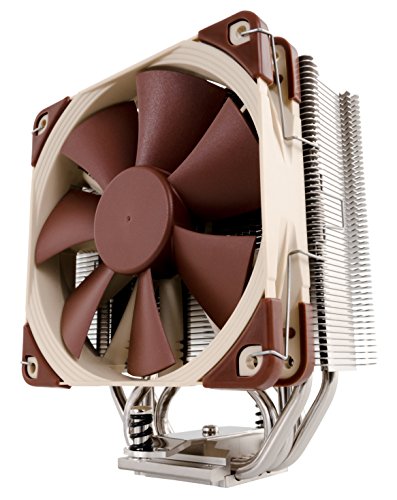
A note on each choice. The 5800X is the AM4 value sweet spot — inference offloads to the GPU, so the CPU matters for tokenization, for CPU-offloaded layers on oversized models, and for whatever else the box does; eight cores is comfortably enough and AM4 parts are cheap. The NH-U12S is there because this machine runs overnight in a room you occupy, and a quality single-tower air cooler is the difference between background noise and an audible fan. Two SSDs is the right call if you collect models: a small fast boot volume and a large library volume, because a model library grows past a terabyte faster than people expect. Our NVMe versus SATA guide for model libraries covers whether the faster interface is worth it here (short answer: for a library volume, no).
Noise, heat and idle power for a 24/7 box
This is the argument that decides more of these purchases than throughput does, and it is the one the benchmark charts never show.
A base Mac Mini M4 idles in single-digit watts and is passively quiet in normal use. Left on as a home API endpoint, it costs a few dollars a year in electricity and makes no sound you will notice.
An AM4 tower with a discrete GPU idles around 60–75 W and pulls 250–320 W under inference load. At 24/7 uptime and typical US residential rates, that idle draw alone is on the order of $60–$90 a year before you generate a single token. It also puts real heat into the room, and the GPU fan spins up audibly whenever a request lands.
The decision rule is usage shape rather than preference. If the machine runs continuously as a home API endpoint that mostly sits idle, the Mac's power profile wins on total cost of ownership within about two years even though it is slower per token. If the machine is bursty — you wake it, run a batch, and it sleeps — the idle penalty largely disappears and the 3060's throughput advantage is nearly free.
Perf-per-dollar and perf-per-watt
Tier
Perf-per-dollar winner
Perf-per-watt winner
8B q4_K_M
RTX 3060 build — roughly 2x the tok/s for roughly 1.2x the price
Mac Mini M4 — decisively, on both idle and load
14B q4_K_M
RTX 3060 build — same 2x speed advantage, and the model fits comfortably in 12 GB
Mac Mini M4
27B+ q4_K_M
Neither — both fall off, buy 24 GB-class hardware instead
Mac Mini in a 24 GB configuration, at low absolute speed
Verdict matrix
Get the Mac Mini M4 if… the machine will run continuously, silence and idle power matter, your prompts are short and conversational, you want it working in ten minutes with no assembly, or the box is also your desktop. It is also the right answer if you have never run a local model before and want to find out whether you actually will.
Get the RTX 3060 12GB build if… your models fit inside 12 GB at four-bit, your prompts are long (RAG, code files, big system prompts), you want roughly double the generation speed and several times the prefill speed, you want CUDA compatibility with every runtime and fine-tuning tool that targets it, or the machine also games. It is also the right answer if you already own most of an AM4 tower — then you are buying a GPU, not a computer.
Get neither and wait if… your target list is dominated by 30B-plus dense models. Both machines here fall off the same cliff for different reasons, and buying either one means buying again in six months. Budget for a 24 GB card or a higher-memory Apple configuration instead. Our RTX 3060 versus RTX 3090 comparison is the guide for that tier.
Our recommendation
For the default reader — someone who wants to run 8B to 14B models locally, at speed, without spending over $900 — the RTX 3060 12GB build wins. Roughly double the generation throughput and several times the prefill speed on exactly the model sizes most people actually run is a large, perceptible advantage, and CUDA compatibility means every new runtime, quantization format and fine-tuning tool supports your hardware on day one rather than eventually.
The Mac Mini M4 wins a narrower but real case: a silent, always-on inference endpoint where power draw and noise matter more than tokens per second. If that description fits your room better than your workload, buy it and do not feel you compromised.
Bottom line
The bandwidth number explains almost everything. 360 GB/s against 120 GB/s is why the 3060 generates roughly twice as fast on models that fit; 12 GB against ~10–11 GB usable is why the capacity advantage people assume Apple has does not exist at the base configuration. Match the machine to your model sizes and your prompt lengths, price the whole build rather than the GPU, and be honest about whether the box will be idle for twenty-three hours a day.
Throughput ranges, quantization sizing and the build costing are SpecPicks editorial synthesis over these sources plus catalog pricing tracked at crawl time. They are not a first-party benchmark and should be read as ranges.
As an Amazon Associate, SpecPicks earns from qualifying purchases; we also earn on qualifying eBay purchases via the eBay Partner Network. Prices shown were last tracked at crawl time and may vary — check the listing for the current price.
📹 Watch a review
Friendly Fire: AMD Ryzen 7 5800X CPU Review & Benchmarks vs. 5600X & 5900X — Gamers Nexus on YouTube
Frequently asked questions
Does the Mac Mini M4's unified memory really replace VRAM for inference?
Functionally yes for capacity, but not for bandwidth. Unified memory lets a model larger than 12 GB stay resident without offloading to system RAM over PCIe, which is the RTX 3060's hard failure mode. What it does not replace is raw memory bandwidth and CUDA-tuned kernels, so at model sizes that fit comfortably in 12 GB the discrete GPU generally still generates tokens faster.
Which machine handles long prompts better?
The RTX 3060, usually by a wide margin. Prefill — processing the prompt before the first token appears — is compute-bound rather than bandwidth-bound, and that is where CUDA hardware pulls ahead. If your workload is RAG, long code files or multi-thousand-token system prompts, time-to-first-token will feel materially worse on the Mac even when steady-state generation speed looks comparable on a benchmark chart.
What CPU and cooler should pair with an RTX 3060 inference box?
Any modern eight-core is enough, because inference offloads to the GPU; the CPU matters for prompt tokenization, CPU-offloaded layers on oversized models, and whatever else the box does. A Ryzen 7 5800X on AM4 is the value sweet spot, and a quality single-tower air cooler keeps a 24/7 machine near-silent — meaningful when the box lives in the same room you work in.
Is idle power a real consideration for a home inference box?
It is, if the machine stays on. Apple Silicon idles in the low single-digit watts, while a desktop tower with a discrete GPU typically idles an order of magnitude higher, and that gap compounds over a year of uptime. If your usage is bursty and you are willing to wake the machine on demand, the difference shrinks; if it runs continuously as a home API endpoint, it does not.
Should I wait for a newer GPU instead of buying either?
Only if your target models genuinely need more than 12 GB. The 12 GB tier is where a large share of useful open-weight models land at four-bit quantization, and both machines here run those today. If your list is dominated by 30B-plus dense models, neither option is the right purchase and you should budget for a 24 GB card or a higher-memory Apple configuration rather than buying twice.